
How to Choose the Right Silica Tubing Supplier?
Choosing the right Silica Tubing supplier requires more than comparing prices or browsing polished product photographs. The decision affects thermal stability, optical performance, dimensional accuracy, and production reliability. A tube may look flawless under warehouse lighting, yet fail after repeated heating cycles.
Market reports show why this choice matters. Fortune Business Insights valued the global optical fiber market at approximately USD 9.89 billion in 2024. It projects the market to reach about USD 18.94 billion by 2032. MarketsandMarkets also forecasts strong growth, although its estimates differ by scope and methodology. These figures reflect expanding demand for high-purity glass products across laboratories, fiber optics, sensors, and industrial equipment.
Robert D. Maurer, a Corning optical-fiber pioneer, is often associated with this practical statement: “The purity of the glass is the key.” That principle still applies to Silica Tubing procurement. Ask suppliers for material grades, hydroxyl content, tolerances, surface-finish data, and batch traceability. Request samples. Test them under your actual temperature and pressure conditions.
A reliable supplier should explain its process clearly. It should also disclose inspection methods, packaging controls, and realistic lead times. ISO certification helps, but it does not replace technical evidence. Sometimes, the cheapest quotation hides inconsistent dimensions or weak documentation.
That deserves reflection.
A strong evaluation also considers communication. Can the supplier respond precisely when your drawing changes? Can it maintain quality across repeated orders? This guide examines those questions, using market evidence and practical purchasing criteria to help buyers choose with greater confidence.
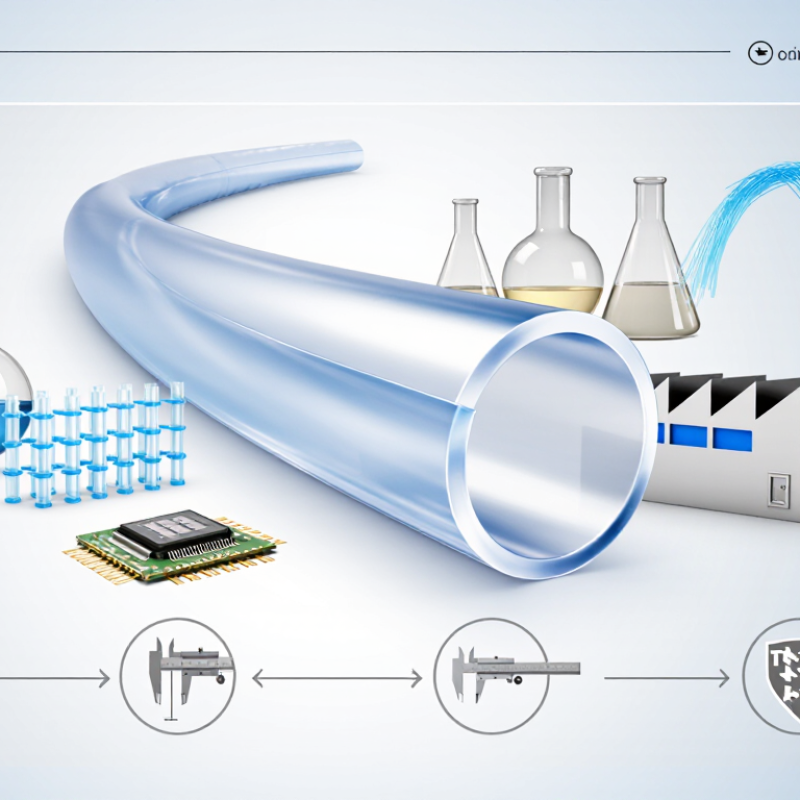
Define Tubing Requirements: 99.99% SiO₂, Dimensions, OH Content, and Tolerance
Choosing a silica tubing supplier starts with a precise technical definition. State the required purity clearly: 99.99% SiO₂ or higher, if your process needs it. Purity affects contamination risk, thermal stability, and optical performance. Do not rely on a general phrase such as “high-purity silica.” Ask how the value is measured and recorded.
Dimensions need equal attention. Specify inner diameter, outer diameter, wall thickness, length, and acceptable ovality. Include drawing tolerances, not only nominal measurements. A tube may look correct but still cause uneven gas flow or difficult assembly. OH content also matters. Low-OH silica suits many high-temperature and optical applications, while higher-OH material may behave differently under heat and ultraviolet exposure. Request test data for the actual production lot.
Tips: Ask for a sample before placing a large order. Check the bore with calibrated tools. Inspect both ends for chips, cracks, and stress marks. Confirm whether tolerances apply after cutting, cleaning, or thermal processing. A supplier should explain its inspection method, certificate format, and lot traceability. Experience shows that unclear measurement conditions create more disputes than visible defects. This part is often overlooked. Keep written records of every requirement and review them with the supplier’s technical team. Even a careful specification can miss a real operating condition, so test the tubing under representative temperature, pressure, and handling procedures.
FAQS
Specify 99.99% SiO₂ or higher when contamination control matters. Ask how purity is measured and recorded. “High purity” is too vague.
Confirm inner diameter, outer diameter, wall thickness, length, and ovality. Include drawing tolerances. Nominal dimensions alone may cause uneven gas flow.
Low-OH silica often suits high-temperature and optical applications. Higher-OH material may react differently to heat and ultraviolet exposure. Request actual lot data.
Yes, test a sample first. Check the bore with calibrated tools. Inspect both ends for chips, cracks, and stress marks.
No. It describes material transition, not continuous operation. A practical service limit may be near 1,100°C. Confirm wall thickness and heating conditions.
Ask about atmosphere, heating duration, temperature cycling, and local hot spots. Check for cracking, sagging, and devitrification. Small defects can worsen quickly.
Compare unit price, MOQ, lead time, customization, packaging, and support. A cheap quote may create excess inventory or inspection costs.
Look for individual sleeves, end caps, rigid separators, and clear lot labels. Packaging should prevent dust, scratches, and tube-to-tube contact.
Request inspection methods, dimensional records, purity data, and batch traceability. Also ask about defect response times. Polished samples do not prove production consistency.
Test tubing under representative temperature, pressure, and handling conditions. Laboratory results may not match production. I may still miss one real operating condition.
Conclusion
Choosing the right Silica Tubing supplier begins with clearly defining your technical requirements. Confirm that the tubing contains at least 99.99% SiO₂ and matches your required dimensions, wall thickness, OH content, and dimensional tolerances. Review thermal performance carefully, including a softening point around 1,680°C and a practical continuous service limit near 1,100°C. For applications involving light transmission, request optical data showing strong UV transmission near 190 nm and low levels of metallic or other impurities.
Supplier quality and total value are equally important. Look for documented ISO 9001 quality systems, batch-specific Certificates of Analysis, and reliable material traceability from production to delivery. Compare minimum order quantities, lead times, customization capabilities, protective packaging, and technical support rather than focusing only on unit price. A dependable supplier should communicate clearly, provide consistent documentation, and demonstrate the ability to maintain stable performance across repeated orders. This balanced evaluation helps ensure the selected tubing is suitable for both current needs and future production requirements.
