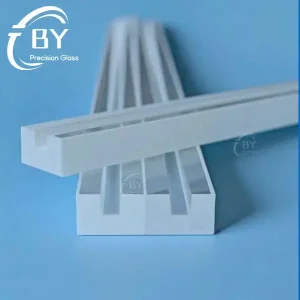
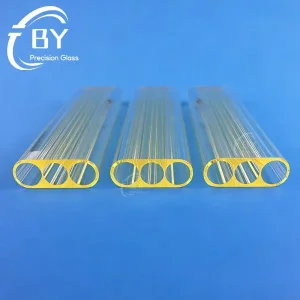
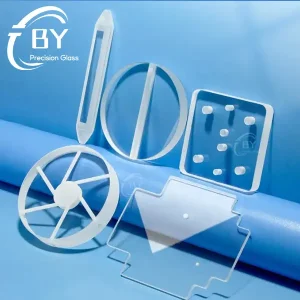
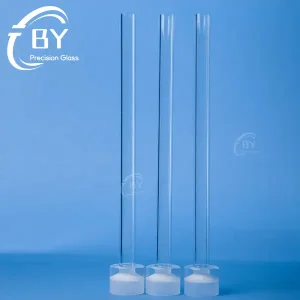
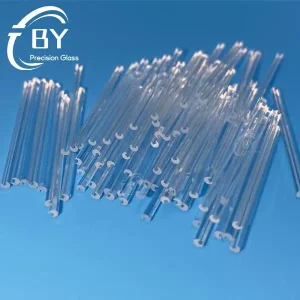
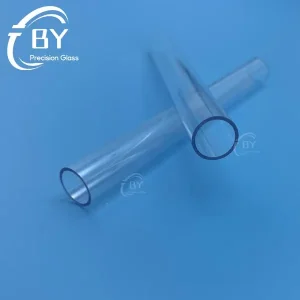
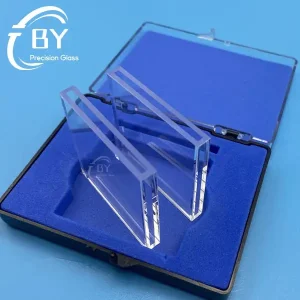
Featured Ceramic Laser Reflectors & Optical Assemblies
Direct-to-drawing engineered ceramic reflectors, high-reflectivity pumping chambers, sapphire light guides, and precision quartz windows supporting leading laser OEMs worldwide.
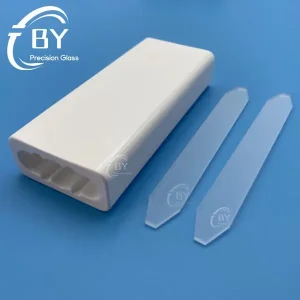
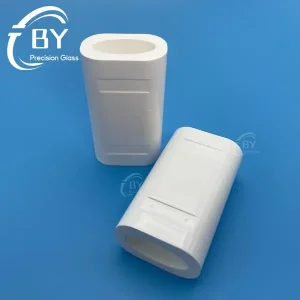
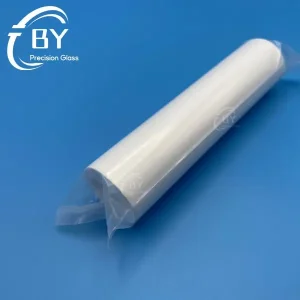
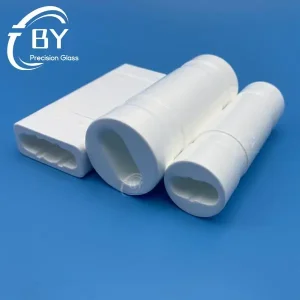
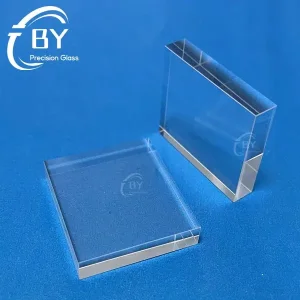
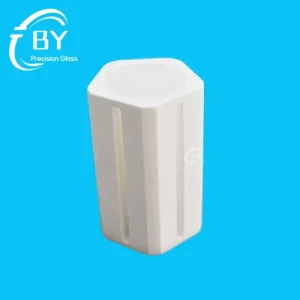
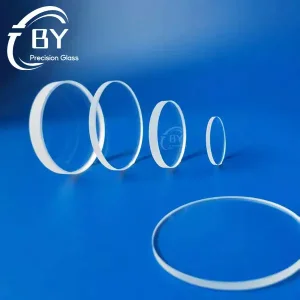
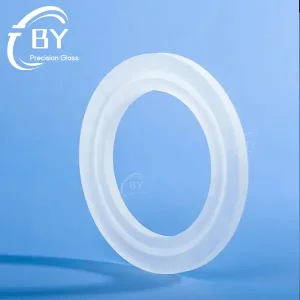
Physical Chemistry & Microstructure of Porous Alumina Laser Reflectors
An engineering breakdown of diffuse reflectance kinetics, optical transfer efficiency, and thermal longevity in high-flux solid-state laser cavities.
Principles of High-Efficiency Diffuse Scattering in Solid-State Cavities
In high-power diode-pumped solid-state (DPSS) and flashlamp-pumped laser architectures (such as Nd:YAG, Er:YAG, Alexandrite, and Holmium lasers), the reflector body surrounding the gain crystal is the single most critical determinator of optical coupling efficiency, gain uniformity, and overall beam quality (M² factor). Unlike specular reflectors (gold-plated brass or polished silver-plated stainless steel) which induce localized hot spots and severe thermal lensing due to directional phase reflection, ceramic laser reflectors operate via true Lambertian volume scattering.
Manufactured using ultra-pure, fine-grained aluminum oxide (Al₂O₃ > 99.7%), the sintered ceramic matrix features an engineered micro-porosity (typically 12% to 22% open and closed sub-micron void distribution). Light entering the material undergoes millions of high-efficiency refractive reflections at the grain boundary interfaces between high-index alumina crystal grains (n ≈ 1.76) and enclosed sub-micron pores (n ≈ 1.0). This multi-scattering phenomenon homogenizes pump photons across the laser rod circumference, yielding a uniform gain distribution and drastically suppressing destructive transverse parasitic oscillations.
Glazed vs. Porous Ceramic Reflectors: Overcoming Coolant Degradation
Direct exposure of raw porous ceramic to high-flow deionized cooling water leads to hydraulic absorption, gradual ion contamination, and bacterial or mineral colonization within the pores, precipitating catastrophic reflectance decay. As a certified ceramic laser reflectors manufacturer, BY Photonics deploys a proprietary chemical-vapor or high-temperature micro-vitrification glazing procedure. A high-purity, refractive-index-matched silicate-free glass film is fused over the internal reflective cavities at temperatures exceeding 1,200°C.
This glaze forms an impervious, molecularly bonded hermetic seal resistant to cavitation erosion from high-velocity liquid cooling, chemical etching from rust-inhibiting glycol additives, and ultraviolet degradation from broad-spectrum xenon flashlamps. Non-cavity regions maintain an unglazed finish to optimize thermal conduction into the surrounding cooling water jacket.
| Performance Criterion | High-Purity Glazed Ceramic (BY Photonics) | Electroplated Gold Metal Cavity | Sintered PTFE (Spectralon-Grade) |
|---|---|---|---|
| Reflectance (600–1064 nm) | 97.5% – 98.2% (Lambertian) | 94.0% – 96.0% (Specular) | 98.5% – 99.2% (Lambertian) |
| Laser Damage Threshold (CW) | > 20 kW/cm² (Exceptional) | ~ 5 kW/cm² (Prone to blistering) | < 2 kW/cm² (Thermal melting risk) |
| Coolant Resistance (DI Water) | Impervious (Vitrified Glaze) | Moderate (Prone to pinhole flaking) | High (Hydrophobic, but low stiffness) |
| Thermal Conductivity (W/m·K) | 25 – 30 W/m·K | 300+ W/m·K (Substrate dependent) | 0.25 W/m·K (Severe thermal insulator) |
| Dimensional Stability under Heat | Superior (CTE: ~7.2 × 10⁻⁶/K) | Moderate (High thermal expansion) | Poor (Substantial thermal creep) |
Macro Industrial Trends Shaping Laser Cavity Manufacturing
Key technological transitions driven by multi-kilowatt industrial solid-state lasers, advanced dermatological aesthetics, and high-repetition-rate scientific photonics.
1. Transition to Mega-Pulse Medical Lasers
Next-generation aesthetic systems (Alexandrite 755nm, Nd:YAG 1064nm, and pulsed-dye 585nm/595nm lasers such as DEKA and Candela VBeam architectures) demand multi-joule output pulses with millisecond durations. Ceramic reflectors must withstand tremendous peak flashlamp optical flux without surface spallation, micro-cracking, or yellowing under persistent ultraviolet irradiance.
2. High-Density DPSS Diode Side-Pumping
Direct diode laser pumping of crystalline slabs and rods requires non-circular, asymmetrical cavity geometry with tightly tolerance-ground entry slits (often < 0.5 mm width). Manufacturers are advancing micro-ultrasonic and 5-axis CNC diamond grinding routines to shape complex non-imaging optical profiles directly into pre-sintered ceramic substrates.
3. Zero-Contamination Semiconductor Lasers
Semiconductor wafer inspection, metrology, and deep UV generation lasers cannot tolerate metallic shedding, flake debris, or outgassing volatile organics. Ultra-dense ceramic cavity reflectors sintered under ultra-clean electric kilns eliminate airborne particle generation and ensure baseline compliance in class 100 cleanroom environments.
Global Enterprise Procurement Requirements & Engineering DFM
Crucial design-for-manufacturability (DFM) variables and quality validation benchmarks demanded by tier-1 photonics procurement divisions.
Bore Geometry & Cylindricity
Internal lamp and rod chambers must hold a cylindricity and straightness within ±0.02 mm over cavity lengths reaching up to 250 mm. Any bow, taper, or ovality causes uneven cooling flow, optical astigmatism, and gain saturation imbalance.
Glaze Uniformity & Radius
Glaze thickness is strictly engineered between 30 μm and 60 μm. Too thin a glaze leads to micro-pore pinholes; excess thickness pools at corner radii and degrades focal alignment in close-coupled elliptical cavities.
Thermal Shock Resistance
Reflectors must undergo cyclic shock qualifications: instantaneous cycling between 20°C and 95°C liquid cooling at high flow velocities without glaze delamination, micro-fracturing, or mechanical cleavage.
Traceability & Purity Testing
Procurement audits demand full batch chemical assays via X-ray fluorescence (XRF) and inductively coupled plasma mass spectrometry (ICP-MS) verifying heavy metal contamination (Fe, Cr, Ti) remains below 5 ppm to prevent laser parasitic absorption.
Design for Manufacturability (DFM) Guidelines for Custom Ceramic Reflectors
Engineering departments transitioning from metal or plastic reflectors to high-purity alumina ceramics must accommodate the fundamental shrinkage kinetics and diamond-grinding tool dynamics inherent to technical ceramics:
- Shrinkage Compensation: Green-state alumina compacts experience volumetric shrinkage between 15% and 18% during high-temperature sintering (1,650°C to 1,720°C). Critical features, mounting tapped holes, and alignment dowel slots must be finish-machined with diamond core tooling post-sintering.
- Internal Radii Constraints: Avoid sharp internal corners (R < 0.5 mm). Incorporating transition fillets of R ≥ 1.0 mm prevents stress concentration during rapid thermal cycling and allows consistent glaze wetting without surface bead pooling.
- Segmented Cavity Modularity: For extended arc lamp lengths (> 180 mm), engineers achieve superior yields, lower total cost, and simplified maintenance by specifying precision interlocking ceramic segments (tongue-and-groove or stepped lap interfaces) rather than monolithic long blocks.
End-to-End Solutions Across Strategic Laser Sectors
Turnkey engineering solutions tailored for global medical aesthetics, precision industrial materials processing, and scientific research labs.
Medical & Dermatological OEM Replacement
BY Photonics manufactures precision-matched aftermarket and OEM ceramic pump chambers compatible with DEKA, Candela (GentleLase, VBeam), Cynosure, Lumenis, and Fotona medical laser devices. Our glazed cavity blocks guarantee 100% mechanical drop-in compatibility, restoring original pulse energy and extending pulse-forming network (PFN) efficiency.
Industrial Laser Welding & Cutting Heads
For high-duty-cycle lamp-pumped and diode-pumped systems used in automotive tooling, battery foil seam welding, and aerospace additive manufacturing, our ceramic reflectors incorporate integral cooling channels that eliminate flow tubes, shrinking laser head volume by up to 35% while increasing cooling transfer rates.
Semiconductor Lithography & Inspection Pumps
Supplying extreme-stability pumping reflectors for solid-state continuous-wave (CW) lasers driving wafer defect inspection. Featuring zero chemical outgassing, high dielectric strength (> 15 kV/mm), and high mechanical damping to isolate high-frequency pump vibrations from delicate interferometers.
Localized Engineering Support, Quality Assurance & Global Compliance
Mitigating supply chain risks through exhaustive incoming material verification, precision metrology, and full regulatory governance.
Full Regulatory Governance
Every ceramic reflector and quartz/sapphire component complies with RoHS Directive 2011/65/EU and REACH (EC 1907/2006). Free of toxic lead glazes, cadmium fluxes, or radioactive thorium dopants, simplifying clearance through North American, European, and Asia-Pacific customs.
Coordinate Metrology Verification
All finished ceramic cavities undergo automated 3D CMM inspection (Mitutoyo CNC coordinate measuring equipment), non-contact laser profilometry for glaze layer thickness, and spectrophotometric diffuse reflectance mapping across the 250 nm – 2,500 nm optical band.
Cleanroom Export Packaging
Reflectors are ultrasonically cleansed in multi-stage deionized water cascades, baked for moisture evacuation, and vacuum-sealed in anti-static, nitrogen-purged ESD barrier packaging within ISO Class 6 cleanroom environments to guarantee pristine out-of-box assembly readiness.
Technology Roadmap: The Next Frontier in Laser Cavities (2026–2030)
BY Photonics R&D initiatives developing breakthrough ceramic architectures to meet escalating solid-state power limits.
Additive Ceramic 3D Printing
Developing stereolithography (SLA) vat photopolymerization of alumina ceramics to produce internal conformally cooled micro-channels impossible to fabricate via standard diamond core drilling.
Rare-Earth Doped Cavities
Synthesizing ceramic bodies integrated with Samarium (Sm) and Cerium (Ce) ions, absorbing unabsorbed flashlamp UV radiation below 400 nm and converting it via fluorescence into peak pump absorption bands.
Nano-Crystalline Sintering
Utilizing spark plasma sintering (SPS) to achieve sub-micron grain sizes (< 200 nm), elevating flexural fracture toughness to > 450 MPa and increasing mechanical damage thresholds under shock pressure waves.
Diamond-Ceramic Composites
Engineering synthetic polycrystalline diamond-alumina composite matrices to raise thermal conductivity from 30 W/m·K past 120 W/m·K, completely revolutionizing conduction-cooled diode laser blocks.
Frequently Asked Questions: Technical & Procurement Diagnostics
Detailed engineering answers regarding ceramic laser reflector material specifications, replacement lifetimes, and maintenance procedures.
What causes optical degradation and yellowing in ceramic laser reflectors?
1. Sub-surface Iron/Transition Metal Contamination: Impurities in low-grade alumina (Fe₂O₃, TiO₂) undergo photoreduction under intense flashlamp UV flux, forming colored F-centers that absorb valuable pump wavelengths.
2. Glaze Micro-Crazing & Coolant Leaching: Thermal fatigue can create sub-micron fissures in poorly annealed glazes, allowing deionized water or coolant corrosion inhibitors to penetrate the porous ceramic matrix, causing localized biological contamination or mineral precipitation.
3. Solarization: BY Photonics avoids solarization by utilizing ultra-pure 99.7% synthetic Al₂O₃ powders with total transition metal impurities controlled to below 5 ppm, and applying high-temperature vitrified coatings that resist photochemical color shift.
Why is diffuse ceramic preferred over gold-plated metal cavities in solid-state laser systems?
How does BY Photonics ensure glaze integrity and prevent coolant leakage into the porous ceramic body?
Can BY Photonics reverse-engineer obsolete or out-of-production medical laser cavities?
What are the standard machining tolerances achievable for custom ceramic cavity blocks?
• Internal cavity bore diameter: ±0.02 mm (±0.0008 in)
• Overall length & width: ±0.05 mm (±0.002 in)
• Bore cylindricity and runout: ≤ 0.025 mm
• Surface roughness of glazed active cavity: Ra ≤ 0.2 μm
• Surface roughness of unglazed outer mounting faces: Ra ≈ 0.8 – 1.2 μm
What drawing file formats are required to submit an RFQ for custom ceramic reflectors?
Integrated Laser Head Optics: Flow Tubes, Quartz Substrates & Cuvettes
Complementing our ceramic cavity manufacturing: high-durability flow tubes, samarium-doped UV filters, precision quartz substrates, and analytical cuvettes for comprehensive optical assemblies.