
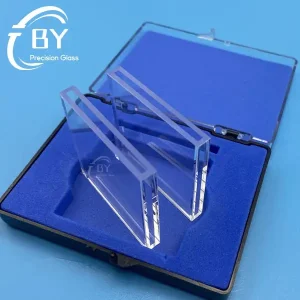
Precision Optical Inventory
Featured Quartz Components & Flow Cell Solutions
Engineered to withstand aggressive chemical environments, extreme thermal gradients, and intense UV irradiation with zero baseline drift and optimal light transmission.
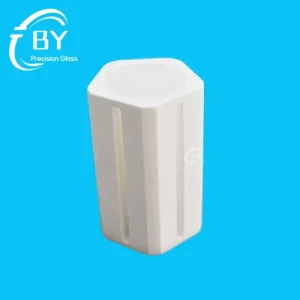
Wholesale Diffuse High‑Reflectivity PTFE Reflectors for Diode‑Pumping Chambers Suppliers, Factory
View Specifications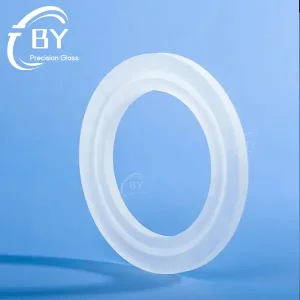
High-Quality Precision Custom Quartz Glass Components for Semiconductor Manufacturers, Supplier
View Specifications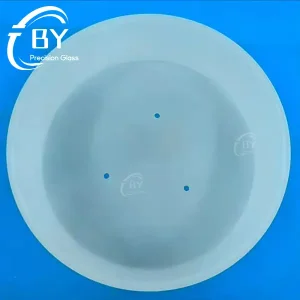
High-Quality Custom Quartz Glass Components for Vacuum Coating Supplier, Factories
View Specifications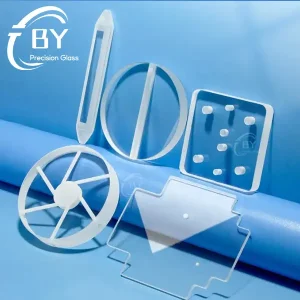
Wholesale High Temperature Custom Quartz Glass Fabrication Suppliers, Factories
View Specifications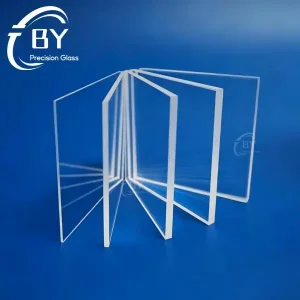
High-Quality JGS1 UItraviolet (UV) Grade Fused Silica Plate Supplier, Factory
View Specifications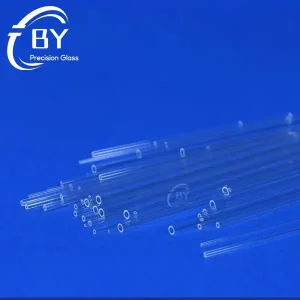
Wholesale Fluorine-Doped Fused Silica Capillary Tube Manufacturer, Factories
View Specifications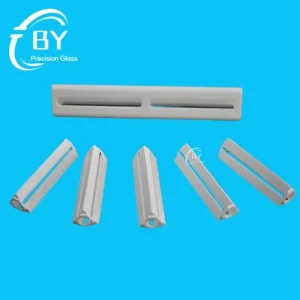
High-Quality Diode‑Pumping Chamber Diffuse Reflectors PTFE‑based Supplier, Suppliers
View Specifications
Material Science & Metrology
Engineering Anatomy of High-Precision Quartz Flow Cells & Cuvettes
In quantitative spectroscopic analysis, HPLC detection, and continuous process analytical technology (PAT), the cuvette or flow cell is not merely a passive liquid reservoir—it is an active optical component determining signal-to-noise ratios, photometric accuracy, and detection limits.
Molecular Fusion Bonding vs. Adhesive Glues
Standard commercial cuvettes frequently fail in demanding HPLC or organic solvent applications due to epoxy deterioration. BY Photonics employs proprietary high-temperature molecular fusion bonding (thermal diffusion sintering above 1100°C). Optical windows fuse seamlessly into a monolithic structure without adhesives, completely eliminating solvent contamination, pathlength creep, and autofluorescence background noise.
Micro-Pathlength & Wavefront Precision
Adhering strictly to Beer-Lambert law requirements ($A = \epsilon \cdot c \cdot l$), our proprietary double-sided CMP (Chemical Mechanical Polishing) achieves optical pathlength tolerances as strict as ±0.005 mm on standard 10 mm paths, and ±0.002 mm on micro-flow cells down to 0.1 mm. Windows guarantee optical surface flatness of λ/4 to λ/10 at 632.8 nm and scratch-dig specifications of 20/10.
Comprehensive Optical Transmission Bandwidths
We source certified synthetic fused silica (JGS1), visible-grade fused quartz (JGS2), and low-hydroxyl infrared-grade silica (JGS3). JGS1 guarantees internal transmission exceeding 82% at 200 nm and near-zero bubble inclusion (Class 0 per DIN 58927). For specialized laser applications, samarium-doped and cerium-doped quartz are integrated to block parasitic oscillation wavelengths.
±0.003mm
Path Length Accuracy
190–3500nm
Spectral Transmission
50 Bar
HPLC Pressure Threshold
20/10
Scratch-Dig Surface Quality
Supply Chain Excellence
Why Global OEMs Partner with BY Photonics in China
Headquartered in the precision optics industrial cluster of Tianjin, BY Photonics couples over fifteen years of specialized glass cold-working and oxyhydrogen hot-working with raw material supply stability and aggressive manufacturing economics.
Direct Factory Ingot-to-Component Flow
By eliminating overseas multi-tier brokerages, raw fused silica blocks and ingots are cut, CNC profiled, ultrasonically drilled, fire-polished, and optically certified under one 3,000 m² standardized manufacturing facility.
Proprietary Micro-Flow Channel Hydrodynamics
Our Tianjin precision machining line incorporates ultra-high-speed diamond grinding and chemical etching to craft micro-channels down to 50 μm internal diameter without subsurface micro-cracks, ensuring smooth laminar fluid flow and zero bubble entrapment.
Rapid 24-Hour DFM & Custom Prototyping
Send STEP, IGES, or 2D DWG engineering files to receive a comprehensive Design-for-Manufacturability (DFM) assessment within 24 hours. We transition seamlessly from 5-piece pilot prototyping to 10,000-piece serial monthly production.
100% Optical Baseline Certification
Every cuvette and flow cell batch undergoes rigorous spectrophotometric transmission validation, Zygo laser interferometric surface measurement, and helium leak testing for pressure-rated fluidic assemblies before shipment.
Engineering Selection Guide
Comparative Optical Material Matrix for Cuvettes & Flow Cells
Selecting the optimal quartz or optical crystal grade dictates detection limits, thermal resilience, and baseline noise in critical analytical applications.
| Optical Substrate | Transmission Band (nm) | Hydroxyl [OH⁻] Content | Fluorescence Background | Primary Industrial Applications |
|---|---|---|---|---|
| JGS1 Synthetic Fused Silica | 190 nm – 2,500 nm | ~1,200 ppm (High OH) | Ultra-Low | Deep UV Spectrophotometry, HPLC UV Detectors, DNA/RNA Purity Analysis |
| JGS2 Optical Fused Quartz | 220 nm – 2,500 nm | ~150–200 ppm | Low | Standard Analytical Chemistry, Visible Colorimetry, Industrial Flow Cells |
| JGS3 Infrared Fused Silica | 260 nm – 3,500 nm | < 5 ppm (Water-Free) | Negligible | FTIR Liquid Transmission Cells, NIR Process Moisture Monitoring, Laser Sensor Windows |
| Optical Borosilicate (BK7 Equivalent) | 340 nm – 2,200 nm | N/A | Moderate | Routine Student Laboratory Education, Low-Cost Automated Clinical Analyzers |
| Single Crystal Sapphire (Al₂O₃) | 170 nm – 5,500 nm | Anhydrous | Zero | Extreme Abrasion, High Alkali / HF Acid Exposure, Ultra-High Pressure Flow Cells |
Implementation Ecosystem
Mission-Critical Applications in Global Analytical Systems
From university biophysics labs to continuous multi-ton pharmaceutical reactors, our quartz cuvettes and fluidic flow cells deliver uncompromised optical clarity across the electromagnetic spectrum.
HPLC, UHPLC & SFC Detectors
Micro-volume Z-type and U-type flow cells engineered for sub-2-micron column liquid chromatography. With internal fluid cell volumes from 1.5 μL down to 80 nL, internal geometries eliminate peak broadening, band-spreading, and eddy currents while withstanding backpressures up to 50 bar.
Fluorometry & Dynamic Light Scattering (DLS)
Designed for nano-particle sizing and protein tertiary structure quantification, our 4-window polished spectrofluorometer cuvettes feature specialized black quartz masking. This eliminates stray side-wall reflections and enhances fluorescence detection limits by over 30 dB.
Continuous Flow Chemistry & PAT Monitoring
Online Process Analytical Technology (PAT) flow cells designed for in-situ FTIR and UV-Vis reaction tracking. Engineered with Kalrez® perfluoroelastomer or direct PEEK / titanium compression fittings for hazardous organometallic flow synthesis.
Environmental Water & TOC Online Analyzers
Total Organic Carbon (TOC) and chemical oxygen demand (COD) online monitors utilize our high-energy synthetic UV quartz flow digestion tubes and cells. Resists solarization darkening caused by constant high-intensity 185 nm and 254 nm mercury lamp irradiation.
Clinical Diagnostics & IVD Auto-Analyzers
High-throughput automated clinical biochemistry reaction disks and wash cuvettes. Polished to zero micro-porosity to prevent reagent carry-over, bio-protein adsorption, and enzyme residue contamination across millions of test cycles.
Semiconductor CMP Slurry & Wet-Bench Optics
Inline flow analysis of chemical mechanical planarization (CMP) abrasive slurry concentrations and chemical bath composition in wafer fabrication facilities. Inert fused silica protects optical measurement channels from high-pH silica slurries.
Future-Ready Engineering
Macro Industry Trends Driving Cuvette & Flow Cell Innovation
As analytical instrumentation scales toward single-cell diagnostics, continuous biomanufacturing, and edge-deployed environmental sensors, traditional optical cell fabrication must evolve.
Microfluidic Miniaturization & Nano-Liters
The global transition from traditional benchtop cuvettes toward microfluidic chips has spurred demand for sub-microliter fused silica flow cells. BY Photonics integrates deep reactive-ion etching (DRIE) and precision ultrasonic milling into quartz chips, achieving laminar optical dead volumes under 50 nanoliters for rare-cell sequencing.
Solarization-Resistant Deep UV Technologies
With Deep UV Raman and 213 nm laser-induced fluorescence expanding rapidly, standard quartz suffers from UV solarization—color center defect formation reducing optical transmission over time. Our modified hydrogen-loaded synthetic fused silica retains >80% internal transmission even after hundreds of hours under intense pulsed 193 nm / 248 nm excimer sources.
Automated Inline Spectroscopic Integration
Modern pharmaceutical bioprocess facilities are shifting away from manual discrete cuvette sampling toward automated closed-loop fluidic flow cells. This eliminates human sampling variability, minimizes contamination risk in sterile bioreactors, and facilitates compliance with FDA 21 CFR Part 11 requirements.
Procurement Engineering
Global Enterprise Technical Sourcing & Quality Verification
When sourcing optical cuvettes and flow cells across international OEM supply chains, procurement teams must evaluate key dimensional, physical, and optical verification metrics.
1. Pathlength Matching & Parity
For dual-beam spectrophotometers, cuvettes must be procured in matched pairs or matched sets (transmission difference < 0.3% across the entire 200–800 nm scan range) to prevent systematic calibration offset.
2. Hydrodynamic Dead-Volume
Flow cell channel geometry must prevent stagnant micro-vortices. Inspect fluid inlet/outlet port taper angles; abrupt right-angle junctions create sample carryover in gradient chromatographic separations.
3. Chemical Purity Certificates
Demand traceable elemental ICP-MS certificates ensuring heavy metal impurity levels (Fe, Ti, Al) remain below 1 ppm in synthetic quartz, preventing unintended photon-induced catalytic fluorescence.
4. Shock-Proof Export Packaging
Precision optics require anti-static, cleanroom-grade double vacuum packaging enclosed in shock-absorbing high-density polyethylene carriers, ensuring zero surface abrasion during transcontinental logistics.
Technical Knowledge Base
Frequently Asked Questions on Quartz Cuvettes & Flow Cells
In-depth engineering answers addressing optical tolerances, cleaning protocols, material differences, and custom OEM manufacturing.
How do molecularly fused quartz cuvettes differ from adhesive-glued cuvettes? +
Molecularly fused cuvettes are produced by placing precision-polished quartz plates under controlled mechanical compression and heating them inside a specialized vacuum furnace to above 1100°C. At this temperature, silicon dioxide (SiO₂) molecules diffuse across the interface boundaries, fusing the individual plates into a singular, homogeneous crystal structure. Adhesive-glued cuvettes rely on epoxy resins or low-melting organic cements. Glued cuvettes inevitably dissolve or swell when exposed to aggressive organic solvents (such as tetrahydrofuran, chloroform, dichloromethane, or DMSO), contaminating the analytical sample and degrading the optical pathlength. Molecularly fused cuvettes are completely inert to virtually all acids and organic solvents (excluding hydrofluoric acid) and can endure thermal shocks up to 1100°C without risk of delamination.
What is the practical difference between JGS1, JGS2, and JGS3 quartz in cuvette applications? +
The core difference lies in the synthesis process and the resulting hydroxyl (OH⁻) radical content. JGS1 is synthetic fused silica synthesized from silicon tetrachloride (SiCl₄) using an oxyhydrogen flame. It possesses exceptional optical transmission down to 190 nm in the deep ultraviolet, making it ideal for DNA/RNA quantification at 260/280 nm and HPLC UV detectors. JGS2 is made from natural crushed quartz crystal; it exhibits good UV transmission down to 220 nm and covers the entire visible spectrum up to 2500 nm, serving general analytical chemistry. JGS3 is synthetic quartz produced in an anhydrous environment, leaving less than 5 ppm of OH⁻. While it transmits from 260 nm, its critical advantage is the absence of the 2.73 μm water absorption band, making it the material of choice for near-infrared (NIR) and FTIR spectroscopy flow cells up to 3500 nm.
What tolerances can BY Photonics maintain on custom micro-volume flow cells? +
BY Photonics maintains exceptional geometric tolerances: Optical pathlengths can be held to ±0.005 mm on standard 10 mm pathlengths and ±0.002 mm on specialized sub-millimeter flow paths (such as 0.1 mm, 0.2 mm, or 0.5 mm). Window parallelism is held within < 15 arcseconds, and window transmitted wavefront distortion (TWD) is verified down to λ/4 at 632.8 nm. Internal channel diameters for capillary flow cells can be engineered down to 50 μm ± 2 μm with internal surface roughness Ra < 0.05 μm, guaranteeing true laminar fluid flow and suppressing sample dispersion.
How do you clean and maintain quartz cuvettes to prevent baseline drift? +
Never clean optical quartz cuvettes with abrasive brushes or harsh ultrasonic baths with loose items, as micro-scratches scatter UV light and cause baseline noise. For standard biological contaminants, soak in a 2% to 5% non-ionic laboratory detergent solution followed by extensive rinsing with 18.2 MΩ·cm Milli-Q water and spectroscopic-grade ethanol or isopropanol. For tenacious protein films, use a mild nitric acid soak (3M HNO₃) for 15 minutes, or a specialized enzymatic cleaner. Never expose cuvettes to concentrated hydrofluoric acid (HF) or strong hot potassium hydroxide (KOH), as both etch fused silica surfaces, permanently ruining optical flatness.
What formats are needed to initiate a custom OEM cuvette or flow cell quote? +
To generate an actionable engineering review and quotation within 24 hours, provide a 3D CAD model (STEP, IGES) or a dimensioned 2D engineering drawing (DWG, DXF, or PDF). Please indicate the desired optical material (JGS1, JGS2, JGS3, or borosilicate), operating wavelength range, required pathlength tolerance, fluidic interface requirements (such as 1/4-28 UNF, 10-32 coned fittings, or barbed connections), operational backpressure, and expected order quantities (prototype batch vs. annual volume).
Comprehensive Catalog
Related Optical Glass Components & Laser Quartzware
Complementing our analytical cuvettes and flow cells, BY Photonics machines specialized optical windows, laser pump cavities, doped filters, and semiconductor carriers.
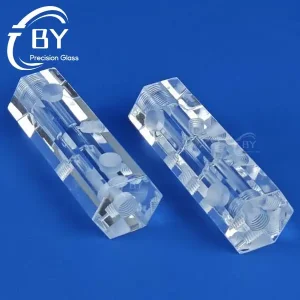
High-Quality Custom Fabrication of Quartz Glass Precision Components Supplier, Factory
View Specifications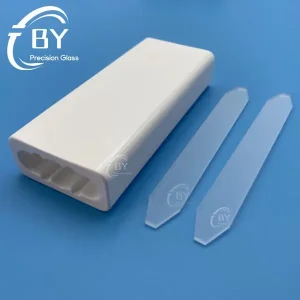
Wholesale Ceramic Cavity Reflector use for DEKA Laser Manufacturers, Supplier
View Specifications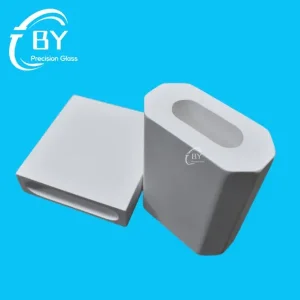
High-Quality Diffuse Reflectors Made of Spectralon‑Grade PTFE for Diode‑Pumping Chambers Manufacturer, Suppliers
View Specifications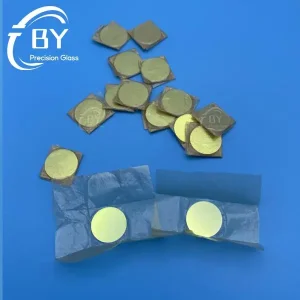
High-Quality Candela Laser Distance Gauge Slider Windows With coating 755 and 1064nm Suppliers, Factories
View Specifications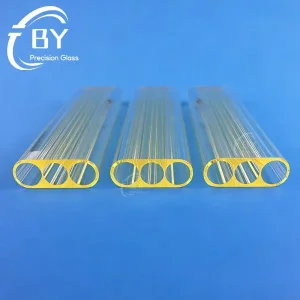
Custom Laser Cavity Flow Tubes & Filters Made from Samarium-doped Glass Supplier, Suppliers
View Specifications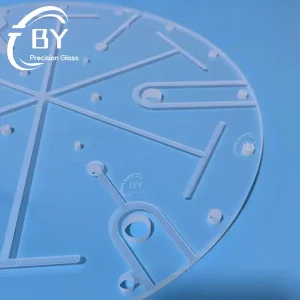
High-Quality Custom Precision Quartz Glass Fabrication Supplier, Suppliers
View Specifications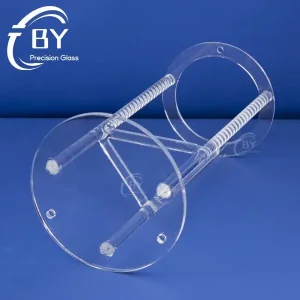
Wholesale Quartz Wafer Carriers for Semiconductor Supplier, Suppliers
View Specifications
Wholesale Customize Quartz Cuvette for Spectrophotometer Supplier, Factory
View SpecificationsAccelerate Your Analytical Optics Development
Consult directly with our senior optical fabrication engineers in Tianjin, China. Whether you need standard spectrophotometer cuvettes in volume or custom microfluidic flow cells tailored to your instrument's mechanical envelope, we provide manufacturability feedback and price quotations within 24 working hours.