
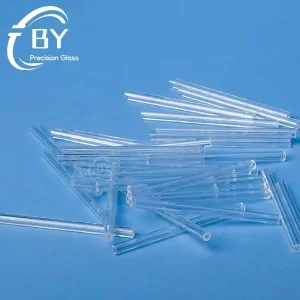
Primary Fabrication Lineup
Featured Precision Quartz & Optical Glass Assemblies
Direct OEM manufacturing runs from our Tianjin facility, including redrawn precision fused silica capillaries, substrate grooves, optical ferrules, and custom laser cavity solutions.
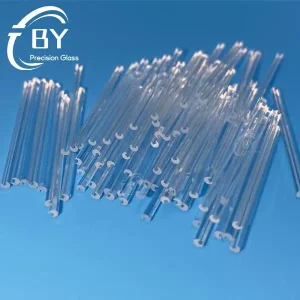
Quartz Substrate Groove for Fiber Coupler
Explore Product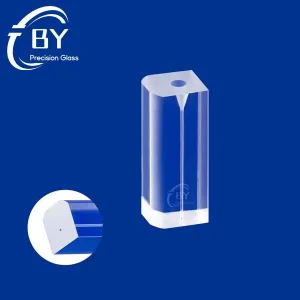
Custom Fiber Optic Glass Ferrules
Explore Product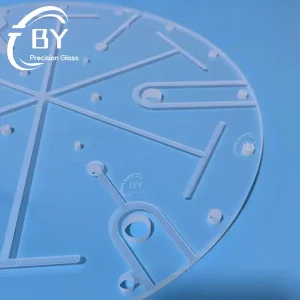
Custom Precision Quartz Glass Fabrication
Explore Product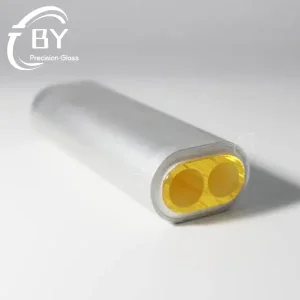
Packed Laser Cavity Flowtubes for Head
Explore Product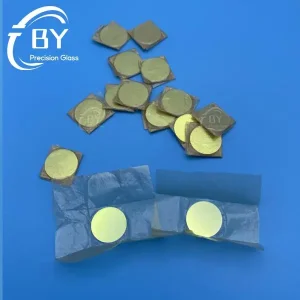
Candela Gauge Slider Windows (755/1064nm)
Explore Product
Precision Substrate Groove for Coupler
Explore Product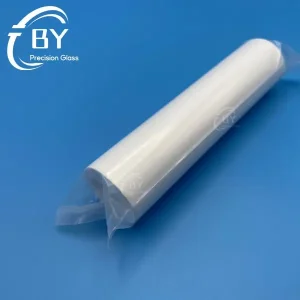
VBeam Laser Cavity Ceramic Reflector
Explore Product
Industry Technical Roadmap
State of the Art in Quartz Capillary & Rod Fabrication
The micro-optics and fluidic analysis sectors require extreme dimensional stability, high-temperature thermal endurance, and high internal surface purity across fused silica platforms.
Sub-Micron Draw Precision
Advanced thermal draw towers equipped with dual-axis laser scanning micrometer feedback maintain inner diameters (ID) and outer diameters (OD) down to ±0.001 mm. This high concentricity prevents chromatic aberration and dispersion in capillary electrophoresis and polarization-maintaining fiber sleeves.
Synthetic Grade Transition
Shifting from natural fused quartz to high-purity synthetic fused silica (JGS1) eliminates metallic trace impurities (Fe, Al, Ti < 0.1 ppm). This reduces solarization, deep UV baseline drift, and background fluorescence down to 185 nm in deep-UV absorbance flow cells.
Polyimide & Fluoropolymer Jacketing
Modern redrawn capillaries feature high-temperature polyimide or fluoropolymer outer claddings that protect pristine silica surfaces from moisture-induced micro-crack propagation, raising mechanical yield strength past 100 kpsi for rugged GC/HPLC column winding.
Engineering Data Matrix
Material Performance & Metrology Parameters
Engineered specifications for fused silica, optical borosilicate, and synthetic quartz tubing and solid rod stock produced to customer technical drawings.
| Property Matrix | Synthetic Fused Silica (JGS1) | Optical Fused Quartz (JGS2) | Infrared Fused Quartz (JGS3) | Precision Borosilicate 3.3 |
|---|---|---|---|---|
| Transmission Band | 185 nm – 2,500 nm (Deep UV) | 220 nm – 2,500 nm (Standard UV-Vis) | 260 nm – 3,500 nm (Low OH IR) | 350 nm – 2,500 nm (Visible-NIR) |
| Hydroxyl (OH⁻) Content | < 1,200 ppm (Standard / Tunable) | < 30 ppm | < 5 ppm (Water-free IR band) | N/A (Multi-component glass) |
| Thermal Expansion (CTE) | 5.5 × 10⁻⁷ / °C | 5.5 × 10⁻⁷ / °C | 5.5 × 10⁻⁷ / °C | 32.5 × 10⁻⁷ / °C |
| Max Working Temperature | 1,150 °C (Continuous) / 1,300 °C (Peak) | 1,100 °C (Continuous) | 1,100 °C (Continuous) | 450 °C (Continuous) / 500 °C (Peak) |
| ID / OD Tolerances | Down to ±0.001 mm (Custom Draw) | Down to ±0.005 mm | Down to ±0.005 mm | Down to ±0.010 mm |
| Birefringence Constant | < 5 nm/cm (Optical Homogeneity) | < 15 nm/cm | < 20 nm/cm | Standard commercial grade |
Macro Application Framework
Turnkey Solutions Across Tier-1 High-Tech Industries
From single-channel capillary lines to integrated optical pump housings, BY Photonics bridges basic material science and finished, functional device sub-assemblies.
Analytical Chemistry
Capillary electrophoresis (CE), capillary electrochromatography (CEC), and nano-LC columns require smooth inner walls with Ra < 0.05 µm to prevent peak broadening, turbulent sample flow, and stationary phase degradation.
Fiber Optic Networking
Single, dual, and multi-bore capillary ferrules and alignment sleeves engineered for telecom interconnects, DWDM splitters, and collimator arrays, matching silica fiber thermal expansion to avoid thermal drift over −40°C to +85°C.
Semiconductor Wet Benches
Heavy-wall quartz tubing, custom diffusion carrier assemblies, and process quartzware designed to resist hot phosphoric acid, RCA clean chemistry, and harsh RF plasma regimes without particle shedding.
High-Power Solid State Lasers
Samarium-doped and cerium-doped quartz flowtubes for Nd:YAG flashlamp pumping, suppressing 1064 nm parasitic oscillations and filtering harmful UV radiation to protect active gain rods from solarization.
Factory Quality Assurance
Full Traceability From Ingot to Cleanroom Packaging
Integrated cold and hot working under one roof eliminates supplier handoffs, stabilizes dimensional accuracy, and provides complete inspection documentation.
Ingot Sourcing & Spectral Certification
Each raw material melt is cataloged by raw quartz lot. Spectrophotometer transmission charts (UV-Vis-NIR) and trace element mass spectrometry certifications are generated before CNC slicing or flame redrawing begins.
Micro-Metrology & In-Line Gauging
Draw lines utilize continuous non-contact laser micrometer scanning across X and Y axes. Off-line verification includes confocal optical profilers, coordinate measuring machines (CMM), and air-gauge systems measuring concentricity, wall uniformity, and ID taper across full cane lengths.
Ultrasonic Cleaning & Cleanroom Packing
Parts undergo multi-stage ultrasonic degreasing, DI-water cascade rinsing (18.2 MΩ·cm), and thermal drying. Capillary and rod assemblies are vacuum-sealed inside antistatic bags in an ISO-classified cleanroom environment to prevent transit contamination.
Innovation Horizon
Engineering Roadmap: Next-Gen Capillary Architectures
Expanding beyond basic cylindrical profiles to support complex photonics, optofluidics, and quantum sensing architectures.
Multi-Lumen & Non-Circular Geometries
Custom multi-channel capillary preforms drawn into multi-lumen tubing (2 to 32 parallel bores), square outer/round inner channels, and D-shaped profiles enable microfluidic flow cytometry, multi-analyte biosensors, and specialized fiber combiners.
Doped Silica Waveguides & Cladding
Fluorine-doped quartz capillary tubes deliver a depressed refractive index cladding (numerical aperture tuning down to NA 0.22). This permits liquid-core optical waveguides (LCOW) where fluid inside the capillary acts as the guiding optical core for trace chemical detection.
Sub-Millimeter Thin-Wall Glass Micropipettes
Precision laser-pulled capillary rods and tips with outer diameters under 10 µm designed for electrophysiology patch-clamp recording, intracellular micro-injection, and scanning ion-conductance microscopy (SICM) probes.
Frequently Asked Questions
Engineering & Sourcing Inquiries (FAQ)
Direct answers to core technical, quality, and logistics questions from OEM procurement managers and optical design engineers.
What is the minimum inner diameter (ID) achievable on your redrawn quartz capillary tubing?
Our Tianjin redrawing facility achieves inner diameters as fine as 2 µm (0.002 mm) with outer diameters ranging from 80 µm up to several millimeters. Standard manufacturing tolerances on micro-capillaries are maintained at ±0.001 mm to ±0.003 mm depending on wall thickness and ID/OD ratio.
How do JGS1, JGS2, and JGS3 materials affect UV and IR performance in capillaries and rods?
JGS1 is synthetic UV-grade fused silica offering high deep-UV transmission (>85% at 185 nm) and minimal bubble/inclusion content, ideal for UV capillary electrophoresis and laser optics. JGS2 is optical-grade fused quartz for UV-Vis (220–2500 nm). JGS3 is vacuum-melted fused quartz with low hydroxyl (<5 ppm OH⁻), which removes the 2.73 µm absorption band for high-transmission mid-infrared optical transmission up to 3500 nm.
Can you supply non-circular, rectangular, or multi-bore capillaries?
Yes. BY Photonics produces precision square bore, rectangular bore, D-shape, and multi-lumen capillaries (including 2, 4, 7, and 19-hole arrays). Geometric preforms are machined on multi-axis ultrasonic CNC machinery before being drawn into finished profile tubes under precise thermal monitoring.
What end-face terminations, polishing, and metallization services do you offer?
We supply capillary tubes and solid rods with cleaved, score-and-break, flame-polished, optical flat polished (down to 20-10 scratch-dig, λ/4 flatness), and beveled/chamfered ends. In addition, we offer customized capillary window stripping, localized window ablation, and vacuum deposition of anti-reflective (AR) coatings or metallization layers (Cr/Au, Ti/Pt/Au) for hermetic soldering.
What are your drawing format preferences and lead times for prototype batches?
We accept 3D models in STEP and IGES formats, as well as 2D dimensioned engineering drawings in DWG, DXF, or PDF formats. Our engineering team returns manufacturability reviews and DFM feedback within 24 hours. Prototype capillary redrawing and custom sample runs are typically completed in 1 to 3 weeks.
Complementary High-Precision Components
Semiconductor Wafers, Reflectors & High-Temperature Parts
Expanding your optical train with vacuum-coating quartzware, Borofloat 33 substrates, precision spectrophotometer cuvettes, and sapphire sight glass.
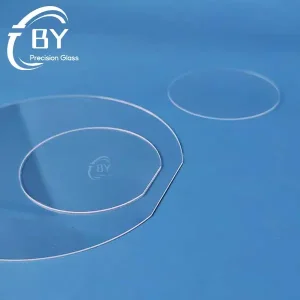
Borofloat 33® Glass Semiconductor Wafers
Explore Product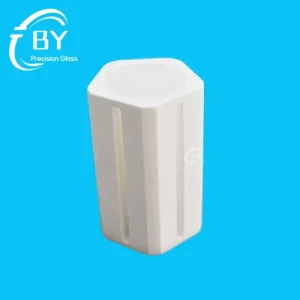
PTFE Reflectors for Pumping Chambers
Explore Product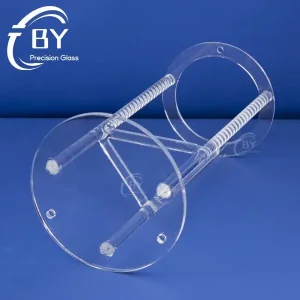
Quartz Wafer Carriers for Semiconductor
Explore Product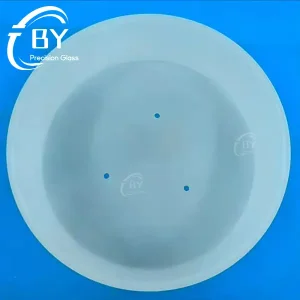
Quartz Glass Components for Vacuum Coating
Explore Product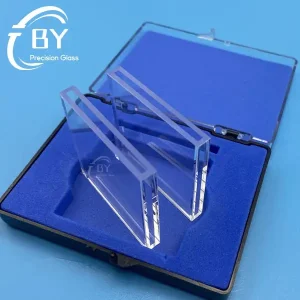
Custom Quartz Cuvette for Spectrophotometer
Explore Product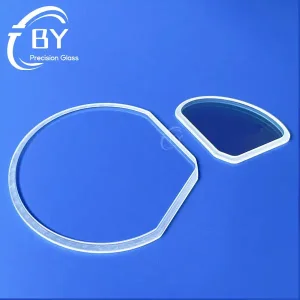
Sapphire Plates for Harsh Environments
Explore Product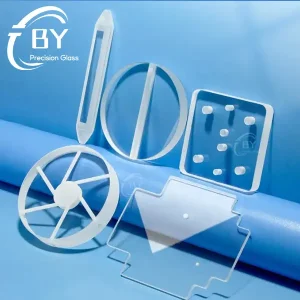
High Temp Custom Quartz Glass Fabrication
Explore Product