
Core Analytical Quartz & Cavity Assemblies
Immediate deployment modules for industrial laboratories, laser manufacturers, and biochemical facilities in Milan and across northern Italy.
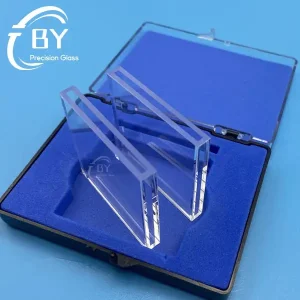
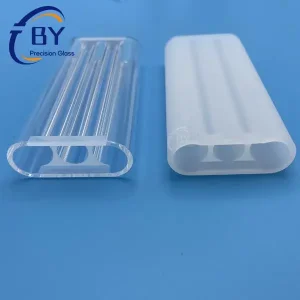
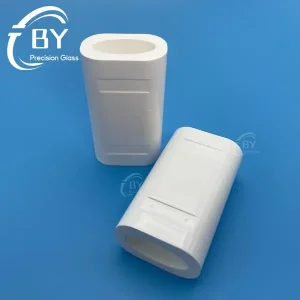
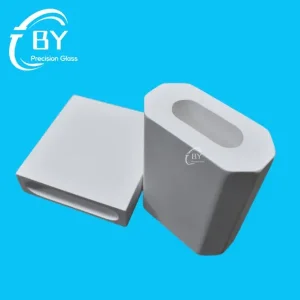
Quartz Cuvettes and Flow Cells in the Milan Industrial Ecosystem
Milan and the broader Lombardy region stand as Europe’s premier economic engine for fine chemistry, clinical biotechnology, and high-precision laser engineering. Here is an overview of how fused quartz flow architecture sustains local technical leadership.
Lombardy Biopharma & API Synthesis
Milan hosts over 40% of Italy’s pharmaceutical synthesis capacity. From high-performance liquid chromatography (HPLC) detection units to in-line UV absorption monitoring of active pharmaceutical ingredients (APIs), synthetic fused silica cuvettes assure strict compliance with European Pharmacopoeia spectroscopic tolerances.
Academic Clusters & Advanced R&D
Institutions such as Politecnico di Milano, Università degli Studi di Milano, and the CNR research institutes require specialized custom flow cell apertures. Micro-bore paths down to 10 µm enable ultra-low-volume fluorescent dynamic analysis without introducing optical dispersion or autofluorescence.
Industrial Laser Metrology & Sensing
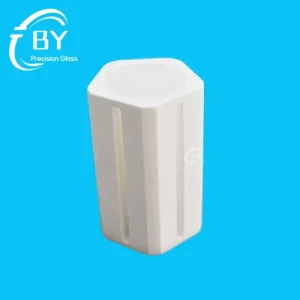
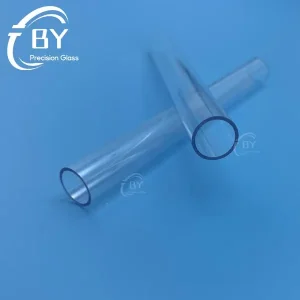
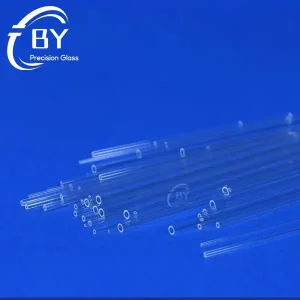
Lombardy’s advanced industrial laser machinery developers integrate precision quartz sample cells, capillary flowtubes, and optical windows into high-power diagnostic platforms, particle size counters, and liquid-cooling solid-state cavity units.
Global Landscape, Technical Roadmap, and Material Frontiers
Transitioning from conventional mechanical thermal assembly to atomic molecular diffusion bonding is reshaping performance ceilings across analytical instrumentation.
Molecular Fusion Bonding vs Glue Glaze
Standard commercial cuvettes frequently utilize epoxy or glass frit glazing which degrade rapidly under harsh solvents like DMSO, tetrahydrofuran, or concentrated acids. Our factory employs full-quartz direct molecular fusion bonding without any intermediate cementing adhesive, providing absolute chemical inertness across pH 0 to 14.
Microfluidic Flow Integration
Next-generation cytometers and capillary electrophoresis rely on monolithic fused silica flow channels. Hydrodynamic focusing channels machined via ultra-short pulse femtosecond lasers maintain channel geometry tolerances of ±1 µm, eliminating optical refraction mismatch during multi-angle laser scattering detection.
Deep-UV Transmittance (190 nm Cutoff)
Utilizing high-purity synthetic fused silica (JGS1 equivalent to Suprasil standards) ensures exceptional optical clarity in the deep ultraviolet spectral window down to 190 nm, free from bubble inclusions, striae, or solarization degradation under continuous deuterium lamp illumination.
Direct OEM Manufacturing Protocol for Milan Instrument Builders
BY Photonics bridges tier-1 optical engineering with direct factory economics. Every step from thermal blank annealing to interferometric verification is conducted in-house.
Zero-Stress Optical Polishing
Internal stress in fused quartz distorts polarizing measurements and introduces birefringence. Our annealing profiles (1150°C soaking followed by controlled cooling curves) eliminate residual thermal stress, guaranteeing wavefront distortion below λ/4 @ 632.8 nm.
Custom Threaded & PEEK Fittings
For automated industrial chromatography or online monitoring in Milan's chemical plants, flow cells can be customized with 1/4-28, M6, or capillary PEEK connections directly bonded to or compressed against quartz flanges without liquid leakage under 10 bar pressure.
ISO 9001 Batch Traceability
Spectrophotometric validation files accompany batch shipments. Spectrogram data confirming matching internal pathlengths (standard 10mm, micro 1mm, down to 0.05mm with ±0.005mm tolerance) ensures instant plug-and-play operation for OEM distributors.
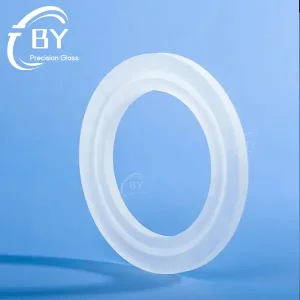
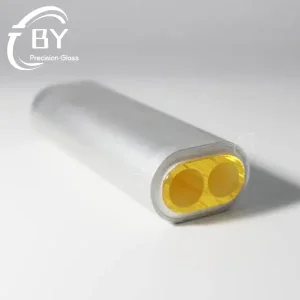
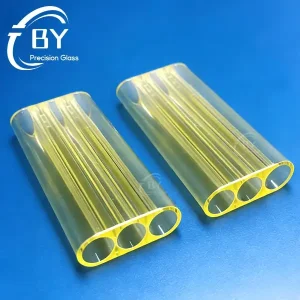
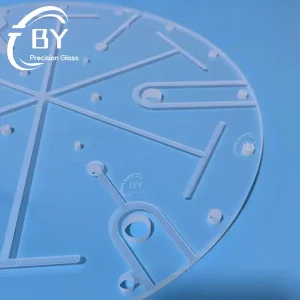
Doped Quartz, Capillary Tubes & Precision Optics for Milan Applications
Explore our full line of specialized components manufactured to your exact technical drawings and performance thresholds.

Frequently Asked Questions for Milan Sourcing Teams
Find direct technical answers regarding material properties, optical pathlength deviations, customization procedures, and delivery terms to Italy.