
Featured Production
High-Precision Optical Termination & Laser Components
Engineered to exact sub-micron tolerances for laser cavity builders, medical device OEMs, and semiconductor fabs.
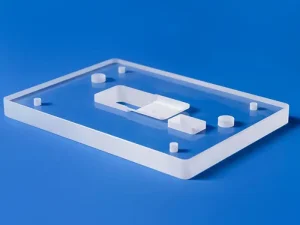
Quartz Glass Precision Custom Components
View Product Specs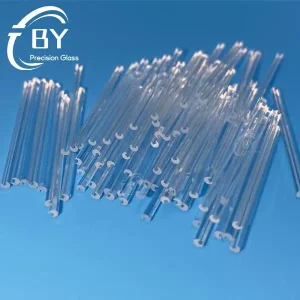
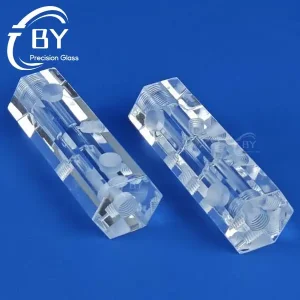
Quartz Substrate Groove For Optical Coupler
View Product Specs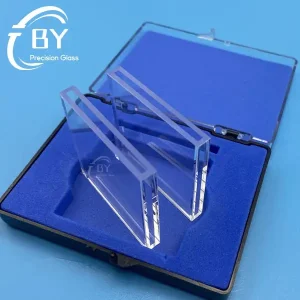
Customize Quartz Cuvette Spectrophotometer
View Product Specs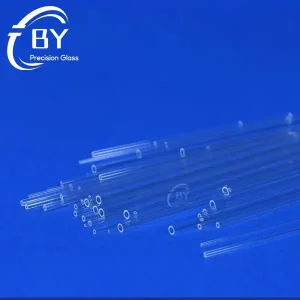
Fluorine-Doped Fused Silica Capillary Tube
View Product Specs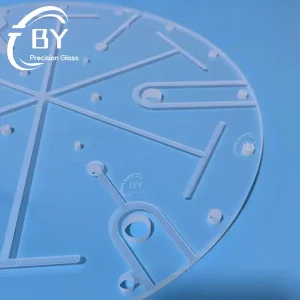
Precision Custom Quartz Glass Fabrication
View Product Specs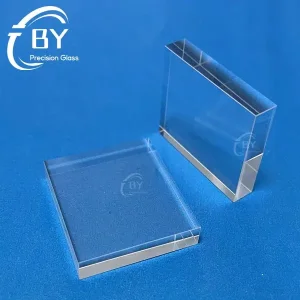
Sapphire IPL Light Guide Block
View Product Specs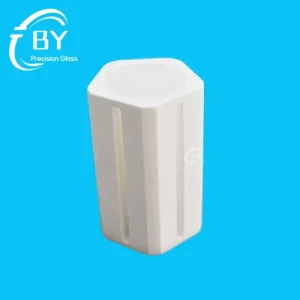
High-Reflectivity PTFE Diode Chambers
View Product SpecsEngineering Whitepaper
Global Industrial State & Custom Endcap Evolution
A comprehensive technical evaluation of optical fiber terminal design, power handling thresholds, and damage threshold (LIDT) mitigation.
In the contemporary optical spectrum spanning kilowatt-class continuous-wave (CW) industrial fiber lasers, high-repetition-rate ultrafast picosecond/femtosecond sources, and deep-UV semiconductor metrology, the output fiber facet has historically represented the single most vulnerable link. When a laser beam propagates through the core of an active or passive optical fiber, power density regularly exceeds gigawatts per square centimeter (GW/cm²). At the naked glass-air boundary, Fresnel back-reflection, ambient particulate contamination, moisture absorption, and mechanical micro-defects inevitably precipitate thermal lensing, catastrophic optical mirror damage, or catastrophic optical damage (COD).
Custom Optical Endcaps are precision-machined, coreless cylinders, flats, or tapered segments fabricated from synthetic high-purity fused silica (such as JGS1, Corning 7980, or Suprasil grades), monocrystalline sapphire, or fluorine-doped quartz. By fusion-splicing an endcap onto an optical fiber facet, the beam freely expands within the homogeneous optical medium prior to reaching the exit facet. As a mathematical consequence of diffraction-limited divergence:
The Area-Divergence Scaling Law: As the mode field expands from a standard 10–50 µm core diameter to a 1–8 mm endcap diameter, the beam surface area scales quadratically ($A = \pi r^2$), reducing optical intensity at the glass-air transition interface by a factor of $10^2$ to $10^4$. This drastic intensity attenuation ensures operating energy densities remain strictly below the Laser-Induced Damage Threshold (LIDT), even under multi-kilowatt CW outputs and megawatt-level peak pulse pulses.
| Material Designation | Transmission Bandwidth | Surface Quality (MIL-PRF-13830B) | Laser-Induced Damage Threshold (LIDT) | Typical Applications |
|---|---|---|---|---|
| JGS1 Fused Silica (Synthetic UV) | 185 nm – 2500 nm | 10-5 Scratch-Dig / λ/10 Flatness | > 45 J/cm² @ 1064 nm, 10 ns, 20 Hz | High-Power CW Fiber Lasers, UV Semiconductor Metrology |
| JGS2 Fused Quartz (Optical Grade) | 220 nm – 2500 nm | 20-10 Scratch-Dig / λ/8 Flatness | > 25 J/cm² @ 1064 nm, 10 ns, 20 Hz | Direct Diode Delivery, Industrial Laser Cutting Heads |
| JGS3 Fused Quartz (Low-OH IR) | 260 nm – 3500 nm | 20-10 Scratch-Dig / λ/4 Flatness | > 30 J/cm² @ 2100 nm (Holmium/Thulium) | Medical Surgical Lasers (Ho:YAG, Tm-fiber), Gas Sensing |
| Optical Sapphire Crystal (Al₂O₃) | 170 nm – 5500 nm | 20-10 Scratch-Dig / 0.5 nm Ra Polish | > 20 J/cm² @ 1064 nm, 10 ns | Aesthetic Cryo-IPL Guides, Extreme Harsh Environment Probes |
Manufacturing Paradigm
Chinese Factory Efficiency & The BY Photonics Supply Chain
Unifying cold optical machining, precision oxyhydrogen hot fusion, and sub-angstrom surface metrology under a single audited roof.
15+
Years Precision Heritage (Est. 2010)
3,000 m²
Class 10k/100 Cleanroom Facility
< 0.3 nm
Super-Polished Surface Roughness (Ra)
24 Hrs
DFM Feasibility & Ray-Tracing Turnaround
Monolithic Integration
Unlike fragmented supply networks that separate blank ingots, CNC contouring, precision polishing, and thin-film anti-reflective (AR) coating across distinct subcontractors, BY Photonics controls the entire lifecycle in Tianjin. This completely eliminates cumulative micro-scratch accumulation, oxidation layers, and interfacial contamination during transit.
Sub-Angstrom Polishing
Surface defects are the fundamental triggers of premature dielectric breakdown. Our automated double-sided continuous pitch-polishing rigs and Magnetorheological Finishing (MRF) achieve a surface micro-roughness below Ra < 0.3 nm (3 Ångströms), maintaining wavefront distortion under $\lambda/10$ across full clear apertures.
Non-Destructive Annealing
Post-machining residual stress inside fused silica blanks leads to birefringence and beam steering during thermal loading. Our proprietary thermal annealing cycles eliminate mechanical stress birefringence to less than 2 nm/cm, verified by full-aperture polariscopic interferometry.
Cost-Velocity Ratio
Our optimized tooling matrices and CNC diamond grinding arrays yield an unprecedented prototype-to-mass-production turnaround. Engineering prototypes ship within 7–10 days, while recurring high-volume OEM lots achieve 40–60% economies of scale compared to Western optical boutiques.
Application Blueprints
Localized Engineering Use Cases & Environments
From industrial manufacturing floors to cleanrooms and surgical suites, custom endcaps ensure flawless photon transport.
Kilowatt Fiber Laser QBH Terminators
High-power industrial sheet metal cutting (6 kW–30 kW) relies on QBH and QD high-power laser delivery cables. Monolithic fused silica endcaps with fused silica cladding or tapered profiles expand the fundamental mode out of 50 µm to 100 µm fibers to over 5 mm, lowering surface power density by orders of magnitude and surviving back-reflections during copper and aluminum processing.
Ultrafast Chirped Pulse Amplification (CPA)
In picosecond and femtosecond fiber amplifiers, high peak powers trigger nonlinear impairments including Self-Phase Modulation (SPM) and Stimulated Raman Scattering (SRS). Angle-cleaved (typically 8°) endcaps prevent optical feedback into the master oscillator power amplifier (MOPA) chain while eliminating catastrophic surface ablation at output boundaries.
Surgical Holmium & Thulium Fiber Delivery
Minimally invasive urology and endoscopic ablation (such as Ho:YAG and Thulium Fiber Lasers operating at 2.1 µm and 1.94 µm) employ specialized low-OH JGS3 quartz or sapphire endcaps. The moisture-free composition ensures negligible OH-absorption bands, preventing micro-explosions caused by localized superheating inside liquid operative fields.
Semiconductor DUV Wafer Inspection
Wafer defect detection systems utilizing 266 nm, 213 nm, and 193 nm laser lines demand ultra-high synthetic purity. JGS1 fused silica endcaps with ppm-level metallic trace impurities resist deep-UV color-center formation (solarization), guaranteeing stable pulse transmission over tens of thousands of operating hours.
Market Foresight
Industry Horizons & Global Procurement Trends
Strategic demand vectors reshaping international B2B optic procurement through 2030.
Shift to Monolithic All-Glass Splices
Mechanical clamping and optical epoxy bonding are increasingly obsolete in high-power systems due to thermal outgassing and photo-darkening degradation. Global procurement is shifting entirely toward all-glass CO₂ laser fusion splicing, which demands custom endcaps with tight outside diameter (OD) and endface angle tolerances (±0.05 mm and < 0.2°).
Dual-Wavelength Anti-Reflective (AR) Coatings
Modern processing heads require simultaneous transmission of the main processing wavelength (1064 nm) and a visible red pilot or tracking beam (635–650 nm). Sourcing departments require custom Ion-Beam Sputtered (IBS) coatings yielding residual reflection ($R < 0.15\%$) at primary lines, with verifiable environmental survival against humidity and thermal shock.
Traceability & Metrology Standardization
Tier-1 defense, aerospace, and medical device buyers mandate comprehensive, lot-traceable documentation. Orders must be accompanied by Zygo interferometric surface wavefront maps, atomic force microscopy (AFM) roughness scans, and spectrophotometer transmission traces certifying pristine internal homogeneities.
Specialty Components
Laser Cavity, Reflectors & Engineered Quartz Ware
Precision-ground flowtubes, ceramic reflectors, and doped assemblies supporting advanced optoelectronic builds.
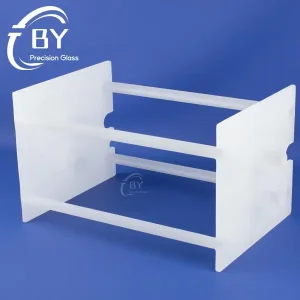
Quartz Diffusion Boat for Semiconductor
View Product Specs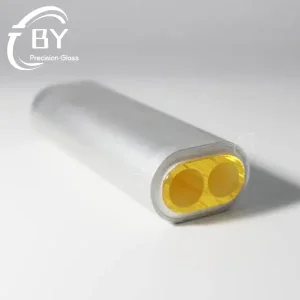
Packed Laser Cavity Flowtubes
View Product Specs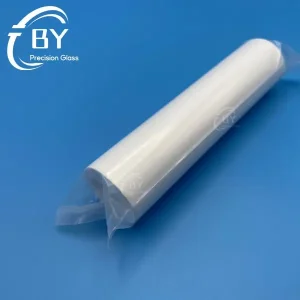
Candela VBeam Laser Ceramic Reflector
View Product Specs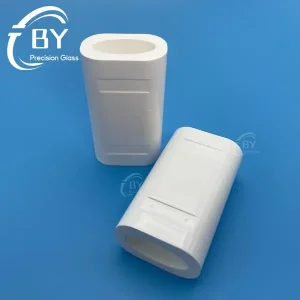
Ceramic Cavities For Nd YAG Laser
View Product Specs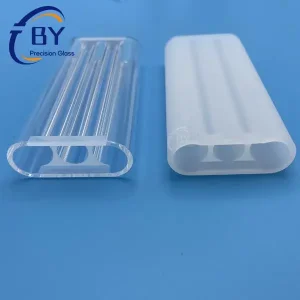
Candela Laser Head Triple Bore Assembly
View Product Specs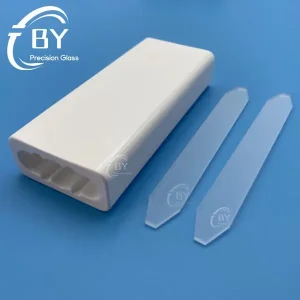
Ceramic Cavity Reflector for DEKA Laser
View Product Specs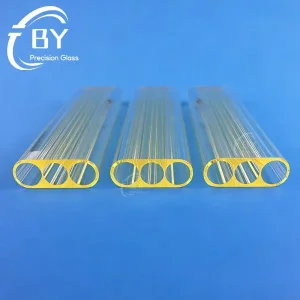
Samarium-Doped Laser Flow Tubes
View Product Specs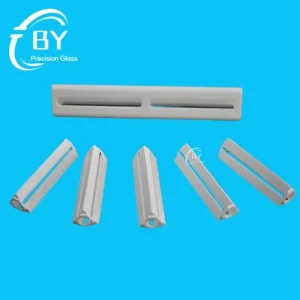
Diode-Pumping Chamber PTFE Reflectors
View Product SpecsKnowledge Base
Frequently Asked Questions: Endcap Design & Fabrication
Direct technical answers to common queries from optical engineers and procurement specialists.
How do I calculate the required length and diameter of an endcap for high-power fiber termination?
The required endcap length is calculated based on fiber core numerical aperture ($NA$) and the targeted expanded beam waist diameter ($D_{beam}$). As the beam propagates through the unguided endcap medium with refractive index $n$, divergence half-angle is given by $\theta \approx NA / n$. To avoid boundary clipping and thermal heating, the endcap diameter must typically be at least $2\times$ to $3\times$ the calculated beam waist at the exit facet. BY Photonics engineers assist OEM clients with ZEMAX ray tracing simulations to identify optimal cylindrical or tapered geometry without introducing unwanted phase shifts.
Why use synthetic fused silica (JGS1) rather than standard optical crown glass (BK7) for endcaps?
Standard borosilicate/crown glass like N-BK7 features significant optical absorption at high power, low thermal conductivity, and a high coefficient of thermal expansion (CTE $\approx 7.1 \times 10^{-6}/\text{K}$), leading to thermal lensing, wavefront collapse, or mechanical fracture. Synthetic UV-grade fused silica (JGS1) exhibits exceptional optical homogeneity, near-zero bubble classification, an ultra-low thermal expansion coefficient (CTE $\approx 0.5 \times 10^{-6}/\text{K}$), and an exceptional laser damage threshold (> 45 J/cm² @ 1064 nm, 10 ns), making it indispensable for kilowatt-level CW and pulsed systems.
How does an angle-cleaved or angle-polished endcap exit facet prevent parasitic oscillation?
Even with high-performance anti-reflective thin-film coatings, normal incidence (0°) surfaces produce approximately 0.1% to 0.2% residual Fresnel back-reflection. In a high-gain fiber laser amplifier system, this reflected light can couple directly back into the fiber core, inducing destructive self-pulsing, amplified spontaneous emission (ASE), or damaging seed laser diodes. Polishing the output facet at an angle—typically 8° or custom 4°–10°—ensures any reflected beam is deflected past the critical capture angle of the core, steering it safely into the cladding or external beam dumps.
Can BY Photonics accommodate custom geometries like conical tapers, hexagonal profiles, and micro-grooves?
Yes. Our CNC glass machining facility utilizes multi-axis ultrasonic-assisted diamond tooling, precision lapping rigs, and laser micro-machining. We fabricate custom geometries including conical transitions, cylindrical fiber-to-cap tapers, precision flats, D-shaped profiles, and capillary-matched outer diameters down to ±0.005 mm dimensional tolerance, fully verified via non-contact optical coordinate measuring machines (CMM).
What clean packaging protocols are enforced to maintain endcap cleanliness for splicing?
Optical endcaps are cleaned through multi-stage ultrasonic baths with semiconductor-grade surfactants and ultra-pure deionized (DI) water (18.2 MΩ·cm resistivity), followed by hot IPA vapor drying. Final inspection is executed under high-intensity green light in a Class 100 laminar flow cleanroom environment. Components are vacuum-sealed in static-dissipative gel boxes or specialized individual tray containers, preventing particulate contamination, vibration abrasion, or surface degradation during international air transport.