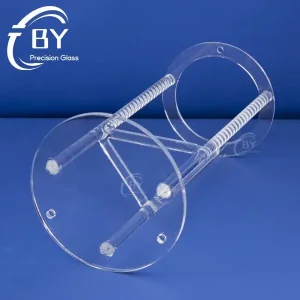
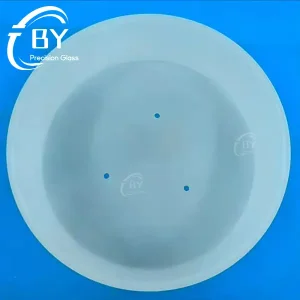
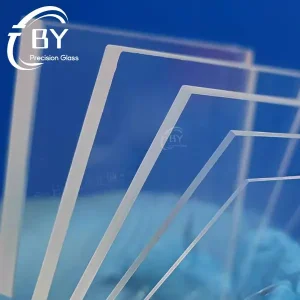
Standard & Custom Precision Glass Components Catalog (Part I)
Explore our core optical components machined directly in Tianjin. Every component conforms to strict laser-damage thresholds, surface scratch-dig standards, and thermal stability requirements.
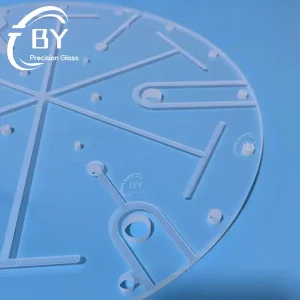
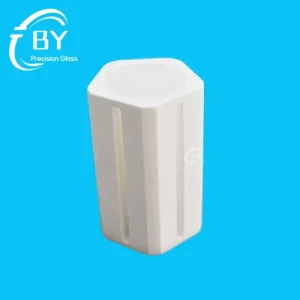
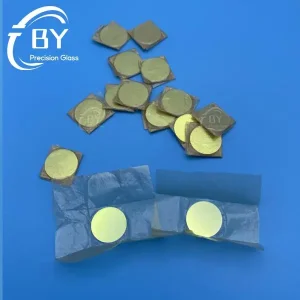
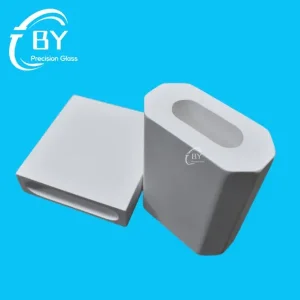
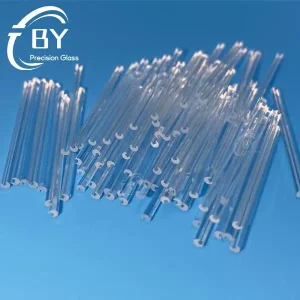
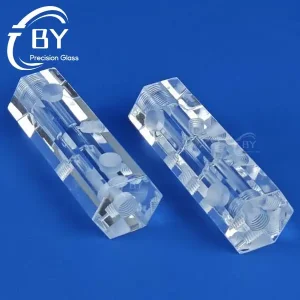
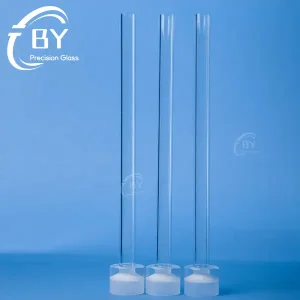
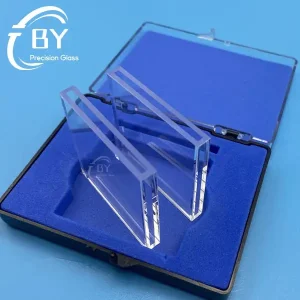
Precision Small-Sized Glass Capillaries: Material Science & Dimensional Mastery
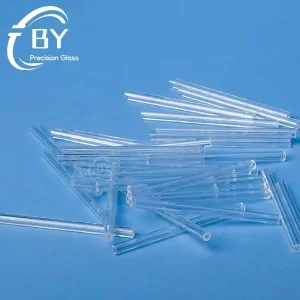
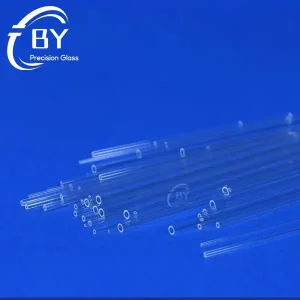
Small-sized glass capillaries are foundational structural and fluidic conduits in high-precision industries ranging from in vitro diagnostics (IVD) and DNA sequencing to telecom fiber collimation and capillary electrophoresis (CE). Achieving micron-level geometric accuracy demands strict thermal gradient control during redrawing.
Synthetic Fused Silica (JGS1)
Fabricated using silicon tetrachloride oxidation, JGS1 features virtually zero bubble inclusions and superior transmission down to 185 nm deep ultraviolet (DUV). Outstanding resistance to solarization makes it ideal for UV-laser flow cytometers and capillary electrophoresis.
- Spectral Range: 185 nm – 2,500 nm
- Softening Point: 1,730 °C
- Thermal Expansion: 5.5 × 10⁻⁷ / °C
Borosilicate 3.3 Engineered Glass
A cost-efficient, high-hydrolytic-resistance glass offering outstanding thermal shock tolerance and acid resistance. Widely utilized for biomedical sample collection, automated hematology diluters, micro-pipetting, and disposable diagnostics.
- Transformation Temp: 525 °C
- Hydrolytic Class: ISO 719 - HGB 1
- Excellent chemical leaching resistance
Fluorine-Doped Silica Capillaries
Engineered with a negative refractive-index step relative to pure silica, fluorine doping allows inner total internal reflection (TIR) for optical light-guiding fluid cells, Raman liquid-core waveguides (LCW), and specialty fiber optic connectors.
- Numerical Aperture (NA): 0.15 – 0.22
- Attenuation: < 10 dB/km @ 850 nm
- Core ID precision: ±0.002 mm
| Capillary Type | Outer Diameter (OD) | Inner Diameter (ID) | Concentricity / TIR | Surface Polish / Roughness | Factory QC Level |
|---|---|---|---|---|---|
| Micro-Bore Fused Quartz | 0.20 mm – 3.00 mm (±0.002 mm) | 0.005 mm – 1.50 mm (±0.001 mm) | ≤ 0.003 mm | Ra < 0.5 nm (Flame polished) | Laser Gauge 100% Inline |
| Multi-Lumen (2 to 7 Bores) | 0.80 mm – 6.00 mm (±0.005 mm) | 0.05 mm – 1.00 mm (±0.003 mm) | Bore pitch ±0.004 mm | Fire-glazed inner bore | Optical Metrology |
| Square & Rectangular Boron/Quartz | 0.50 × 0.50 mm – 8.0 × 8.0 mm | 0.05 × 0.05 mm – 4.0 × 4.0 mm | Wall uniform ±0.005 mm | Flats Ra < 1.0 nm | Interferometer λ/4 |
| Doped / Samarium / Ce Absorptive | 1.00 mm – 12.0 mm (±0.010 mm) | 0.20 mm – 8.00 mm (±0.005 mm) | ≤ 0.008 mm | Custom anti-reflective (AR) | Spectrophotometer Batch |
Why Tier-1 Global OEMs Source Glass Capillaries from Our Chinese Factory
In modern high-tech procurement, the decision to partner with our Tianjin manufacturing plant transcends labor economics. It is rooted in raw material supply security, multi-axis automated redrawing towers, sub-micron metrology, and turnkey post-processing under a single roof.
Full Upstream Ingot Control
We source raw quartz crystal and high-purity polysilicon preforms through vertically integrated domestic channels. This eliminates geopolitical bottlenecks, shortens standard raw ingot procurement to days, and prevents price volatility for overseas buyers.
High-Precision Redrawing Towers
Our workshop houses automated 8-meter vertical redrawing towers with dual-axis infrared laser gauges and closed-loop servo tractor feeds, holding microscopic capillary outer and inner diameters to ±0.001 mm across continuous 1,000-meter draws.
Class 10,000 Cleanroom Packaging
All micro-capillaries are ultrasonic-cleaned with semiconductor-grade deionized water (18.2 MΩ·cm), dried with filtered nitrogen, and sealed in anti-static, particulate-free trays. We guarantee no particulates >0.5 μm upon delivery.
DFM Engineering Feasibility <24h
Our senior optical engineering department assesses CAD models (STEP, DXF, DWG) within 24 hours. We offer Design-For-Manufacturability (DFM) advice regarding thermal stress relief, bore taper angles, wall aspect ratios, and fire-polishing parameters.
High-Value Industrial Solutions Powered by Small-Sized Glass Capillaries
Glass capillaries serve as the critical interface between physical micro-mechanisms, photonic streams, and chemical reagent fluids. Below are our specialized, proven turnkey solutions deployed by global engineering clients.
1. IVD, Flow Cytometry & Liquid Biopsy
Modern clinical cytometers use our square quartz capillaries as hydrodynamic focusing flow cells. The planar outer walls prevent refractive distortion, allowing multi-color fluorescence laser interrogation of single cells or circulating tumor cells (CTCs) with signal-to-noise ratios > 40 dB.
- Zero autofluorescence under 488 nm & 633 nm excitation
- Square ID/OD with polished optical windows
- Hydrodynamic sheath flow channels (50 μm to 250 μm)
2. Gas & Liquid Chromatography (GC / HPLC)
Capillary columns demand exceptional burst pressure ratings (> 1,000 bar) and chemically inert, de-activated inner surfaces. Our synthetic silica capillary tubings feature uniform cross-sectional concentricity (>98%), preventing band-broadening in high-throughput chromatography assays.
- Polyimide protective external coating available
- Burst pressure tested up to 10,000 psi
- Chemically inert silanol-passivated inner walls
3. Optical Fiber Ferrules & Splicing Sleeves
For CWDM/DWDM telecom transceivers, fiber lasers, and medical fiber endoscopes, we produce micro-hole quartz capillaries with high-precision funnel leads (tapered lead-in). This facilitates sub-micron optical fiber insertion and zero-play optical alignment.
- Precision ID: 125.5 μm +1/-0 μm for standard SMF-28
- Funnel lead angle: 30° to 60° custom chamfer
- Concentricity between outer diameter and bore < 1 μm
4. Microfluidic Organ-on-a-Chip & Droplet Generation
Micro-droplet generation and single-cell encapsulation require hydrophobic/hydrophilic microfluidic nozzles. Our tapered glass capillaries, drawn to tip orifices from 2 μm to 50 μm, enable monodisperse picoliter emulsion synthesis with CV < 2%.
- Controlled taper profiles drawn by laser micromanipulation
- Multi-barrel / Co-axial dual-flow designs
- Compatible with UV-curable and thermal bonding protocols
5. Semiconductor Cryogenic & High-Temp Probing
Thermal stability and dialectic isolation are paramount in wafer test stations. Custom high-purity quartz micro-tubing provides ultra-high breakdown voltage (> 25 kV/mm) and preserves mechanical integrity up to 1,150 °C during rapid thermal annealing (RTA) monitoring.
- Low dielectric loss factor: tan δ < 0.0001
- Extreme thermal shock resistance (ΔT = 1,000 °C quench)
- Zero heavy-metal ionic outgassing under ultra-high vacuum
6. Nuclear Metrology & Radiation Scintillation Flow
Filled with liquid scintillators or heavy noble gases (Xenon/Argon), micro-capillary arrays detect beta particles and soft gamma rays in real-time. Our capillaries exhibit negligible background radio-isotopes (Th < 0.5 ppb, U < 0.2 ppb), guaranteeing zero background noise.
- Ultra-low background fused silica (HPFS equivalent)
- Precision arrays with pitch spacing down to 20 μm
- Hermetically fused end-caps via CO2 laser heating
Emerging Technological Trends in Micro-Glass Capillary Manufacturing
The micro-optics and precision fluidics landscape is rapidly progressing from conventional circular tubes toward non-standard geometries, integrated micro-optics, and intelligent laser-machined end-faces. Here is where the industry is heading over the next decade.
Complex Multi-Bore & Asymmetric Profiles
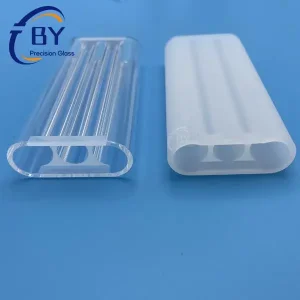
Next-generation optofluidics and multi-analyte biosensors require micro-capillaries with complex interior channel arrays: dual-D bores, cloverleaf channels, theta-tubes, and hexagonal multi-lumens. Fabricating these requires precision preform ultrasonic milling paired with balanced differential pressure redrawing.
Femtosecond Laser Micromachining
Traditional mechanical scoring and diamond-saw cutting risk micro-cracking and chipping at capillary edges. Our production line incorporates ultrafast femtosecond (fs) lasers that yield clean, sub-micron end-face cleaves with Ra < 0.2 μm, eliminating manual flame-polishing and preventing lumen collapse.
Surface Silanization & Functional Thin-Films
Beyond dimensional geometry, international procurement demands customized inner-wall functionalization. We deliver pre-silanized capillaries (PEG, octadecylsilane, fluorinated silanes) and internal metal/dielectric coatings that mitigate protein adhesion and enable localized surface plasmon resonance (LSPR).
Global Enterprise Procurement Checklist: Qualifying Glass Capillary Vendors
When Tier-1 biomedical, defense, and analytical instrumentation enterprises qualify capillary glass manufacturers, procurement specialists and quality assurance directors evaluate four vital engineering criteria:
1. Ovality & Concentricity Precision
Does the supplier measure and document Total Indicated Runout (TIR) and inner-bore ovality across high-volume production? Our factory guarantees ovality ≤ 1.5% and concentricity within ±0.002 mm using motorized rotating laser micrometers.
2. Hydrolytic Stability & Leaching Data
For microfluidic bio-assays, sodium or boron ion leaching can denature enzyme cocktails or alter buffer pH. We furnish full ICP-MS elemental migration test reports, certifying pure synthetic quartz purity (>99.9999% SiO2) with zero detectable alkali migration.
3. End-Face Integrity & Chipless Cuts
Defects such as micro-spalls, micro-cracks, and particulate debris cause seal leakage and fluidic turbulence. Every order undergoes 100% digital microscopic inspection at 200× magnification, validating chipless cuts with flaw depths < 0.01 mm.
4. Packaging Reliability & Yield Rate
Thin capillaries are fragile. We utilize custom CNC-milled high-density anti-static polyethylene foam cassettes and sealed vacuum-purged barrier foil pouches that withstand standard ISTA-2A drop, vibration, and air-transport shock tests.
Engineering FAQ: Custom Small-Sized Glass Capillaries
Technical answers prepared by our senior optical and materials engineers to address common questions asked by R&D scientists and OEM procurement managers.
Our vertical automated redrawing towers reliably achieve an inner diameter as low as 5 μm (0.005 mm) with a tolerance of ±0.001 mm. Outer diameters can be scaled from 0.08 mm (80 μm) up to 10.0 mm. For specialized nano-fluidic and micropipette tip applications, laser-assisted micro-pulling allows custom orifice apertures down to 1 μm on localized terminal points.
Fused Silica (JGS1) is synthetic, virtually 100% pure SiO2. It delivers exceptional DUV transmission down to 185 nm, near-zero autofluorescence under laser irradiation, and superior thermal tolerance up to 1,100 °C. It is the premier choice for laser-induced fluorescence (LIF), flow cytometry, and DNA sequencing. Borosilicate 3.3 is more economical and easier to seal with metals/solders, but it absorbs light below 310 nm and contains traces of boron and sodium that can interfere with sensitive bio-reactions.
We provide four standard end-face finishing techniques depending on your assembly method:
1. Precision Cleaved: Perpendicularity within 1°, minimal micro-chipping (<10 μm).
2. Optical Diamond Lapped & Polished: Flatness ≤ 1λ, scratch-dig 40-20 or 20-10, Ra < 1 nm for direct butt-coupling.
3. Oxyhydrogen Flame Polished / Fire-Glazed: Smooth, round edges that facilitate o-ring sealing and eliminate edge micro-flaws.
4. Precision Chamfered / Funnel Shaped: Internal lead-in funnel angles (30° to 60°) designed for effortless fiber-optic thread insertion.
Yes. We specialize in custom cross-sectional geometries. Our production capabilities include square outer/square inner bore, round outer/square inner bore, rectangular flow channels for microscopy imaging, and multi-lumen canes featuring 2, 3, 4, or up to 7 separate internal flow channels. All non-circular shapes maintain wall thickness uniformity within ±0.005 mm.
For standard glass sizes held in stock, prototype samples can be dispatched within 3 to 5 business days. For custom redrawing preforms requiring dedicated tooling and hot-drawing calibration, prototype lead times typically run 2 to 3 weeks. We support R&D teams with low-MOQ prototype runs (as low as 50 to 100 pcs) before ramping to multi-million-piece annual blanket contracts.
Standard & Custom Precision Glass Components Catalog (Part II)
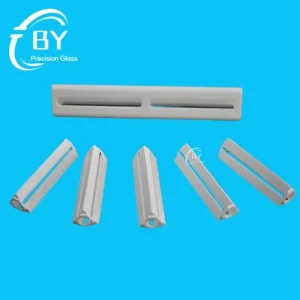
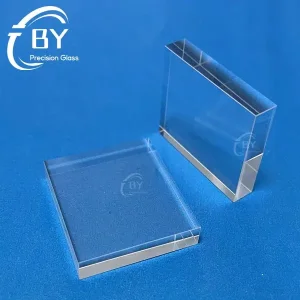
Complete product offerings from BY Photonics including semiconductor wafer carriers, vacuum sight windows, multi-bore Candela-compatible laser heads, and specialized capillary tubes.