
Engineered Quartz & Photonic Cavity Components
Discover our certified product lines engineered to withstand high thermal loads, mechanical abrasion, and broad-spectrum laser radiation. Produced with complete material traceability.
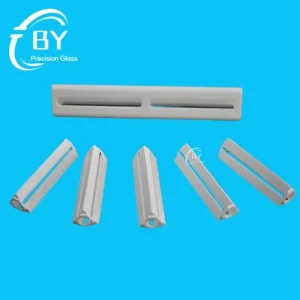
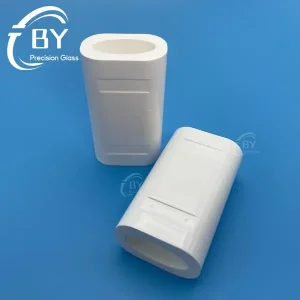
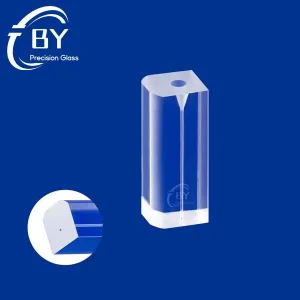
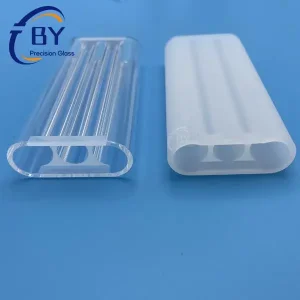
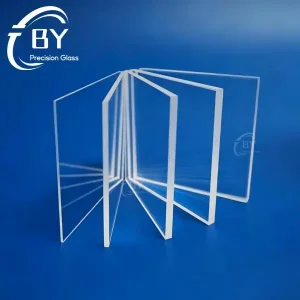
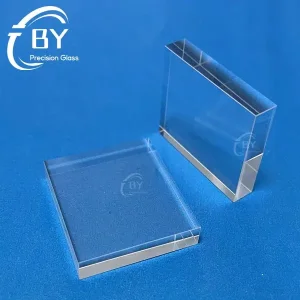
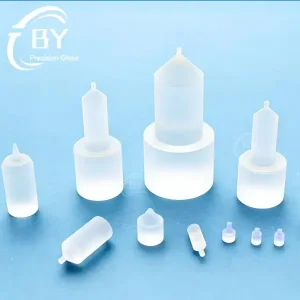
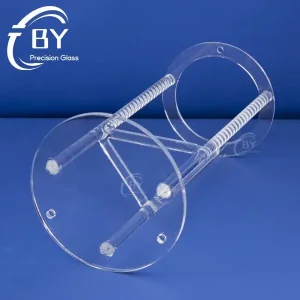
Executive Summary: The Strategic Evolution of High-Purity Quartz Covers
As semiconductor fabrication migrates toward advanced nodes (sub-3nm) and high-power laser systems surpass 30kW continuous-wave power, the humble quartz cover has evolved from a passive mechanical shield into a mission-critical optoelectronic sub-assembly.
Defect Sensitivity & High-Purity Metallurgy
Modern photonic and vacuum chambers can no longer tolerate micro-inclusions, refractive index striae, or trace alkaline metal impurities. A quartz cover plate now requires 5N5 to 6N chemical purity (99.9999% SiO2) to eliminate thermal runaway caused by trace aluminum, iron, and sodium under high-flux laser ablation and aggressive halogen plasma.
Spectral Expansion: DUV to Mid-IR
From deep ultraviolet photolithography tools operating at 193nm (ArF excimer) to industrial CO2 and solid-state Tm/Ho lasers in the mid-IR range up to 3.5µm, the choice between synthetic UV-grade fused silica (JGS1) and electrically melted low-hydroxyl quartz (JGS3) dictates optical transmission, internal absorption, and long-term solarization resistance.
Thermal Gradient & Mechanical Rigidity
With an ultralow coefficient of thermal expansion (CTE of 5.5 × 10^-7 / °C), engineered quartz cover assemblies survive thermal shock from cryogenic vacuum up to +1150°C continuous operation. Our factory solves differential stress challenges through finite element analysis (FEA) and oxyhydrogen flame thermal annealing routines.
Global OEM Procurement Demands & Technical Bottlenecks
Procurement leaders across North America, Europe, and the Asia-Pacific region encounter persistent bottlenecks when sourcing customized precision quartz covers. Our integrated fabrication resolves critical supply chain friction.
Zero-Microcrack Edge Integrity
Traditional mechanical dicing leaves subsurface damage that initiates brittle fracture under thermal cycling. BY Photonics integrates diamond CNC grinding with automated edge profiling (C-shape chamfer, radius bevel) and flame-polished edge sealing, increasing structural rupture modulus by over 40%.
Optical Transmission & AR Coatings
In high-energy laser covers, unmitigated Fresnel reflection accounts for ~7% transmission loss. We engineer multi-layer dielectric anti-reflective (AR) coatings, ion-beam sputtered (IBS) directly onto our quartz covers, yielding single-surface reflectance <0.1% and high laser-induced damage thresholds (LIDT > 15 J/cm2 @ 1064nm, 10ns).
Geometrical Precision & Flatness
Vacuum flange covers and semiconductor viewports demand total thickness variation (TTV) < 5µm and transmitted wavefront distortion (TWD) better than λ/4. Our double-sided planetary pitch polishing and Zygo interferometer metrology verify surface accuracy across large apertures up to 800mm.
Aggressive Chemical & Plasma Resistance
In reactive ion etching (RIE) and plasma-enhanced chemical vapor deposition (PECVD), fluorine and chlorine plasmas corrode standard borosilicate covers instantly. Our ultra-high-density fused silica covers exhibit superior etch-rate uniformity and minimal particulate shedding.
Fused Silica & Quartz Cover Material Selection Matrix
Selecting the correct optical quartz substrate is decisive for system transmission, laser durability, and budget efficiency. Compare primary grades machined at our Tianjin manufacturing center.
| Material Grade | Manufacturing Synthesis | Transmission Band (nm) | OH Content (PPM) | Refractive Index (nd) | Key Industrial Applications |
|---|---|---|---|---|---|
| JGS1 (UV Fused Silica) | Synthetic SiCl4 chemical vapor deposition | 185 - 2,500 nm | < 1,200 | 1.4585 | DUV laser covers, lithography viewports, UV sterilization windows |
| JGS2 (Optical Quartz) | Oxyhydrogen flame fused refined crystal quartz | 220 - 2,500 nm | 150 - 200 | 1.4585 | Industrial laser protective covers, observation sight glasses, furnace viewports |
| JGS3 (IR Fused Quartz) | Vacuum electric induction melting | 260 - 3,500 nm | < 5 (Infrared Grade) | 1.4585 | Mid-IR spectroscopy covers, CO2 laser shielding, thermal pyrometer covers |
| Corning 7980 Equivalent | Direct ultra-pure synthetic flame hydrolysis | 190 - 2,600 nm | 800 - 1000 | 1.4584 | Excimer laser optics, aerospace sensor enclosures, astronomy blank covers |
| Samarium/Cerium Doped | Rare-earth oxide doped quartz matrix | Custom filter cut-off | Tailored | 1.46 - 1.48 | Parasitic laser oscillation suppression, UV-blocking IPL flow shields |
Macro Industry Solutions: Where Precision Quartz Covers Perform
From cleanroom fabrication to extreme orbital environments, our customized quartz cover assemblies provide uncompromised optical clarity and mechanical shielding under high-stress operating regimes.
Semiconductor & Wafer Fab Front-End
In high-density plasma chambers (ICP-RIE, dry strip) and thermal diffusion furnaces, our quartz covers serve as observation viewports, lamp shields, and wafer dome caps. They isolate sensitive vacuum environments from atmospheric contamination, withstanding temperatures over 1000°C without devitrification or outgassing.
High-Power Fiber & Solid-State Lasers
Industrial laser cutting and welding heads rely on sacrificial protective quartz covers to shield expensive focus collimators from metal splatter, fumes, and thermal blooming. Our covers feature scratch-dig 20-10 surface quality and dual-band AR coatings (900-1100nm) ensuring zero optical distortion under 20kW+ beam density.
Biomedical Instrumentation & IPL Aesthetics
In clinical diagnostics, spectrophotometry, and intense pulsed light (IPL) dermatological devices, quartz covers and light-guide blocks isolate flash lamps and tissue contact zones. They transmit critical therapeutic spectrum bands while blocking carcinogenic UV wavelengths through cerium or titanium doping.
Harsh Petrochemical & Nuclear Inspection
Downhole visual inspection tools, offshore pipeline sensors, and nuclear reactor sight ports utilize pressure-rated quartz covers. With high compressive strength (over 1100 MPa) and resistance to gamma irradiation discoloration, our heavy-gauge quartz covers survive differential pressures exceeding 200 bar.
Aerospace Sensor Enclosures & Avionics
Airborne LiDAR, hyperspectral imaging pods, and orbital satellite star trackers require optical covers with high mechanical shock resistance and zero thermal expansion across extreme atmospheric gradients (-60°C to +150°C). Our customized mounting flange quartz windows meet stringent space-qualification requirements.
Photovoltaic & Green Energy Processing
Next-gen TOPCon and HJT solar cell manufacturing relies on massive quartz cover plates in continuous PECVD and LPCVD furnaces. BY Photonics manufactures extra-large quartz flat plates up to 1200mm with exceptional thickness consistency and chemical purity, preventing silicon contamination.
In-House Manufacturing Processes: From Ingot to Sub-Nanometer Polish
Combining cold abrasive grinding, 5-axis CNC diamond profiling, and precision oxyhydrogen flame hot working under one roof eliminates multi-tier supplier variance and guarantees sub-micron dimensional adherence.
1. Precision Cold Slicing & Lapping
Utilizing high-speed diamond wire saws and automated double-sided planetary lapping tables, we control substrate thickness within ±0.01mm, establishing uniform stress distribution and superior parallelism across wide-diameter quartz covers.
2. 5-Axis Ultrasonic CNC Machining
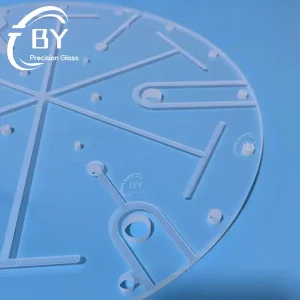
Hard, brittle quartz requires specialized ultrasonic-assisted tooling to mill through-holes, countersinks, step flanges, and complex sealing grooves without initiating microscopic chip-out or subsurface micro-fractures.
3. Oxyhydrogen Flame Fire-Polishing
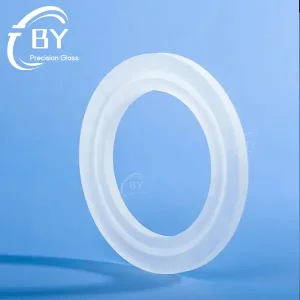
For components operating in ultra-high vacuum (UHV) or fluidic environments, our master glassblowers use computer-controlled oxyhydrogen torches to fire-polish cut edges and weld quartz rings, hermetically eliminating burrs and surface micro-pores.
4. Pitch Polishing & Interferometry
Final surface polishing with colloidal ceria and pitch laps achieves super-polished surface roughness (Ra < 0.5nm). 100% of precision optical covers are verified via Zygo phase-shifting laser interferometers and PerkinElmer Lambda UV-Vis-NIR spectrophotometers.
Localized Support, Cleanroom Standards & Global Compliance
Tianjin BY Photonics Co., Ltd. operates under rigorous quality management systems, delivering complete material certification, export-grade packaging, and real-time engineering collaboration for tier-1 industrial clients.
Traceable Material Certification
Every batch of quartz covers is shipped with comprehensive inspection documentation, including Glow Discharge Mass Spectrometry (GDMS) trace element analysis, bubble & inclusion classification (DIN ISO 10110-3), and spectrophotometric transmission curves.
ISO Class 5 Cleanroom Ultrasonic Cleaning
Contamination during final packing is unacceptable for optical and semiconductor integration. Finished quartz covers undergo multi-stage ultrasonic degreasing in deionized water (18.2 MΩ·cm) followed by nitrogen blow-drying and Class 100 vacuum packaging in ESD pouches.
Rapid DFM & Global Logistics Network
Our bilingual senior optical engineering team provides comprehensive Design for Manufacturability (DFM) reviews within 24 hours of CAD receipt. With established logistics channels, we support door-to-door delivery with shock-damped, shock-watch labeled export crating.
Technology Roadmap & Future Outlook (2025–2030)
As quantum computing, high-numerical-aperture EUV lithography, and multi-kilowatt short-pulse lasers advance, our R&D team is developing transformative quartz substrate capabilities.
Super-Smooth Chemical Mechanical Polishing
Achieving sub-angstrom surface roughness (Ra < 0.2nm) across large-format fused silica plates to eliminate scatter loss in extreme DUV/EUV optical monitoring assemblies.
Plasma-Immune Y2O3 Atomic Layer Deposition
Integrating ultra-thin yttria (Y2O3) and hafnia (HfO2) protective barrier layers via atomic layer deposition (ALD) onto quartz covers, increasing chamber service lifetime in fluorocarbon dry etching by 300%.
Freeform & Conformal Optical Covers
Pioneering magneto-rheological finishing (MRF) for complex aerodynamic and conformal quartz viewports used in high-speed defense sensors and directed-energy shielding.
Zero-Striae Ultra-Low Expansion Silica
Developing titania-doped fused silica covers exhibiting near-zero coefficient of thermal expansion (±30 ppb/°C) between 5°C and 35°C for orbital and interferometric metrology.
Frequently Asked Questions: Quartz Cover Engineering & Sourcing
Clear, engineering-backed answers addressing the most common questions raised by procurement managers, optical designers, and fab engineers.
Advanced Optical Glass & Specialized Quartzware
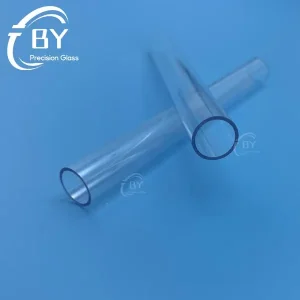
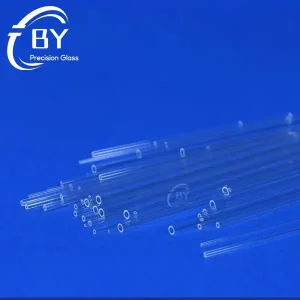
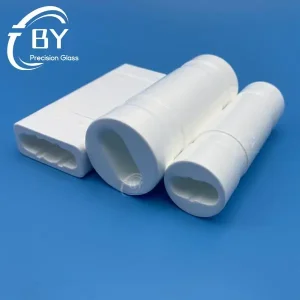
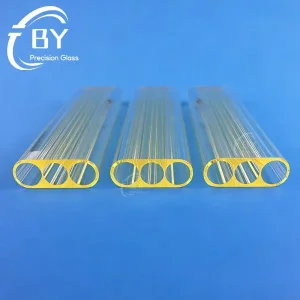
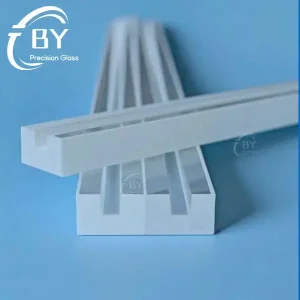
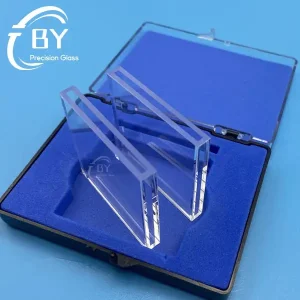
Expand your system integration with our custom-machined doped quartz tubes, precision capillary microstructures, ceramic reflectors, and analytical cuvettes.
Accelerate Your Quartz Cover Engineering Pipeline
Collaborate directly with senior optical glass processing specialists. We evaluate CAD geometries, optimize tolerance thresholds, and provide guaranteed manufacturability assessments within 24 business hours.