
Featured Precision Quartz & Optical Glass Assemblies
Factory-direct optical fabrications manufactured to certified drawings. Standard optical pathlengths and custom geometric integrations with verified spectrophotometric baseline repeatability.
Critical Parameters in Precision Spectrophotometric Cuvette Engineering
Analytical spectroscopy in pharmaceutical HPLC, bioprocessing assays, and semiconductor chemical metrology demands strict adherence to Beer-Lambert linear constraints. Pathlength deviations of merely ±0.02 mm induce unacceptable photometric inaccuracies.
Dimensional & Pathlength Precision
Standard optical cuvettes rely on tight internal pathlength dimensions (standard 10 mm, micro 1 mm, or extended 50–100 mm). At our facility, cuvettes are diamond machined and finished with double-sided planetary lapping to guarantee optical tolerances down to ±0.005 mm.
- Standard Pathlength: 10 mm ± 0.01 mm (Standard), ±0.005 mm (Metrology Grade)
- Window Parallelism: < 10 arcseconds, mitigating stray refraction
- Orthogonal Wall Angularity: 90° ± 5 arcminutes for flawless cell-holder alignment
Joint Integrity & Fusion Dynamics
Traditional adhesive-glued cuvettes fail when exposed to corrosive acids (e.g., aqua regia), organic solvents, or thermal sterilization cycles. Our production lines use direct thermal diffusion bonding (molecular contact fusion) without intermediate binders.
- Zero-Adhesive High-Temp Sintering at >1100°C
- Chemical Resistance: Fully resistant to DMSO, THF, Acetone, Hydrochloric Acid
- Thermal Shock Tolerance: Withstands sudden temperature gradients up to 500°C
Surface Metrology & Optical Flatness
To prevent beam scattering and baseline noise during high-resolution UV-Vis-NIR scanning, cuvette optical windows undergo high-precision pitch polishing to suppress microscopic scratches and surface sub-layer lattice disruptions.
- Surface Quality: 20-10 Scratch-Dig (MIL-PRF-13830B compliant)
- Transmitted Wavefront Distortion (TWD): Down to λ/4 @ 632.8 nm
- Roughness Average (Ra): < 0.5 nm through non-contact white light interferometry
Optical Glass vs. Synthetic Quartz Spectral Characteristics
Matching the substrate material to application-specific excitation wavelengths ensures optimal signal-to-noise ratios. Below is our manufacturing baseline selection matrix across synthetic silica, fused quartz, and optical borosilicate.
| Material Designation | Effective Spectral Range | Internal Transmission (10 mm) | Hydroxyl (OH⁻) Impurity | Coefficient of Thermal Expansion (CTE) | Primary Industrial Use-Cases |
|---|---|---|---|---|---|
| JGS1 Synthetic UV Fused Silica | 185 nm – 2500 nm (Deep UV to Near-IR) | > 90% @ 200 nm, > 92% @ 250 nm | Standard High-OH (~1200 ppm) | 5.5 × 10⁻⁷ / °C | UV-Vis Spectrophotometry, DNA/Protein Quantification, Excimer Lasers |
| JGS2 Fused Optical Quartz | 220 nm – 2500 nm (Standard UV-Vis) | > 85% @ 220 nm, > 91% @ 360 nm | Medium OH (< 150 ppm) | 5.4 × 10⁻⁷ / °C | Industrial Process Photometers, Analytical Flow-Through Cells, Environmental Sensors |
| JGS3 Full-Spectrum IR Fused Quartz | 260 nm – 3500 nm (Infrared Enhanced) | > 90% across 2000–3200 nm | Ultra-Low OH (< 2 ppm) | 5.5 × 10⁻⁷ / °C | FTIR Spectroscopy, Gas Concentration Cells, Laser Cavity Envelopes |
| Optical Borosilicate Glass (Boro 3.3) | 340 nm – 2500 nm (Visible to NIR) | > 91% @ 380 nm – 1100 nm | N/A (Multi-component Oxide) | 3.3 × 10⁻⁶ / °C | Colorimetry, Educational Laboratories, Standard Clinical Blood Analyzers |
| Optical Crown Glass (BK7 / K9) | 350 nm – 2000 nm (Vis-NIR Range) | > 92% @ 400 nm – 800 nm | N/A (Inorganic Borosilicate) | 7.1 × 10⁻⁶ / °C | Visible Range Photometric Testing, Sugar Polarimetry, Educational Cuvettes |
Macro-Industry Sourcing & High-Volume Integration
From life science reagent automation to deep-submicron semiconductor wet cleaning tanks, wholesale quartzware and cuvette components serve as fundamental metrology assets across four core enterprise sectors.
Biotech & Pharmaceutical HPLC / FPLC
Continuous flow detection in protein purification, peptide synthesis, and viral vector separation requires high-pressure flow cells with minimal swept volume. Our micro-channel quartz cells eliminate dead volume to eliminate peak broadening and band dispersion.
- Burst pressure rating tested up to 100 bar (1450 psi)
- Swept cell volume down to 0.5 µL for capillary electrophoresis
- Bio-inert passivation preventing non-specific analyte adsorption
In Vitro Diagnostics (IVD) & Clinical Analyzers
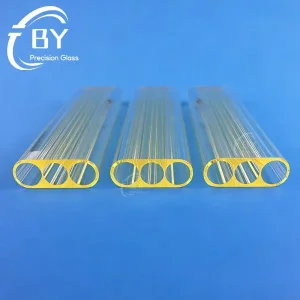
Tier-1 clinical diagnostic instrument manufacturers require multi-cavity cuvette strips and reaction carousels machined with tight dimensional consistency to guarantee identical optical gain across all diagnostic channels.
- Inter-well pathlength repeatability within CV < 0.3%
- High-throughput automated barcoding and indexing integration
- Black self-masking quartz walls eliminating optical crosstalk
Semiconductor Chemical Analysis
In advanced fab wet benches (SC-1, SC-2, Piranha bath monitoring), inline quartz cuvettes monitor chemical replenishment and trace metallic contaminants down to sub-ppb thresholds without leaching trace metal ions.
- Purity: 99.9999% SiO₂ with total metal impurity < 15 ppm
- Resistance to boiling concentrated sulfuric acid and hydrogen peroxide
- Threaded PFA / PTFE connector integration for safe fab plumbing
Technology Roadmap: Advanced Quartz Metrology 2026–2030
As analytical limits push toward single-molecule fluorescence, vacuum UV wavelengths, and integrated organ-on-a-chip architectures, our production capabilities follow an aggressive technological evolution plan.
Femtosecond Laser Micro-Machining
Deploying cold-ablation ultrafast femtosecond lasers (1030 nm / 515 nm) to drill true micro-fluidic channels inside solid fused silica cuvettes without heat-affected micro-fissuring, enabling turbulent-free laminar flows.
Hybrid Quartz-Silicon Direct Bonding
Eliminating mechanical gaskets through atomic-contact direct hydrophilic bonding between quartz window surfaces and silicon MEMS structures, creating hermetic, leak-proof micro-spectrometer sensor engines.
Deep-UV Plasma-Enhanced Anti-Reflective Nano-Textures
Replacing traditional thin-film dielectric coatings with sub-wavelength moth-eye nanostructure etching directly on fused silica windows, preventing high-energy laser peeling and expanding 190 nm transmission to > 97%.
Enterprise Compliance, Traceability & Delivery Guarantees
Procurement teams face strict compliance mandates under FDA, GMP, and ISO frameworks. We offer comprehensive documentation, batch integrity traceability, and export-grade cleanroom packaging.
Certified Material Traceability
Every production batch is accompanied by 3.1 Inspection Certificates, raw quartz ingots traceability (certified synthetic silica precursors), and spectrophotometric baseline transmission charts from 190 nm to 1100 nm.
- NIST-Traceable Holmium Oxide wavelength verification
- RoHS 3 (EU 2015/863) & REACH SVHC compliance screening
- DIN 58927 bubble and inclusion classification grade 1
Cleanroom Packaging & Shock Shielding
Optical cuvettes require immaculate delivery conditions. Final components undergo ultrasonic de-ionized water washing, Class 1000 cleanroom packaging in anti-static, lint-free containers, and drop-tested shock mitigation shipping frames.
- Individual blister or vacuum-sealed optical clamshell packaging
- Moisture barrier pouches with silica gel desiccant packs
- Global air logistics via DHL, FedEx, UPS with breakage compensation
Engineering OEM/ODM Co-Development
We do not simply machine parts; our optical engineers work side-by-side with your instrument development team. Send STEP, IGES, or DWG drawings, and receive manufacturing optimization feedback within 24 business hours.
- Rapid prototyping within 7 to 10 working days
- Design for Manufacturability (DFM) review reduces machining cost up to 30%
- Custom branding, laser engraving, and custom optical apertures
Procurement & Technical Engineering Inquiries
Essential clarifications on manufacturing constraints, material selection, cleaning methods, and bulk procurement logistics.
How do fused quartz and fused silica cuvettes compare in UV absorbance and transmission?
Why is molecular fusion (flame/sintering) superior to glued assembly in wholesale cuvettes?
What is the standard tolerance capability for optical pathlength in custom flow cells?
What cleaning protocols are recommended to prolong the operating life of quartz cuvettes?
Can you provide matched pairs or sets for dual-beam spectrophotometers?
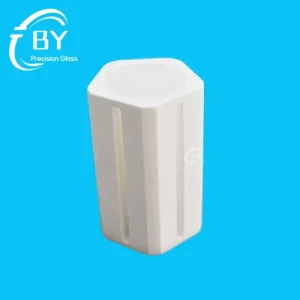
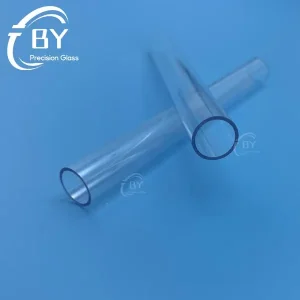
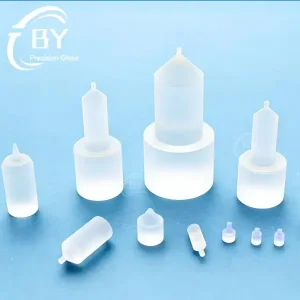
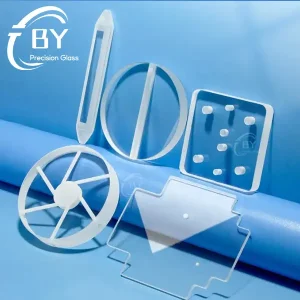
High-Temperature Laser Cavities & Optical Substrates
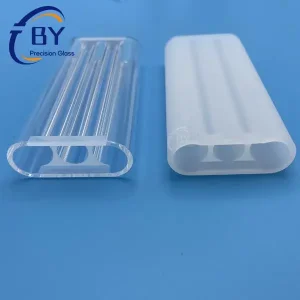
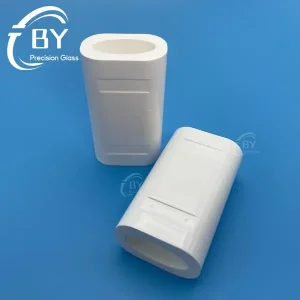
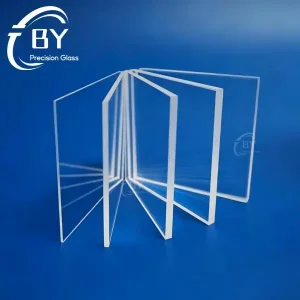
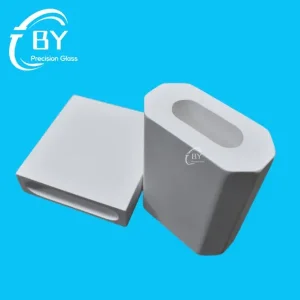
Complementary product lines engineered for diode-pumped solid-state lasers, industrial IPL flashlamps, and high-purity synthetic fused silica windows.
Initiate Custom Quartz Optical Prototyping Today
Submit your STEP, DXF, or dimensioned PDF drawings directly to our optical engineering team in Tianjin, China. We analyze tolerances, thermal expansion coefficients, and process feasibility with a formal quotation and DFM assessment within 24 business hours.