Featured Industrial & Medical Laser Glassware
Complementing our high-precision transparent triple-bore quartz tubing, explore Tianjin BY Photonics' core catalog of specialized optical cavity components, flow filters, and laser pump reflectors machined to strict international standards.
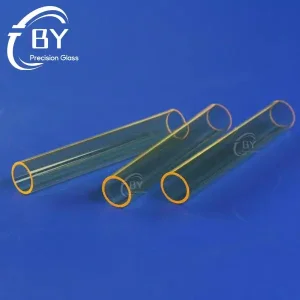
Custom UV Block Yellow Quartz Tube for IPL Lamp Flow Handle
View Product Details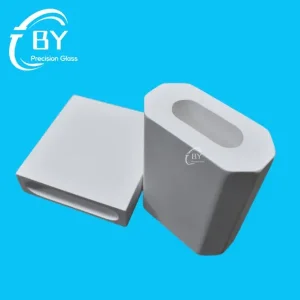
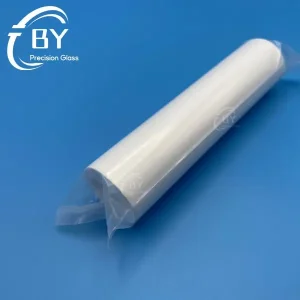
High-Quality Diffuse Reflectors Made of Spectralon‑Grade PTFE for Diode‑Pumping Chambers
View Product Details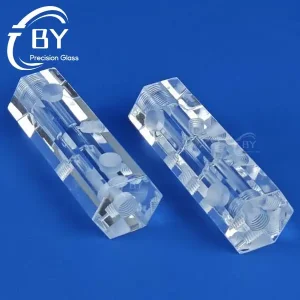
High-Quality Custom Fabrication of Quartz Glass Precision Components
View Product Details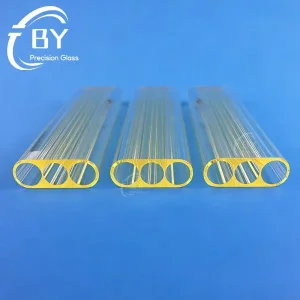
Custom Laser Cavity Flow Tubes & Filters Made from Samarium-doped Glass
View Product Details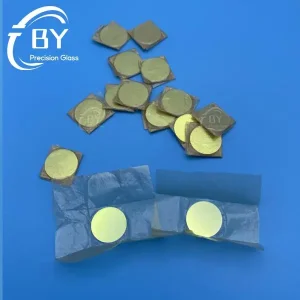
Candela Laser Distance Gauge Slider Windows (755 & 1064nm Coating)
View Product Details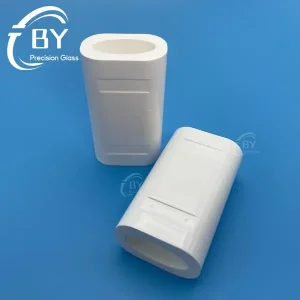
High-Quality Ceramic Cavities For Solid-State Nd:YAG Laser Systems
View Product Details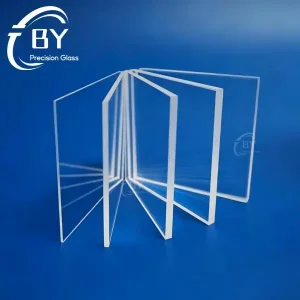
High-Quality JGS1 Ultraviolet (UV) Grade Fused Silica Optical Plate
View Product Details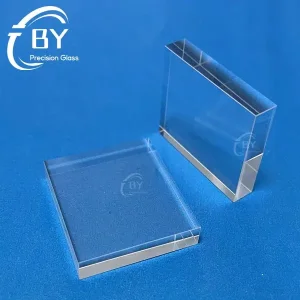
Custom Sapphire IPL Light Guide Block for Aesthetic Handpieces
View Product DetailsEngineering Transparent Triple Bore Glass Tubing: Physics, Thermodynamics & Materials
Transparent triple bore tubing represents one of the most mechanically and optically demanding geometries in micro-optics and fluid containment. Designed with three precisely controlled parallel internal conduits embedded within a single monolithic fused quartz or borosilicate outer envelope, it solves multi-channel fluidic, thermal, and optical routing challenges in mission-critical applications.
Sub-Micron Bore Concentricity & Pitch Control
In laser pump chambers and capillary electrophoresis, bore pitch (center-to-center spacing) determines optical pumping symmetry and fluidic dwell times. BY Photonics maintains center-to-center pitch deviations within ±0.015 mm across lengths up to 1,200 mm through high-tension thermal redrawing towers.
- Uniform wall thickness prevents thermal lensing hot-spots under high kilowatt loads.
- Zero internal corner wedging guarantees laminar fluid dynamic profiles.
- 100% video-extensometer computerized monitoring during draw cycles.
Hydroxyl (OH⁻) Chemical Purity & Transmission
Optical performance across UV-Vis-NIR spectra depends strictly on OH radical content. For aesthetic flashlamp pumping and analytical spectroscopy, our triple bore units are fabricated using synthetic JGS1 (OH < 2 ppm) for high UV transmission, or controlled JGS2/JGS3 fused silica for high thermal stability.
- Extreme resistance to solarization under continuous intense ultraviolet emission.
- Zero fluorescent autofluorescence background interference for bioassays.
- Chemical inertness to corrosive coolants, deionized water, and organic solvents.
Thermal Shock Endurance & Internal Burst Pressure
Fused silica features an exceptionally low coefficient of thermal expansion (α = 5.5 × 10⁻⁷ / °C). A triple bore tube subjected to cold deionized water quenching at 1,000 °C experiences zero micro-fracturing, providing burst strength exceeding 4.5 MPa for high-pressure micro-channel cooling circuits.
- Continuous operating temperature threshold of 1,100 °C; softening point 1,680 °C.
- Stress-relieved through closed-loop computer-controlled anneal lehrs.
- Hydrostatic pressure-tested to satisfy industrial safety factors.
| Material Grade | Spectral Range (T > 80%) | OH⁻ Content | Thermal Expansion (α) | Primary Industrial Application | Compliance Standards |
|---|---|---|---|---|---|
| JGS1 Synthetic Silica Ultra-Pure | 185 nm – 2,500 nm | < 2 ppm | 5.4 × 10⁻⁷ K⁻¹ | Excimer/IPL flow sleeves, bio-fluorescence detection, capillary electrophoresis | RoHS, REACH, ISO 10110 |
| JGS2 Optical Fused Quartz Standard | 220 nm – 2,600 nm | < 30 ppm | 5.5 × 10⁻⁷ K⁻¹ | Flashlamp Nd:YAG laser pump cavities, water-cooled flow dividers | RoHS, REACH, CE |
| JGS3 Infrared Silica IR Grade | 260 nm – 3,600 nm | < 5 ppm | 5.5 × 10⁻⁷ K⁻¹ | Mid-IR spectroscopic flow channels, laser gas monitoring cells | DIN ISO 12123, RoHS |
| Borosilicate Glass 3.3 Cost-Effective | 320 nm – 2,300 nm | N/A (Oxide) | 33 × 10⁻⁷ K⁻¹ | Microfluidic diagnostic cassettes, low-thermal analytical flow cells | USP Type I, ISO 3585 |
Upstream Integration & China Supply Chain Scale
Sourcing transparent triple bore tubes from Tianjin BY Photonics delivers an unmatched competitive advantage. By unifying raw ingot preparation, ultra-high temperature oxyhydrogen drawing, precision 5-axis ultrasonic CNC milling, and localized optical metrology under one 3,000 m² standardized manufacturing facility, we eliminate intermediary markups, shorten R&D cycles, and secure volume delivery.
Raw Synthetic Preform Synthesis
Direct access to domestic high-purity silicon tetrachloride (SiCl₄) vapor axial deposition feeds our drawing lines with low-defect preforms. Zero reliance on third-party ingot dealers keeps wholesale pricing stable despite global market fluctuations.
High-Precision Hot Redrawing Towers
Multi-axis oxyhydrogen flame drawing towers utilize non-contact real-time laser micrometer arrays. Continuous feedback adjustments maintain bore diameter roundness within 99.8% circularity and prevent channel collapse.
Ultrasonic Cold Machining & Fire Polishing
Post-draw processing utilizes specialized diamond diamond-wheel slicing, ultrasonic CNC bore chamfering, and controlled gas-phase fire polishing. Tube end faces achieve optical scratch-dig ratings down to 40-20 with chip-free chamfers.
Class 1,000 Cleanroom Packaging
All finished triple bore capillary tubes undergo 18.2 MΩ·cm ultra-pure DI water ultrasonic cleaning, nitrogen-purge drying, and anti-static vacuum blister sealing inside our cleanroom to eliminate dust contamination prior to international transit.
Meeting Global OEM & Tier-1 Tiered Quality Protocols
Procurement teams from global medical device OEMs, laser system integrators, and chromatography manufacturers cannot tolerate component variations. A variation in inner lumen dimension of just 20 microns can cause differential cooling flow rates, laser crystal damage, or chromatographic peak distortion. BY Photonics adheres to an end-to-end quality validation architecture.
Geometric Verification & CMM Optical Profiling
Every batch undergoes automated 2D optical comparator and non-contact coordinate measuring machine (CMM) inspection. Inner bore diameter (ID), outer diameter (OD), wall thickness variation (WTV), and axial camber (straightness per meter) are recorded on lot inspection sheets.
- Straightness guaranteed ≤ 0.5 mm/m for automated robotic handling.
- Concentricity held within 0.02 mm across multi-kilometer redraw campaigns.
- Customized cross-section profiles: symmetrical triangle, in-line linear, or offset channels.
Internal Bubble, Inclusions & Striae Screening
Under high-intensity laser illumination, internal microscopic inclusions or seed bubbles act as scattering centers that cause local thermal absorption and catastrophic burst failure. We inspect glass bodies under polarized light according to DIN ISO 10110 standards.
- Bubble class: 1/1 × 0.04 or superior in active transmission zones.
- Zero tolerated striae or cord lines along fluidic channels.
- Optical clarity inspected under 532 nm and 1064 nm collimated laser sources.
Full Batch Traceability & Material Certifications
Global buyers receive a comprehensive Documentation Packet with every wholesale consignment. This includes Certificate of Conformance (CoC), raw material spectroscopic melt data, RoHS/REACH compliance sheets, and individual dimensional inspection charts.
- Laser etching of serial and batch numbers on tube peripheries upon request.
- Archived melt records retained for 7 years for medical device regulatory audits.
- Pre-shipment First Article Inspection (FAI) reports for custom production runs.
Localization Support, Regulatory Assurance & Logistics
Navigating international optical glass procurement requires seamless compliance alignment, transparent customs classifications, and shockproof logistic routes. Tianjin BY Photonics provides comprehensive engineering and trade support tailored to North American, European, and Asia-Pacific markets.
Regulatory Conformance
All quartz and borosilicate triple-bore tubing comply fully with EU RoHS Directive 2011/65/EU and REACH (EC 1907/2006). For medical diagnostic integrations, our glass materials are bio-inert, heavy-metal free (lead, cadmium, mercury, hexavalent chromium < 2 ppm), and support FDA Master File compatibility.
Customs & Harmonized Tariffs
We provide exact HS Code classifications (e.g., HS 7002.31 for quartz capillary tubes, HS 7017.10 for laboratory glassware) to ensure frictionless customs clearance with minimal tariff risk across US CBP, EU TARIC, and Asian customs bodies.
Engineering DFM Consultations
Our bilingual senior optical engineering team provides free Design For Manufacturability (DFM) evaluations. Within 24 hours of receiving your 2D/3D CAD drawings (STEP, IGES, DWG, DXF), we provide feedback on tolerance feasibility, wall stress risks, and cost-reduction opportunities.
Engineered Export Packaging
Glass capillary assemblies are secured inside custom-molded shock-absorbing EVA foam slots, housed within hermetic moisture-barrier aluminum barrier pouches, and crated in heavy-duty reinforced wooden shipping crates tested for drop and air-cargo turbulence survivability.
Where Transparent Triple Bore Tubes Excel in Field Operations
By integrating three independent fluidic or optical conduits into a single compact, rigid tube body, design engineers eliminate complex plumbing, minimize physical footprints, and ensure balanced thermal environments across critical subsystems.
Medical Aesthetic & Dermatological Laser Handpieces
In dual-lamp aesthetic systems (such as alexandrite 755nm and Nd:YAG 1064nm hair-removal units), a transparent triple bore quartz tube houses two parallel flashlamps in the outer bores while the central bore accommodates the laser crystal rod. Simultaneously, chilled deionized water flows symmetrically through all channels to stabilize operating temperatures.
- Yellow-doped or samarium-doped options to block harmful UV and prevent skin burns.
- Extreme thermal shock resistance under repeated pulse energy spikes.
- High mechanical strength prevents vibration fatigue within handheld wands.
Capillary Electrophoresis & Liquid Chromatography
Analytical instruments require parallel sample screening and real-time baseline referencing. Transparent triple-bore fused silica capillaries allow simultaneous separation of unknown analytes alongside internal standards while an auxiliary sheath fluid channel runs concurrently.
- Near-zero background fluorescence under deep-UV laser-induced fluorescence (LIF).
- Ultra-smooth inner bore surface finish (Ra < 0.5 nm) eliminates analyte adhesion.
- Precision outer diameter allows standard micro-ferrule liquid-tight compression.
Semiconductor Optical Sensors & Fiber Optic Bundles
In wafer inspection tools and optical communication interconnects, multi-bore capillary tubes serve as high-precision alignment ferrules. Three optical fibers are threaded into designated micro-bores with micron-level positioning accuracy, enabling multi-channel spatial multiplexing.
- Thermal expansion matched to fused silica telecommunication fibers.
- Custom inner bore taper funnels for rapid automated fiber insertion.
- End-face optical polishing down to λ/8 flatness for minimal insertion loss.
Future Trends: Multi-Lumen Miniaturization & Hybrid Doping
As photonics and analytical biochemistry demand tighter integration, the transparent triple bore capillary landscape is advancing rapidly toward micro-channel scaling, selective chemical doping, and hybrid material configurations.
Micro-Lumen Miniaturization
Next-generation flow cytometry and single-cell sequencing instruments demand bore IDs below 50 μm with total tube outer diameters under 1.0 mm. BY Photonics is pioneering ultra-fine redrawing capabilities to achieve sub-10 μm multi-bore channels.
Selective Multi-Doped Sleeves
Emerging medical solid-state lasers require differential optical filtering per bore. Research is underway on triple-bore geometries where specific lumens are doped with Cerium or Samarium, while the crystal bore remains synthetic UV silica, consolidating filtration and cooling.
Integrated Anti-Reflective Internal Coatings
Utilizing atomic layer deposition (ALD) and liquid-phase chemical vapor deposition, internal channel walls can now be coated with broadband AR layers to reduce internal optical reflections, increasing pump power efficiency in laser chambers by over 4.8%.
Smart Sensor Embedded Assemblies
The integration of fiber Bragg grating (FBG) temperature and pressure sensors directly into an auxiliary bore of the triple-bore tube enables real-time internal monitoring of industrial laser chambers, avoiding unexpected downtime.
Frequently Asked Questions: Specifications, Wholesale & Customization
Technical, procurement, and logistics questions addressed directly by our process engineers to streamline your sourcing decisions.
What materials are available for custom transparent triple bore tubes?
What are the tightest dimensional tolerances achievable for inner bore diameters and pitch?
Can the three internal bores have different diameters or asymmetric layouts?
What is the minimum order quantity (MOQ) and sample lead time for custom drawings?
How do you verify internal channel smoothness and absence of micro-cracks?
What end-face finishing and edge treatments can be provided?
How do you prevent transit breakage for long or delicate capillary tubes?
Explore Allied Optical & Laser Cavity Components
Expand your procurement system with Tianjin BY Photonics' integrated line of laser flow tubes, quartz fiber accessories, optical spectrophotometer cuvettes, and diffuse pump reflectors manufactured under full quality control.
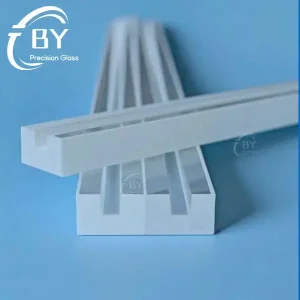
Square Groove Quartz Substrate for Precision Fiber Couplers
View Product Details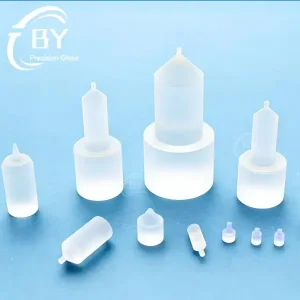
Customized Quartz Fiber End Caps for High-Power QBH Heads
View Product Details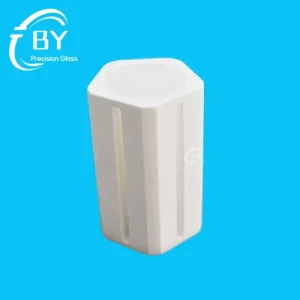
Diffuse High‑Reflectivity PTFE Reflectors for Diode Pumping
View Product Details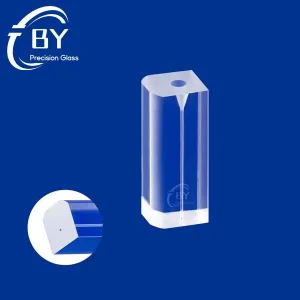
Custom Optical Fiber Glass Ferrules & Micro-Alignment Tubes
View Product Details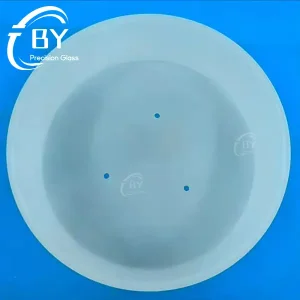
Custom Quartz Glass Components for High-Vacuum Coating Chambers
View Product Details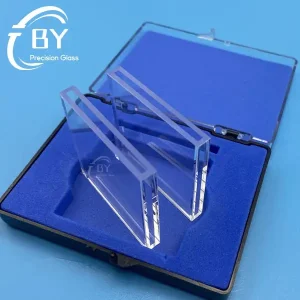
Wholesale Customized Quartz Cuvettes for UV-Vis Spectrophotometers
View Product Details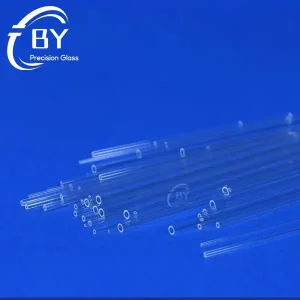
Fluorine-Doped Fused Silica Precision Capillary Tubing
View Product Details