
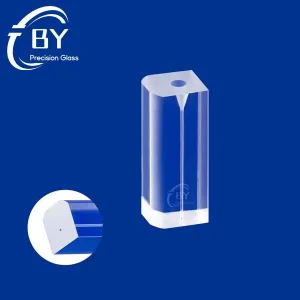
Custom Fiber Optic Glass Ferrules for Austrian Photonics Integrators
View Detailed Specs
Direct line export components engineered for critical analytical instrumentation, high-energy lasers, and customized optoelectronic installations.
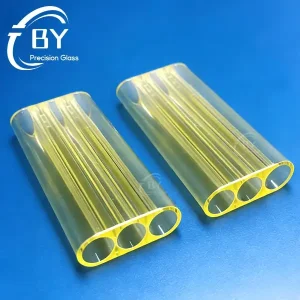
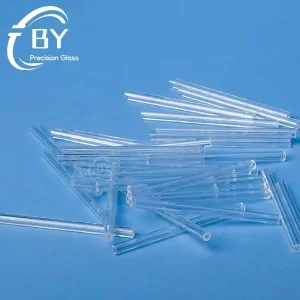
Analyzing the specific commercial demands, regulatory frameworks, and technological drivers across Graz, Linz, and Vienna.
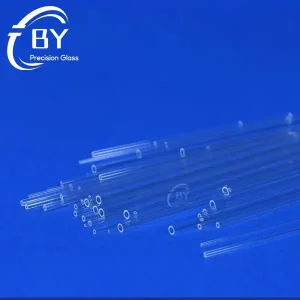
Austria hosts leading measurement instrument creators, particularly clustered around the Styrian Human-Technology Cluster (HTS) and Vienna Biocenter. These organizations require borosilicate 3.3 capillary glass featuring pristine inner wall smoothness, ultra-low bubble frequency (ISO 719 Class 1), and chemical inertness resistant to leaching during HPLC, gas chromatography, and capillary electrophoresis procedures.
With universities in Innsbruck and technical faculties in Graz pushing biomedical fluid dynamics, precision-drawn micro-capillaries serve as foundational connectors and reaction vessels. Austrian OEMs in diagnostics prioritize uniform flow velocities and predictable capillary forces, which depend directly on absolute concentricity and tight inner diameter tolerance bounds.
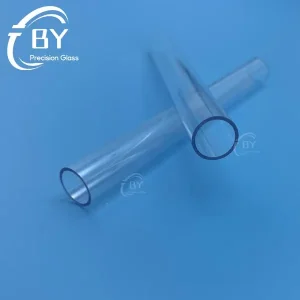
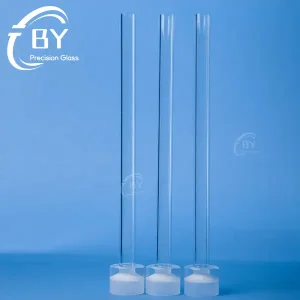
Upper Austria’s Mechatronics Cluster requires resilient optical delivery channels, fiber protection ferrules, and hermetic sensor housings. Borosilicate rods and heavy-wall capillary designs provide superior mechanical damping, high electrical resistivity, and stable transmission across the 350 nm – 2500 nm spectrum under harsh industrial environments.
Comparative metrics validating strict conformance to international standard DIN ISO 3585 for engineering procurement directors.
| Physical / Chemical Property | Borosilicate Glass 3.3 (DURAN/Pyrex Equiv.) | Test Standard / Conformance | Functional Impact in Instrumentation |
|---|---|---|---|
| Coefficient of Thermal Expansion (CTE) | (3.3 ± 0.1) × 10⁻⁶ K⁻¹ (20°C to 300°C) | DIN ISO 7991 | Exceptional resistance to thermal shock, critical for fluidic heaters. |
| Hydrolytic Resistance | Class HGB 1 | ISO 719 / DIN 12111 | Prevents alkali ion elution into ultra-pure reagents and solvents. |
| Acid Resistance Class | Class S1 | DIN 12116 | Zero surface degradation under prolonged acidic exposure. |
| Alkali Resistance Class | Class A2 | ISO 695 | High resilience against basic washing solutions in autodiluters. |
| Transformation Temperature (Tg) | 525 °C ± 10 °C | ISO 7884-8 | Maintains microstructural geometry under high baking regimes. |
| Refractive Index (nd, λ = 587.6 nm) | 1.473 ± 0.002 | Abbe Refractometry | Predictable light path dynamics in optical and fiber alignment tubes. |
Combining proprietary high-speed vertical redrawing lines, precision cold processing, and direct air freight logistics to Austrian industrial parks.
Our redrawing towers feature continuous closed-loop laser gauge monitoring running at 1000 Hz. Wall thickness, outer diameter, and inner roundness are captured dynamically, keeping bore tolerances within ±0.005 mm across custom multi-kilometer extrusion campaigns.
Unlike raw mechanically scored tubing, our facility offers precision diamond saw slicing, ultrasonic washing, fire-polishing, and fine lapping. End surfaces achieve optical flatness (down to λ/4) and pristine chip-free edges that seal directly against fluoropolymer HPLC fittings.
With consolidated air shipping channels connecting Beijing/Tianjin to Vienna Schwechat Airport (VIE), Austrian manufacturing teams experience prototype turnarounds in under 10 business days and repeat bulk consignments with comprehensive customs clearance documentation.
Explore our core manufactured product units available for rapid prototyping and scale supply in the Austrian market.
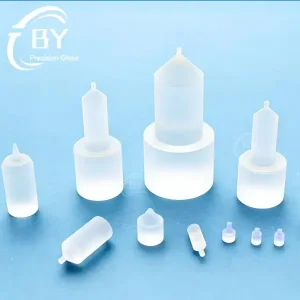
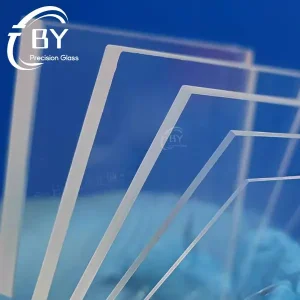
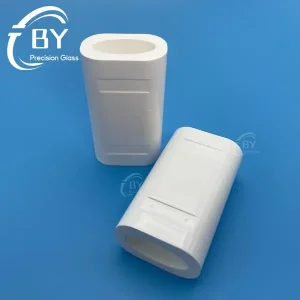
Key information regarding international logistics, material conformance, minimum order limits, and custom engineering parameters.
Send your STEP, DWG, or PDF specifications directly to our senior glass technologists. Receive complete manufacturability and pricing feedback within 24 hours.
Send Inquiry Now