
High-Precision Capillaries & Optical Substrates for Kuala Lumpur
Engineered to withstand rigorous OSAT thermal cycles and high-density optoelectronic assembly in Greater Kuala Lumpur, Selangor, and Cyberjaya.
The Photonics & Semiconductor Landscape in Greater Kuala Lumpur
Analyzing the intersection of Malaysia's New Industrial Master Plan 2030 (NIMP 2030) and the critical need for advanced micro-structured quartz components.
Equatorial Industrial Resilience in the Klang Valley Corridor
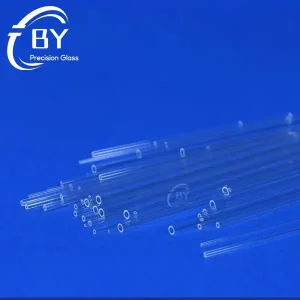
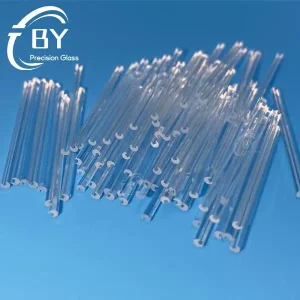
The Federal Territory of Kuala Lumpur and the contiguous industrial corridors of Selangor (encompassing Petaling Jaya, Shah Alam, Subang, and the technology epicenters of Cyberjaya) represent Southeast Asia’s most rapidly diversifying ecosystem for advanced optical communications, outsourced semiconductor assembly and test (OSAT), and clinical diagnostics instrumentation. Under the framework of the Malaysian National Investment Aspirations (NIA), enterprise demand for mission-critical optical glass has migrated beyond standard soda-lime or generic borosilicate toward custom, tightly toleranced fluorine-doped silica capillaries.
These components are foundational to next-generation telecommunication transceiver modules, high-power fiber laser clad mode strippers (CMS), and electrophoretic analytical equipment deployed in academic centers such as Universiti Malaya (UM) and Universiti Kebangsaan Malaysia (UKM). In tropical environments where ambient relative humidity consistently exceeds 80%, high-purity synthetic silica capillaries doped with fluorine ion matrices prevent ambient moisture delamination and hydrolytic stress corrosion cracking.
Klang Valley Technical Requirements Overview
- Climatic Resilience: Zero glass network hydroxyl replenishment under 30°C/85% RH ambient storage conditions.
- Optical Index Modification: Controlled refractive index depression ($\Delta n$ from -0.003 to -0.015 relative to pure fused silica).
- Sub-Micron Concentricity: Internal-to-outer diameter runout $\le 0.8\,\mu\text{m}$ for high-yield automatic wire and fiber alignment.
- Semiconductor Compliance: Class 100 cleanroom packaging conforming to SIRIM and MS ISO 14644-1 parameters.
- High Laser Damage Threshold (LIDT): $\gt 15\,\text{J/cm}^2$ at 1064 nm for CW and pulsed kilowatt-class fiber laser packaging.
Atomic Structure & Refractive Index Engineering in F-Doped Silica
Understanding how substitution of bridging oxygen atoms by monovalent fluorine governs light guidance, numerical aperture, and modal attenuation.
Network Depolymerization Mechanics
In standard high-purity synthetic fused silica ($\text{SiO}_2$), the amorphous tetrahedral matrix is linked exclusively via bridging oxygen ($\equiv\text{Si}-\text{O}-\text{Si}\equiv$) bonds with an average angle of 144°. When fluorine gas ($\text{SiF}_4$ or $\text{C}_2\text{F}_6$) is introduced into plasma chemical vapor deposition (PCVD) or modified chemical vapor deposition (MCVD) flames, fluorine acts as a network terminator:
This substitution replaces strong covalent bridging oxygens with non-bridging fluorine atoms ($\equiv\text{Si}-\text{F}$), reducing atomic packing density and polarizability, which directly triggers a controlled drop in the real refractive index ($n$).
Refractive Index Depression Matrix
The fractional index difference ($\Delta$) between the pure silica core ($n_0 \approx 1.4585$ at 589 nm) and the fluorine-doped cladding ($n_{cl}$) determines the capillary’s internal total internal reflection (TIR) capability when filled with aqueous buffers or lower-index media:
By adjusting doping concentrations up to 3.5 wt% fluorine, we achieve tailored refractive index offsets down to $n = 1.4380$, yielding capillaries capable of optical waveguiding through fluidic cores without metallic coating losses.
Elimination of OH Absorption Bands
Traditional flame fusion processes induce severe hydroxyl vibrational absorption overtones at 940 nm, 1240 nm, and particularly the devastating fundamental overtone at 1383 nm (water peak). Our synthetic fluorine-doped fused silica is synthesized via an oxygen-free, chloride-dehydrated soot consolidation cycle.
Residual $[\text{OH}^-]$ concentrations are suppressed below 0.5 ppm, rendering these capillaries transparent across the entire telemetry spectrum (O, E, S, C, and L bands) and fully resistant to photochemical solarization under high-intensity ultraviolet irradiation.
Technical Comparison: Fluorine-Doped vs. Standard Fused Quartz Materials
| Physical / Optical Property | Standard Synthetic Fused Silica (JGS1) | Electrically Fused Quartz (JGS2) | BY Photonics Fluorine-Doped Capillary (F-300) |
|---|---|---|---|
| Refractive Index ($n_d$ @ 587.6 nm) | 1.4585 | 1.4584 | 1.4380 – 1.4520 (Depressed) |
| Hydroxyl ($\text{OH}^-$) Content | < 5 ppm to < 20 ppm | 150 – 200 ppm | < 0.5 ppm (Dry Grade) |
| Transmission Window ($\gt 85\%$) | 185 nm – 2500 nm | 220 nm – 2500 nm | 180 nm – 2400 nm (No 1383nm Peak) |
| Coefficient of Thermal Expansion (CTE) | $5.5 \times 10^{-7} /\text{K}$ | $5.5 \times 10^{-7} /\text{K}$ | $4.8 \times 10^{-7} /\text{K}$ (Slightly Reduced) |
| Viscous Softening Point ($10^{7.6}\text{ Poise}$) | 1730 °C | 1680 °C | 1640 °C – 1660 °C |
| Laser Damage Threshold (1064nm, 10ns) | > 20 J/cm² | 10 – 15 J/cm² | > 25 J/cm² (Clean Interfaces) |
High-Yield Industrial Applications for Malaysian High-Tech Sectors
From high-power fiber laser assemblies in Selangor manufacturing facilities to clinical capillary electrophoresis in medical centers.
High-Power Cladding Mode Strippers (CMS)
In multi-kilowatt fiber lasers utilized across Malaysian industrial tool centers, residual optical pump power and backward reflections leak into the inner cladding. If unmanaged, this stray radiation destroys splice joints and protective polymer coatings.
- Index Matching Fluid Replacement: Low-index fluorine capillaries act as optical leakage sleeves.
- Thermal Dissipation: High thermal conductivity silica prevents local focal thermal burns.
- Selective Refraction: Strips cladding modes without disturbing the single-mode fundamental beam.
Capillary Electrophoresis (CE) & Bio-Fluidics
For biopharmaceutical research labs and diagnostic equipment developers in Kuala Lumpur and Putrajaya, capillary electrophoresis requires exceptional inner bore consistency to avoid band broadening in protein and DNA assays.
- Surface Zeta Potential Control: Extremely homogeneous $\text{Si}-\text{OH}$ and $\text{Si}-\text{F}$ distributions prevent protein wall adsorption.
- Ultra-Violet Transparency: Facilitates on-column UV detection down to 195 nm for direct peptide bond absorption.
- Bore Diameter Uniformity: Inner diameters calibrated within $\pm 0.5\,\mu\text{m}$ across continuous 100-meter draws.
Optical Transceiver Collimator Sleeves
As Malaysian hyperscale data centers scale up to 400G and 800G optical architectures (in Cyberjaya and Bukit Jalil), active fiber-to-lens alignment requires micro-sleeves with matched optical dispersion and coefficient of thermal expansion.
- Chamfered Entry Geometries: Precision conical funnels eliminate fiber insertion cleave chipping.
- Concentricity: Outer to inner bore runout under $0.8\,\mu\text{m}$ ensures low insertion loss insertion.
- High Environmental Stability: Zero swelling or chemical leaching under 85°C/85% RH endurance qualifications.
Consult with Our Photonics Engineering Desk
Need custom geometric profiles, square bores, dual capillaries, or specified refractive index steps? Our engineering team reviews CAD drawings and complete specifications within 24 working hours.
Send Drawing / Inquire NowLocalization Support & Regulatory Conformance for Malaysia
Direct supply paths into Port Klang, KLIA cargo, and conformity with Malaysian and international standards.
Quality Control & Metrology Standards
Every batch of fluorine-doped capillary tubing manufactured for our Kuala Lumpur and regional clients undergo comprehensive multi-point metrology testing prior to vacuum packaging:
- Laser Triangulation Gauging: Continuous two-axis non-contact scanning during the drawing process to maintain outer diameter (OD) within $\pm 0.5\,\mu\text{m}$.
- Refractive Index Profiling (RIP): Calibrated transverse interferometry ensuring the depressed index profile meets target numerical aperture tolerances.
- End-Face Surface Finish: Precision diamond cleaving or optical mechanical polishing achieving scratch-dig ratings down to 20-10 or 10-5 per MIL-PRF-13830B.
- Full Traceability: Raw material synthetic soot certificates supplied with every consignment, including spectrometer scans for hydroxyl concentration.
Mitigating Tropical Moisture Ingress
The Greater Kuala Lumpur metropolitan area experiences year-round tropical humidity averaging between 75% and 90%. Under these conditions, lower-grade optical glasses experience atmospheric moisture adsorption, leading to surface hydrolysis and microcrack propagation via subcritical crack growth.
Our synthetic fluorine-doped fused silica is intrinsically hydrophobic compared to dopant-free quartz. Because non-bridging fluorine atoms cap surface silicon vacancies, moisture molecules are repelled, inhibiting the creation of surface silanol groups ($\text{Si-OH}$).
Furthermore, all orders destined for Malaysian delivery are packaged under dry nitrogen vacuum sealed within multi-layer ESD-shielded hermetic enclosures with active cobalt-free moisture desiccant packs, preventing any hydrolytic degradation during sea transit to Port Klang or air clearance at KLIA.
Advanced Photonic Roadmap: Negative Curvature & Multibore Capillaries
Anticipating the technological requirements of quantum computing networks, high-order harmonic generation, and automated pharmaceutical screening.
Hollow-Core Negative Curvature Fibers (HC-NCF)
We supply precision thin-walled fluorine-doped capillary tubes configured as anti-resonant cladding rings for hollow-core fiber drawing. The lower refractive index of the F-doped struts mitigates transmission loss into outer silica jackets, achieving optical attenuation below 0.5 dB/km in deep-UV and mid-IR spectra.
Multibore & D-Shaped Array Capillaries
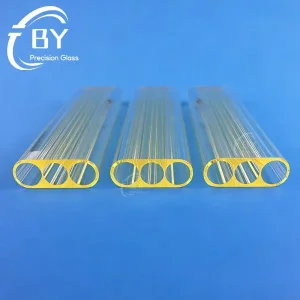
Developing micro-structured arrays featuring 7, 19, or 37 internal bores within a single circular or hexagonal jacket. Tailored specifically for spatial division multiplexing (SDM) transceivers and parallel organ-on-a-chip microfluidic flow screening tested at biomedical research incubators in Kuala Lumpur.
Cost-Optimized Batch Production
Leveraging high-capacity automated redraw towers, we have scaled production throughput to deliver OEM-tier cost parity across Malaysia and ASEAN. Local system integrators can order customized dimensional prototypes with immediate transition into multi-thousand-piece manufacturing runs.
Frequently Asked Questions for Kuala Lumpur Engineering & Procurement
Comprehensive technical and commercial clarifications regarding fluorine-doped capillaries and custom quartz components.
What is the exact refractive index difference achievable with your fluorine-doped capillaries?
Why choose fluorine-doped silica over borosilicate for microfluidics in Malaysia?
What dimensional ranges and tolerances do you support for capillary tubing?
How do you handle shipping, customs clearance, and logistics to Kuala Lumpur?
Can your fluorine-doped capillaries be fused or spliced to standard SMF-28 fiber?
What is the minimum order quantity (MOQ) for custom inner/outer diameter specifications?
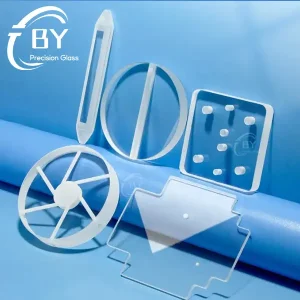
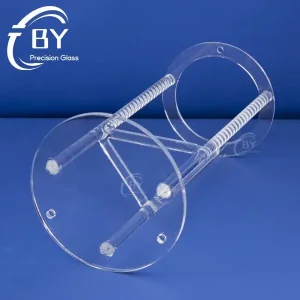
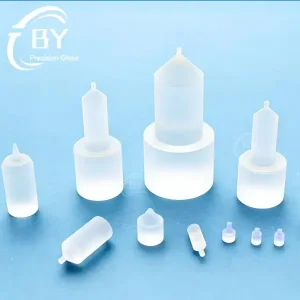
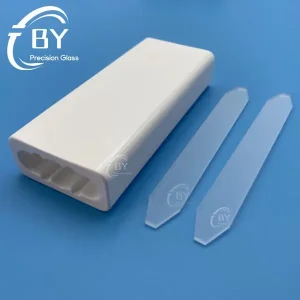
Complete Engineered Quartzware & Optical Assemblies for Malaysia
Complementary optical glass fabrication, custom wafer carriers, laser cavities, and spectral filters manufactured strictly to customer drawings.



Looking for Precision Optical Glass Machined to Your Print?
Tianjin BY Photonics provides complete cold machining, oxyhydrogen hot flame working, and capillary redrawing with worldwide export fulfillment.