

UV Spectrophotometry
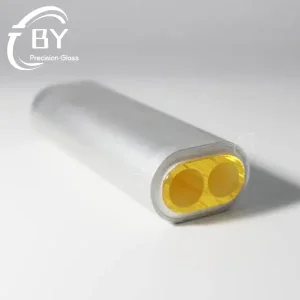
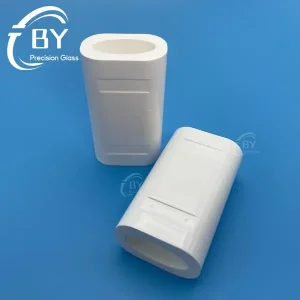
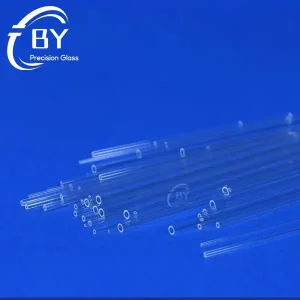
The Greater Toronto Area (GTA), anchored by the Discovery District, the MaRS Centre, and stretching through the Kitchener-Waterloo photonics corridor and the Mississauga Life Sciences Cluster, represents one of North America's fastest-accelerating biomedical and advanced manufacturing regions. With over 1,400 life sciences establishments and premier institutions such as the University of Toronto, McMaster University, and University Health Network (UHN), local demand for high-transmission, ultra-pure quartz cuvettes and micro-engineered optical flow cells has expanded dramatically beyond standard catalog specifications.
Toronto's thriving biopharmaceutical drug discovery pipelines rely on molecular interaction analysis via surface plasmon resonance (SPR), circular dichroism (CD), and UV-Vis spectrophotometry. In these assays, zero-autofluorescence fused silica and pathlength tolerance of ±0.005 mm are mission-critical for regulatory compliance under Health Canada and FDA protocols.
Surrounding Ontario's freshwater basins, government and commercial laboratories monitor trace heavy metals, polyfluoroalkyl substances (PFAS), and organophosphate pesticides. Continuous automated water quality analyzers require rugged, chemical-resistant quartz flow cells with high-pressure fluidic connectors and uninterrupted deep-UV transmission down to 190 nm.
From Waterloo’s Institute for Quantum Computing to Markham’s laser hardware startups, local photonics pioneers integrate specialized fused silica cells into trapped-ion architectures, laser cavity pumping channels, and Raman spectroscopy probes, necessitating surface flatness to λ/10 and scratch-dig specifications of 20-10.
The international market for analytical optical components is undergoing a foundational paradigm shift. Traditional cuvette manufacturing relied on manually aligned optical components held together with organic glues or thermal fluxes that succumb to aggressive mobile phases like tetrahydrofuran (THF), dimethyl sulfoxide (DMSO), and strong alkaline rinses. Today's global analytical standard mandates fully integrated, fire-fused, or optically contacted (molecularly bonded) monolithic quartz assemblies capable of enduring high pressures, continuous fluid dynamics, and intense broadband laser radiation.
Analytical errors in Toronto laboratories frequently stem from optical window solarization, internal luminescence, and absorption bands caused by chemical impurities within raw silica boules. At BY Photonics, every precision optical cuvette and flow cell destined for spectroscopy is classified by precursor purity:
Synthesized from high-purity SiCl₄ via chemical vapor deposition. Free of micro-bubbles, metallic impurities <1 ppm, and boasts internal transmission >90% at 200 nm. Imperative for DNA/RNA quantification at 260/280 nm and HPLC UV detectors.
Gas-refined from natural crystalline quartz. Excellent transmission from 220 nm to 2,500 nm. Preferred for general chemical analysis, visible-light colorimetry, and cost-effective industrial laser flow assemblies.
Electrically fused in high vacuum with OH- radical content suppressed below 5 ppm. Eliminates deep water absorption peaks at 1,380 nm, 2,200 nm, and 2,720 nm, making it indispensable for FTIR flow analysis and NIR spectrophotometry.
For Toronto OEMs, biotechnology scale-ups, and commercial analytical chains, domestic procurement often involves high markups from middlemen, limited customization flexibility, and 10 to 14-week lead times. By partnering directly with our Tianjin manufacturing facility (est. 2010), Canadian enterprises bridge the gap between bespoke engineering agility and direct factory cost structures.
| Evaluation Parameter | BY Photonics Factory Direct | Traditional Regional Distributorship | Technical Impact on Toronto End-User |
|---|---|---|---|
| Joining Technology | High-Temp Oxyhydrogen Fusion / Optical Contacting | Often epoxy bonded or adhesive laminated | 100% solvent impervious; will not dissolve in acetone, acids, or halogenated solvents. |
| Optical Path Accuracy | ±0.005 mm (Verified by Laser Interferometry) | ±0.02 mm to ±0.05 mm typical | Guarantees exact Beer-Lambert Law linearity across multi-instrument clinical calibrations. |
| Custom CAD-to-Prototype Cycle | 7 to 10 Working Days | 6 to 12 Weeks (Backordered) | Accelerates life science R&D cycles in Toronto's fast-paced competitive biotech sector. |
| Procurement Economics | Tier-1 Direct OEM Pricing (30-55% Cost Reduction) | Multi-tier importer markups and warehouse fees | Reallocates operational budgets directly to research talent and clinical trial expansion. |
| In-House Full-Cycle Processes | Ultrasonic CNC + Double-Sided Lap + Fire Fusion + Coating | Dispersed subcontracting model | Complete material traceability from raw boules to packed finished cells under ISO 9001. |
Our engineering team analyzes complete STEP, DXF, or PDF engineering prints within 24 hours.
From academic bench spectrophotometers to continuous industrial process analytical technology (PAT), optical quartz cells serve as the physical interface where photons interrogate matter. Here is how our custom fabrication directly empowers Toronto's high-technology sectors:
Analytical contract testing organizations (CROs) in Mississauga and Oakville run round-the-clock purity verifications of active pharmaceutical ingredients (APIs). Our sub-microliter volume Z-type and U-type HPLC flow cells provide optical pathlengths up to 10 mm with dead volumes under 1.5 μL, totally eliminating peak broadening and sample carryover.
Toronto's premier immunology and cancer institutes rely on flow cytometers to characterize rare single cells. Our four-window polished optical flow cells feature micro-machined quartz channels where sheath fluid centralizes cell streams, providing non-turbulent laminar flow and 360-degree scattered light capture with zero background fluorescence.
As pharmaceutical manufacturing moves toward continuous perfusion bioreactors across Southern Ontario, inline spectrophotometric monitoring of protein concentration, cell density, and nutrient consumption is vital. Our ruggedized flow cells withstand Clean-In-Place (CIP) and Steam-In-Place (SIP) thermal shocks at 134°C without seal degradation.
The demand for optical spectroscopy equipment is transitioning from static batch cuvettes to dynamic micro-reaction monitoring. Modern Canadian innovators are demanding sophisticated hybrid configurations that unite photonics with microfluidic chip fabrication:
Replacing glued multi-plate assemblies with femtosecond laser-assisted chemical etching (FLICE). This creates internal micro-tunnels directly inside a single block of JGS1 quartz, eliminating all assembly seams, resisting internal pressures up to 100 bar, and enabling inline capillary spectroscopy in supercritical fluid systems.
Modern bioprocess engineers require simultaneous multi-modal analysis. We design multi-angle optical flow cells featuring five polished optical windows: two opposing faces configured with anti-reflective (AR) coatings for UV-Vis absorption, and three orthogonally positioned windows polished to laser-grade 10-5 scratch-dig for 785 nm and 1064 nm Raman backscattering collection.
Standard cuvettes operated with manual pipetting are incompatible with automated liquid handlers. We manufacture micro-cuvette strips and flow-through quartz assemblies integrated with robotic vacuum aspiration ports, ensuring high-speed continuous sample exchange without droplet adhesion or bubble entrapment.
When qualifying an offshore precision optical glass supplier, procurement managers and lead optomechanical engineers in Ontario must scrutinize far more than unit purchase price. To ensure seamless mechanical integration, prolonged optical stability, and zero false analytical readings, enforce this four-pillar technical audit:
Request definitive proof of thermal molecular bonding. High-performance flow cells must be fire-fused at temperatures exceeding 1,100°C or optically contacted. Any cell assembled with UV-curable optical epoxy will degrade under chromatography solvent exposure or ultrasonic bath cleaning.
Demand spectrophotometer scan curves for each material batch. For UV-range cuvettes, baseline transmission through filled deionized water at 200 nm must exceed 80%, with matched cuvette sets exhibiting absorbance delta ΔA ≤ 0.005 to guarantee interchangeable measurement.
Verify precision machining of fluid inlet and outlet ports. Common standards such as 1/4-28 UNF, M6, or 10-32 Coned threads must feature mirror-smooth bottom seats to avoid o-ring deformation, micro-leaks, or fluidic dead zones that trap bubbles.
Inquire regarding ultrasonic cleaning protocols and Class 1,000 cleanroom packaging. Every optical aperture must be visually inspected under 100W fiber illumination for micro-chips, scratches, and striae according to MIL-PRF-13830B standards.
Detailed answers addressing physical properties, cleaning protocols, custom machining limitations, and international logistics for scientific buyers in the Toronto market.
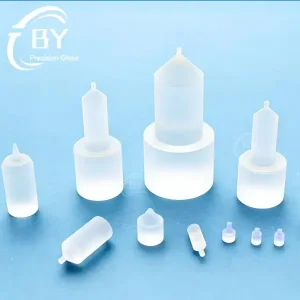


Connect directly with BY Photonics senior optical fabrication engineers. Upload your technical drawing, specify your pathlength, tolerance, and wavelength parameters, and receive a comprehensive manufacturability analysis and tier-1 factory quotation within 24 hours.
Send Inquiry Now