
Featured Optical Assemblies for Houston Laboratories
Engineered to ASTM E275 standards with sub-micron pathlength repeatability. Sourced directly from our precision production facility to Houston industrial research centers.
-
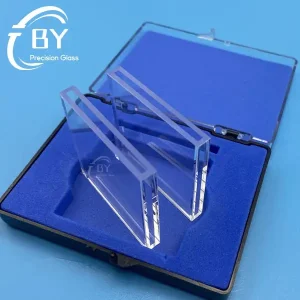
Houston Petrochem High-Precision Quartz Cuvettes (JGS1 UV-Vis)
View Technical Specs -
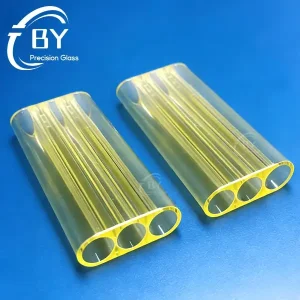
Texas Medical Center Samarium-Doped Quartz Laser Cavity Tubes
View Technical Specs -
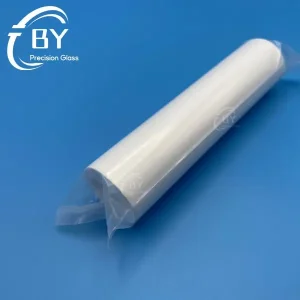
Clinical Grade High-Reflectance Laser Cavity Ceramic Reflectors
View Technical Specs -
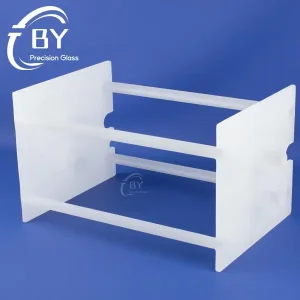
Thermal Furnace Quartz Diffusion Boats & Process Ware
View Technical Specs
The Houston Precision Optics Ecosystem: Petrochem, Bio-Innovation & Energy Transition
Houston represents the world's dense cross-section of heavy hydrocarbon analytical infrastructure and next-generation clinical bioprocessing. Precision quartz optics are the mission-critical window into process integrity.
Houston Ship Channel & Downstream Refining
The petrochemistry complex along the Houston Ship Channel, Baytown, Pasadena, and Texas City demands analytical instruments capable of continuous operation in severe thermal and chemical conditions.
In-line quartz flow cells and spectroscopy cuvettes are deployed inside high-pressure liquid chromatography (HPLC) modules, process analyzers, and refractive index detectors. Hydrocarbon characterization requires 100% molecular fusion bonding to resist benzene, toluene, xylenes, and aggressive chlorosilanes without trace optical cement leaching.
Texas Medical Center (TMC) Biopharma
As the largest medical complex in the world, Houston’s Texas Medical Center drives global breakthroughs in cellular therapy, antibody production, and genetic sequencing.
Micro-volume quartz flow cells with channel geometries down to sub-100 microns are essential for laser-induced fluorescence (LIF) detection, capillary electrophoresis, and acoustic-focusing flow cytometry. Low autofluorescence JGS1 fused silica guarantees that weak single-molecule fluorescence is not blinded by background substrate excitation.
Clean Energy Transition & CCUS Analytics
With Houston positioning itself as the Energy Transition Capital of the World, massive capital expenditure is flowing into hydrogen energy hubs and Carbon Capture, Utilization, and Storage (CCUS).
Our custom optical flow cells are integrated into gas-phase non-dispersive infrared (NDIR) sensors and tunable diode laser absorption spectroscopy (TDLAS) chambers. They withstand rapid thermal cycling and extreme pressures up to 30 MPa in supercritical CO₂ capture pilot facilities.
Global Analytical Demands vs. China Factory Direct Engineering
Navigating supply chain volatility with vertically integrated optical engineering, molecular fusion bonding, and sub-micron dimensional verification.
The Global Optical Quartz Landscape
Spectroscopic measurement has transitioned from slow, offline laboratory sampling to rapid, in-line process analytical technology (PAT). Global instrument manufacturers in the US, Germany, and Japan require quartz cuvettes and flow cells that eliminate the Achilles' heel of optical cells: cement degradation.
Traditional optical epoxy cements dissolve in ketones, chlorinated aromatics, and strong alkalis, distorting transmittance readings. Furthermore, laser-induced thermal stress causes premature optical delamination. The global industry demands monolithic direct fire-welding and atomic diffusion bonding capable of surviving 1100°C without mechanical distortion or baseline baseline drift.
- Zero-Epoxy All-Quartz Fusion eliminates sample contamination
- Parallelism held within 10 arc-seconds across multi-window cells
- Custom multi-port inlet/outlet capillary interfaces down to 0.2mm ID
Tianjin Direct Factory Manufacturing Advantage
Tianjin BY Photonics Co., Ltd. (operating continuously since 2010) combines raw ingot sawing, precision 5-axis ultrasonic CNC milling, automated optical double-sided planar lapping, and cleanroom fire-welding under one roof.
By eliminating US domestic multi-tier distributor markups, Houston laboratory operators, OEMs, and analytical service contractors gain 40% to 60% procurement efficiency with uncompromised optical traceability. Drawings submitted by Houston process engineers receive immediate review by optical fabrication experts with DFM feedback returned within 24 hours.
- 100% In-house raw material spectrum certification (JGS1, JGS2, JGS3)
- Laser-interferometer wave front inspection (Flatness up to λ/10 @ 632.8nm)
- Vacuum-sealed, shockproof export packaging certified for Gulf Coast delivery
Engineered for Harsh Environments: Local Application Scenarios
From Galveston Bay environmental water monitoring to offshore gas extraction skids, see how our precision quartz flow cells and cuvettes perform in field conditions.
ASTM D-Standard Fuel & Petrochemical Testing
Deployment: Quality control laboratories at Baytown and Deer Park refineries executing ASTM D1840 (naphthalene hydrocarbons in aviation turbine fuels) and ASTM D2269 (white mineral oils).
Optical Requirement: Matched-pair quartz cuvettes with transmission transmission variance < 0.3% across the 200–400 nm UV spectrum. Monolithic fused bodies withstand automated solvent wash cycles using warm toluene and nitric acid without fogging or etching.
Continuous Online Bioreactor Monitoring
Deployment: TMC-adjacent biotechnology pilot plants running continuous mammalian cell perfusion systems.
Optical Requirement: Non-invasive bypass flow cells utilizing low-OH JGS1 synthetic silica for NIR/UV spectral measurement of glucose, lactate, and monoclonal antibody titer concentrations. Zero dead-volume flow paths prevent cell adhesion, wall fouling, and turbulence-induced shear stress.
Galveston Bay & Ship Channel Estuary Monitoring
Deployment: Automated autonomous environmental monitoring buoys along the Gulf Coast measuring polycyclic aromatic hydrocarbons (PAHs) and micro-algae blooms.
Optical Requirement: Miniaturized 4-optical-window fluorometer flow cells resistant to biological fouling and marine salinity. Hydrophobic surface passivations maintain crystal-clear baseline integrity under continuous seawater immersion.
Optical Material Grade Selection Architecture
Selecting the correct optical transmission substrate is crucial to avoiding solarization, autofluorescence, and thermal drift in precision analytical equipment.
| Material Designation | Transmission Bandwidth | Refractive Index (nd) | OH- Ion Content | Max Operational Temp | Optimal Houston Industry Target |
|---|---|---|---|---|---|
| JGS1 Synthetic Fused Silica | 185 nm – 2,500 nm | 1.4585 | < 1 ppm (Ultra-Pure) | 1,100 °C | Deep-UV Spectrophotometry, TMC Laser Diagnostics, HPLC |
| JGS2 Fused Quartz | 220 nm – 2,500 nm | 1.4584 | < 30 ppm | 1,150 °C | Visible Range Refining Quality Control, Water Turbidity Analyzers |
| JGS3 Low-OH Infrared Quartz | 260 nm – 3,500 nm | 1.4580 | < 5 ppm | 1,200 °C | FTIR Hydrocarbon Gas Analysis, CCUS Supercritical Flue Sensors |
| Borosilicate Optical 3.3 | 320 nm – 2,500 nm | 1.4730 | N/A | 450 °C | Routine Chemical Assay Testing, High-Throughput Education Labs |
| Optical Single-Crystal Sapphire | 170 nm – 5,500 nm | 1.7680 | Hydroxyl Free | 1,800 °C | High-Pressure Downhole Sensors, Offshore Abrasive Slurry Slits |
Diffusion Bonding vs. High-Temperature Fire Fusion
Traditional multi-piece quartz cells utilize heat-cured organic adhesives. Under continuous solvent bombardment (tetrahydrofuran, chloroform, methylene chloride), these adhesives degrade, causing window separation and optical scattering.
Our Tianjin factory uses dual-technology fusion: High-temperature oxyhydrogen micro-flame welding for rugged industrial cells, and Optical Contact Diffusion Bonding (molecular surface cohesion followed by cleanroom annealing at 1050°C) for precision sub-millimeter microfluidic flow cells. The joined interface becomes a single continuous crystalline matrix with zero cement lines.
Surface Figure & Wavefront Homogeneity
Wavefront distortion directly degrades Beer-Lambert linearity ($A = \varepsilon b c$). If the optical window exhibits curvature or wedge angle defects, refraction shifts the light beam off the detector photocathode.
Every spectrophotometer cuvette manufactured for our Houston partners is polished to a surface flatness of $\lambda/4$ to $\lambda/10$ @ 632.8 nm with scratch-dig standards certified to MIL-PRF-13830B (20-10 or 40-20 surface quality). Optical pathlength tolerances are maintained within $\pm 0.005$ mm on 10 mm standard cells.
Technological Trajectories: Microfluidics, Automation & Multi-Angle Detection
Next-generation flow cell architectures are moving beyond simple rectangular path lengths toward multi-parametric analytical cells.
Monolithic 3D Microfluidic Chips
Transitioning from multi-component assemblies to monolithic quartz glass chips with laser-etched internal channels. These units integrate acoustic cell focusing with multi-channel fluorescence interrogation, slashing sample volumes to nanoliter scales while completely preventing leak paths in TMC gene therapy assays.
Explosion-Proof Ultra-High Pressure Flow Cells
Houston's offshore drillers and chemical plant automation require PAT flow cells rated above 6,000 PSI. Integrating chemically pre-stressed fused quartz windows with Hastelloy-C and titanium compression housings prevents mechanical rupture during line pressure spikes.
Multi-Angle Light Scattering (MALS) Geometry
Characterizing synthetic polymers and biotherapeutic proteins requires real-time molecular weight verification. Multi-faceted polygon flow cells provide simultaneous light transmission and 90°/18° scatter measurement without internal cross-reflection artifacts.
OEM & Enterprise Procurement Verification Protocol
Engineered for supply chain executives and optical lab procurement directors. Six criteria essential for batch-to-batch repeatability.
1. Optical Pathlength Tolerance
Ensure pathlength deviation is under $\pm 0.01$ mm for standard 10 mm paths, and $\pm 0.002$ mm for micro-volume 0.1 mm paths. Verified with non-contact laser confocal metrology.
2. Window Parallelism & Orthogonality
Optical faces must maintain parallelism under 15 arc-seconds and perpendicularity within $\pm 0.05$ mm to ensure zero refractive beam wander inside spectrophotometers.
3. Residual Stress Birefringence
All quartz assemblies must undergo controlled 18-hour thermal annealing cycles. Quantitative polariscope verification guarantees optical retardance under 5 nm/cm.
4. Chemical Purity & Leaching
Certified synthetic fused silica (JGS1) with total metallic impurity content below 1 ppm. Zero extraction of sodium, iron, or aluminum during trace organic sample runs.
5. Hydraulic Burst & Seal Rating
Flow cell assemblies for in-line chromatography must carry factory hydrostatic test certificates verified at 1.5x working pressure with deionized water.
6. Spectrophotometric Traceability
Every delivered shipment includes raw spectral transmission charts (190 nm – 1100 nm) verified on calibrated double-beam UV-Vis spectrophotometers.
Specialized Optical Glass, Flowtubes & Semiconductor Components
Engineered strictly to technical drawings for Houston research labs, medical device manufacturers, and industrial optics systems.
-

Dual-Band AR Coated Laser Windows (755nm / 1064nm)
View Technical Specs -
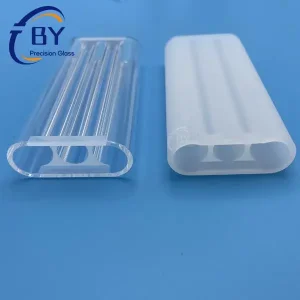
Precision Multi-Bore Quartz Laser Cavity Flow Chambers
View Technical Specs -
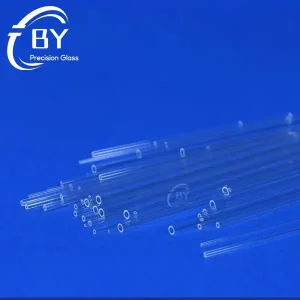
Fluorine-Doped Fused Silica Micro-Capillary Tubing
View Technical Specs -
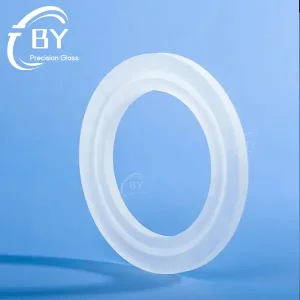
Custom CNC-Machined Semiconductor Quartz Glass Components
View Technical Specs -
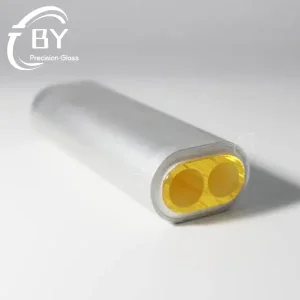
Custom Industrial Laser Cavity Cooling Flowtubes
View Technical Specs -
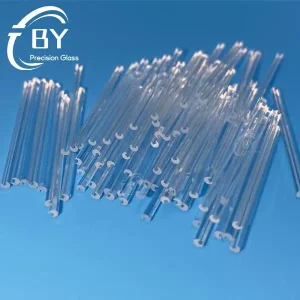
Precision V-Groove Quartz Substrates for Fiber Alignment
View Technical Specs -
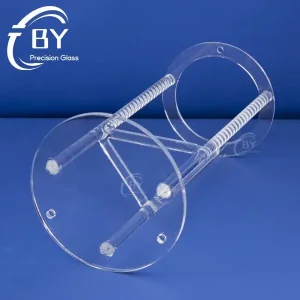
High-Purity Slotted Quartz Wafer Carriers & Cassettes
View Technical Specs -
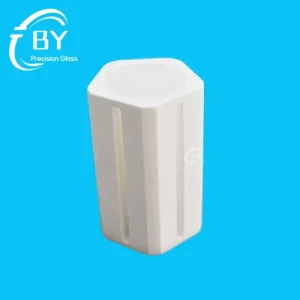
High-Reflectivity Diffuse PTFE Diode Pumping Reflectors
View Technical Specs
Engineering & Procurement FAQ
Direct answers to technical queries submitted by Houston petrochemical, biopharma, and environmental analytical teams.
What is the difference between JGS1, JGS2, and JGS3 quartz in cuvettes?
JGS1 is synthetic fused silica with high transmission from 185 nm to 2,500 nm, completely bubble-free with virtually no OH absorption band at 2700 nm, making it the industry standard for Deep-UV and fluorescence spectrophotometry. JGS2 is optical quartz produced from natural quartz crystals, transmitting from 220 nm to 2,500 nm, widely used for visible spectrum process applications. JGS3 is infrared-grade fused quartz with hydroxyl (OH) content strictly controlled below 5 ppm, maximizing transmission up to 3,500 nm for FTIR and hydrocarbon vibrational band analysis.
Why should Houston petrochemical labs avoid epoxy-bonded flow cells?
Hydrocarbon streams along the Houston Ship Channel regularly contain aromatic solvents such as benzene, toluene, xylenes, as well as chlorinated wash reagents. Epoxies and optical glues soften, swell, and leach into the flow channel within hours of exposure, contaminating chromatographic peaks and eventually causing optical window failure. BY Photonics uses proprietary Direct Molecular Fusion bonding, merging the quartz plates into a single physical block capable of withstanding any chemical solvent capable of touching quartz.
What dimensional and pathlength tolerances can your factory achieve?
For standard 10 mm pathlength absorption cuvettes, our standard production tolerance is $\pm 0.01$ mm, with precision-matched sets calibrated to within $\pm 0.003$ mm. For specialized micro-channel flow cells used in TMC cytometry, we regularly machine micro-channels with internal dimensions of $100\,\mu\text{m} \times 100\,\mu\text{m}$ with cross-sectional channel tolerances within $\pm 2\,\mu\text{m}$.
How does direct factory supply from Tianjin compare with US distributors?
Most commercial optical brands in the United States do not fabricate quartz cuvettes; they outsource production to Asian manufacturing centers, apply private branding, and add 200% to 400% markups while offering standard off-the-shelf catalog dimensions. By partnering directly with our Tianjin facility, Houston engineering teams work directly with optical fabricators, receive custom DFM modifications, and reduce overall procurement expenditures by 40% to 60% with expedited FedEx/DHL transit to Houston within 4-6 business days.
Can you manufacture custom flow cells based on STEP or PDF drawings?
Yes. Over 70% of our production consists of custom optical parts manufactured to client-furnished blueprints. We accept STEP, IGES, DXF, DWG, and fully dimensioned 2D engineering PDFs. Our engineering department reviews optical clear apertures, fluidic inlet angles, threading standards (e.g., 1/4-28 UNF, M6), and material compatibility, returning manufacturability feedback and quotations within 24 working hours.
How do you guarantee safe transit of fragile quartzware to Texas?
Every optical component undergoes ultrasonic cleaning and cleanroom vacuum-sealing in antistatic, dust-free pouches. Fragile cuvettes are nested inside custom-molded high-density EVA foam cassettes, surrounded by multi-layer shock-absorbing outer cartons capable of passing standard ISTA 3A drop tests. In the event of any shipping damage, we offer immediate no-cost priority replacement.