
Featured Laser Cavity & Optical Substrates
Direct factory supply machined to customer drawings · Class 1000 cleanroom verified
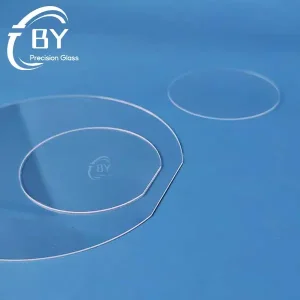
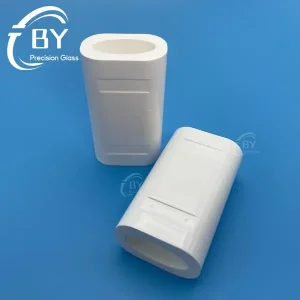
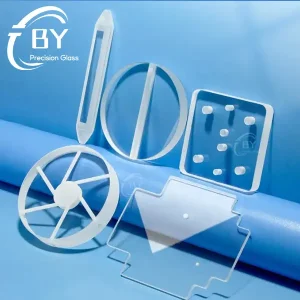
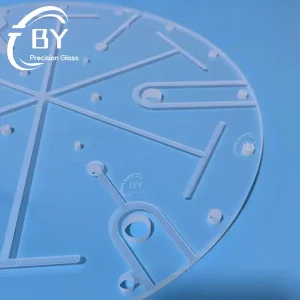
State of Alumina Cavity Reflectors in Modern Photonics & Industrial Lasers
The commercial deployment of solid-state laser systems—ranging from pulsed Nd:YAG and Alexandrite to Holmium:YAG, Erbium:YAG, and high-power Diode-Pumped Solid-State (DPSS) architectures—relies decisively on optical pump cavity efficiency. Across the global photonics sector, porous and glazed alumina ceramic (Al₂O₃) reflectors have established an uncontested dominance over electroplated metal (gold-coated or silver-coated brass and aluminum) and polymer-based diffuse alternatives. This transition is propelled by the quest for multi-kilowatt thermal endurance, solarization resistance under extreme UV flashlamp bursts, and chemical inertness in continuous deionized water cooling loops.
Medical & Aesthetic Dermatology
In dual-wavelength aesthetic systems (such as 755nm Alexandrite and 1064nm long-pulsed Nd:YAG systems manufactured by Candela, Cynosure, and Lumenis), alumina reflectors provide superior diffuse scattering. The lambertian reflection profile guarantees uniform excitation throughout the laser rod, eliminating localized thermal lensing and hot spots that compromise pulse energy consistency.
Semiconductor Annealing & Micromachining
Sub-nanosecond and picosecond lasers utilized in wafer dicing, direct laser patterning, and surface annealing demand continuous 24/7 uptime. High-density 99.7% Al₂O₃ cavities resist cavitation erosion and chemical leeching in turbulent cooling channels, preventing laser output degradation across billions of repetitive pulses.
Aerospace LIDAR & Defense Systems
Compact laser rangefinders and airborne LIDAR modules operating in extreme environmental temperatures benefit from the low thermal expansion coefficient (7.2–8.6 × 10⁻⁶/K) and extreme mechanical stiffness of sintered alumina. Unlike polymer reflectors that degrade under UV exposure, sintered ceramics remain dimensionally locked from -55°C to over +300°C.
Material Science: Optical Thermodynamics of High-Purity Porous Al₂O₃ Ceramics
A laser pump cavity performs two synchronized functions: coupling optical radiation from the excitation source (xenon/krypton flashlamps or laser diode bars) into the laser medium with minimal photon loss, and providing a hydrodynamically sound cooling jacket. The internal microstructure of our laser-grade alumina ceramic delivers intrinsic volumetric scattering that renders metal coatings obsolete.
| Performance Parameter | High-Purity Alumina Cavity (BY Photonics) | Gold-Coated Metal Cavity (Brass/Cu) | Spectralon-Grade Sintered PTFE |
|---|---|---|---|
| Reflectance @ 500–1200 nm | 97.8% – 99.2% (Lambertian Diffuse) | 95.5% – 97.0% (Specular) | 98.5% – 99.3% (Diffuse) |
| UV Solarization Resistance | Immune (No photodegradation) | Poor (Gold micro-blistering under UV) | Moderate (Degrades under <300nm UV) |
| Maximum Working Temperature | > 1200 °C (Melting Pt: 2050 °C) | ~250 °C (Coating flaking limit) | ~260 °C (Deforms under stress) |
| Thermal Conductivity (W/m·K) | 25 – 32 W/m·K (Rapid heat diss.) | 110 – 380 W/m·K | 0.25 W/m·K (Thermal insulator) |
| Coolant Resistance (Deionized H₂O) | Zero leaching with glazed flow bore | Vulnerable to galvanic corrosion | Chemically inert but micro-porous |
| Mechanical Rigidity & Machinability | Mohs 9 (Diamond CNC contouring) | Easily scratched during cleaning | Soft (Prone to creep and deformation) |
Volumetric Diffuse Reflection Physics
Unlike polished specular reflectors that create focal lines and spatial intensity striations inside the laser crystal, high-purity Al₂O₃ features controlled sub-micron intergranular pores. Photons penetrating the surface undergo hundreds of microscopic refractive scattering events per millimeter before emerging. This creates ideal Lambertian diffuse reflectance, yielding an exceptionally uniform pump light distribution across the entire cross-section of rods and slabs.
Selective Glazing & UV Filter Integration
To preserve reflectance while sealing against high-velocity coolant erosion, Tianjin BY Photonics applies proprietary high-temperature glass glazes inside pump cavity fluid bores. Furthermore, our engineers offer customized glaze formulations doped with cerium or samarium oxides. This allows the internal glaze layer to function as a sharp-cut optical filter—absorbing harmful ultraviolet wavelengths below 400 nm that cause color centers, while passing pump photons.
China Manufacturing Efficiency & Engineering Depth at BY Photonics
Operating since 2010 in Nankai District, Tianjin, BY Photonics has spent over fifteen years perfecting the synthesis, CNC green-machining, precision sintering, and hard diamond-grinding of advanced optical ceramics. By integrating powder formulation, diamond tooling, cold isostatic pressing (CIP), vacuum sintering furnaces, and optical spectrophotometry under one traceable roof, we provide international OEMs with an unmatched balance of dimensional accuracy, agile prototyping, and competitive scalability.
Multi-Axis Ceramic CNC
Equipped with ultra-high-speed spindle multi-axis machining centers using diamond electroplated micro-tools, achieving complex multi-bore, slotted, elliptical, and close-coupled cooling geometries.
CIP & Controlled Sintering
Cold Isostatic Pressing at >200 MPa ensures uniform bulk density before firing in computer-controlled atmosphere kilns at 1650°C, eliminating micro-voids and irregular shrinkage.
100% CMM Metrology
Hexagon coordinate measuring machines (CMM) and non-contact optical profilometers certify critical center-to-center bore distances, cylinder coaxiality, and edge chamfers to ±0.02 mm.
24-Hour DFM Engineering
Our bilingual senior applications team examines CAD designs (STEP, IGES, DWG) within 24 working hours, offering design-for-manufacturability insights that reduce costs and lead times.
Localized Application Scenarios & Direct OEM Replacement Systems
From medical clinics in North America and Western Europe to semiconductor wafer fabs in East Asia, BY Photonics manufactures customized alumina reflectors configured for leading commercial laser pump assemblies:
Candela VBeam & GentleLase Series
Direct Drop-In Replacement Reflector Blocks
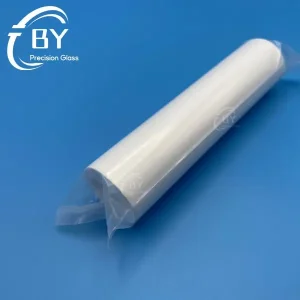
We supply high-precision 6" white cavity ceramic reflectors, twin-bore cylinders, and flow tube mounts specifically engineered for pulsed-dye and Alexandrite systems. Glazed bore surfaces prevent coolant erosion while sustaining 98% diffuse output.
Cynosure Apogee & Elite Chambers
Dual-Lamp / Single-Rod Configurations
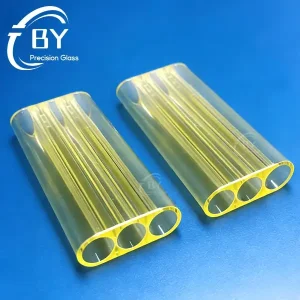
Engineered triple-bore ceramic blocks incorporating dedicated coolant routing and precision O-ring grooves. Holds optical lamp-to-rod alignment within 30 arcseconds under intense thermal shock.
Industrial Nd:YAG Welding & Cladding
High-Duty-Cycle Industrial Multi-kW Heads
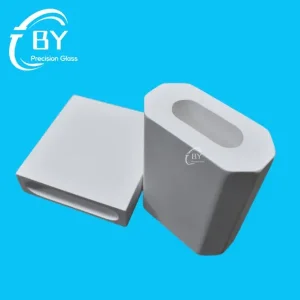
Custom monolithic and split-cavity alumina reflectors supporting dual-lamp continuous wave (CW) and high-peak pulsed systems. Provides absolute chemical stability against DI water cavitation over 5,000+ operating hours.
Diode-Pumped Solid-State (DPSS) Slabs
Close-Coupled Array Diffusers
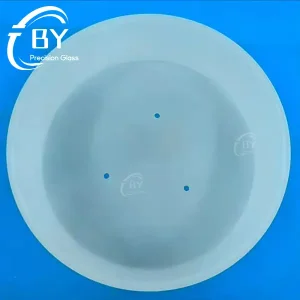
Custom flat, curved, and stepped alumina diffuse reflector plates designed to encase high-power 808nm and 880nm diode laser stacks, ensuring homogeneous side-pumping into Nd:YAG or Nd:YVO₄ crystals.
Holmium & Erbium Surgical Lasers
Mid-IR 2.1µm & 2.94µm Pumping Modules
High-efficiency diffuse cavities tailored for flashlamp-pumped Ho:YAG and Er:YAG medical devices. The ceramic matrix eliminates parasitic oscillations and handles intense heat loads during tissue ablation pulses.
Bespoke Scientific & Defense Cavities
One-Off Prototyping to Full Production
Custom single-bore, multi-rod, and asymmetrical geometries designed in close partnership with national laboratories and defense contractors for high-energy Q-switched laser transmitters.
Technological Roadmaps & Emerging Trends in Laser Pumping Architectures
As solid-state lasers push toward higher repetition rates, tighter beam parameter products (BPP), and miniaturized modular formats, alumina cavity reflector technology is rapidly evolving across three critical fronts:
Micro-Channel Direct Liquid Cooling
Conventional cavity designs rely on separate quartz flow tubes inserted into ceramic blocks. Modern architectures increasingly employ monolithic alumina bodies with laser-drilled micro-cooling channels. This eliminates quartz-to-ceramic interfaces, reducing thermal resistance by over 35% and preventing air-pocket bubble formation in turbulent coolant flows.
Doped Glaze Parasitic Wavelength Suppression
In high-gain Nd:YAG and Yb:YAG amplifiers, amplified spontaneous emission (ASE) at 1064nm causes significant loss. BY Photonics is pioneering functionalized glazes doped with selective rare-earth absorbing agents that capture ASE photons striking the cavity walls while reflecting pump wavelengths at 808nm and 880nm with >98% efficiency.
Hybrid Ceramic-Fused Silica Assemblies
To address the diverse expansion rates of quartz flow tubes and ceramic blocks, our engineering team has developed pre-assembled, stress-annealed hybrid cavity units. Integrated with precision viton seals or hermetic ceramic-to-glass braze interfaces, these assemblies cut OEM production-line installation time from hours to minutes.
Global Procurement Checklist: Key Requirements for Specifying Alumina Cavities
When procuring custom ceramic reflectors for mission-critical laser platforms, optical and mechanical engineers must specify more than external geometry. To ensure seamless turnkey integration and lifetime performance, BY Photonics validates every order against our five-tier procurement verification framework:
1 Purity Grade & Bulk Density Verification
Ensure the quotation explicitly designates ≥99.7% Al₂O₃. Lower ceramic grades (such as 95% or 96% industrial ceramics) contain silica, calcium, and fluxing agents that cause optical absorption in the near-infrared and degrade rapidly under UV flashlamp radiation. Bulk density should remain tightly controlled between 3.85 and 3.95 g/cm³.
2 Glazing Integrity & Coolant Compatibility
For wet pump chambers, request full internal bore glazing with documented zero micro-fissures. Un-glazed porous ceramic can absorb deionized cooling water, promoting ion exchange, lowering resistivity, and fostering bacterial biofilm growth that severely scatters lamp photons.
3 Spectrophotometer Reflectance Curves
Every batch produced at BY Photonics comes accompanied by an integrating-sphere spectrophotometric reflectance scan covering 400 nm to 1200 nm. Ensure diffuse reflectance meets or exceeds 97.8% at 600 nm and 98.5% at 1064 nm.
4 Geometric Tolerances & Bore Coaxiality
Specify centerline parallelism and coaxiality of twin and triple bores within ±0.02 mm. Even minute misalignments between the flashlamp center and laser crystal rod cause non-uniform excitation, reduced beam quality (M²), and localized rod breakage.
Frequently Asked Engineering & Procurement Questions
Direct technical answers from Tianjin BY Photonics' lead ceramic and optical engineers:
What is the primary optical advantage of porous alumina over polished gold-coated laser cavities?
Why is internal bore glazing recommended for liquid-cooled laser chambers?
What dimensional tolerances can Tianjin BY Photonics hold on custom cavity blocks?
Can BY Photonics fabricate direct replacements for obsolete or legacy medical laser cavities?
What is the typical lead time for custom prototype versus batch ceramic production?
Specialized Laser Optics, Ceramic Blocks & Flow Tubes
Full traceability · Factory direct pricing · Export-grade protective shock packaging
Ready to Optimize Your Laser Cavity Performance?
Upload your technical drawings (STEP, IGES, DXF, DWG, or PDF). Our senior ceramic engineers in Tianjin, China will return a comprehensive manufacturability assessment, material grade recommendation, and transparent volume quotation within 24 business hours.