Featured Laser Reflectors & Optical Assemblies
Engineered to deliver over 97% diffuse reflectance across 600–1000 nm pump bands. Explore our first batch of precision-machined cavities and high-temperature quartz components.
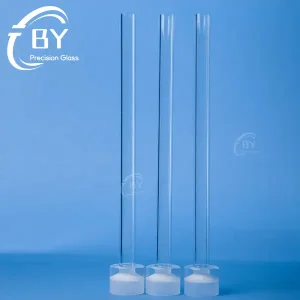
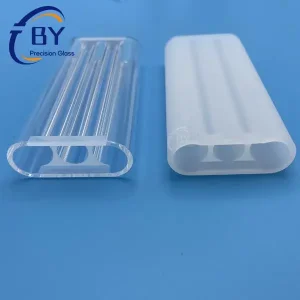
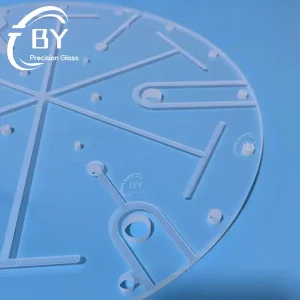
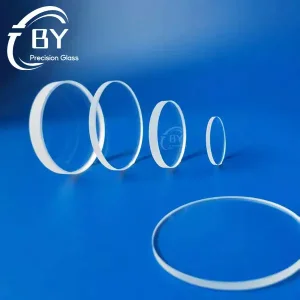
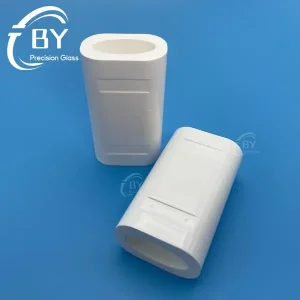
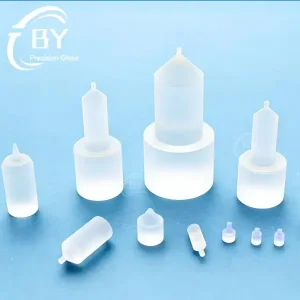
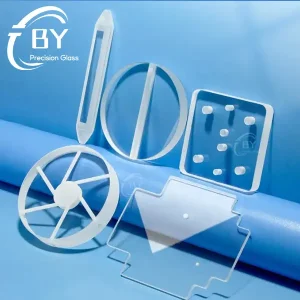
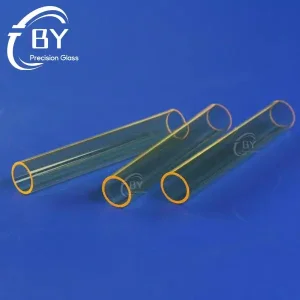
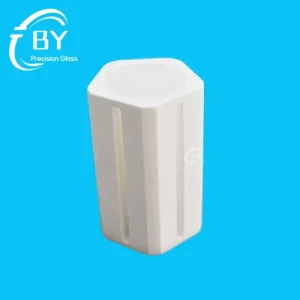
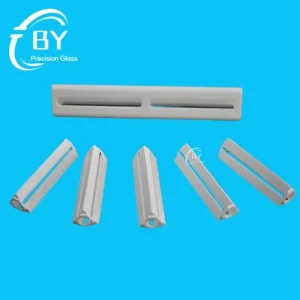
Next-Gen Diffusive Ceramic Laser Cavities
In high-power diode-pumped solid-state (DPSS) and flashlamp-pumped laser architectures, diffusive ceramic reflectors offer superior optical diffusion, unmatched thermal shock resistance, and immunity to coolant-induced oxidation compared to gold-plated metallic cavities.
Meeting Global Enterprise Procurement Standards
Leading laser system integrators worldwide require robust ceramic reflector chambers that optimize pump-energy transfer efficiency while ensuring zero contamination in high-flow deionized (DI) cooling circuits.
Aesthetic & Medical Lasers
Widely deployed in Alexandrite (755 nm) and Nd:YAG (1064 nm) aesthetic systems. Glazed internal bores prevent coolant penetration, inhibiting bio-film growth and eliminating flashlamp scorch marks.
High-Precision Industrial Machining
For laser seam welding, micro-cutting, and additive manufacturing heads. Diffuse multi-bore ceramics ensure uniform optical gain across the laser rod diameter, drastically mitigating thermal lensing.
Aerospace LIDAR & Defense Photonics
Engineered for lightweight, shock-resistant cavity structures. Ceramic reflectors maintain strict beam symmetry and spatial consistency even under severe vibrational and thermal fluctuations.
Comprehensive Engineering Specifications
A granular look at the optical, thermal, and mechanical parameters of our proprietary sintered porous alumina ceramics versus competing technologies.
| Performance Parameter | High-Purity Laser Ceramic (Al₂O₃) | Sintered PTFE (Spectralon-Grade) | Gold-Plated Metal Cavity |
|---|---|---|---|
| Reflectance (600–1064 nm) | 97.2% – 98.1% (Lambertian Diffuse) | 98.5% – 99.2% (Lambertian Diffuse) | 95.5% – 96.5% (Specular) |
| Continuous Service Temperature | Up to 1500°C | Up to 260°C | Up to 300°C (Risk of blister) |
| Dielectric Strength | >15 kV/mm (Electrical Insulator) | >20 kV/mm (Electrical Insulator) | Conductive (Requires isolation) |
| Surface Glaze Option | Yes (Zero Porosity, Hydrophobic) | N/A (Micro-porous matrix) | N/A (Metallic surface) |
| Coolant Compatibility | Deionized Water, Glycol, UV Flush | DI Water (Low velocity only) | Deionized Water (Corrosion risk) |
| Long-Term Photochemical Life | 10+ Years (UV Non-Aging) | Susceptible to high UV fluence | Susceptible to tarnishing/wear |
Phase I: Microstructure Optimization
Sub-micron grain boundaries engineered to increase backscattering probability, raising overall reflectance above 98% across standard DPSS pump bands.
Phase II: Advanced Hermetic Glazing
Application of high-index glassy sealants to inner bores, preventing chemical adsorption of dissolved ions and maintaining peak reflectance over years of continuous run-time.
Phase III: Direct-Integration Hybrid Modules
Co-sintering ceramics with embedded flow-tubes and mounting brackets, enabling plug-and-play laser heads that cut assembly labor by 40%.
Rigorous Inspection & International Standards
From raw material verification to coordinate measuring machine (CMM) dimensional checks, our quality framework ensures zero-defect delivery across North America, Europe, and Asia-Pacific.
Full Material Traceability
Every ceramic batch is backed by X-ray fluorescence (XRF) and XRD phase analysis, guaranteeing 99.7% Al₂O₃ purity with controlled grain size distribution.
Spectrophotometric Verification
Using integrating spheres across 250 nm to 2000 nm, diffuse reflectance is logged per production lot to verify consistent pump light distribution.
RoHS, REACH & ISO 9001:2015
All ceramic bodies and glazes are completely lead-free, cadmium-free, and fully compliant with EU environmental regulations, safely cleanroom-packed for export.
Procurement & Engineering Inquiries
Comprehensive answers regarding ceramic reflector characteristics, customization workflows, and high-volume OEM delivery schedules.
Why choose ceramic reflectors over gold-plated cavities?
Gold-plated cavities produce specular reflection which can create hot-spots on laser crystals, inducing thermal stress. In contrast, ceramic reflectors create a uniform Lambertian diffuse light field. Furthermore, gold coatings are prone to peeling, pinholing, and deionization corrosion, whereas ceramics are chemically inert and virtually permanent.
When should a glazed inner bore be specified?
A glazed bore is recommended when the reflector serves as a wet cavity where deionized cooling water directly touches the ceramic walls. The glaze seals microscopic surface pores, preventing water absorption, mineral buildup, and bacterial contamination, while facilitating easy cleaning during regular maintenance.
Can you manufacture customized multi-bore geometry?
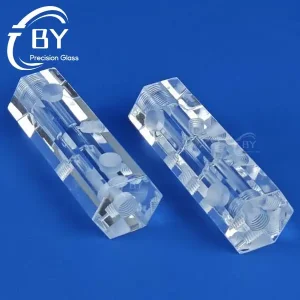
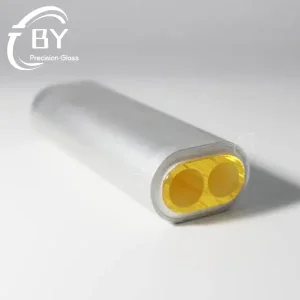
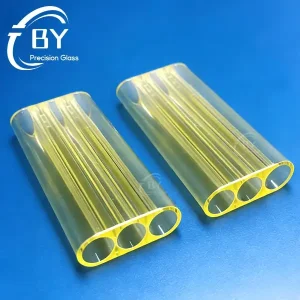
Yes. We routinely produce single-bore, double-bore (elliptical or close-coupled), triple-bore (e.g. for dual flashlamp + single rod configurations), and complex custom polygonal cavity blocks tailored directly to your 3D CAD files (STEP, IGES, DXF).
What is the standard production turnaround time?
Standard prototype machining from green/sintered stock typically ships in 2 to 3 weeks. Production runs of hundreds to thousands of pieces adhere to staggered delivery schedules with an initial batch release within 4 to 6 weeks, supported by international air and sea freight.
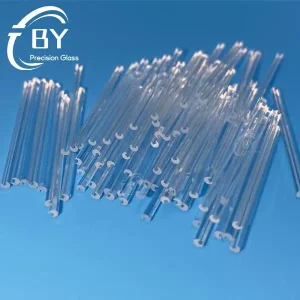
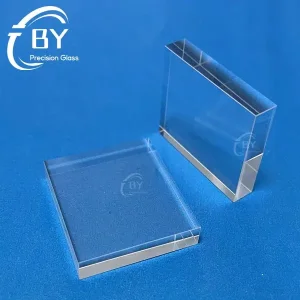
Precision Flow Tubes, Reflectors & Optical Substrates
Explore our second selection of high-reflectivity PTFE reflectors, samarium-doped filter tubes, and precision sapphire light guides engineered for medical and industrial laser equipment.