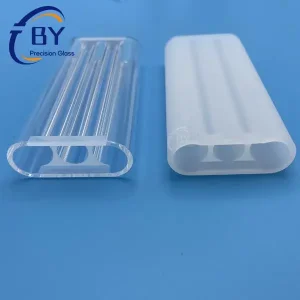
High-Precision Optical & Microtube Solutions
Engineered to deliver tight concentricity, clean-cut end faces, and superior chemical resilience across laboratory, semiconductor, and optoelectronic applications.
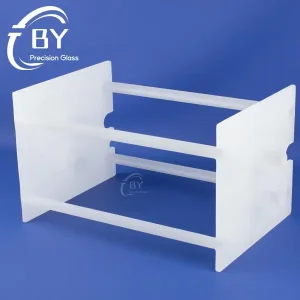
Wholesale Quartz Diffusion Boat for Semiconductor Suppliers, Factories
View Specifications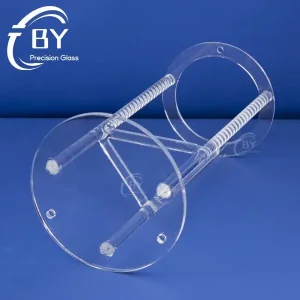
Wholesale Quartz Wafer Carriers for Semiconductor Supplier, Suppliers
View Specifications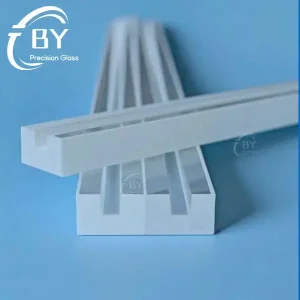
High-Quality Square Groove Quartz Substrate for Fiber Couplers Supplier, Factories
View Specifications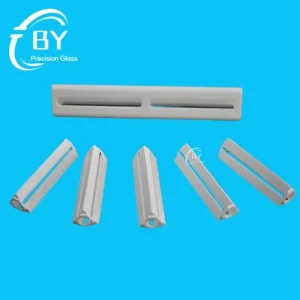
High-Quality Diode‑Pumping Chamber Diffuse Reflectors PTFE‑based Supplier, Suppliers
View Specifications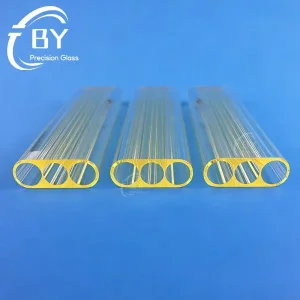
Custom Laser Cavity Flow Tubes & Filters Made from Samarium-doped Glass Supplier, Suppliers
View Specifications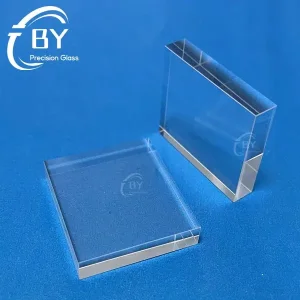
Custom Sapphire IPL Light Guide Block Used for Laser IPL Hair Removal Handle Manufacturer, Manufacturers
View Specifications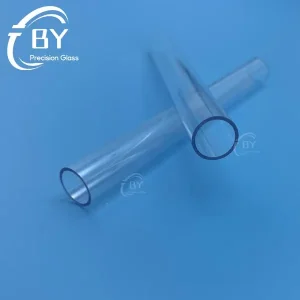
Wholesale Cerium Doped Quartz Tube Blocked UV Wavelength Manufacturer, Manufacturers
View Specifications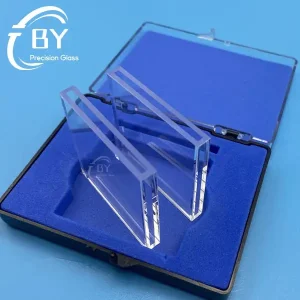
Wholesale Customize Quartz Cuvette for Spectrophotometer Supplier, Factory
View SpecificationsTrends Driving High-Accuracy Glass Microtube Evolution
Microfluidics, high-throughput DNA sequencing, and photonic integrated circuits demand glass capillary tubing with geometric sub-micron tolerances and superior chemical stability.
Next-Gen Microfluidics & Lab-on-a-Chip
Microbore capillary tubing serves as the foundational conduit for droplet-based microfluidics, single-cell analysis, and continuous flow chemistry. Consistent inner diameter (ID) repeatability minimizes shear variance and ensures predictable laminar fluid dynamics.
Fiber Optic Packaging & Splicing
Custom quartz capillary ferrules and square-groove substrates deliver ultra-low insertion losses in photonic connectors, telecommunication arrays, and multi-core fiber alignment matrices requiring sub-micron concentricity and zero thermal expansion mismatch.
Harsh-Environment Sensor Sleeves
Synthesized fused silica provides total immunity to biological corrosion, acidic reagents, and high-pressure steam sterilization. High-accuracy glass microtubes protect miniature fiber-Bragg grating (FBG) temperature and pressure probes in semiconductor reactors.
Global Enterprise Sourcing Criteria & Material Matrix
Leading OEM buyers require standardized batch validation, zero micro-crack propagation, and verified thermal expansion coefficients. The matrix below defines standard grades available for custom tube drawing.
| Material Classification | Spectral Transmission | Softening Point | Thermal Expansion (×10⁻⁷/K) | Primary Industrial Use-Case |
|---|---|---|---|---|
| JGS1 Synthetic Fused Silica | 185 nm – 2,500 nm | 1,730 °C | 5.5 | UV capillary electrophoresis, high-energy laser optics, deep UV biochips |
| JGS2 Fused Quartz | 220 nm – 2,500 nm | 1,680 °C | 5.4 | Industrial laser flow tubes, furnace thermocouple sleeves, standard microfluidics |
| JGS3 Infrared Quartz | 260 nm – 3,500 nm | 1,680 °C | 5.4 | IR spectroscopic analysis, moisture analyzers, thermal process tubes |
| Borosilicate 3.3 Glass | 310 nm – 2,200 nm | 820 °C | 33.0 | Disposable diagnostic capillaries, chromatographic columns, chemical dosing |
| Doped Quartz (Sm / Ce) | Tailored Cut-off Filters | 1,650 °C | 5.5 | Solid-state laser cooling jackets, UV-suppression flow tubes, intense pulse lights |
Macro-Industry Integrated Solutions
Combining thermal drawing, cold-end optical machining, and robotic dimensional verification into a closed-loop turnkey fabrication cycle.
Semiconductor & Wafer Handling
Micro-bore quartz guide pins, vacuum pickup wands, and high-purity diffusion furnace boats fabricated with zero metallic contaminants (Fe, Cu, Ni < 0.1 ppm). Our products prevent wafer contamination while enduring continuous 1100°C thermal cycles.
Analytical Chemistry & Chromatography
Ultra-straight glass capillaries featuring bore sizes from 10 μm up to multiple millimeters. Precision hot-drawn walls prevent sample holdup and ensure clean optical detection through polished windows for UV/Vis absorbance and fluorescence monitoring.
Laser Pumping & Medical Optics
Custom multi-bore capillary tubes and Samarium-doped glass flow sleeves that absorb parasitic 1064 nm amplified spontaneous emissions while withstanding intense flashlamp pulses and coolant hydraulic pressure fluctuations.
Localized Support, Compliance & Technology Roadmap
Enterprise procurement demands continuous material traceability, strict regulatory conformity, and forward-looking optical micro-engineering capabilities.
RoHS & REACH International Compliance
All fabricated fused silica and borosilicate glass products comply with EU RoHS Directive 2011/65/EU and REACH regulations. Heavy metal contents (Pb, Cd, Hg, Cr VI) remain strictly under 10 ppm, certified through rigorous third-party ICP-MS testing.
Traceable Metrology & Cleanroom Packing
Every shipment comes backed with dimensional optical inspection reports, contact profilometry verification, and batch material certificates. Products undergo ultrasonic multi-stage cleaning and double vacuum packaging in ISO Class 6 environments.
Roadmap: Multi-Lumen & 3D Photonic Capillaries
Our engineering pipeline includes non-circular square/hexagonal bore drawing, multi-lumen capillary tubes with up to 16 isolated channels, and selective internal anti-reflective coating deposition to service the next generation of biophotonics.
Frequently Asked Questions for Engineering Buyers
Essential guidance on tolerances, raw material properties, drawing specs, and sample validation protocols.
What dimensional tolerances can be held on microtube ID and OD?
Depending on the diameter range and drawing length, standard production holds inner diameter (ID) and outer diameter (OD) tolerances to ±0.01 mm. For high-precision applications like fiber optic arrays, specialized redraws achieve ±0.001 mm to ±0.003 mm.
When should JGS1 synthetic silica be chosen over JGS2 quartz?
JGS1 synthetic fused silica provides exceptional transmittance in the deep ultraviolet range (down to 185 nm) with negligible bubble density and fluorescence. JGS2 is suited for visible and near-infrared applications where cost efficiency is balanced against UV optical clarity.
Can you provide custom end-face finishes such as optical polishing or flaring?
Yes. Beyond standard scratch-and-snap cleaving, we offer laser cleaving, fire-polishing, mechanical optical flat polishing (scratch-dig 40-20), beveling, and thermal flaring for fluidic catheter interfaces and cannula coupling.
What is the standard turnaround time for custom microtube prototypes?
Standard design feasibility reviews take under 24 hours. For custom diameters requiring dedicated redraw dies and furnace setups, prototype batches typically ship within 2 to 3 weeks, while standard stocked bores dispatch within 3 business days.
Precision Laser, Flow & Substrate Solutions
Engineered to deliver high thermal-shock resistance, tight geometric alignment, and verified structural longevity under intense optical load.
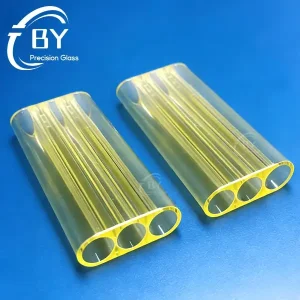
Wholesale Samarium-doped Quartz Triple Bore for Medical Laser Manufacturer, Supplier
View Specifications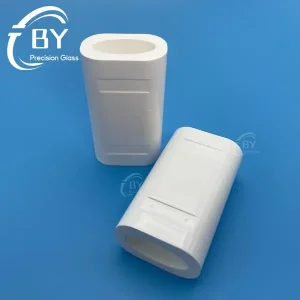
High-Quality Ceramic Cavities For Nd YAG Laser Supplier, Factories
View Specifications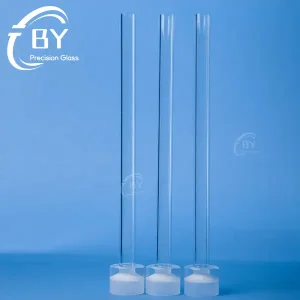
High-Quality Chemical Resistant Custom Quartz Glass Parts Fabrication Supplier, Factories
View Specifications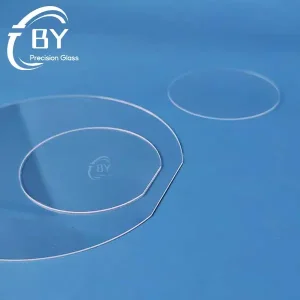
Custom Borofloat 33® Glass Wafers for Semiconductor Manufacturers, Factories
View Specifications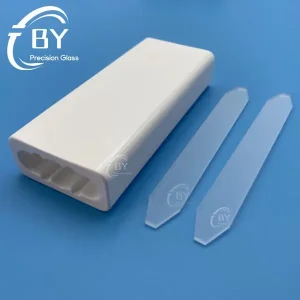
Wholesale Ceramic Cavity Reflector use for DEKA Laser Manufacturers, Supplier
View Specifications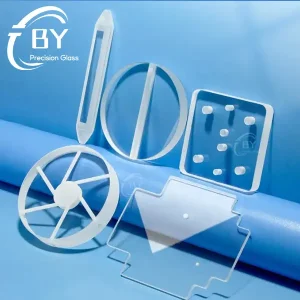
Wholesale High Temperature Custom Quartz Glass Fabrication Suppliers, Factories
View Specifications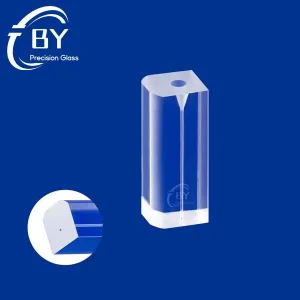
Custom Fiber Optic Glass Ferrules Supplier, Factories
View Specifications