
Optoelectronic Substrates, Optical Windows & Specialized Cavities
Explore engineering-grade optical components manufactured via multi-axis CNC cold diamond machining, precision flame polishing, and thermal redrawing.
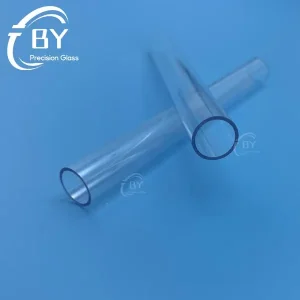
Precision Engineering in Glass Capillary Tubing Fabrication
A comprehensive examination of thermo-mechanical drawing, synthetic quartz purities, concentricity control, and micro-fluidic transport dynamics.
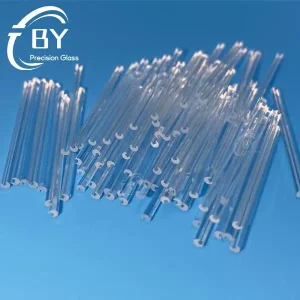
In modern industrial photonics, microfluidics, analytical chemistry, and semiconductor lithography, high-precision glass capillary tubes represent critical fluidic and optical channels. Fabricated predominantly from synthetic fused silica (such as JGS1, JGS2, and JGS3 grades) and low-expansion borosilicate formulations (such as Borofloat 33), these components require rigorous inner diameter (ID) and outer diameter (OD) control down to single-micron and sub-micron variances. As modern analytical techniques such as Capillary Electrophoresis (CE), High-Performance Liquid Chromatography (HPLC), and Gas Chromatography (GC) advance into picoliter liquid manipulation, the physical integrity, surface smoothness, and geometric concentricity of the capillary walls dictate signal-to-noise ratios and hydraulic resistance stability.
High-precision glass capillary tubing is produced through vertical redraw processes. Preforms with exact outer-to-inner dimensional ratios are lowered through controlled thermal zones within electrical resistance or induction redraw towers. Precise thermal profiling across temperatures between 1,700°C and 2,150°C governs viscosity, enabling uniform draw ratios under high-speed laser measurement feedback. In-line laser scan micrometers monitor continuous dual-axis OD variances, while internal pressure stabilization systems regulate pneumatic counter-pressure within the bore. This setup prevents elliptical deformation, internal bore collapse, and axial wall tapering across extensive draw lengths.
Competitive Engineering Ecosystem & High-Yield Fabrication
How China's advanced photonics infrastructure delivers high-precision capillary manufacturing with high thermal stability and short development lead times.
Full-Spectrum Raw Material Integration
Direct supply-chain integration with specialized silica purifiers provides verified JGS1, JGS2, JGS3, and specialized fluorine-doped materials. This end-to-end access lowers material procurement costs and ensures reliable chemical homogeneity.
Scalable Thermal Redraw Platforms
Facilities like BY Photonics operate automated vertical redraw towers with high-resolution closed-loop PID thermal management. This enables scalable runs from meter-scale prototype canes up to high-volume OEM lots without sacrificing concentricity.
Combined Hot and Cold Micro-Machining
Housing precision glass diamond-blade dicing, CNC end-face polishing, chemical fire-polishing, and oxyhydrogen flame sealing in one facility avoids subcontractor pass-offs, minimizing transit chipping and preserving edge bevel geometries.
Stringent In-Line Quality Assurance
In-process interferometry, multi-axis optical profilometry, and spectrophotometric transmission verification guarantee zero internal striae, sub-nanometer inner-wall roughness, and scratch-dig specifications down to 20-10 per ISO 10110.
Rapid Turnaround DFM Engineering
OEM engineering support reviews complex customer STEP and DXF drawings within 24 hours. Experienced tooling designers offer rapid Design-For-Manufacturability feedback to prevent stress fractures and micro-tapering issues.
Class 1,000 / 10,000 Cleanroom Packaging
Capillary components destined for medical diagnostic flow cells and semiconductor wafer-handling apparatus are ultrasonically scrubbed in deionized water, baked dry, and vacuum-sealed to prevent airborne particulate contamination.
Key Industry Trends Driving Capillary Tube Geometries
Market and technical demands shaping precision glass tube engineering for emerging analytical, laser, and biomedical platforms.
Multi-Lumen & Non-Circular Bores
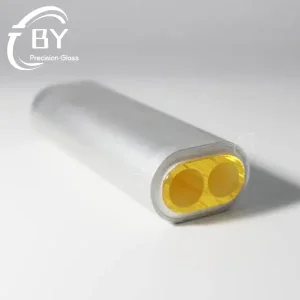
Microfluidic analysis increasingly demands multi-channel capillaries (dual-bore, four-bore, and honeycomb layouts) alongside square, rectangular, and D-shaped profiles. These geometries enable simultaneous multi-reagent fluid transport and single-point laser-induced fluorescence interrogation without refractive lensing aberrations.
Fluorine-Doped & Cladded Geometries
Advanced optical fiber ferrules, end-caps, and photonic couplers demand precision glass sleeves with lower refractive indices than pure silica. Fluorine doping depresses index profiles, guiding internal transmission modes and preventing numerical aperture mismatches in high-power laser delivery.
Shift to Synthetic Fused Silica (UV-Grade)
As gene sequencers and molecular analyzers move to deeper ultraviolet (UV) excitation bands below 260 nm, natural quartz tubes are being replaced by high-purity synthetic fused silica (JGS1). These grades eliminate autofluorescence and resist solarization effects under deep-UV illumination.
| Material Matrix | Refractive Index (nd) | Softening Point | Transmission Band | Key Performance Attribute |
|---|---|---|---|---|
| JGS1 Synthetic Fused Silica | 1.458 | 1,730 °C | 185 nm – 2,500 nm | Zero Autofluorescence Excellent UV clarity |
| JGS2 Fused Quartz | 1.458 | 1,680 °C | 220 nm – 2,500 nm | High optical homogeneity, low bubble inclusion |
| JGS3 Infrared Silica | 1.458 | 1,700 °C | 260 nm – 3,500 nm | Low OH (< 5 ppm) No absorption bands at 2.7 μm |
| Borofloat 33 Borosilicate | 1.471 | 820 °C | 350 nm – 2,500 nm | Low thermal expansion (3.25 × 10⁻⁶/K), high chemical durability |
| Doped Quartz (Sm / Ce) | 1.460 | 1,650 °C | Application-Tuned | Absorbs parasitic 1064 nm & blocks harmful UV radiation |
Precision Fluidic & Optical Integration Environments
Specific field use cases where capillary dimensional consistency and optical clarity directly influence system performance.
Micro-Spectrophotometry & Flow Cells
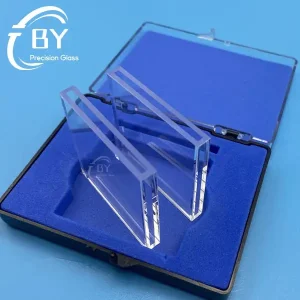
Custom square and rectangular bore capillaries serve as on-column detection flow cells in liquid chromatography and capillary electrophoresis. Flat outer surfaces eliminate cylindrical beam distortion, providing stable optical paths for spectroscopic absorbance and fluorescence measurements.
Fiber Optic Splicing & Alignment Ferrules
Single and multi-mode fiber connection architectures rely on circular capillary sleeves with inner diameters held within +1.0/-0 μm of nominal fiber cladding sizes (typically 125 μm or 250 μm). Tight concentricity prevents transmission insertion losses and polarization errors.
Medical Diagnostics & Flow Cytometers
High-precision flow channels isolate single cellular lines during hydrodynamic focusing in automated cell counters and DNA sequencers. Synthetic silica maintains high bio-inertness, resists chemical etching from cleaning solvents, and prevents cellular adhesion.
Solid-State Laser Cavities & Flow Tubes
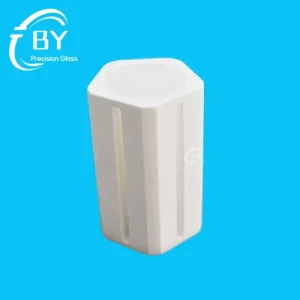
Samarium- and cerium-doped quartz capillary tubes surround laser rods and flash lamps in medical and industrial lasers. These tubes absorb parasitic ASE (Amplified Spontaneous Emission) wavelengths at 1064 nm while shielding internal assemblies from UV degradation.
Semiconductor Gas Injection & Distribution
Micro-bore fused silica injection capillaries feed specialty etching and precursor gases into high-vacuum CVD (Chemical Vapor Deposition) and ALD (Atomic Layer Deposition) processing chambers without outgassing or particle shedding.
Academic & High-Energy Physics Synchrotrons
Research arrays leverage ultra-thin wall silica capillaries for X-ray collimation, protein crystal micro-mounting, and vacuum feedthrough conduits capable of holding high differential pressure across extreme temperature gradients.
Navigating Technical Sourcing, Compliance & Traceability
Key quality and regulatory criteria procurement specialists must confirm when purchasing custom capillary tubing lots.
Procuring precision glass capillary tubes for integration into medical devices, diagnostic instruments, and semiconductor manufacturing lines requires strict adherence to regulatory standards and dimensional verification routines. Tier-1 global procurement officers evaluate manufacturing partners through four primary qualification criteria:
1. Batch Traceability
Full raw material traceability back to preform batches, verified by optical emission spectrometry reports detailing trace metal impurities (such as Fe, Cu, and Ti < 0.1 ppm).
2. Surface Cleanliness
End-face cut finishes free of micro-chipping, micro-fractures, and saw-blade marks, achieving clean circularity without requiring manual re-polishing on assembly lines.
3. Dimensional Reports
Verification with non-contact optical micrometers, measuring wall thickness variation, outside diameter, inside bore concentricity, and total runout across production lots.
4. Compliant Packaging
Shock-absorbing, ESD-safe packaging protocols designed to prevent transit fractures, surface abrasions, and particulate contamination during cross-border air shipping.
BY Photonics maintains ISO 9001 certified manufacturing quality systems, offering detailed inspection documentation, optical transmittance curves, Certificate of Analysis (COA), and RoHS/REACH compliance documentation with every export shipment.
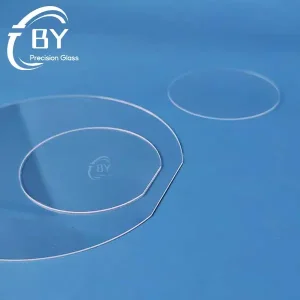
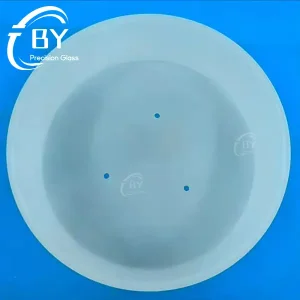
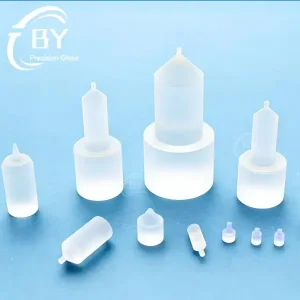
Fused Silica Wafers, Laser Tubes & High-Reflectivity Reflectors
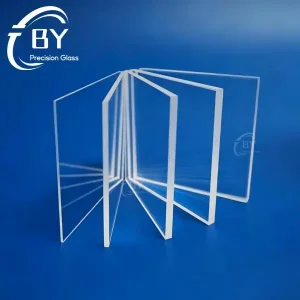
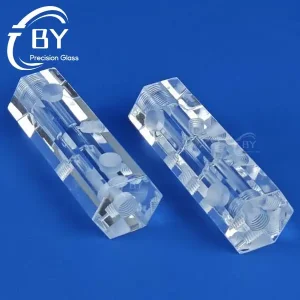
Explore high-temperature glass, specialized optical components, and precision quartzware engineered to customer drawings.
Frequently Asked Technical & Purchasing Questions
Direct engineering answers addressing material capabilities, tolerances, surface finishes, and global shipping policies.