High-Performance Laser & Optical Glass Assemblies
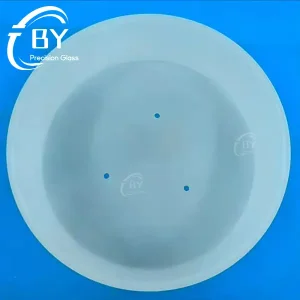
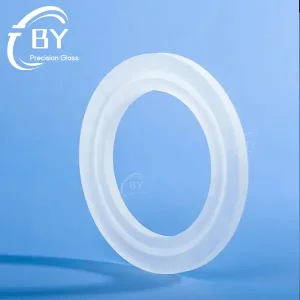
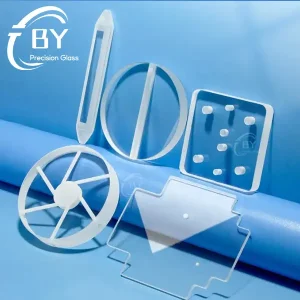
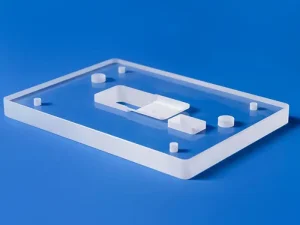
Explore our foundational range of laser windows, doped quartz, custom substrates, and precision sapphire light guides fabricated to ultra-tight micrometer tolerances.
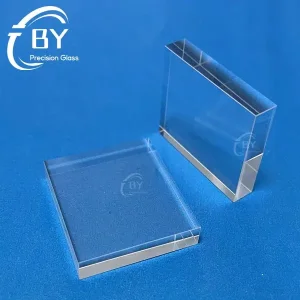
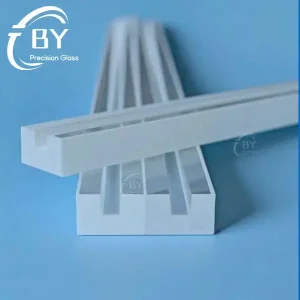
Engineering Superiority of Sapphire Crystal in IPL Systems
A rigorous examination of optical throughput, thermal conductivity, and structural longevity in medical and aesthetic light-guide applications.
Thermal Dissipation & Epidermal Protection
Intense Pulsed Light (IPL) emitters deliver substantial thermal radiation across 400 nm–1200 nm wavelengths. Synthetic sapphire (single crystal alpha-Al₂O₃) exhibits thermal conductivity approximately 30 times higher than fused silica, allowing thermoelectric cooling (TEC) elements in handpieces to pull heat directly away from the patient's skin to prevent epidermal blistering while maintaining constant fluence.
Total Internal Reflection (TIR) Waveguiding
Our five-face optical polishing processes achieve sub-nanometer surface roughness (Ra < 0.5 nm), guaranteeing superior Total Internal Reflection. High beam homogeneity mitigates "hot spots" within the emission aperture, ensuring that energy distributed across targeted vascular lesions or hair follicles remains completely uniform.
Ultra-Hard Chemical & Mechanical Endurance
Rated 9 on the Mohs scale, sapphire blocks resist mechanical scouring caused by aggressive ultrasound coupling gels, sanitizing alcohols, and abrasive cleaning protocols. Unlike BK7 or K9 optical glass blocks, sapphire will not develop micro-pitting, clouding, or solarization under intense multi-million flash cycles.
Why Tier-1 Laser Brands Source from Chinese Sapphire Factories
Combining Kyropoulos boule growth, deterministic multi-axis CNC grinding, and fully integrated cleanroom thin-film coating.
Vertical Crystal Growth Capacity
Chinese production clusters operate industrial Kyropoulos (KY) and Heat Exchanger Method (HEM) crystal growers, cultivating ultra-pure, bubble-free sapphire boules weighing over 100 kg. This provides unfettered raw ingot availability, reducing material lead times for global medical equipment developers by over 45% compared to Western regional suppliers.
High Laser-Induced Damage Threshold (LIDT) AR Coatings
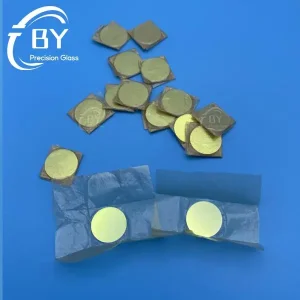
Equipped with state-of-the-art Ion-Assisted Deposition (IAD) and Magnetron Sputtering coating chambers, our factories apply dual-wavelength anti-reflective (e.g., 755nm / 1064nm) and steep cutoff optical filter layers capable of enduring repeated peak power exposures above 15 J/cm² without delamination.
Metrology & Defect Zero-Tolerance
Every single optical block is inspected via Zygo GPI phase-shifting laser interferometers, UV-Vis-NIR spectrophotometers, and automated laser confocal microscopes. Scratch-dig standards conform stringently to MIL-PRF-13830B down to 20-10 or ISO 10110 standards, eliminating edge chipping that could compromise patient safety.
Economic Agility: Rapid Prototyping to Mass Batch
By pairing high-speed CNC diamond contouring with flexible batch chemical-mechanical planarization (CMP), factory lines switch from prototype R&D lots (5–20 pcs) to monthly production volumes surpassing 50,000 pcs, providing OEM buyers with significant cost reductions and reliable delivery timelines.
Sapphire vs. Quartz vs. K9 Glass for IPL Light Guides
A comprehensive benchmark table illustrating why premier optoelectronic manufacturers designate sapphire as the gold standard for clinical handpieces.
| Performance Parameter | Monocrystalline Sapphire (Al₂O₃) | Fused Quartz / Silica (JGS1/JGS2) | Optical Glass (BK7 / K9) |
|---|---|---|---|
| Thermal Conductivity | ~41.8 W/m·K (Excellent contact cooling) | 1.38 W/m·K (Poor heat transfer) | 1.11 W/m·K (Thermal lag, skin risk) |
| Mohs Hardness | 9 Mohs (Virtually unscratchable) | 6.5 - 7.0 Mohs | 5.5 Mohs (Easily scratched by gels) |
| Optical Transmission Range | 170 nm – 5500 nm (Broad UV-VIS-MWIR) | 185 nm – 2500 nm | 350 nm – 2000 nm |
| Refractive Index (nd @ 589nm) | 1.768 (High TIR efficiency) | 1.458 | 1.516 |
| Thermal Shock Resistance | Extremely High (Resists intense thermal gradients) | High (Low expansion coefficient) | Moderate (Prone to fracture during pulse spikes) |
| Service Life Cycle | > 5,000,000 Pulses (Minimal degradation) | ~ 1,000,000 Pulses | < 300,000 Pulses (Prone to solarization) |
Localized Applications & Macro-Industry Solutions
Tailored crystal geometries, optical coatings, and mechanical mountings designed for global medical equipment integrators.
Clinical Aesthetic & Laser Dermatology
Custom light-guide blocks engineered with precision bevels and integrated thermistor pockets. Used extensively in hair removal applicators, tattoo removal laser probes, vascular lesion coagulators, and fractional skin rejuvenation handpieces.
High-Duty Diode Laser Pump Chambers
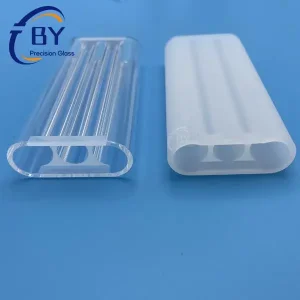
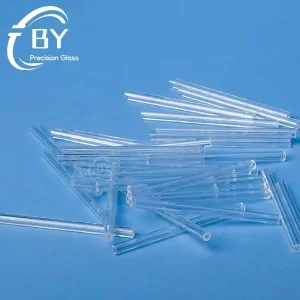
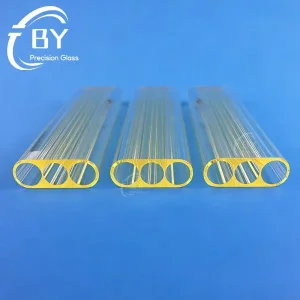
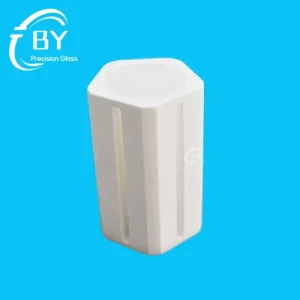
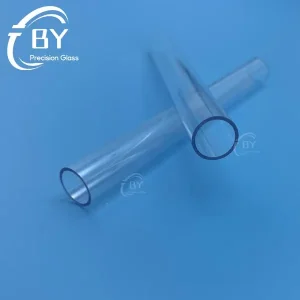
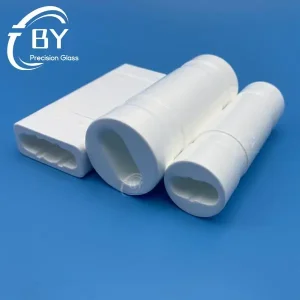
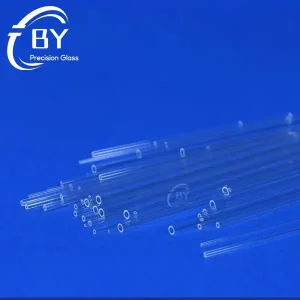
Combining sapphire coupling prisms with diffuse PTFE reflectors and samarium-doped flow tubes to construct solid-state laser pumping cavities that reject parasitic oscillations and maximize photon conversion efficiency.
Severe-Environment Industrial Metrology
Sapphire viewing windows and prism refractometers applied in high-pressure oil/gas pipelines, semiconductor chemical vapor deposition (CVD) reaction chambers, and corrosive liquid spectrophotometry cells.
Frequently Asked Questions on IPL Sapphire Sourcing
In-depth responses from our optical engineering department to assist procurement teams and R&D directors.
Why is sapphire preferred over quartz for high-energy contact cooling?
While fused quartz maintains low thermal expansion, its thermal conductivity is merely 1.38 W/m·K. Sapphire delivers 41.8 W/m·K—nearly 30 times greater. This permits continuous extraction of thermal energy from the skin into the water-cooled copper jacket of the IPL applicator, ensuring skin contact temperatures remain strictly between 0°C and 4°C during rapid-repetition firing.
What crystal orientations (C-plane vs. A-plane) are optimal for light guides?
For standard IPL light-guide applications, optical birefringence is rarely a disqualifying factor because flashlamps emit non-coherent, randomly polarized light. Hence, randomly oriented or C-plane (0001) sapphire is utilized to balance high yield, superior thermal conductivity along the optic axis, and optimal production economies.
Can you coat multi-band filter layers directly on the sapphire crystal?
Yes. By utilizing Ion-Assisted Electron-Beam Deposition (IAD), we deposit steep cutoff interference filters directly onto the input face of the sapphire block (e.g., cutting off harmful UV below 515nm, 560nm, or 640nm) while maintaining anti-reflective properties across the NIR therapeutic spectrum, eliminating the need for external glass absorption filters.
How does BY Photonics protect against edge micro-cracking and chipping?
Due to sapphire's hexagonal crystal structure and Mohs 9 hardness, improper grinding induces sub-surface micro-fractures. We utilize multi-axis CNC diamond edging followed by chemical etching or fine mechanical chamfering (0.2–0.5 mm at 45°) and CMP polishing on all edges to eliminate stress points, ensuring total safety during patient contact.
Precision Optoelectronic & Laser Pump Components
Complete your supply chain integration with our specialized vacuum coating optics, diffuse pump reflectors, precision cuvettes, and triple-bore cavity heads.