
Precision Optical, Substrate & Ceramic Cavity Components
Explore high-reflectivity porous alumina cavities, custom quartz flow components, and precision sapphire optics manufactured strictly to OEM tolerances.
The Mechanics of High-Reflectivity Alumina Ceramic Cavities
Understanding why 99.7% porous alumina matrices outlast metallic and standard dielectric reflectors under intense flashlamp and diode array pumping.
Volume Scattering Matrix
Unlike specular metal mirrors (such as electroplated gold or silver) that experience blistering, oxidation, and localized hot-spotting, high-purity laser-grade alumina ceramic operates via bulk volume scattering. Sub-micron controlled porosity creates random, isotropic photon bounce, delivering an ultra-uniform radiation field across the active laser medium (Nd:YAG, Er:YAG, Alexandrite, or Ruby crystals).
Thermal & Chemical Inertness
Laser pump chambers undergo severe thermal cycling and constant fluid exposure to deionized (DI) cooling water. Alumina ceramics feature outstanding thermal shock resistance, negligible thermal expansion, and total immunity to photo-oxidation, chemical leaching, and galvanic erosion—ensuring the chamber cavity remains dimensionally locked for years of round-the-clock discharge.
Glazed Cavity Sealing
To eliminate particulate flaking into cooling channels and prevent biological biofilm adhesion, critical inner reflective bores can be precision-glazed with an amorphous, refractive-matched silica overcoat. This high-temperature fused glaze seals porous micro-voids, enabling laminar fluid flow, simplified sterilization, and continuous operation in sterile medical laser handpieces.
Global Procurement Dynamics & Industry Evolution
How international laser system manufacturers navigate supply-chain resilience, strict optical certifications, and rising duty-cycle demands.
Aesthetic & Medical Laser Demand
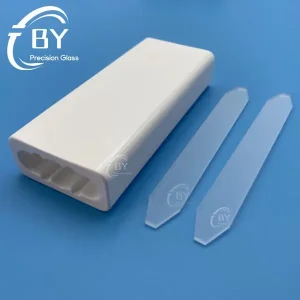
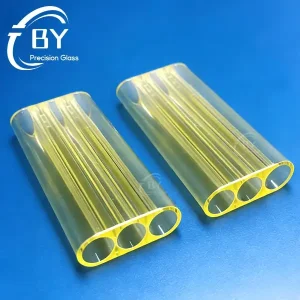
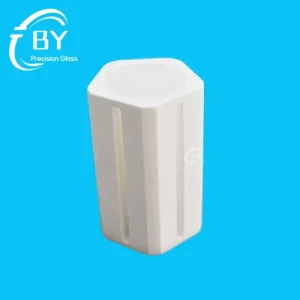
Global clinics demand multi-wavelength aesthetic workstations (755nm Alexandrite, 1064nm Nd:YAG, and 2940nm Er:YAG). Cavities must sustain flashlamp bursts exceeding 30 Joules per pulse without micro-fracturing. Procurement teams prioritize suppliers capable of delivering multi-bore ceramic cavities (triple and quad bores) that house lamp, rod, and flow tube within a singular monolithic ceramic block.
Industrial Welding & Additive Manufacturing
Continuous-wave (CW) and high-repetition industrial lasers demand cavity reflectors that resist UV degradation triggered by intense xenon discharge spectra. OEM procurement shifts decisively toward cold-isostatic pressed (CIP) ceramics that prevent uneven beam mode degradation (M² factor drift) and ensure stable output over millions of duty hours.
Subcontractor Consolidation & Total Cost (TCO)
Tier-1 photonics integrators increasingly eliminate multi-tier contractor drift by procuring ceramic reflectors, doped flow tubes (Samarium/Cerium glass), and quartz filtration sleeves from a unified single-source factory. This integrated delivery streamlines inspection, reduces assembly scrap, and accelerates product-to-market cycles.
Macro Material Benchmarking for Laser Pump Cavities
Quantitative selection parameters for photonics engineers evaluating pump reflector substrates.
| Performance Dimension | Porous Alumina Ceramic (Al₂O₃) | Sintered PTFE (Spectralon-Grade) | Gold/Silver Electroplated Metal |
|---|---|---|---|
| Diffuse Reflectance (500–1100 nm) | 96.5% – 98.2% (Uniform isotropic) | 98.5% – 99.2% (Highest diffuse) | 88.0% – 95.0% (Specular only) |
| Operating Temperature Limit | > 1,400 °C (Exceptional structural strength) | ~ 260 °C (Prone to creep and softening) | ~ 300 °C (Coating oxidation threshold) |
| Resistance to Deionized Coolant | Absolute zero erosion; inert to pure water | Chemical inert; subject to porosity wetting | Risk of flaking, pinholing, & electrolytic pitting |
| Mechanical Rigidity & Machinability | Diamond grinding / CNC; rigid structural block | Soft polymer; susceptible to machining distortion | High rigidity; prone to optical scratch damage |
| Lifetime in High-Energy Flash Systems | Decade-scale continuous reliability | Medium; requires UV stabilizers in flash cavities | Low; requires regular recoating cycles |
Compliance, Metrology & Global Support Framework
Ensuring critical tolerances are verified, certified, and repeatable from prototype validation through multi-thousand batch shipments.
Sub-Micron Coordinate Metrology
Every cavity reflector undergoes 3D Coordinate Measuring Machine (CMM) testing to confirm critical concentricity, bore center distances, and mounting slot perpendicularity down to ±0.01 mm. Non-contact optical profiling inspects interior chamfers and sealing faces to eliminate coolant bypass leaks in pressurized pump blocks.
Spectrophotometric Reflectivity Verification
Equipped with specialized integrating sphere spectrophotometers, our metrology laboratory certifies absolute and relative diffuse spectral reflectance across the 250 nm to 2500 nm range. OEM clients receive calibrated spectral data sheets with each batch, verifying lot-to-lot pumping efficiency consistency.
RoHS, REACH & Secure Global Freight
Raw alumina powders are certified halogen-free and compliant with international RoHS and REACH directives. Finished components undergo automated multi-stage ultrasonic degreasing, cleanroom vacuum packaging, and reinforced custom foam nesting to guarantee zero shock breakage across North American, European, and Asian supply chains.
Technological Roadmap: The Next Decade in Laser Ceramics
Pioneering additive ceramic manufacturing, complex micro-channel cooling, and doped functional coatings for next-generation photonic engines.
Monolithic Micro-Channel Fluidics
Direct integration of internal conformal cooling lines within the green ceramic body before sintering. This eliminates external quartz jacket tubes, vastly reduces thermal boundary resistance, and enables higher power densities in compact handheld surgical lasers.
Multi-Oxide Doped Spectral Filtering
Synthesizing alumina ceramic bodies with selective rare-earth oxide dopants (such as Samarium and Cerium compounds). This allows the cavity wall itself to absorb harmful parasitic UV and infrared pump frequencies, protecting optical crystals from solarization without secondary filters.
Lithography-based Ceramic AM (3D Printing)
Adopting high-precision stereolithography ceramic printing (LCM) for ultra-complex organic cavity geometries, asymmetrical pump reflectors, and custom diode collimation blocks impossible to produce with conventional 5-axis CNC diamond tooling.
Specialized Optical Filters, Windows & Pumping Media
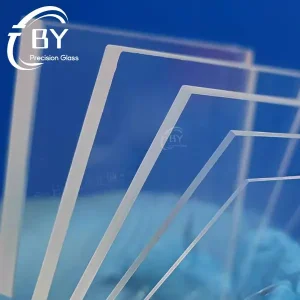
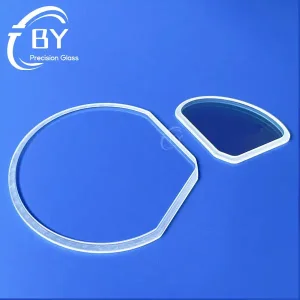
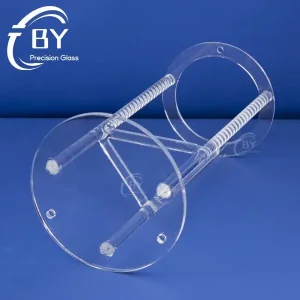
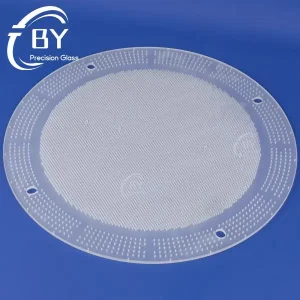
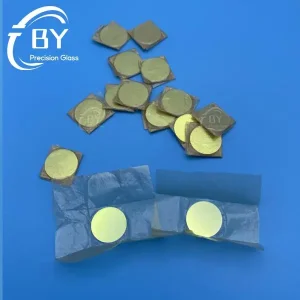
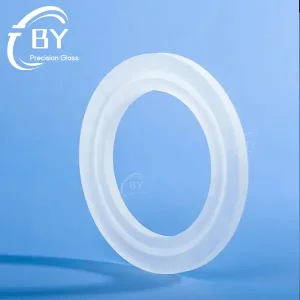
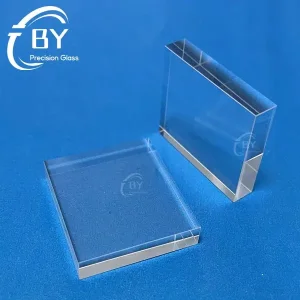
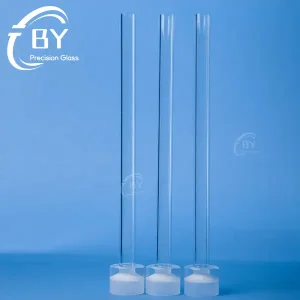
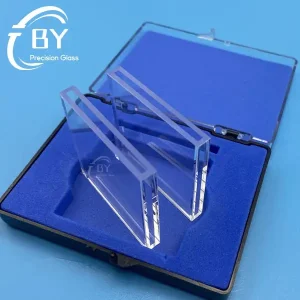
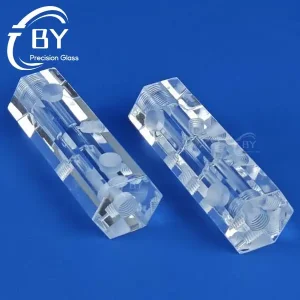
Complete your laser pump chamber assembly with our high-durability optical elements, flow tubes, and custom precision substrates.
Frequently Asked Engineering & Procurement Questions
Immediate answers regarding manufacturing capabilities, tolerance thresholds, and operational lifetimes.