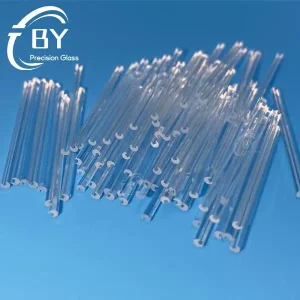
Featured Optical & Semiconductor Quartzware
Explore our top-tier precision-machined quartz substrates, fused silica ferrule components, and laser pump cavities crafted directly at our specialized production workshops.
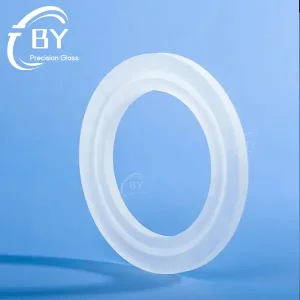
High-Quality Precision Custom Quartz Glass Components for Semiconductor Manufacturers
View Product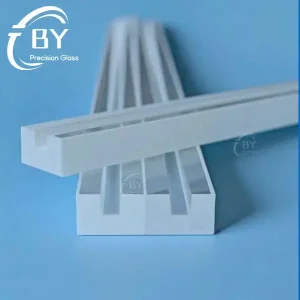
High-Quality Square Groove Quartz Substrate for Fiber Couplers Supplier, Factories
View Product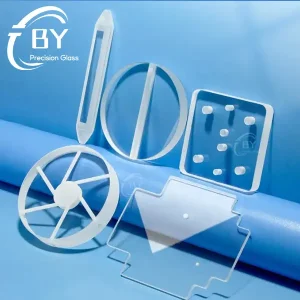
Wholesale High Temperature Custom Quartz Glass Fabrication Suppliers, Factories
View Product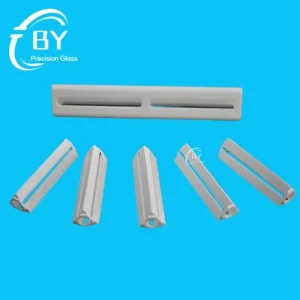
High-Quality Diode‑Pumping Chamber Diffuse Reflectors PTFE‑based Supplier, Suppliers
View Product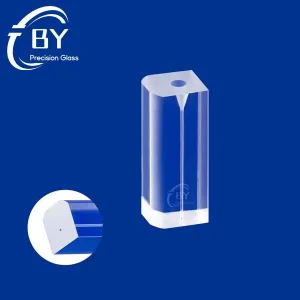
Custom Fiber Optic Glass Ferrules Supplier, Factories
View Product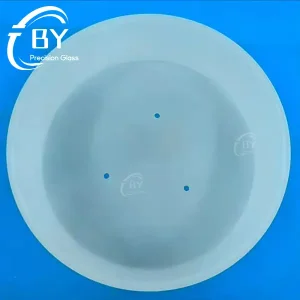
High-Quality Custom Quartz Glass Components for Vacuum Coating Supplier, Factories
View Product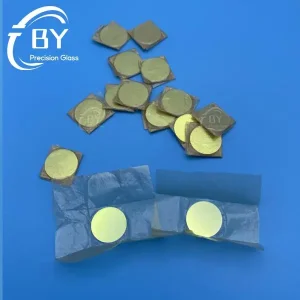
High-Quality Candela Laser Distance Gauge Slider Windows With coating 755 and 1064nm
View Product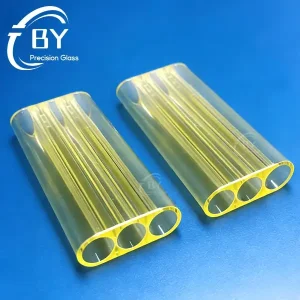
Wholesale Samarium-doped Quartz Triple Bore for Medical Laser Manufacturer, Supplier
View ProductThe Physics & Critical Architecture of Optical Fiber End Caps
Demystifying power-density handling, laser-induced surface breakdown, and the thermodynamic necessity of monolithic quartz termination optics in modern kilowatt-class photonic architectures.
Surface Power Density Reduction
In high-power single-mode and large-mode-area (LMA) optical fibers, core power densities routinely exceed hundreds of megawatts per square centimeter (MW/cm²). An optical fiber end cap acts as a beam-expanding optical conduit: by fusion-splicing an index-matched, coreless synthetic fused silica block onto the fiber facet, the optical mode freely diverges before meeting the glass-air interface, lowering surface intensity well below catastrophic optical damage (COD) thresholds.
Homogeneous Index Matching
Fabricated using ultra-pure synthetic fused silica (JGS1 / Suprasil grade), our fiber end caps possess a refractive index identical to the fiber silica cladding (n ≈ 1.4496 at 1064 nm). This achieves total elimination of internal Fresnel reflections at the splice boundary, preventing thermal hotspot localized lensing and ensuring pristine wavefront fidelity without introducing high-order spatial mode distortion.
Mitigation of Parasitic Back-Reflections
High-energy back-reflections from metallic workpieces during cutting or welding can travel backward, destabilizing master oscillator power amplifiers (MOPA) or destroying seed diodes. End caps featuring calibrated 8° angled physical facets (APC) or high-efficiency ion-beam sputtered (IBS) AR multilayer dielectric coatings suppress back-reflections to < -50 dB, protecting upstream gain modules.
| Material Grade | Transmission Bandwidth | OH Content (PPM) | Internal Absorption @ 1064nm | Max Continuous Operating Temp | Primary Industrial Application |
|---|---|---|---|---|---|
| JGS1 Synthetic Silica Pristine UV | 185 nm – 2,500 nm | < 2 ppm (Standard) / < 0.5 ppm | < 3 ppm / cm | 1,150 °C | Multi-kW Industrial Lasers, Ultrafast CPA Systems |
| JGS2 Fused Quartz Standard Vis | 220 nm – 2,500 nm | ~30 – 150 ppm | < 15 ppm / cm | 1,100 °C | Laser Pump Chambers, Analytical Spectroscopy Flow Cells |
| JGS3 Fused Quartz Low OH / IR | 260 nm – 3,500 nm | < 5 ppm | < 5 ppm / cm | 1,100 °C | Mid-IR Fiber Delivery, Holmium/Thulium Surgical Lasers |
| Optical Sapphire (Al₂O₃) Single Crystal | 170 nm – 5,500 nm | Hydroxyl Free | < 25 ppm / cm | 1,800 °C | Extreme Harsh Environments, High-Abrasion IPL Handpieces |
China Factory Supply Chain & Manufacturing Ecosystem
Capitalizing on integrated upstream raw material synthesis, proprietary automated double-sided CMP lapping, and uncompromised cost efficiency for global Tier-1 OEMs.
Vertically Integrated Ingot Processing
Our Tianjin and regional supply hubs control the complete chain from ultra-pure SiCl₄ synthetic vapor deposition to ingot slicing, core drilling, and computer-controlled centerless outer-diameter cylindrical grinding down to ±0.005 mm tolerances.
40% - 60% Procurement Cost Efficiency
By streamlining labor-intensive multi-axis CNC cold machining, ultrasonic cleaning arrays, and in-house Ion-Assisted Deposition (IAD) coating chambers under one roof, we eliminate intermediate vendor markups and logistics overhead.
Accelerated Rapid Prototyping
Turnaround from initial 2D/3D customer CAD drawings (STEP, DWG, PDF) to finished pilot test samples within 5 to 7 business days, allowing agile R&D teams to validate optical beam delivery systems rapidly without extended lead times.
High-Volume Batch Repeatability
Automated planetary double-sided polishers and real-time Zygo laser interferometric measurement guarantee 100% batch-to-batch repeatability across runs exceeding 50,000 units per month with complete sub-aperture surface validation.
Global Enterprise Procurement & Quality Metrics
How international procurement directors and laser system engineers qualify high-reliability fiber end caps: technical validation parameters that safeguard long-term MTBF.
Sub-Angstrom Surface Quality
Laser damage predominantly originates at microscopic surface micro-cracks and sub-surface fractures left behind by conventional diamond grinding. Our specialized Chemical Mechanical Polishing (CMP) protocols achieve 10-5 or 20-10 scratch-dig levels according to MIL-PRF-13830B, paired with microscopic inspection at 200× darkfield illumination.
Precision End-Face Geometry & Beveling
Concentricity between the outer cylinder diameter and the fiber splicing face is maintained to within < 0.003 mm. Custom edge chamfering (0.1 mm to 0.3 mm @ 45°) eliminates brittle chipping during high-temperature arc discharge or filament fusion splicing inside Vytran or Fujikura commercial splicers.
Class 100 Cleanroom Packaging
End caps are subjected to multi-stage ultrasonic degreasing, ultra-pure deionized water cascade rinsing, and CO₂ snow jet cleaning. Individual optics are hermetically packaged in gel-pack carriers or custom medical-grade blister trays within an ISO Class 5 (Class 100) cleanroom environment, ensuring zero hydrocarbon particulate contamination.
Localization Support, Regulatory & Compliance Assurance
Eliminating cross-border procurement friction through standardized material reporting, environmental certifications, and dependable logistical infrastructure.
Full RoHS & REACH Compliance
All fused quartz, borosilicate, sapphire, and optical thin-film coatings are certified 100% compliant with EU RoHS Directive 2011/65/EU and REACH Regulation (EC) No 1907/2006. Full chemical testing dossiers and SVHC declarations are delivered alongside batch shipments.
ITAR-Free Supply Chain Architecture
Our optical fiber end caps and micro-optics are developed strictly under civil and commercial industrial laser standards, classified as dual-use cleared or EAR99/ITAR-free. This guarantees zero export control licensing delays for deliveries across North America, Europe, and Asia-Pacific.
Direct Engineering Support in Global Time Zones
We provide bilingual (English & Chinese) senior optical design engineering consultation. Drawings submitted via CAD or PDF receive a rigorous Design-for-Manufacturability (DFM) assessment within 24 working hours, ensuring seamless alignment with your mechanical housings.
Localized Application Scenarios Across Modern Industry
From multi-kilowatt sheet metal cutting to sub-micron ophthalmic surgery, explore where precision-terminated fiber end caps make the critical difference.
10 kW – 30 kW Fiber Laser Cutting Heads
High-power continuous wave (CW) industrial laser cutting heads utilize end caps with diameters from 3.0 mm to 8.0 mm. By allowing the beam diameter to expand to 2 mm before exiting through the AR-coated face, energy density at the quartz-air boundary is decreased by > 95%, eliminating thermal degradation and catastrophic facet burns.
Medical Holmium & Thulium Surgical Lasers
In urological lithotripsy and soft-tissue surgery, optical delivery fibers operate in fluid environments (saline solution). Low-OH JGS3 or synthetic silica end caps provide a robust hermetic water-barrier seal, preventing vapor bubble cavitation erosion on the core face.
Free-Space Optical Communications & LIDAR
Coherent Doppler wind LIDAR and satellite-to-ground laser terminals require low-loss fiber-to-telescope collimation. Fiber end caps with λ/10 surface flatness prevent transmitted wavefront distortion, ensuring diffraction-limited beam propagation over extensive terrestrial and space baselines.
Ultrafast Femtosecond / Picosecond Lasers
Chirped Pulse Amplification (CPA) systems exhibit extreme gigawatt-scale peak powers. End caps fabricated from synthetic fused silica with minimal self-focusing (low non-linear refractive index n₂) protect compressor output couplers against non-linear filamentation and bulk optical breakdown.
Future Trends in Optical Fiber Termination Technology
Where high-power fiber optic engineering is heading: monolithic integration, structured glass materials, and photonic crystal fiber sealing.
Integrated Curved & Collimating End Caps
The industry is rapidly shifting from flat/angled cleaved end caps to monolithic end caps with pre-polished spherical, aspherical, or GRIN surfaces. This innovation integrates collimation directly onto the fiber tip, discarding bulky external lens assemblies in compact robotic hand tools.
Hermetic Sealing of Photonic Crystal Fibers (PCF)
Hollow-core and large-pitch photonic crystal fibers feature micro-structured air capillaries susceptible to ambient moisture contamination and dust accumulation. Precision vacuum-fusion end-capping hermetically seals the micro-channels while maintaining modal confinement integrity over decades of operation.
Mid-IR and Chalcogenide Glass Terminations
With the surge in defense infrared countermeasures (DIRCM) and environmental spectroscopy spanning 3 μm to 8 μm, factories are mastering end-capping techniques using non-silica materials including single-crystal sapphire, polycrystalline diamond, and chalcogenide glasses.
Frequently Asked Engineering & Procurement Questions
In-depth guidance covering splicing tolerances, anti-reflective coating thresholds, and dimensional design recommendations.
What is the optimal length calculation for an optical fiber end cap?
Why choose JGS1 synthetic fused silica over standard fused quartz (JGS2) for end caps?
How does an 8-degree angled physical contact (APC) face prevent back-reflection?
What fusion splicing equipment is required to fuse end caps onto fibers?
What testing data and quality certificates accompany custom end cap shipments?
Request Custom End Cap Engineering Feasibility
Submit your optical fiber specifications, core/cladding dimensions, and operating wavelength for a dedicated DFM analysis within 24 hours.
Specialized Optical Glasses, Viewports & Laser Cavities
Explore our custom borosilicate plates, sapphire light guide blocks, lithography windows, and spectrophotometer quartz cuvettes built strictly to customer drawings.
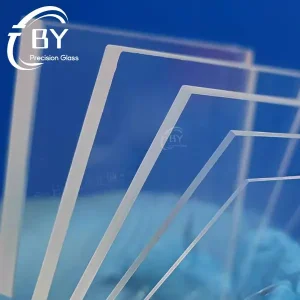
High-Quality Borosilicate Windows and Plates for Viewports Suppliers, Factory
View Product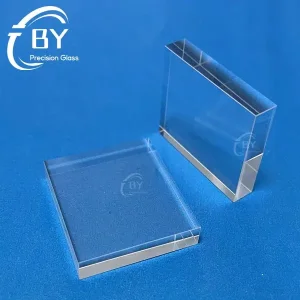
Custom Sapphire IPL Light Guide Block Used for Laser IPL Hair Removal Handle Manufacturer
View Product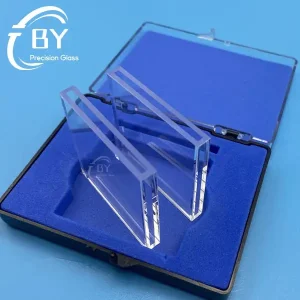
Wholesale Customize Quartz Cuvette for Spectrophotometer Supplier, Factory
View Product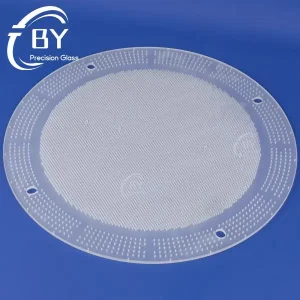
Custom Custom Optical Quartz Gas Distribution Plate Manufacturer, Suppliers
View Product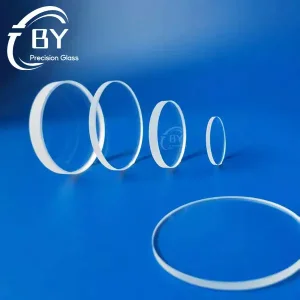
Wholesale Quartz Optical Windows for Semiconductor Lithography Equipment
View Product
Wholesale Candela VBeam Laser 6" White Cavity Ceramic Reflector 2 Pk Manufacturer
View Product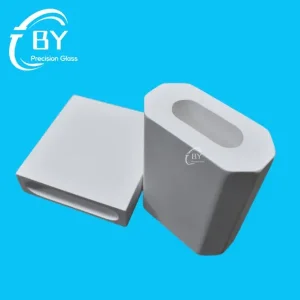
High-Quality Diffuse Reflectors Made of Spectralon‑Grade PTFE for Diode‑Pumping Chambers
View Product