
High-Purity Laser Cavities & Optical Hardware (Batch 1)
Engineered to deliver high reflectance, thermal shock resilience, and extended service life under intensive multi-kilowatt pulsed optical pumping environments.

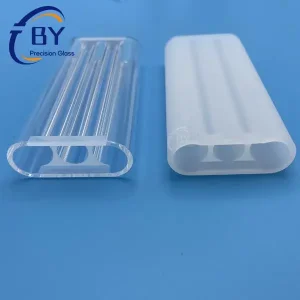
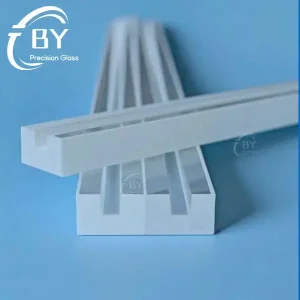
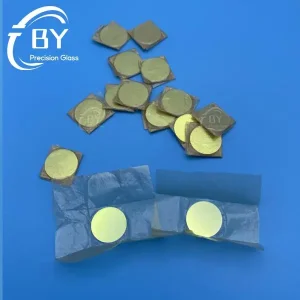
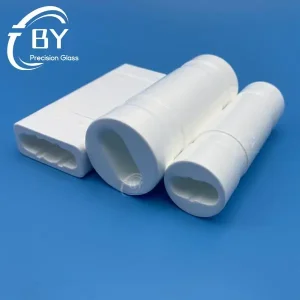
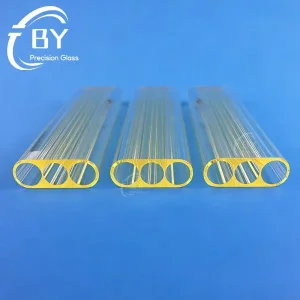
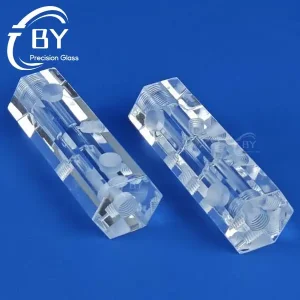
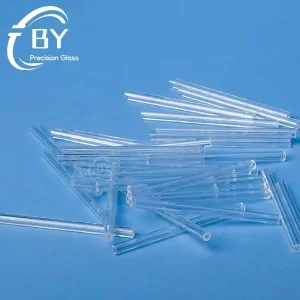
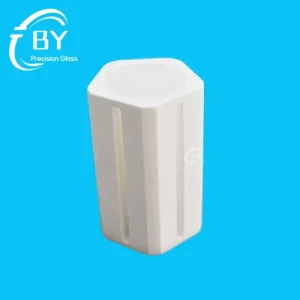
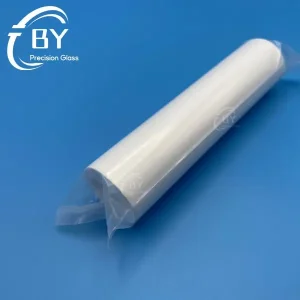
High-Purity Porous Alumina (Al₂O₃) Reflective Chambers
A rigorous examination of volumetric diffuse reflectance, thermal conductivity equilibriums, and anti-solarization properties under broadband high-intensity flashlamp pumping.
In high-gain solid-state laser heads—specifically Nd:YAG, Er:YAG, Alexandrite, and Ruby systems—the efficiency of the optical pumping architecture defines the output beam profile, wall-plug efficiency, and laser rod longevity. Historically, specular metal-coated reflectors (such as electroplated gold or polished silver) suffered from catastrophic degradation modes: thermal blister flaking, pinhole oxidation, and localized hot-spotting caused by uneven specular focal points. Modern laser engineering relies upon porous, high-purity α-alumina (Al₂O₃) ceramic cavities.
Unlike specular reflectors where reflection occurs entirely at a two-dimensional boundary layer, an alumina-based ceramic reflector behaves as a true Lambertian volumetric bulk scatterer. Light emitted from the excitation source (xenon or krypton arc flashlamps, or high-density diode arrays) penetrates the micro-crystalline ceramic matrix to a depth of several hundred microns. Multiple internal refractions between the high refractive index alumina crystallites (n ≈ 1.76) and intergranular micro-voids randomize photon paths without intrinsic absorption, resulting in a diffuse reflectance exceeding 97.8% across the 600 nm to 1100 nm band, and up to 99.2% when paired with high-temperature glass glazes.
Isotropic Pump Illumination
By scattering the flashlamp emission homogeneously across 4π steradians, ceramic cavities mitigate transverse thermal gradients across the laser crystal rod. This eliminates localized thermal lensing, avoids wavefront distortion, and maintains high laser beam beam-parameter product (BPP).
Chemical & Water Inertness
Operable in continuous deionized (DI) water immersion loops. Proprietary high-temperature vitreous glazing insulates the porous corundum core from coolant ingress, preventing biological fouling, trace element leaching, and fluid flow erosion under turbulent cooling regimes.
High Laser Damage Threshold
Engineered to resist catastrophic failure under peak optical fluence exceeding 20 J/cm² at pulse widths of 250 µs. Alumina matrices do not degrade under intense ultraviolet (UV) radiation bands, averting the solarization and dark-color-center formation common in polymer assemblies.
Cavity Material Performance & Physical Properties
Direct comparison of engineering ceramics, sintered polymers, and samarium-doped glasses utilized in modern solid-state laser chambers.
| Property Parameter | Porous α-Al₂O₃ (Glazed) | Porous α-Al₂O₃ (Unglazed) | Spectralon-Grade PTFE | Samarium-Doped Glass (Sm:SiO₂) |
|---|---|---|---|---|
| Reflectance @ 700–1064 nm | 97.8% – 98.6% | 96.5% – 97.4% | 99.0% – 99.3% | N/A (Absorption Filter) |
| Thermal Conductivity (W/m·K) | 28 – 32 | 25 – 30 | 0.25 – 0.35 | 1.3 – 1.4 |
| Dielectric Strength (kV/mm) | 18 – 22 | 15 – 18 | 40 – 60 | 25 – 30 |
| Maximum Service Temp (°C) | 1,500 °C | 1,650 °C | 260 °C (Deforms easily) | 1,100 °C |
| Direct Coolant Contact | Fully Impervious (Glazed) | Permeable (Requires Sleeve) | Hydrophobic but Soft | Impervious / Chemical Grade |
| UV Solarization Resistance | Extreme (Zero Discoloration) | Extreme | Moderate (Degrades under deep UV) | Selective (Absorbs UV & 1064nm ASE) |
| Typical Geometry | Triple Bore, Cylindrical, Elliptical | Monolithic Blocks, Plates | Machined Diode Reflector Housings | Flow Tubes, Concentric Sleeves |
Precision Applications Across Advanced Industrial Verticals
Facilitating mission-critical photonics deployment from medical aesthetic workstations to sub-nanosecond wafer inspection platforms.
Dermatology & Medical Aesthetic Systems
Direct OEM-tier drop-in replacements for leading aesthetic platforms, including the Candela GentleLase (Mini & Pro series 755nm Alexandrite), GentleYAG (1064nm), and VBeam (595nm Pulsed Dye) systems. Sintered triple-bore cavities host flashlamps and laser rods with geometric alignment repeatability under 15 microns.
Semiconductor Photolithography & Annealing
Used in high-repetition-rate excimer and DPSS laser sources driving laser spike annealing (LSA), wafer inspection scanners, and extreme ultraviolet (EUV) debris mitigation systems. Alumina reflectors endure corrosive halogen atmosphere traces and high plasma ionization environments.
Precision Aerospace & Defense LIDAR
Tactical rangefinders, designated laser target locators, and airborne topographic mapping LIDAR platforms. Ceramic cavities provide structural integrity across severe thermal excursions (-55 °C to +125 °C) and mechanical shock loads exceeding 50G without micro-fracturing or optical misalignment.
Heavy Industrial Cutting & Additive Manufacturing
High-duty-cycle flashlamp-pumped Nd:YAG lasers for aerospace superalloy turbine blade drilling, micro-welding, and selective laser sintering. Ceramic pump chambers withstand multi-kilowatt electrical inputs while delivering uniform spatial energy distribution.
Scientific Spectroscopy & Research Lasers
Custom-engineered multi-rod cavities, samarium-doped filter tubes, and yellow UV-blocking jackets deployed in ultra-clean physics labs, synchronized picosecond dye lasers, and controlled nuclear fusion research setups.
Vertically Integrated Manufacturing in Tianjin, China
Consolidating precision powder metallurgy, cold isostatic pressing (CIP), diamond CNC machining, and optical flame vitrification under a single roof since 2010.
In the precision photonics supply chain, multi-tier subcontracting is the primary driver of schedule disruptions, non-conforming tolerances, and batch-to-batch optical variance. Tianjin BY Photonics bypasses third-party dependencies by operating a unified 3,000 m² advanced manufacturing facility. From raw sub-micron Al₂O₃ powder formulation to the final coordinate measuring machine (CMM) dimensional verification, every stage is fully traceable.
Engineering Compliance, Standards & Testing Regimes
Stringent multi-stage validation ensures every alumina cavity and optical component complies with stringent international aerospace and medical directives.
ISO 9001:2015 Certification
Every fabrication batch follows strict standard operating procedures (SOPs). From raw powder chemical titration to final vacuum packaging, material tracking cards document equipment IDs, machine operators, and inspection stamps.
RoHS 3 & REACH Directives
Full compliance with European Directives 2011/65/EU and 2015/863 (RoHS 3) and SVHC lists under Regulation (EC) No 1907/2006 (REACH). Zero toxic heavy metal glazes, lead-free glass frits, and eco-friendly aqueous degreasing baths.
Metrology & Testing Verification
Certified inspection protocols using UV-Vis-NIR spectrophotometers equipped with 150mm integrating spheres (measuring 200–2500 nm absolute reflectance), Zeiss CMMs for complex bore geometries, and Zygo laser interferometers for flat optical substrates.
Technological Roadmap & Next-Generation Innovations (2026–2032)
Pioneering advancements in co-doped thermal dissipation ceramics, conformal fluidics, and hybrid additive ceramic manufacturing.
As solid-state laser systems trend toward higher average power densities and extreme repetition rates (multi-kilohertz operation), ceramic cavity designs must evolve beyond conventional planar and cylindrical configurations. BY Photonics is actively investing in three primary research vectors:
- Rare-Earth Co-Doped Ceramic Substrates: Integrating selective absorption elements directly into the alumina powder formula to suppress 1064 nm amplified spontaneous emission (ASE) and eliminate parasitic oscillation in high-energy laser amplifiers without requiring discrete samarium glass flow tubes.
- Conformal Cooling Micro-Channels via Ceramic 3D Printing: Utilizing stereolithography (SLA) additive processing of Al₂O₃ slurries followed by advanced debinding and sintering cycles. This enables internal helical cooling water channels that mirror the contour of multi-bore chambers, reducing boundary layer stagnation and optimizing heat extraction by 40%.
- Laser-Engineered Vitreous Nano-Glazes: Development of zero-porosity ultra-thin (15–25 µm) sol-gel silica-alumina surface coatings cured by CO₂ laser scanning. These glazes completely seal internal cooling bores against deionized water leaching while preserving higher diffuse scattering ratios than conventional kiln-fired thick glazes.
Frequently Asked Questions on Alumina Cavities & Laser Reflector Engineering
In-depth responses covering procurement specifications, design for manufacturability (DFM), and maintenance parameters.
What is the optical performance difference between glazed and unglazed alumina ceramic cavities?
Can BY Photonics fabricate drop-in replacement ceramic cavities for legacy medical laser heads?
How does porous Al₂O₃ compare to PTFE (Spectralon-grade) reflectors in solid-state laser heads?
What drawing files and parameters are needed to request a production quotation?
What is the typical operational lifespan of a glazed alumina ceramic reflector?
High-Purity Laser Cavities & Optical Hardware (Batch 2)
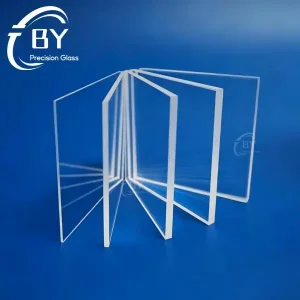
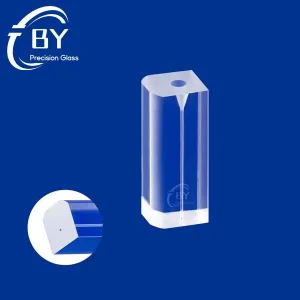
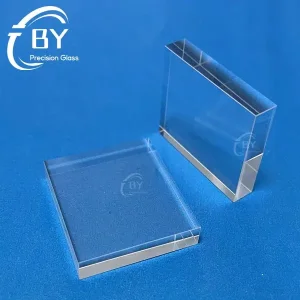
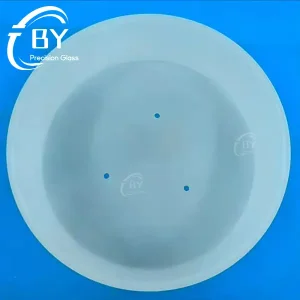
Complementary optical glass elements, flow tubes, vacuum window plates, and synthetic diffuse reflectors manufactured to exact mechanical drawings.
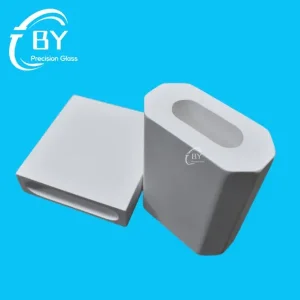

Submit Your CAD Drawings for Engineering DFM Review
Direct communication with our Senior Photonics Process Engineers in Tianjin. Receive a full manufacturability report, material recommendation, and wholesale pricing quote within 24 business hours.