
Primary Laser Pump Cavities & Optical Substrates
Standardized and custom manufactured optical ceramic cavities, doped flow filters, and precision quartz carrier architectures direct from our Tianjin production floor.
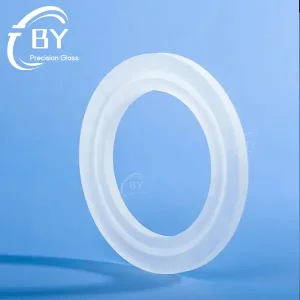
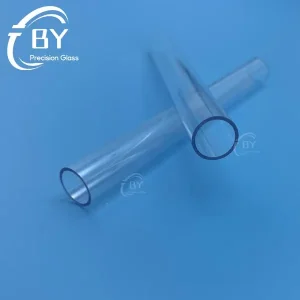
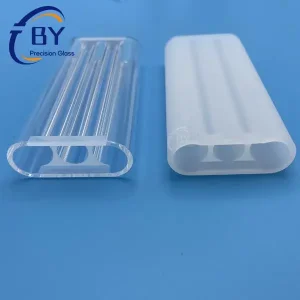
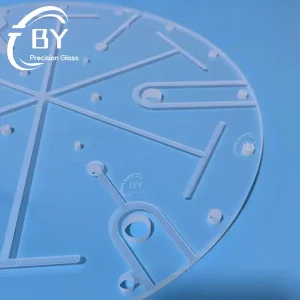
Macro Industrial Solutions: Engineering Next-Gen Solid-State Photon Scattering
In high-power diode-pumped solid-state (DPSS) and lamp-pumped laser architectures, optical efficiency, thermal management, and wavelength uniformity govern resonator power limits. Traditional specular metallic mirrors (such as electro-plated gold or silver cavities) suffer from severe limitations: spectrally selective degradation, metallic flaking, thermal expansion mismatch, and localized cooling water cavitation.
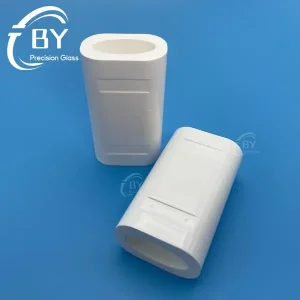
As a dedicated wholesale ceramic laser reflectors supplier and high-precision manufacturer established in 2010 in Tianjin, China, Tianjin BY Photonics Co., Ltd. produces porous high-purity alumina ($Al_2O_3 \ge 99.7\%$) diffuse ceramic reflectors. Utilizing multi-directional volume scattering within sub-micron porous crystal matrices, our ceramic reflectors achieve an exceptional diffuse reflectance exceeding 97.8% across 600 nm to 1000 nm. This isotropic photon redistribution converts pump radiation into uniform excitation profiles across Nd:YAG, Er:YAG, Alexandrite, and Ruby crystal rods, effectively mitigating thermal lensing and eliminating catastrophic hot-spot formation within resonator cavities.
Global Commercial & Industrial Status: Market Transition to Porous Ceramics
Across international photonics clusters—spanning North America, the European Union, East Asia, and the Middle East—laser systems integrators are actively retrofitting legacy pump chambers to high-purity sintered ceramics. This shift is driven by five macro-industry dynamics:
Aesthetic & Medical Systems
Dermatological platforms operating at 755 nm (Alexandrite) and 1064 nm (Nd:YAG) require uniform energy delivery. Ceramic cavities (such as Candela-compatible triple-bore assemblies) provide stable, un-degraded fluence over tens of millions of flashlamp shots without solarization.
Industrial Heavy Machining
High-duty-cycle welding, additive manufacturing (L-PBF), and precision ceramic cutting lasers demand cavities that resist continuous deionized water flow, extreme hydraulic turbulence, and temperatures upwards of 1,200 °C.
Aerospace & Defense LIDAR
Target designators and airborne rangefinders require lightweight, mechanically rigid pump chambers immune to electromagnetic interference, mechanical shock, and extreme thermal cycling between -40 °C and +85 °C.
Engineering Benchmark: Laser Cavity Reflector Materials Compared
Procuring optimal pump reflectors requires evaluating diffuse reflectivity, chemical stability in cooling circuits, thermal conductivity, and mechanical lifetime. Sintered porous alumina outperforms traditional metallic and polymeric alternatives:
| Performance Parameter | Porous Al₂O₃ Ceramic (BY Photonics) | Gold-Plated Metal (Cu/Brass) | Sintered PTFE (Spectralon-Grade) | Synthetic Fused Silica (JGS1) |
|---|---|---|---|---|
| Reflectance Type | Isotropic Volume Diffuse (>97.8%) | Specular (~95–96% in IR, drops in Visible) | Diffuse Lambertian (>99.0%) | Specular via dielectric coating |
| Continuous Service Temp | Up to 1,500 °C | < 250 °C (Plating blistering risk) | < 260 °C (Decomposition risk) | ~1,100 °C |
| DI Water Corrosion Resistance | Complete chemical inertness (Glazed bore) | Prone to pinhole oxidation & peeling | Hydrophobic but mechanically soft | Immune to water corrosion |
| Laser Induced Damage Threshold | Extremely High (>15 J/cm² @ 1064nm) | Moderate (Subject to surface burn) | Low to Medium (Discolors under UV) | Very High (>25 J/cm²) |
| Micro-Hardness (Mohs/Vickers) | Vickers 1,600 HV (Rigid structural) | ~100–150 HV (Easily scratched) | Shore D 55–60 (Prone to creep) | Mohs 6.5–7.0 |
| Thermal Expansion (CTE) | $7.2 \times 10^{-6}/\text{K}$ (Dimensional match) | $16.5 \times 10^{-6}/\text{K}$ (Thermal warping) | $100–120 \times 10^{-6}/\text{K}$ (Severe drift) | $0.55 \times 10^{-6}/\text{K}$ |
*Test conditions: Spectral reflectance measured across 600 nm to 1000 nm integrating sphere spectrophotometry. In-house CMM verification at 20 °C, 50% RH.
Localized Engineering Support, Quality Control & Compliance Assurance
Industrial procurement managers and optical design engineers require full traceability, consistent batch repeatability, and international compliance. Tianjin BY Photonics provides structured OEM engineering support:
Send CAD drawings in STEP, IGES, DXF, or dimensioned PDF formats. Our senior ceramic tooling engineers review tolerances, draft angles, wall thicknesses, and glaze boundaries within 24 working hours, optimizing manufacturability and reducing unit cost.
Equipped with Zeiss and Mitutoyo Coordinate Measuring Machines (CMM), optical surface profilometers, and spectrophotometers. Critical bore alignments, concentricity, and wall thickness are held to $\pm 0.01\text{ mm}$ with full inspection reports.
100% compliant with RoHS 3, REACH, and Conflict Minerals protocols. Every component undergoes multi-stage ultrasonic degreasing, clean-air drying, and dual-layer nitrogen-purged vacuum packaging for safe overseas transit.
Localized Application Scenarios: Where Precision Meets Optical Performance
Tianjin BY Photonics ceramic reflectors and pump cavities serve in mission-critical applications worldwide:
Candela Aesthetics
Direct-fit replacement ceramic triple-bores for GentleLase and GentleYag hair-removal laser heads. Glazed internal coolant bores protect against DI water erosion and preserve pulse stability.
Laser Scribing & Micro-Welding
Custom single-lamp and double-lamp elliptic cavities for Nd:YAG precision welders. High diffuse scattering eliminates hot-spot induced rod fracture during 24/7 industrial shifts.
IPL Beauty Handpieces
Ceramic diffuse reflective liners combined with doped quartz flow tubes filter UV wavelengths while maximizing flashlamp coupling efficiency into sapphire IPL skin light guides.
Scientific Lasers
Custom multi-bore chambers for Ti:Sapphire, Cr:LiSAF, and Er:YAG lasers in ultrafast spectroscopy, LIDAR, and plasma physics research facilities.
Technological Roadmap: The Next Era of Ceramic Photonic Reflectors
To address escalating power densities and green-wavelength diode pumping, BY Photonics invests continuously in advanced material science and fabrication processes:
Sub-Micron Pore Control
Isostatic cold pressing paired with 1,700 °C sintering achieves a homogeneous 20–25% porosity distribution, maintaining diffuse reflectance at 98.2% across pump absorption bands.
Anti-Solarization Glazes
Proprietary micro-glaze formulations match alumina coefficients of thermal expansion, preventing crazing while resisting high-flux xenon lamp UV degradation.
Direct Diode Cavities
Multi-channel ceramic modules with integrated microfluidic cooling channels for compact 808 nm and 940 nm direct-diode bar array side-pumped laser architectures.
Composite Ceramic Optics
Hybrid porous ceramic and fused silica monolithic blocks engineered for 100 kW+ high-energy research installations and additive manufacturing beam delivery.
Frequently Asked Questions: Technical Sourcing & Engineering Support
Clear answers to key technical questions from laser system OEMs and procurement specialists:
Why choose porous ceramic diffuse reflectors over gold-plated metallic cavities?
What is the function of the glaze coating on internal ceramic reflector bores?
How does BY Photonics ensure precise dimensional tolerances for custom multi-bore cavities?
Can BY Photonics fabricate drop-in replacements for obsolete or legacy laser heads?
What are standard lead times for custom prototype tooling versus batch manufacturing?
Which CAD formats are supported for manufacturing inquiries?
Complementary Precision Quartz, Doped Optics & Laser Assemblies
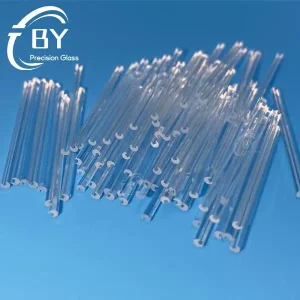
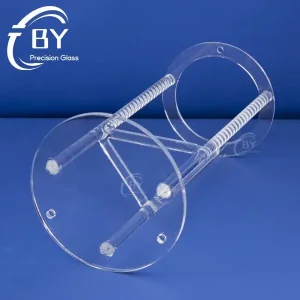
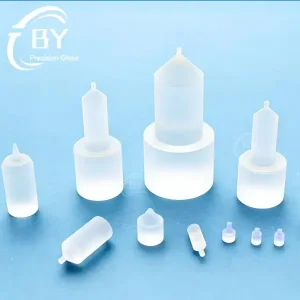
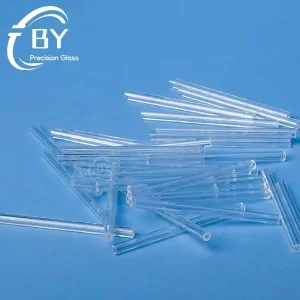
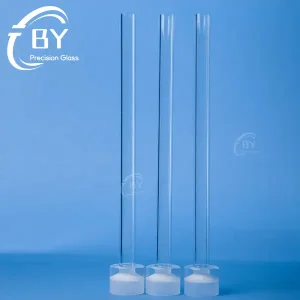
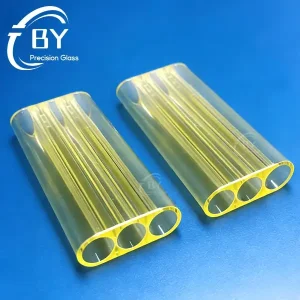
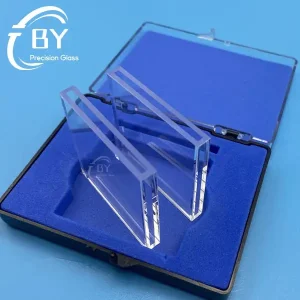
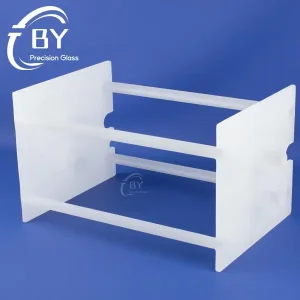
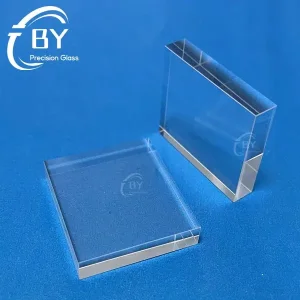
Full portfolio of high-temperature optical components, capillary tubing, samarium flow tubes, and semiconductor processing boats manufactured under one roof in Tianjin, China.
Submit CAD Drawings for 24h Engineering Feasibility Assessment
Direct consultation with our senior ceramic and optical machining team in Tianjin. We confirm raw material grades, shrinkage ratios, glazing boundaries, and volume production quotes within one business day.