High-Precision Substrates & Laser Optics Assemblies
Engineered to extreme geometric tolerances for high-reliability analytical instrumentation, laser heads, and optoelectronic assemblies.

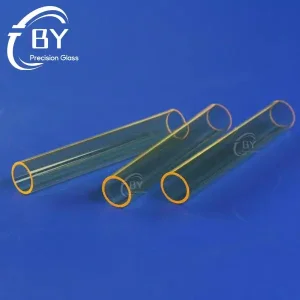
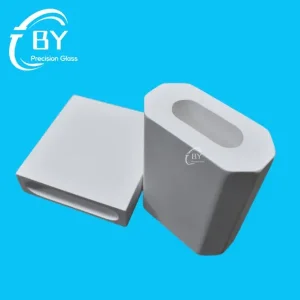
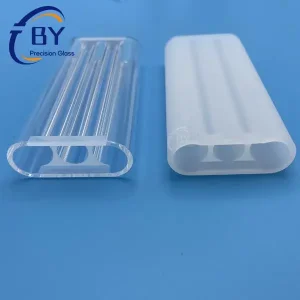
Global Enterprise Procurement Dynamics for Spectrophotometer Cuvettes
Analyzing cross-industry sourcing pain points: dimensional drift, optical contamination, and high-volume batch uniformity.
Pathlength & Beer-Lambert Precision
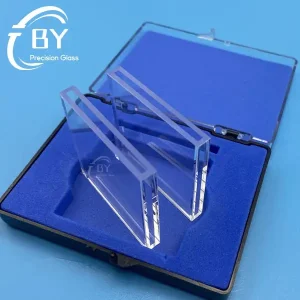
Modern analytical biochemistry hinges on strict adherence to the Beer-Lambert Law (A = ε·c·l). Enterprise laboratories cannot tolerate pathlength deviations beyond ±0.005 mm. Standard injection-molded plastics suffer from parabolic surface sagging and refractive index fluctuations. Direct B2B factory fabrication of fused silica cuvettes provides absolute dimensional rigidity, ensuring inter-instrument calibration repeatability across distributed laboratory sites.
Chemical & Thermal Fusion Integrity
Traditional low-tier cuvettes utilize epoxy or organic optical adhesives that rapidly dissolve when exposed to aggressive polar aprotic solvents (such as DMSO, dichloromethane, or acetonitrile). Direct molecular fusion welding (fire-fusion at >1700°C) bonds optical quartz plates without foreign interfaces, eliminating chromatographic contamination, sample leaching, and catastrophic structural delamination under thermal shock.
OEM Customization & Batch Traceability
Global instrumentation manufacturers require exact mechanical geometries for carousel auto-samplers, Peltier temperature-controlled jackets, and micro-spectrophotometer cells. Sourcing directly from an established factory provides full material certification (synthetic JGS1 vs visible JGS2), optical window parallelism under 10 arcseconds, and scratch-dig specifications down to 20-10 under MIL-PRF-13830B standards.
Macro-Industry Solutions & Materials Physics
Comprehensive optical component integration across life sciences, industrial process automation, and micro-volume spectrometry.
Biopharmaceutical & Proteomics Diagnostics
Modern biopharmaceutical workflows require strict quantification of monoclonal antibodies, oligonucleotide purity, and protein concentrations at 260 nm and 280 nm. Using synthetic quartz cuvettes prevents baseline drift caused by internal solarization. Multi-pass fluorescence cuvettes with four optical polished windows minimize stray scattering and inner filter effects, delivering signal-to-noise ratios essential for sub-nanomolar fluorophore quantification.
Continuous Process Analytical Technology (PAT)
Industrial chemical manufacturing relies on real-time spectrophotometric tracking in flow lines. High-pressure flow-through quartz cuvettes withstand operating pressures exceeding 3 MPa while sustaining elevated fluid temperatures. Flame-worked fused silica windows maintain non-birefringent, high-flatness profiles under dynamic turbulent flow, safeguarding against refractive lensing anomalies during automated process control.
Environmental Water & Petrochemical Testing
Spectroscopic determination of Chemical Oxygen Demand (COD), polycyclic aromatic hydrocarbons (PAHs), and dissolved heavy metals requires cuvettes immune to aggressive acidic digestion reagents (e.g., concentrated sulfuric acid with potassium dichromate). Optical borosilicate and fused quartz vessels retain optical transmission without surface clouding, pitting, or catalytic ion exchange.
| Material Class | Usable Spectral Range | Refractive Index (nd) | Thermal Shock Limit | Autofluorescence | Primary Industrial Use Case |
|---|---|---|---|---|---|
| JGS1 Synthetic Fused Silica | 185 nm – 2500 nm | 1.458 | ΔT > 1000°C | Virtually Zero | Deep-UV Absorption, Far-UV Fluorescence, Laser Photometry |
| JGS2 Optical Fused Quartz | 220 nm – 2500 nm | 1.458 | ΔT > 900°C | Extremely Low | Standard UV-Vis Spectrophotometry, Routine Biochemical Assays |
| JGS3 Infrared Grade Quartz | 260 nm – 3500 nm | 1.453 | ΔT > 900°C | Negligible | NIR Molecular Spectroscopy, Moisture Band Analysis, IR Sensors |
| Optical Crown Glass (G-Grade) | 340 nm – 2500 nm | 1.517 | ΔT ~ 120°C | Low to Moderate | Cost-Effective Visible Spectrum Colorimetry, Educational Labs |
| Borosilicate 3.3 Glass | 320 nm – 2500 nm | 1.473 | ΔT ~ 280°C | Low | Aggressive Chemical Viewports, Thermal Digestion Colorimetry |
Technical Roadmap & Future Outlook: 2026–2035
Architecting next-generation optofluidic spectrometry cells through femtosecond laser sintering and automated nanoliters arrays.
Femtosecond Direct-Write Optofluidics
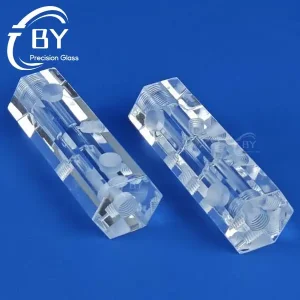
Traditional mechanical grinding and flame sealing are giving way to 3D internal laser etching in high-purity quartz substrates. By combining femtosecond laser exposure with selective chemical etching (FLICE), monolithic cuvette micro-channels can be carved with internal diameters below 50 µm without requiring separate window bonding. This technical trajectory enables high-speed micro-capillary flow cells that operate with sample volumes <500 nanoliters, drastically cutting reagent waste in drug discovery pipelines.
Plasma-Assisted Superhydrophobic Nanocoatings
Meniscus curvature and residual droplet pinning distort transmittance baselines, necessitating time-consuming cleaning protocols between diagnostic runs. Advanced optical vacuum deposition introduces ultra-thin, vacuum-UV transparent fluoro-silane nanocoatings to the interior active windows. These coatings establish contact angles >115° without causing chromatic aberration, ensuring immediate fluid release and total carry-over elimination in high-throughput robotic analyzers.
Extreme Environment & Radiometric Stability
Next-generation space exploration, deep-well nuclear logging, and high-intensity ultraviolet excimer spectroscopy demand extreme radiation resistance. Standard quartz develops E-centers (color center defects) under prolonged deep-UV or gamma irradiation, yielding unwanted absorption bands at 215 nm. The manufacturing roadmap centers on high-purity synthetic soot hydrolysis with controlled hydrogen loading to actively neutralize oxygen-deficient centers, guaranteeing transmission stability past 10,000 continuous hours.
Commercial Landscape & Global Supply Chain Realities
Strategic geographic shifts, upstream silica gas synthesis, and mitigating supply disruption risks in OEM optical procurement.
Upstream Precursor Sourcing Dynamics
High-purity optical cuvette production relies directly on the supply chains for silicon tetrachloride ($SiCl_4$) and octamethylcyclotetrasiloxane (OMCTS). The synthetic silica CVD process requires feedstocks refined to parts-per-billion impurity limits for transition metals (iron, chromium, cobalt). Shifts in semiconductor demand impact raw synthetic boule pricing, making vertically integrated quartz manufacturers with stable domestic feedstock pipelines the optimal choice for volume cost control.
OEM Dual-Sourcing & Decentralization
Global instrumentation brands headquartered in North America, Germany, Japan, and the UK are transitioning away from localized high-cost machining toward qualified high-precision Asian manufacturing centers. Maintaining redundant tooling and standardized CAD/CAM parameter sets ensures uninterrupted optical component delivery during logistics bottlenecks, backed by localized buffer warehousing.
Total Cost of Ownership (TCO) vs Consumables
While disposable plastic cuvettes (PMMA or polystyrene) carry minimal initial unit costs, their high autofluorescence, baseline variation, and single-use plastic waste generation impose significant environmental and analytical penalties. Durable, molecularly fused quartz cuvettes withstand ultrasonic cleaning cycles for thousands of operational runs, cutting the total cost of ownership by up to 74% across high-frequency industrial analytical laboratories.
Localization Support, Metrological Compliance & Standards
Ensuring compliance with international pharmacopeia regulations, traceable calibration protocols, and environmental standards.
USP <857> & Ph. Eur. 2.2.25 Compliance
Analytical laboratories operating under cGMP and FDA environments must comply with USP Chapter <857> and European Pharmacopoeia 2.2.25 regulations. Cuvettes must demonstrate verified optical pathlength stability within ±0.005 cm. We provide comprehensive optical transmission verification, stray-light documentation, and matched cell pairing with absolute transmission variances within 0.1% at key validation wavelengths (e.g., 200 nm, 240 nm, 300 nm).
Cleanroom Class 10,000 Ultrasonic Processing
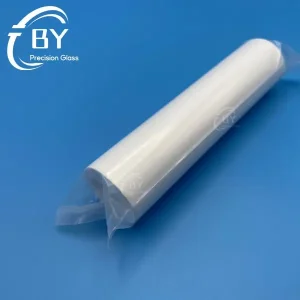
Particulate contamination during production introduces micro-bubbles and scatter voids. Precision polishing and high-temperature flame fusing take place in temperature- and humidity-controlled facilities, followed by multi-stage ultrasonic chemical degreasing in Class 10,000 cleanroom environments. Cuvettes are vacuum-sealed in non-shedding fluoropolymer containers, ready for immediate integration into certified diagnostic equipment.
RoHS, REACH & ISO 9001:2015 Traceability
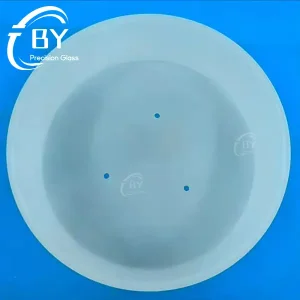
Every fabrication run includes lot-traceable raw material melt certificates and geometric interferometry reports. All manufactured quartz, borosilicate, and diffuse reflector materials fully comply with European RoHS Directive 2011/65/EU and REACH Regulation (EC) No 1907/2006, guaranteeing complete absence of heavy metals, toxic plasticizers, and SVHC candidate substances.
Technical Q&A: Spectrophotometer Cuvettes
In-depth engineering answers covering optical physics, window polishing, bonding methodologies, and operational maintenance.
Semiconductor Quartzware, Reflectors & Custom Cuvettes
Advanced hot-worked quartz fixtures, semiconductor wafer carriers, cavity reflectors, and analytical flow cells.