Integrated Supply Catalog
Featured Solid-State & Laser Head Optical Assemblies
Direct factory production lines for high-threshold pump cavity reflectors, doped filter tubes, and precision laser glassware compatible with medical and industrial resonators.
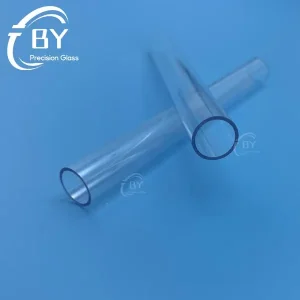
Wholesale Cerium Doped Quartz Tube Blocked UV Wavelength Manufacturer, Manufacturers
View Product Specs →
High-Quality Custom Quartz Glass Components for Vacuum Coating Supplier, Factories
View Product Specs →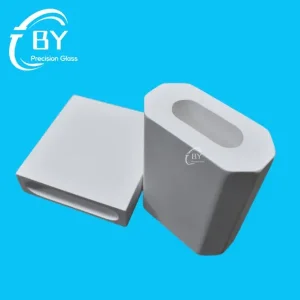
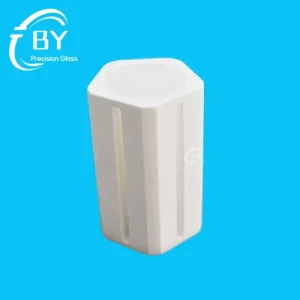
High-Quality Diffuse Reflectors Made of Spectralon-Grade PTFE for Diode-Pumping Chambers
View Product Specs →
High-Quality Custom Fabrication of Quartz Glass Precision Components Supplier, Factory
View Product Specs →
High-Quality Diode-Pumping Chamber Diffuse Reflectors PTFE-based Supplier, Suppliers
View Product Specs →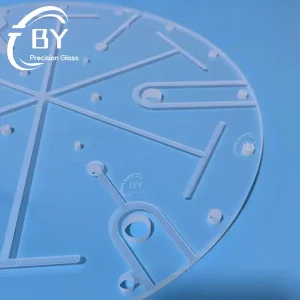
High-Quality Custom Precision Quartz Glass Fabrication Supplier, Suppliers
View Product Specs →
High-Quality Borosilicate Windows and Plates for Viewports Suppliers, Factory
View Product Specs →Engineering White Paper
Engineering Deep-Dive: Laser Head Triple Bore Old Version Mechanics
Critical mechanical dimensions, thermomechanical stability, and optical gain dynamics in legacy dual-lamp single-rod solid-state laser resonators.
System Engineering Definition: The "Laser Head Triple Bore Old Version" designates the monolithic or assembled tri-channel fused glass/quartz/samarium chamber engineered for high-duty-cycle flashlamp-pumped solid-state lasers (typically Nd:YAG, Alexandrite, or Ruby). In this design, two parallel outer bores accommodate high-intensity linear flashlamps, while the axial center bore holds the laser gain crystal rod bathed in laminar dielectric coolant.
Differential Thermal Profiling
Legacy triple-bore flow chambers face severe transverse thermal gradients. Flashlamp conduits experience multi-kilowatt thermal loading, requiring extreme thermal shock resistance (CTE of 0.55 × 10⁻⁶/K in JGS1 quartz) to avoid wall fracturing under intermittent repetition rates.
Samarium-Doping Filtration (Sm10)
Original architecture relies heavily on Samarium-doped glass (Sm:Glass 10% or custom wt%) to completely attenuate parasitic 1064nm amplified spontaneous emission (ASE) while filtering UV radiation below 400nm to avoid color center formation inside laser host crystals.
Dimensional Bore Concentricity
Unlike modern split cavities, the "Old Version" triple bore requires sub-micron longitudinal bore parallelism (≤0.02 mm over 150mm length) and bore runout within ±0.015 mm to maintain constant hydraulic drag across both lamp sleeves and the crystal envelope.
| Design Parameter | Legacy Triple Bore (Old Version) | Split-Cavity Modern Alternative | BY Photonics Engineered Upgrade |
|---|---|---|---|
| Hydraulic Flow Uniformity | Single-body pressure envelope; risk of cavitation at high Reynolds numbers. | Multiple discrete modular flow tubes; joint seal failure vectors. | CNC multi-axis micro-honed interior bores; optimized fluid transfer geometry. |
| ASE Parasitic Suppression | Sm-doped single body absorption (≥99.8% attenuation at 1064nm). | External dielectric thin-film coatings prone to blistering. | Bulk-melt Samarium Rare-Earth Glass (10% standard) with verified spectrophotometry. |
| Alignment Tolerances | Fixed geometric pitch; relies on ultra-precise initial CNC boring. | Variable alignment bracketry; prone to mechanical drift. | Zero-drift monolithic positioning with laser interferometer inspection. |
| Thermal Shock Threshold | Vulnerable if unannealed stresses exist across internal web partitions. | Moderate; localized stress relief. | Oxyhydrogen secondary high-temp anneal down to ≤4 nm/cm internal stress birefringence. |
Chinese Industrial Advantage
Why Global Laser Manufacturers Source Legacy Triple Bores from Chinese Factories
Bridging high-precision multi-bore glass engineering with full-chain vertical integration from raw ingot drawing to optical-grade metrology.
15+
Years Dedicated Optical Machining Since 2010
≤0.01mm
Bore Pitch & Concentricity Precision
100%
In-House Cold Working & Annealing Line
<24h
Engineering DFM Analysis per CAD Drawing
Melt-to-Assembly Raw Material Control
Chinese production ecosystems integrate raw quartz ingot preparation (JGS1 synthetic silica, JGS2/JGS3 fused quartz) and custom rare-earth doping ovens. We control samarium oxide and cerium oxide concentration ratios directly at the melt stage to ensure uniform spectral cutoffs without batch-to-batch variations.
Advanced Micro-Drilling & Ultrasonic Honing
Fabricating deep, narrow parallel bores in brittle glass without micro-cracking demands customized ultrasonic core drills and diamond slurry laps. Chinese specialist plants maintain dedicated 4-axis and 5-axis CNC glass platforms designed specifically to eliminate subsurface micro-fractures in internal cavity walls.
Cost-Effective Reverse Engineering
Original western OEM equipment makers often declare old-version laser head components obsolete to compel customers to buy complete laser consoles. Our engineering facility provides high-fidelity CMM contact/optical reverse engineering, replicating original legacy prints with equal or superior material purity at 40-60% lower unit procurement costs.
Application Engineering
Field Deployments & Global Macro-Solutions
Where old-version triple bore cavities serve mission-critical operations across medical aesthetics, precision metallurgy, and scientific infrastructure.
Medical Aesthetics & Dermatology Resonators
Widely installed in long-pulsed Alexandrite (755nm) and dual-wavelength Nd:YAG (1064nm/532nm) systems. Old-version triple bore sleeves protect laser crystals from UV-induced solarization while circulating deionized cooling water across high-energy pulse cycles.
Heavy Industrial Laser Welding & Tool Repair
Manual spot-welding machines utilized for aerospace mold refurbishing and jewelry assembly depend on robust pulse stability. Old-version triple bore blocks offer durable monolithic housings that tolerate vibration, mechanical impacts, and extended coolant cycles.
Worldwide Supply Chain Sustainability
Third-party MRO (Maintenance, Repair, and Overhaul) service organizations across North America and Europe rely on standardized wholesale suppliers to extend the lifecycle of multi-million dollar laser installations, avoiding premature equipment obsolescence.
Procurement & Technical FAQ
Frequently Asked Questions: Wholesale Laser Head Triple Bore Sourcing
Direct technical clarifications on material grades, replacement interchangeability, and manufacturing lead times.
What distinguishes the "Old Version" triple bore laser head from modern iterations?
The "Old Version" typically refers to the monolithic precision-machined solid glass/quartz flow block with three bored channels (two flashlamps + one center crystal rod) that mounts directly inside gold-plated or diffuse ceramic reflector outer shells. Newer versions often break this into separate, modular flow tubes clamped in an aluminum housing. The old monolithic version is renowned for superior mechanical rigidity, stable optical cavity alignment, and zero seal drift under prolonged operation.
Why is Samarium-doped glass (Sm:Glass) preferred over pure fused quartz for triple bore flow cavities?
While pure synthetic fused silica (such as JGS1) provides excellent UV transmission, solid-state lasers operating at 1064nm (Nd:YAG) suffer from 1064nm lateral parasitic emissions that deplete population inversion. Samarium glass selectively absorbs 1064nm laser wavelengths (preventing lateral ASE breakdown) while strongly blocking ultraviolet light below 400nm, protecting the gain rod from solarization, while remaining transparent in the 600-900nm lamp pump absorption bands.
Can BY Photonics replicate an obsolete triple bore without original factory blueprints?
Yes. Our engineering division routinely receives worn, fractured, or unbranded sample parts from international laser service contractors. We utilize non-contact coordinate measuring machines (CMM) and spectrophotometric analysis to determine exact bore spacing, runout tolerances, chamfer angles, and dopant concentrations, returning 100% compatible 3D CAD models (STEP/DWG) for approval before starting production.
What tolerances are maintained on wholesale triple bore cavity production runs?
Standard manufacturing tolerances hold bore inner diameters (ID) to ±0.02 mm, center-to-center pitch distance to ±0.015 mm, and overall length to ±0.05 mm. Bore wall surface roughness is polished or fine-honed to Ra ≤ 0.4 μm (or clear fire-polished finish) to prevent micro-turbulences and bubbles in cooling flow channels.
How do you safeguard fragile triple bore components during international wholesale shipments?
Each finished triple bore part undergoes thorough ultrasonic de-ionized water washing and cleanroom vacuum packaging. Parts are shock-isolated in high-density custom-molded EVA cellular foam inserts, boxed individually, and packed into reinforced wooden crates certified for air and sea export worldwide, complete with shockwatch and tilt sensors upon request.
Factory Precision Portfolio
Complementary Laser Optical Tubes, Reflectors & Wafers
Precision-machined optical quartzware and rare-earth ceramic modules supporting advanced medical resonators and high-temperature processing equipment.
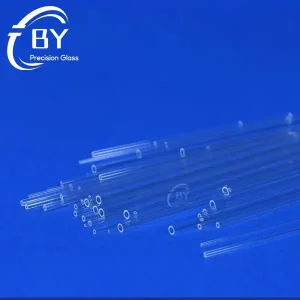
Wholesale Fluorine-Doped Fused Silica Capillary Tube Manufacturer, Factories
View Product Specs →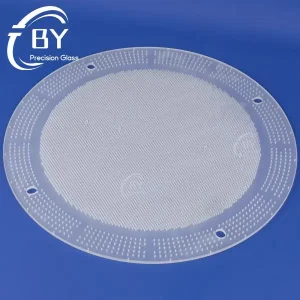
Custom Optical Quartz Gas Distribution Plate Manufacturer, Suppliers
View Product Specs →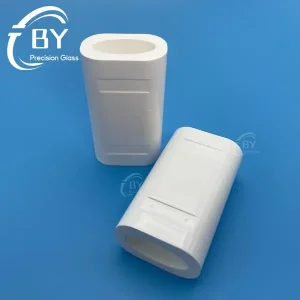
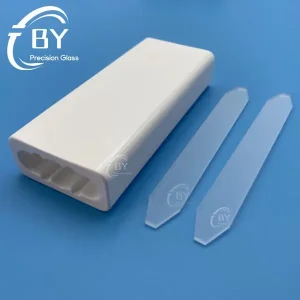
High-Quality Ceramic Cavities For Nd YAG Laser Supplier, Factories
View Product Specs →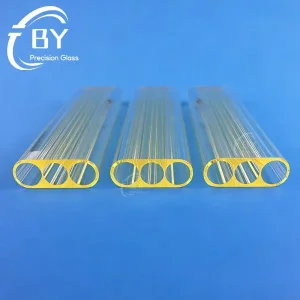
Custom Laser Cavity Flow Tubes & Filters Made from Samarium-doped Glass
View Product Specs →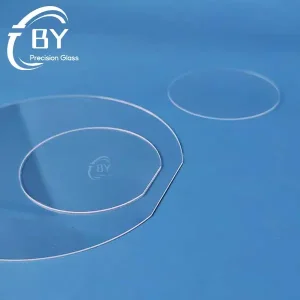
Custom Borofloat 33® Glass Wafers for Semiconductor Manufacturers, Factories
View Product Specs →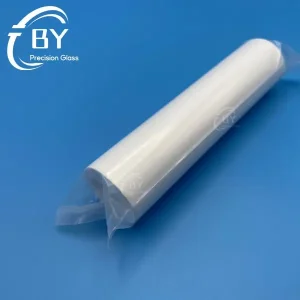
Wholesale Candela VBeam Laser 6" White Cavity Ceramic Reflector 2 Pk
View Product Specs →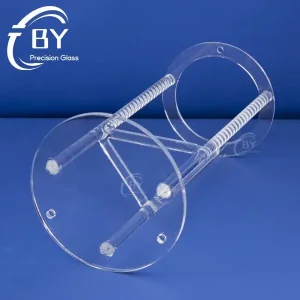
Wholesale Quartz Wafer Carriers for Semiconductor Supplier, Suppliers
View Product Specs →