
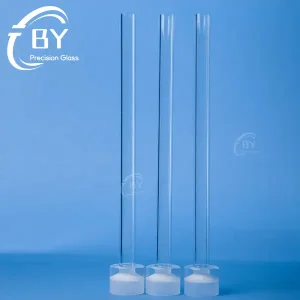
Precision Catalog Showcase - Tier I
High-Purity Quartz & Optical Glass Assemblies
Engineered to deliver extreme thermal shock resistance, trace-element chemical inertness, and ultra-flat vacuum mechanical tolerances down to ±0.01 mm for international OEM fabs.
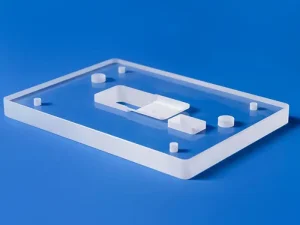
High-Quality Factory Supply Precision Quartz Glass Machining Plate Supplier, Suppliers
Explore Details & RFQ →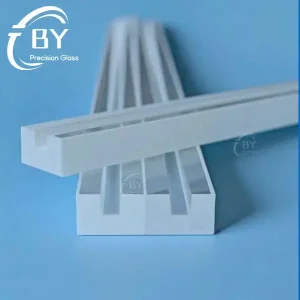
High-Quality Square Groove Quartz Substrate for Fiber Couplers Supplier, Factories
Explore Details & RFQ →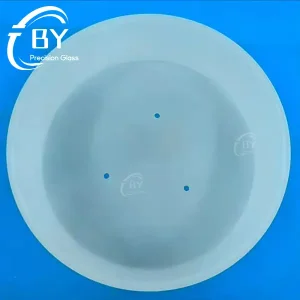
High-Quality Custom Quartz Glass Components for Vacuum Coating Supplier, Factories
Explore Details & RFQ →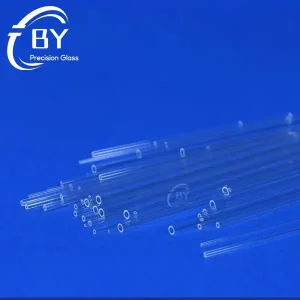
Wholesale Fluorine-Doped Fused Silica Capillary Tube Manufacturer, Factories
Explore Details & RFQ →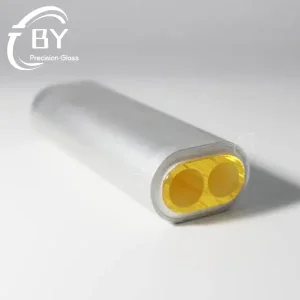
Custom Packed Laser Cavity Flowtubes for Laser Head Manufacturers, Suppliers
Explore Details & RFQ →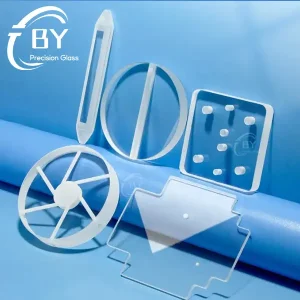
Wholesale High Temperature Custom Quartz Glass Fabrication Suppliers, Factories
Explore Details & RFQ →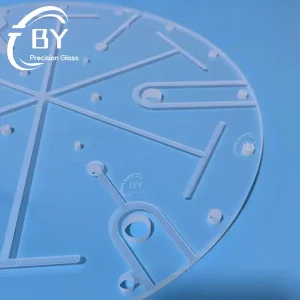
High-Quality Custom Precision Quartz Glass Fabrication Supplier, Suppliers
Explore Details & RFQ →Technical Whitepaper · Industrial Landscape
The Global Commercial & Engineering Status of Quartz Flanges
How monolithic fused silica flanges solve critical hermetic and contamination challenges across sub-nanometer semiconductor nodes, synchrotron beamlines, and vacuum metallurgy.
In modern ultra-high vacuum (UHV), high-temperature wafer processing, and severe corrosive plasma synthesis, the junction between reaction chambers and process tooling represents the primary single point of failure. Quartz flanges—engineered from synthetic or electric-arc fused silica (SiO&sub2; purity ≥ 99.999%)—have transitioned from passive mechanical fittings into mission-critical structural sub-assemblies. As global chip fabricators push toward 3nm, 2nm, and gate-all-around (GAA) architectures, process chambers for Atomic Layer Deposition (ALD) and Low-Pressure Chemical Vapor Deposition (LPCVD) demand interface flanges that eliminate thermal expansion mismatches, resist volatile halogen chemistry, and prevent metal ion leeching.
1,150°C
Continuous Service Temp
5.5×10⁻⁷
Thermal Expansion (CTE /K)
<1×10⁻¹⁰
He Leak Rate (mbar·L/s)
λ/4 - λ/10
Optical Sealing Flatness
Historically, vacuum chambers relied heavily on stainless steel (316L, 304) or nickel superalloys. However, when operating above 800°C, metallic flanges present severe operational bottlenecks: thermal expansion coefficient (CTE) mismatch against quartz processing tubes causes catastrophic micro-cracking; native chromium and iron oxides volatilize under fluorine/chlorine cleaning plasmas, creating catastrophic transition-metal aerosol defects on silicon wafers; and eddy currents induce parasitic thermal gradients. Tianjin BY Photonics Co., Ltd. (est. 2010) manufactures bespoke fused quartz flanges, KF/NW quick-release flanges, CF ConFlat-compatible knife-edge quartz flanges, and monolithic tube-welded flanges that provide an unbroken, inert chemical barrier while guaranteeing mechanical integrity up to 1,300°C short-term thermal excursions.
Supply Chain Realignment
Global semiconductor fabs in North America, Europe, Taiwan, and East Asia are actively diversifying away from single-source European glass conglomerates. Precision Chinese manufacturers with complete vertically integrated cold-machining, laser-cutting, and oxyhydrogen flame working provide 60% shorter lead times with full ISO-certified chemical trace compliance.
Standardized Vacuum Standards
Modern quartz flanges are no longer custom glassblowers' approximations. Precision 5-axis CNC diamond grinding allows fused silica flanges to mirror international metal vacuum standards: ISO-KF (NW16, NW25, NW40, NW50), ISO-K/ISO-F bolted flanges, and custom rectangular slotted ports with engineered Viton®, Kalrez®, or indium seal grooves.
Thermal Shock Resilience
With a near-zero thermal expansion coefficient of 5.5 × 10⁻⁷ /K, a precision-ground fused quartz flange can be repeatedly cycled from ambient room temperature to 1,100°C without volumetric deformation, structural fatigue, or mechanical failure, completely eliminating flange creep under high mechanical clamping pressures.
Material Science · E-E-A-T Benchmark
Fused Quartz vs. Synthetic Fused Silica: Grade Selection Matrix
A granular engineering comparison between synthetic JGS1, commercial JGS2, and IR-grade JGS3 materials for vacuum quartz flange fabrication.
Selecting the correct grade of silica glass for wholesale quartz flange production is a balance between raw material costs, optical transmission requirements, operational temperature limits, and hydroxyl (-OH) radical absorption bands. As a premier manufacturer with 15+ years of glassworking heritage, BY Photonics guides procurement officers and vacuum system engineers through material matching:
| Material Designation | Production Route | Spectral Transmission | OH Content (ppm) | Primary Industrial Utility | Purity Level (SiO&sub2;) |
|---|---|---|---|---|---|
| JGS1 Synthetic Silica | Chemical Vapor Deposition (SiCl&sub4;) | 185 nm – 2,500 nm (Deep UV) | < 2 ppm to 1,200 ppm (Grade dep.) | Laser viewports, EUV lithography vacuum flanges, spectrometry ports | 99.9999% (6N) |
| JGS2 Fused Quartz | Oxyhydrogen Fused Natural Quartz | 220 nm – 2,500 nm (Visible / Near UV) | < 30 ppm | Diffusion furnace tubes, LPCVD reactor flanges, sight glasses | 99.99% (4N) |
| JGS3 Fused Quartz | Vacuum Electric Arc Melting | 260 nm – 3,500 nm (Extended IR) | ≤ 5 ppm (Anhydrous) | IR heating chambers, pyrometry observation flanges, semiconductor heaters | 99.995% (4.5N) |
| Corning 7980 / Suprasil | Flame Hydrolysis Synthetic | 190 nm – 2,100 nm (Excimer Grade) | ~800 - 1000 ppm | Precision optical flanges, laser windows, high-energy optics | 99.99999% (7N) |
For structural vacuum flanges operating in thermal oxidation or diffusion stacks, JGS2 represents the worldwide industrial standard, combining superior mechanical shear resistance with minimal bulk cost. Conversely, when the quartz flange also serves an optical monitoring function—such as in laser-induced fluorescence (LIF), in-situ spectroscopic ellipsometry, or pyrometric chamber telemetry—JGS1 or JGS3 is non-negotiable to avoid absorption spikes at 1,380 nm and 2,720 nm triggered by water radicals.
Macro Forecast · 2026–2035
Future Trends Transforming the Quartz Flange Industry
Emerging manufacturing techniques, wafer fab scaling, and clean energy applications shaping global procurement demands.
300mm & 450mm Ultra-Large Diameter Flanges
As advanced foundry capacity scales to high-volume 300mm wafer runs, furnace core tubes require quartz flanges exceeding 450 mm to 650 mm Outer Diameter (OD). Fabricating large-diameter quartz rings without sagging or bubble inclusion demands multi-torch computerized robotic oxyhydrogen lathes and high-tonnage precision diamond flat lappers.
Halogen Plasma Etch Shielding
Dry plasma etching utilizing CF&sub4;, NF&sub3;, and Cl&sub2; severely erodes standard fused silica, inducing surface clouding and micro-flaking. Next-generation quartz flanges integrate specialized chemical flame glazing and atomic yttria (Y&sub2;O&sub3;) protective coatings on sealing faces to boost chamber MTBF (Mean Time Between Failures) by more than 300%.
Monolithic Laser Fusion vs. Mechanical Assembly
The industry is rapidly phasing out mechanical elastomeric clamp couplings at furnace throats in favor of monolithic fused silica assemblies where the flange collar is directly flame-welded to the quartz process tube, eliminating potential O-ring thermal degradation and volatile outgassing during high-vacuum bake-out cycles.
Diffusion-Bonded Composite Hybrid Joints
In aerospace sensors and deep-UV spectroscopy systems, direct glass-to-metal transition seals (Kovar/Invar to Quartz via graded intermediate glasses) are being replaced by optically contacted, diffusion-bonded quartz-to-sapphire hybrid flanges, allowing operating pressures up to 100 bar with helium leak tightness down to 1×10-11 mbar·L/s.
Automated Green Hydrogen Flame Polishing
Traditional hydrocarbon torch polishing risks carbon atom entrapment in the vitreous silica network. Replacing hydrocarbon fuels with electrolytic hydrogen-oxygen (HHO) clean flames guarantees carbon-free annealing, drastically decreasing surface micro-roughness (Ra < 0.5 nm) on high-vacuum seal facets.
Application Engineering · Real-World Scenarios
High-Stress Industrial Applications of Precision Quartz Flanges
Case studies on how BY Photonics custom quartz flanges serve as the structural backbone for leading high-tech industrial processes.
1. Horizontal & Vertical Semiconductor Diffusion Furnaces
In thermal oxidation, phosphorus oxychloride (POCl&sub3;) doping, and gate oxide annealing at 1,000°C–1,150°C, vertical furnace quartz tubes seal directly to stainless steel manifold manifolds using dual-faced ground quartz flanges. BY Photonics integrates machined O-ring grooves (Viton or perfluoroelastomer) directly into the quartz mating face with flatness ≤ λ/4, preventing process atmosphere leakage and toxic dopant exhaust leaks into cleanroom sub-fabs.
2. High-Power Fiber Laser Hermetic Enclosures
Industrial multi-kilowatt fiber lasers (10 kW – 30 kW) operate with nitrogen-purged hermetic optical paths. Fused silica output flanges with laser-polished end caps and anti-reflective (AR) multilayer coatings withstand multi-gigawatt/cm² laser-induced damage thresholds (LIDT > 15 J/cm² @ 1064 nm, 10 ns), maintaining internal positive gas pressure without wave-front distortion.
3. Ultra-High Vacuum (UHV) Synchrotron Beamlines
Synchrotron radiation sources require viewport flanges transparent from 185 nm deep-UV into the far infrared. Fused synthetic silica (JGS1) is metallized with refractory titanium-molybdenum thin films and braze-welded or flange-clamped to standard CF (ConFlat) stainless steel knife-edge flanges, holding baseline pressures of 1×10⁻¹⁰ Torr without helium permeation.
4. MOCVD Epitaxy for GaN & SiC Power Devices
Metalorganic Chemical Vapor Deposition (MOCVD) processes synthesize gallium nitride (GaN) and silicon carbide (SiC) under corrosive ammonia (NH&sub3;) and silane flows at 1,200°C. Quartz showerheads and chamber flange lids ensure complete non-reactivity, protecting epitaxial wafer crystalline uniformity from metallic iron or nickel particulate poisoning.
5. Photochemical Synthesis & API Pharmaceuticals
Continuous flow chemistry synthesis of Active Pharmaceutical Ingredients (APIs) leverages UV-initiated photo-reactors. Quartz flanges with integrated borosilicate or quartz fluid conduits permit continuous UV-C light irradiation through the flange viewport while circulating aggressively acidic reagent streams (HCl, concentrated nitric acid) at elevated hydraulic pressures.
Quality Verification · Manufacturing Route
Precision Engineering Workflow: From Raw Ingot to Final Inspection
BY Photonics deploys 120+ processing machines and 20+ specialized optical and metrology inspection instruments under one traceable manufacturing roof in Tianjin, China.
01
Ultrasonic 5-Axis CNC Diamond Milling
Raw silica boules are water-jet sliced and shaped on ultrasonic CNC workstations. Diamond core drill bits cut bolt holes, O-ring retaining dovetails, and custom chamfers at feed rates designed to eliminate subsurface micro-fracturing and edge chipping (< 0.05 mm defect threshold).
02
Precision Double-Sided Lapping & Polishing
Planar flange faces undergo multi-stage planetary lapping using cerium oxide and diamond slurries. We routinely achieve surface roughness of Ra ≤ 0.2 nm and flatness up to λ/10 (λ = 632.8 nm), guaranteeing direct metal-gasket sealability without grease or vacuum paste.
03
Robotic Oxyhydrogen Flame Sealing
When flanges require monolithic attachment to quartz tubes, flow plates, or reduction cones, synchronized dual-torch oxyhydrogen glass lathes rotate components at controlled speeds. Temperatures are raised to 1,800°C to achieve continuous bubble-free atomic welds without weld seams.
04
Annealing & Stress Birefringence Relief
Every hot-worked quartz flange is immediately transferred to microprocessor-controlled annealing furnaces. Parts undergo a 12-hour thermal cycle up to 1,180°C followed by controlled cooling to permanently eliminate thermal stress, verified via polarized light strain viewers (< 5 nm/cm residual path difference).
05
CMM Metrology & Helium Mass Spectrometry
Flange geometry is 100% verified on Zeiss 3D Coordinate Measuring Machines (CMM). Finished vacuum assemblies undergo pressurized helium mass spectrometer leak testing down to 1×10⁻¹⁰ mbar·L/s before ultrasonic chemical bath cleaning and cleanroom vacuum bagging.
Procurement & Engineering Guide
Frequently Asked Questions (FAQ) · Wholesale Quartz Flanges
Clear, authoritative answers to critical engineering, manufacturing, and shipping questions asked by semiconductor and optical equipment buyers.
What standard dimensions and connection types are available for wholesale quartz flanges?
We fabricate all standard international vacuum geometries: ISO-KF / NW standard sizes (NW10, NW16, NW25, NW40, NW50) compatible with standard aluminum hinged clamps; CF ConFlat-compatible flanges from 1.33" (CF16) to 10" (CF150); ISO-K and ISO-F bolted collar flanges; and custom rectangular, square, or multi-port flanges up to 800 mm outside diameter machined strictly according to customer STEP, DWG, or PDF engineering prints.
How do you seal a quartz flange against a stainless steel vacuum chamber without cracking?
Because quartz has an exceptionally low coefficient of thermal expansion (5.5 × 10⁻⁷ /K) compared to stainless steel (16 × 10-6 /K), direct metal-to-quartz rigid bolting under varying thermal loads causes stress concentration. We recommend three engineering solutions: (1) Perfluoroelastomer O-rings (Kalrez, Chemraz, or Viton) housed within precision-machined dovetail or flat grooves on the quartz flange face; (2) Spring-loaded Belleville washer assemblies on clamp bolts to absorb thermal expansion differentials; or (3) Step-machined flanges clamped via external split-collar aluminum or stainless steel retaining rings with PTFE buffer rings.
What is the maximum operating temperature and thermal shock limit of your quartz flanges?
Our fused quartz flanges (JGS2/JGS3) operate continuously at 1,100°C to 1,150°C and withstand short-duration thermal excursions up to 1,300°C (the softening point of fused silica is approximately 1,680°C). Because fused silica exhibits virtually zero thermal expansion, a red-hot quartz flange at 1,000°C can be quenched in cold water without shattering, demonstrating unmatched thermal shock resistance compared to borosilicate or soda-lime glass.
Can you machine O-ring grooves, counterbores, and through-holes directly into the quartz flange?
Yes. BY Photonics specializes in multi-axis diamond CNC machining of hard and brittle optical materials. We machine complex geometries including circular O-ring grooves, specialized trapezoidal dovetail grooves for inverted vacuum retention, blind threaded inserts, bolt holes with precision edge chamfering, and optical viewing recesses with tolerances held to ±0.02 mm or better.
What surface flatness and scratch-dig specifications can you guarantee on sealing faces?
Depending on the sealing medium, our double-sided planetary lapping and polishing stations hold surface flatness from λ/2 down to λ/10 per 25 mm aperture (λ = 632.8 nm helium-neon laser line). Scratch-dig surface quality can be certified to military specifications MIL-PRF-13830B from standard commercial 60-40 down to precision laser optic grades of 20-10 or 10-5.
How does BY Photonics prevent residual stress in flame-welded quartz flange tubes?
Flame welding introduces localized thermal gradients. To prevent delayed stress cracking under vacuum or mechanical clamping, all welded assemblies pass through high-capacity digital annealing kilns. The parts undergo soak cycles at 1,160°C–1,180°C followed by controlled slow cooling below 900°C. Every batch is certified with polarimetric optical retardance measurements to guarantee residual stress remains below 5 nm per cm of optical thickness.
What is your minimum order quantity (MOQ) and production turnaround for custom wholesale orders?
We operate a flexible production facility capable of serving both rapid prototyping (1 to 5 pieces) and full-scale OEM recurring manufacturing contracts (hundreds to thousands of pieces monthly). Design for Manufacturability (DFM) reviews are returned within 24 working hours. Prototype samples typically ship within 7 to 12 working days, while recurring production runs ship on planned schedules via air express or sea freight with custom shockproof wooden crates.
What quality documentation and traceability do you provide with shipments?
Every production lot ships with a complete Quality Assurance dossier containing: raw material melt certificates and spectral transmission curves, 3D CMM dimensional inspection reports, laser interferometer surface flatness interferograms, helium leak test certifications, and annealing stress polariscope compliance sheets.
Precision Catalog Showcase - Tier II
Advanced Viewports, Laser Cavities & Doped Flow Ware
Complementary high-precision fused silica, borosilicate, sapphire, and ceramic components machined to OEM drawings for critical photonics and industrial vacuum lines.
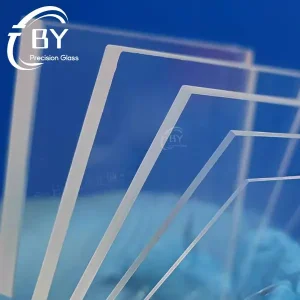
High-Quality Borosilicate Windows and Plates for Viewports Suppliers, Factory
Explore Details & RFQ →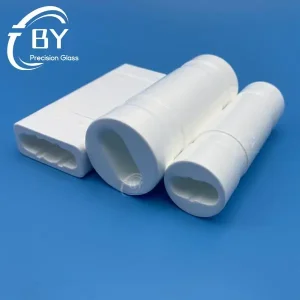
Wholesale Ceramics Reflecor for Semiconductor Lasers Suppliers, Factory
Explore Details & RFQ →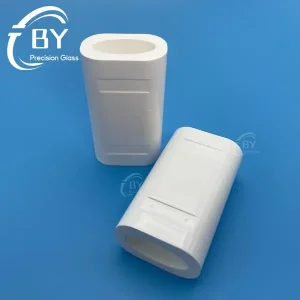
High-Quality Ceramic Cavities For Nd YAG Laser Supplier, Factories
Explore Details & RFQ →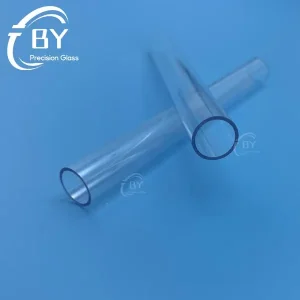
Wholesale Cerium Doped Quartz Tube Blocked UV Wavelength Manufacturer, Manufacturers
Explore Details & RFQ →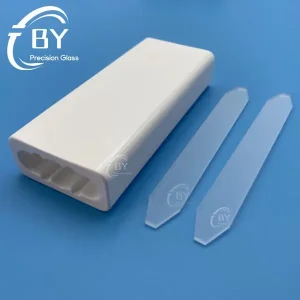
Wholesale Ceramic Cavity Reflector use for DEKA Laser Manufacturers, Supplier
Explore Details & RFQ →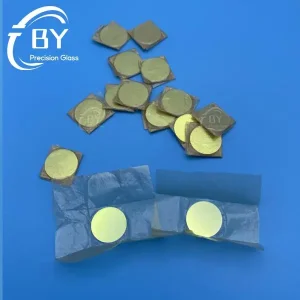
High-Quality Candela Laser Distance Gauge Slider Windows With coating 755 and 1064nm Suppliers, Factories
Explore Details & RFQ →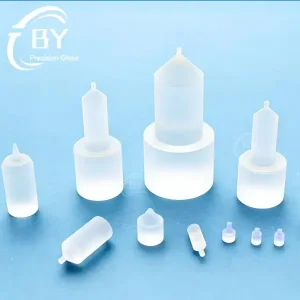
High-Quality Customized Quartz Fiber End Caps for QBH Manufacturer, Factory
Explore Details & RFQ →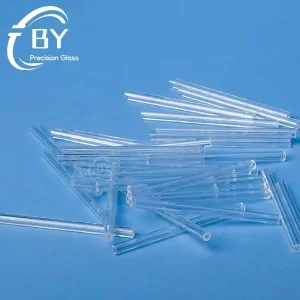
High-Quality Custom Precision Quartz Capillary Tubes Manufacturers, Suppliers
Explore Details & RFQ →Direct OEM Engineering Consultation & Fast RFQ
Send your 2D/3D CAD models (STEP, IGES, DWG, DXF, PDF). Our senior materials and precision glassworking engineers return a manufacturability review and competitive quotation within 24 hours.