
Featured Precision Quartz Components (Batch 01)
Explore high-temperature fabricated glassware, custom ferrules, wafer carriers, and high-purity fused silica optics calibrated to sub-micron tolerances for commercial and laboratory scalability.
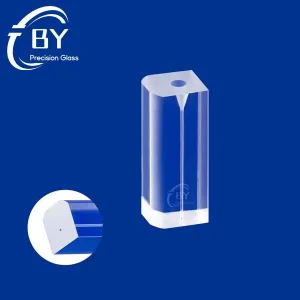
Custom Fiber Optic Glass Ferrules Supplier, Factories
View Product Specs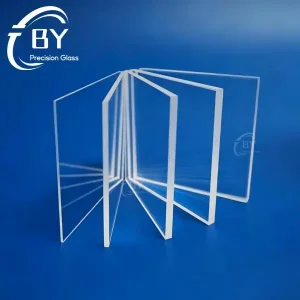
High-Quality JGS1 UItraviolet (UV) Grade Fused Silica Plate Supplier, Factory
View Product Specs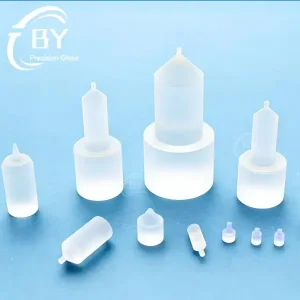
High-Quality Customized Quartz Fiber End Caps for QBH Manufacturer, Factory
View Product Specs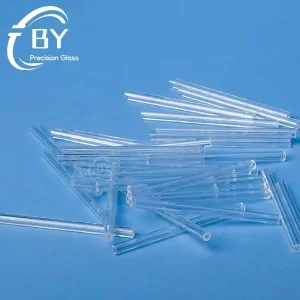
High-Quality Custom Precision Quartz Capillary Tubes Manufacturers, Suppliers
View Product Specs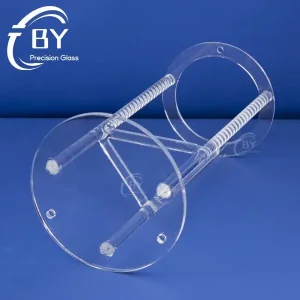
Wholesale Quartz Wafer Carriers for Semiconductor Supplier, Suppliers
View Product Specs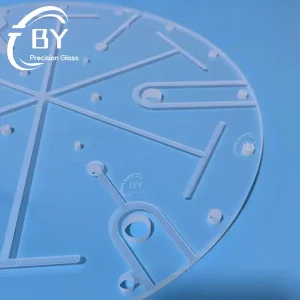
High-Quality Custom Precision Quartz Glass Fabrication Supplier, Suppliers
View Product Specs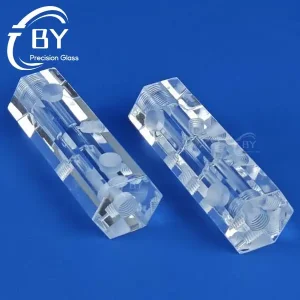
High-Quality Custom Fabrication of Quartz Glass Precision Components Supplier, Factory
View Product Specs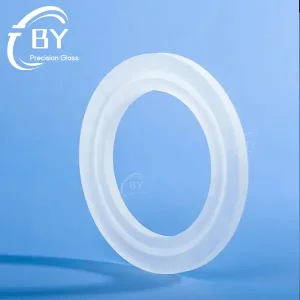
High-Quality Precision Custom Quartz Glass Components for Semiconductor Manufacturers, Supplier
View Product SpecsGlobal Commercial Landscape: The Strategic Imperative of High-Purity Quartz
A technical assessment of raw silicon refining, geopolitical supply chain dynamics, and the unprecedented demand shifts from advanced semiconductor fabrication nodes to high-throughput clinical instrumentation.
Upstream Synthesis & Raw Granular Constraints
The global high-purity quartz (HPQ) supply chain operates under acute geopolitical concentration. Natural ultra-pure quartz sand, mined selectively from deposits like Spruce Pine, North Carolina, serves as the baseline for semiconductor crucibles and high-temperature furnace tubes. However, cutting-edge sub-7nm lithography and extreme ultraviolet (EUV) optical systems require synthetic fused silica manufactured via silicon tetrachloride (SiCl₄) flame hydrolysis, completely eliminating trace alkali metals (Li, Na, K < 0.1 ppm).
Industrial procurement teams now actively seek Tier-1 certified fabricators capable of providing dual-sourcing architectures—blending natural fused quartz for furnace integrity with synthetic silica for high-energy laser transmission windows.
Semiconductor Fab Expansion Driving Consumption
The acceleration of wafer fabrication facilities worldwide has reshaped quartz manufacturing economics. Horizontal and vertical quartz diffusion tubes, wafer boats, pedestal rings, and etching bell jars operate directly in aggressive chemistries involving gaseous hydrochloric acid (HCl), ammonia (NH₃), and dichlorosilane (SiH₂Cl₂) at temperatures reaching 1,150°C.
These components undergo thermal fatigue, structural devitrification, and chemical etching, mandating periodic replacement schedules. Wholesale factory partnerships have shifted from transactional piece-part buying to managed lifecycle contracts with guaranteed batch consistency, certified trace metal specs, and strict dimensional tolerances.
Analytical Chemistry & High-Throughput Automation
Modern analytical laboratory equipment—including inductively coupled plasma mass spectrometry (ICP-MS), UV-Vis-NIR spectrophotometry, and microfluidic capillary electrophoresis—requires glassware inert to organic solvents and harsh mineral acids (including aqua regia and perchloric acid). Borosilicate glassware, while historically ubiquitous, suffers from trace boron and sodium leaching in trace elemental analysis.
Consequently, laboratory automation OEMs are converting fluid manifolds, cuvettes, nebulizers, and digestion vessels entirely to precision-machined fused quartz, demanding ISO-compliant production with automated fire-polishing to eradicate micro-fissures.
Material Science Classification: JGS1 vs. JGS2 vs. JGS3 Fused Silica
A foundational breakdown of synthetic fused silica versus natural fused quartz, transmission spectrum mechanics, hydroxyl ion ([OH⁻]) concentration, and thermal performance metrics essential for technical design engineers.
| Material Designation | Raw Material & Synthesis Process | Useful Spectral Range | Hydroxyl [OH⁻] Content | Critical Engineering Applications |
|---|---|---|---|---|
| JGS1 (Far UV Grade) | Synthetic amorphous silicon dioxide (SiCl₄ flame hydrolysis) | 185 nm – 2,500 nm (Zero UV absorption edge down to 180 nm) | < 5 ppm (or high OH option > 1200 ppm for excimer stability) | Deep-UV lithography lenses, high-energy laser windows, analytical cuvettes, QBH laser delivery end caps. |
| JGS2 (Optical Grade) | Refined natural crystal quartz fused via hydrogen-oxygen flame | 220 nm – 2,500 nm (Broad UV-Visible transmission) | 30 – 150 ppm | Spectroscopy optics, optical windows, precision sight glasses, solar cell substrates, high-intensity discharge envelopes. |
| JGS3 (Infrared Grade) | Natural quartz sand electro-fused in vacuum or inert atmosphere | 260 nm – 3,500 nm (No 2.73 µm OH absorption band) | < 2 ppm (Extremely anhydrous structure) | Mid-wave infrared viewing ports, pyrometry viewports, thermal reaction chambers, gas sensing flow cells. |
| Semiconductor Tube Grade | High-purity natural quartz sand (IOTA standard) arc fused | Thermal process optimized (190 nm – 3,200 nm broad) | < 30 ppm | Wafer carriers, diffusion process tubes, oxidation boats, epitaxial reactor liners, LPCVD processing tubes. |
Thermal Shock Immunity
Possessing a coefficient of thermal expansion (CTE) of approximately 5.5 × 10⁻⁷ /°C between 20°C and 320°C, quartz glassware can withstand rapid quenching from 1,100°C directly into ice water without structural fracturing or micro-crack propagation.
Devitrification Kinetics
At sustained service temperatures above 1,150°C, amorphous SiO₂ transitions into crystalline cristobalite. Our proprietary chemical flame polishing removes surface micro-defects and nucleation centers, drastically retarding devitrification rates.
Universal Chemical Resistance
Excepting hydrofluoric acid (HF) and hot concentrated phosphoric acid (>150°C), fused silica remains totally chemically unreactive across the entire pH spectrum, preventing reagent contamination in ultra-trace pharmaceutical formulation.
Dielectric Breakdown Strength
With an electrical resistivity exceeding 10¹⁸ Ω·cm at room temperature and a low dielectric loss tangent (tan δ < 0.0004 at 1 MHz), quartz is an unmatched substrate for RF plasma chambers, microwave digestion systems, and high-voltage electrodes.
Advanced Processing Chains: From CNC Cold-Working to Oxyhydrogen Glassblowing
Combining high-precision CNC multi-axis ultrasonic milling with traditional artisan master flame-working to deliver mission-critical geometry without induced residual stress.
5-Axis CNC Ultrasonic Cold Machining
Traditional grinding of brittle hard materials induces subsurface micro-fractures that weaken under thermal cycling. BY Photonics integrates high-frequency ultrasonic spindle kinematics (20–40 kHz) coupled with diamond core tooling.
This achieves sub-10 µm positional tolerances, complex internal fluid channels, multi-level countersunk bores, and high-aspect-ratio wafer carrier slots without edge chipping, ensuring structural fatigue integrity for high-vacuum and high-pressure duties.
Oxyhydrogen Flame Lathe Fabrication
Quartz fuses only above 1,700°C, demanding specialized stoichiometric oxyhydrogen (H₂/O₂) torch clusters. Our master glass technicians execute seamless longitudinal seam welding, heavy-wall flange joining, and multi-manifold distillation assemblies.
Crucially, every thermal operation is followed by program-controlled annealing cycles at 1,180°C in electric furnaces to relieve internal stress birefringence, verified via cross-polarization photoelastic analyzers prior to dispatch.
Double-Sided Lapping & Laser Interferometry
Optical quartz plates, viewports, and UV flow cells require uncompromising wavefront transmission. We utilize planetary double-sided lapping machines with cerium oxide and diamond slurries to achieve flatness down to λ/10 (632.8 nm) and surface roughness Ra < 0.5 nm.
Surface quality adheres strictly to MIL-PRF-13830B (down to 10-5 scratch-dig) and ISO 10110 standards, validated via Zygo Verifire phase-shifting laser interferometers and 3D white-light optical profilers.
Industrial Solutions & Localized Application Ecosystems
Real-world engineering applications where precision quartz laboratory glassware is non-negotiable for system performance, safety, and repeatable experimental data.
Semiconductor Front-End (FEOL) Processing
In thermal oxidation, polysilicon CVD, and boron/phosphorus diffusion furnaces, our ultra-high purity quartz boats, injector tubes, and transfer paddles prevent metallic heavy-ion migration into 300mm silicon wafers, safeguarding gate-oxide dielectric breakdown integrity.
Spectrophotometry & HPLC Flow Cells
Direct light absorption measurements at 190–260 nm (nucleic acid and protein characterization) demand molecularly bonded JGS1 quartz cuvettes. Our flame-fused, non-adhesive cuvettes eliminate solvent polymer leaching and survive continuous cleaning cycles.
Photochemical Synthesis & UV Reactors
Continuous-flow photochemical reactors for APIs (Active Pharmaceutical Ingredients) rely on high-flux immersion quartz wells. High optical transmission in the UVC spectrum maximizes quantum yields in singlet oxygen oxidation and halogenation reactions.
Ultra-Trace Metals Environmental Digestion
Testing wastewater and soil samples down to parts-per-trillion (ppt) levels via ICP-MS demands closed-vessel microwave digestion liners crafted from synthetic quartz. The inert SiO₂ matrix completely prevents sample contamination and analyte memory effects.
Technology Roadmap: Next-Generation Fused Silica & Micro-Optics
Anticipating the converging requirements of photonic computing, quantum sensors, microfluidic lab-on-a-chip, and green manufacturing over the 2026–2035 development horizon.
Nanoscale Laser-Induced Etching (SLE)
Next-generation biomedical and photonic devices require microfluidic channels with sub-micron cross-sections impossible with diamond drills. Selective Laser-induced Etching (SLE) uses femtosecond pulsed laser writing inside fused silica bulk, followed by selective chemical development.
This enables monolithic 3D quartz microfluidic channels, embedded optical waveguide arrays, and integrated optical resonators inside a single solid glass wafer with zero joint interfaces.
Rare-Earth & Transition Metal Doping
Modifying silica matrices with specialized dopants enables unique spectral management. Cerium-doped quartz eliminates harmful deep ultraviolet solarization in intense flashlamps, protecting surrounding optical coatings.
Samarium-doped quartz precisely absorbs unwanted 1,064 nm parasitic laser amplified spontaneous emission (ASE) while maintaining high transmission in pump bands, revolutionizing cooling jackets for solid-state medical lasers.
Carbon-Neutral High-Enthalpy Plasma Synthesis
Traditional oxyhydrogen glass fusion consumes high energy volumes. BY Photonics is pioneering radio-frequency (RF) induction thermal plasma torch systems to sinter synthetic quartz boules.
This eliminate water-vapor ([OH⁻]) contamination at the melting stage, producing ultra-dry infrared-grade quartz with zero carbon footprint and significantly lowering total manufacturing lead times for wholesale international clients.
OEM Procurement Engineering & Quality Governance
A rigorous factory auditing standard ensuring end-to-end material traceability, mechanical durability, and strict zero-defect export packaging for international distribution.
GD-MS Trace Impurity Profiling
Every melt batch undergoes Glow Discharge Mass Spectrometry (GD-MS) testing to certify total metallic impurities stay strictly beneath 15 ppm (natural grade) or 0.1 ppm (semiconductor JGS1 grade), preventing unpredicted devitrification.
DIN ISO 10110 Inclusion & Bubble Grade
Internal bubble counts and striae directly cause optical scatter and thermal stress rupture. We guarantee visual optical certification conforming to DIN ISO 10110-3/4 (class 0 or class 1 bubble free), backed by shadowgraph inspection images.
Precision Stress Birefringence Mapping
Hot-worked glassware retains destructive internal stresses if cooled improperly. We employ automated polariscopes measuring optical path difference (OPD < 5 nm/cm), verifying total thermal equilibrium prior to final mechanical milling.
Class 10,000 Cleanroom Packaging
Finished components receive multi-stage ultrasonic degreasing, ultra-pure water (UPW 18.2 MΩ·cm) rinse, and vacuum-sealed nitrogen pouching inside a certified cleanroom, ensuring clean, immediately deployable parts upon global arrival.
Featured Precision Quartz Components (Batch 02)
Specialty doped flow tubes, semiconductor diffusion boats, vacuum coating components, and high-temperature engineered glassware engineered to withstand harsh chemical and thermal environments.
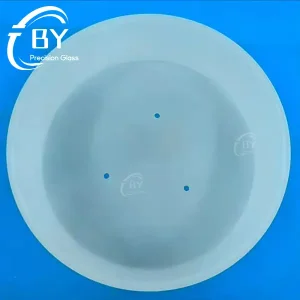
High-Quality Custom Quartz Glass Components for Vacuum Coating Supplier, Factories
View Product Specs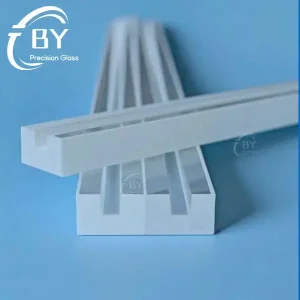
High-Quality Square Groove Quartz Substrate for Fiber Couplers Supplier, Factories
View Product Specs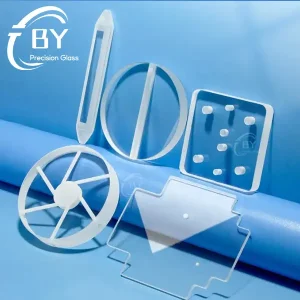
Wholesale High Temperature Custom Quartz Glass Fabrication Suppliers, Factories
View Product Specs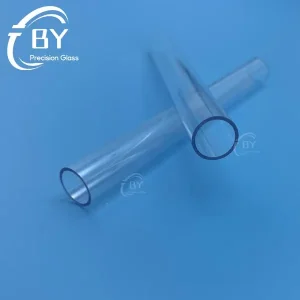
Wholesale Cerium Doped Quartz Tube Blocked UV Wavelength Manufacturer, Manufacturers
View Product Specs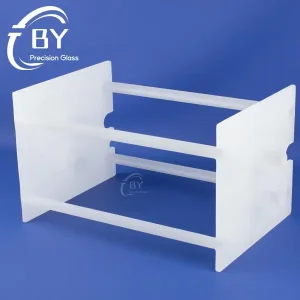
Wholesale Quartz Diffusion Boat for Semiconductor Suppliers, Factories
View Product Specs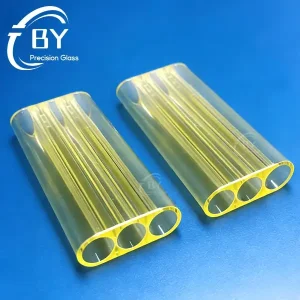
Wholesale Samarium-doped Quartz Triple Bore for Medical Laser Manufacturer, Supplier
View Product Specs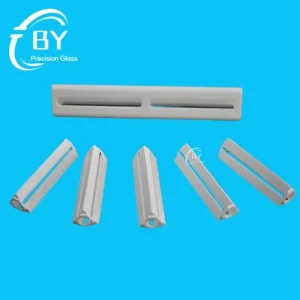
High-Quality Diode‑Pumping Chamber Diffuse Reflectors PTFE‑based Supplier, Suppliers
View Product Specs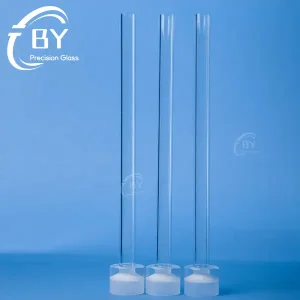
High-Quality Chemical Resistant Custom Quartz Glass Parts Fabrication Supplier, Factories
View Product SpecsFrequently Asked Questions (FAQ) for Engineering & Procurement
Direct technical answers addressing physical tolerances, material grades, thermal limitations, and factory lead-times for custom quartz laboratory glassware.