
Featured Laser Cavities & Specialized Assemblies for Irish Engineering
Engineered for extreme pumping chamber duty cycles, high thermal shock tolerance, and maximum diffuse reflectivity across near-infrared (NIR) and visible spectrums.
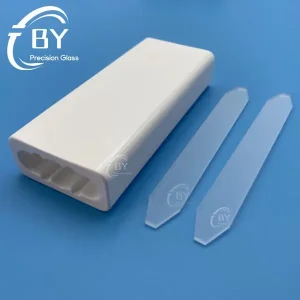
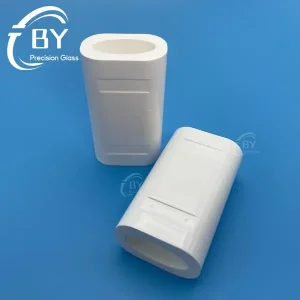
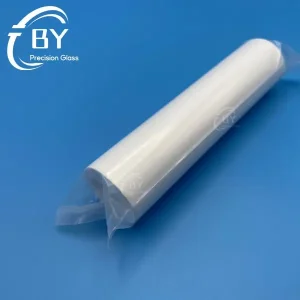
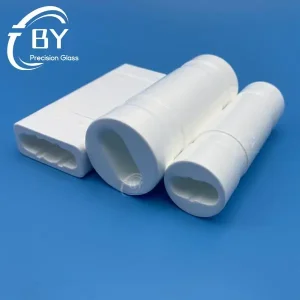
Ceramic Laser Reflectors in Ireland's Advanced MedTech & Photonics Clusters
Ireland has cemented its status as one of Europe's most vital high-tech epicenters, driven by over 300 medical technology enterprises situated across hubs in Galway, Cork, Limerick, and the greater Dublin metropolitan area. Within these advanced sectors, high-power solid-state lasers (such as Nd:YAG, Er:YAG, and Alexandrite) are integral instruments for ultra-precise catheter hole drilling, stent micro-cutting, guide wire laser welding, and high-volume aesthetic systems.
At the core of these solid-state optical cavities lies the porous alumina diffuse reflector. Unlike traditional metallic gold or silver-plated metal cavities that degrade over time through flaking, thermal peeling, and cooling fluid erosion, modern high-purity (99.7% Al₂O₃) porous ceramics deliver stable diffuse reflectance exceeding 97.8% across the 600–1000 nm absorption bands of standard gain media. The high dielectric strength, superior heat distribution, and chemical inertness against deionized (DI) cooling water ensure unyielding beam stability throughout multi-million-pulse manufacturing regimes.
Emerging Technical Trends in Laser Pumping Architectures
Across both European contract manufacturing facilities and global research laboratories, cavity engineering is progressing rapidly towards tight integration, thermal stability, and prolonged operational cycles:
- Selective Internal Glazing: Advanced partial glass-flux sealing inside reflector bores eliminates DI water ingress and solarization, preventing bio-film deposition and reflective degradation.
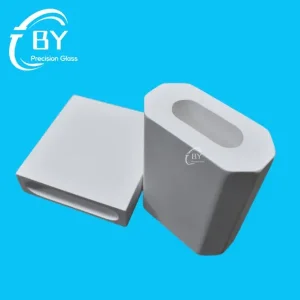
- Complex Multi-Bore Profiles: Triple-bore, close-coupled elliptical geometries optimize pump photon efficiency from flashlamps directly into laser rods while minimizing thermal lensing.
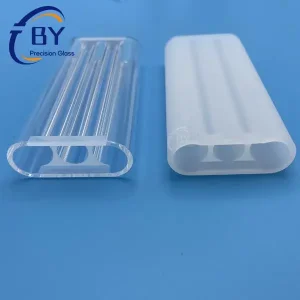
- Hybrid Ceramic-Polymer Cavities: Combining high-durability ceramic bodies with engineered PTFE flow tubes to withstand extreme UV radiation emitted by xenon arc discharges.
| Parameter | Alumina Ceramic (Al₂O₃) | Gold-Coated Metal |
|---|---|---|
| Reflectance Type | Uniform Lambertian Diffuse | Specular Directional |
| NIR Reflectivity | 97.5% – 98.5% | 95% – 96% |
| Coolant Resistance | Chemically Inert (DI Water) | Prone to Oxidation / Peeling |
| Solarization | Zero Degradation | Surface Blistering Over Time |
| Dielectric Strength | > 15 kV / mm | Conductive (Risk of Arcing) |
China Industry 4.0: Supply Chain Agility for Irish & EU Tech Hubs
Bridging high-volume precision isostatic pressing with agile CNC green-body machining and ISO-compliant vacuum sintering, providing dependable tier-1 sourcing without European distributor markups.
Isostatic Pressing & Green CNC
Cold isostatic compaction generates homogeneous density gradients throughout raw ceramic blocks, followed by high-speed CNC green-machining before sintering to minimize internal stress and micro-cracking.
Controlled Atmospheric Sintering
1,750°C computer-controlled kiln profiles guarantee optimal crystal grain size growth, avoiding sub-surface micro-voids and achieving high diffuse scatter properties without adding pigment contaminants.
Hermetic Glazing & Rapid DFM
Dedicated engineering teams conduct comprehensive Design For Manufacturability (DFM) analyses within 24 hours. Custom selective vitreous glaze application seals laser cooling channels down to vacuum standard tolerances.
Optical Substrates, UV Flow Components & Pumping Chambers
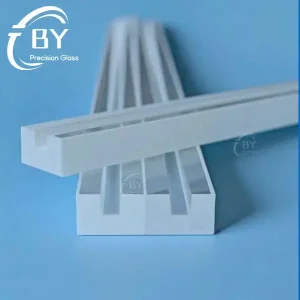
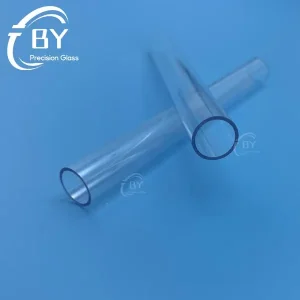
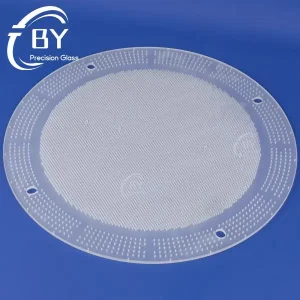
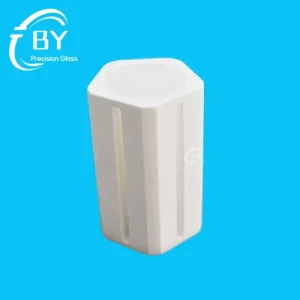
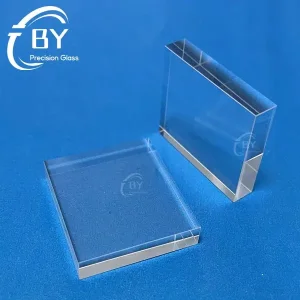
Browse our comprehensive selection of optical quartz substrates, UV filtering flow tubes, sapphire lightguides, and high-reflectivity diffuse cavities engineered for industrial and scientific applications.
Frequently Asked Questions
Technical, logistical, and material details for European purchasing teams and laser design specialists.
Why is 99% porous alumina ceramic favored over gold plating in industrial laser pump chambers?
What is the purpose of applying a vitreous glaze on the ceramic cavity's internal surface?
Can you manufacture custom triple-bore or elliptical configurations from customer drawings?
How are international shipments handled for tech and medical manufacturers in Ireland?
What are the minimum order quantities (MOQ) for prototypes versus production runs?
Ready to Optimize Your Laser Pumping Cavity Performance?
Send your part prints or CAD files for a comprehensive manufacturability review, technical feedback, and a competitive factory-direct quote within 24 hours.
Send Inquiry Now