
High-Quality Quartz Cuvettes and Flow Cells Manufacturer & Supplier for the Chicago Market
Empowering the Chicagoland Biotechnology Corridor, Precision Analytical Instrumentation, and Lake Michigan Environmental Laboratories with JGS1/JGS2 Synthetic Fused Silica Optical Fluidics.
Primary Precision Assemblies for Chicago Instrumentation Engineers
Direct-from-factory optical components configured to withstand demanding HPLC, UV-Vis spectrophotometry, microfluidics, and photonics analysis with zero transmission distortion.
-

Chicago-Grade Spectrophotometer Quartz Cuvette (Custom Direct)
Wholesale Customize Quartz Cuvette for Spectrophotometer Supplier, Factory
-

Precision Quartz Glass Components for Illinois Tech Labs
High-Quality Custom Fabrication of Quartz Glass Precision Components Supplier, Factory
-
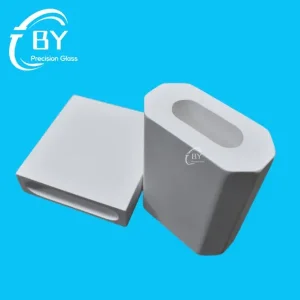
Spectralon-Grade PTFE Laser Pump Reflectors (Chicago Standard)
-
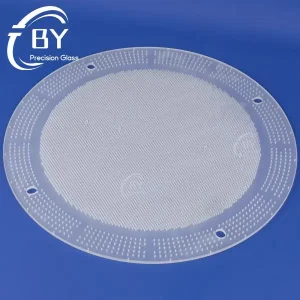
Midwest High-Purity Optical Quartz Gas Distribution Plates
Custom Custom Optical Quartz Gas Distribution Plate Manufacturer, Suppliers
Executive Whitepaper: Industrial & Analytical Dynamics of the Greater Chicago Market
The Greater Chicago metropolitan area—spanning Cook, DuPage, and Lake counties—serves as one of North America’s most complex and vital hubs for life science discovery, advanced manufacturing, and water safety testing. As institutions such as the University of Chicago, Northwestern University, Argonne National Laboratory, and Fermilab push boundaries in synchrotron light sources and biophotonics, the demand for dimensionally stable optical channels has transitioned from commodity glassware to precision micro-engineered quartz solutions.
Chicagoland Biopharma Corridor
Lake County’s world-class pharmaceutical manufacturing corridor demands flow cells capable of sub-nanoliter volume control for in-line chromatography, protein crystallization monitoring, and automated high-throughput drug screening.
Petrochemical & Refinery Controls
Operating along the Calumet River and Northwest Indiana industrial zones, petrochemical downstream operations utilize UV/NIR absorption quartz flow cells to monitor hydrocarbon fractions in real-time under aggressive pressure gradients.
Great Lakes Environmental Testing
Continuous monitoring of Lake Michigan’s freshwater ecosystems relies on deep-UV transparent fused silica cuvettes for trace detection of heavy metals, per- and polyfluoroalkyl substances (PFAS), and organic contaminants down to parts-per-trillion levels.
Shifting Global Procurement Architectures
Tier-1 original equipment manufacturers (OEMs) across North America, Europe, and Asia-Pacific are transitioning away from traditionally cemented optical cells toward monolithic thermal fusion (fire-fused) and molecular optical contact bonding. Adhesive-bonded cells consistently fail under aggressive solvents—such as tetrahydrofuran (THF), chloroform, and concentrated acids—causing phase separation, beam deflection, and baseline drift.
Procurement teams now prioritize supply contracts with direct manufacturers capable of providing end-to-end spectral verification, interferometric surface topography readouts, and documented hydroxyl (OH) concentration levels to suppress parasitic fluorescence in sensitive bio-assays.
Next-Gen Flow Cell Design Trends
The continuous miniaturization of sample volumes has stimulated significant innovation in microfluidic fused silica channels. Micro-bore flow cells featuring optical apertures as small as 0.5 mm require precision CNC ultra-sonic core-drilling without propagating micro-fractures along internal optical surfaces.
Modern continuous process analytical technologies (PAT) also require flow cells integrated with specialized PEEK, 316L stainless steel, or titanium compression assemblies, allowing automated spectrophotometers to operate reliably under pulsing hydraulic pressures up to 100 bar without optical window displacement.
China Factory 4.0: Resilient, High-Precision Quartz Fabrication
Bridging high-volume cost efficiency with nanoscale precision: How our Tianjin advanced production campus delivers superior supply chain security, short lead cycles, and direct DFM review for Chicago buyers.
Consolidated In-House Manufacturing
From raw synthetic fused silica ingot pre-shaping, planetary double-sided chemical mechanical planarization (CMP), multi-axis CNC micro-machining, to oxyhydrogen fire fusion, all operations reside under one roof to prevent tolerance creep.
Material Traceability (JGS1 / JGS2 / JGS3)
Every delivery includes verified spectral transmission certificates, certifying high deep-UV transmission (>80% at 200 nm for JGS1) or near-IR clarity with negligible bubble classes (DIN ISO 10110 compliance).
Rapid Transpacific Logistics Direct to O'Hare
Leveraging direct air-cargo corridors to Chicago O'Hare International Airport (ORD), we provide standard 48-hour DFM engineering turnarounds, rapid prototyping within 7–10 working days, and expedited palletized deliveries.
Frequently Asked Technical Questions: Quartz Cuvettes & Flow Cells
Essential technical, material, and optical engineering answers for Chicago laboratory procurement officers and precision instrument designers.
What is the definitive advantage of fused quartz flow cells over optical glass (BK7) in spectrophotometric applications? +
How do you construct optical flow cells to prevent solvent leakage under high operational pressure? +
What tolerances do you maintain on custom cuvette path lengths? +
How does your facility package precision quartz glassware to prevent shipping damage to the US Midwest? +
Specialized Industrial Glass, Laser Flowtubes & Optical Components
Explore our expanded precision catalog supporting Chicago photonics research, medical laser engineering, and industrial viewport systems.
-
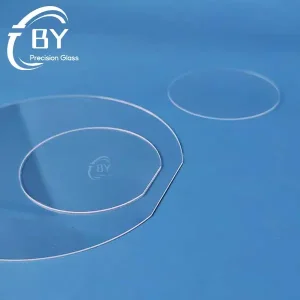
Borofloat 33® Glass Wafers for Midwest MEMS Fab
Custom Borofloat 33® Glass Wafers for Semiconductor Manufacturers, Factories
-
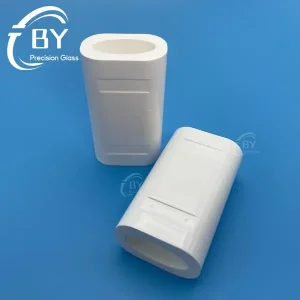
High-Reflectance Nd:YAG Laser Ceramic Cavities
High-Quality Ceramic Cavities For Nd YAG Laser Supplier, Factories
-
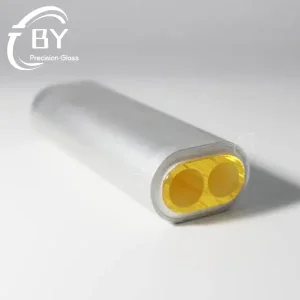
Pre-Assembled Laser Cavity Flow Tubes for Industrial Lasers
Custom Packed Laser Cavity Flowtubes for Laser Head Manufacturers, Suppliers
-

High-Pressure Borosilicate Sight Glass & Viewports
High-Quality Borosilicate Windows and Plates for Viewports Suppliers, Factory
-
Multi-Wavelength Precision Absorption Cells
Wholesale Customize Quartz Cuvette for Spectrophotometer Supplier, Factory
-
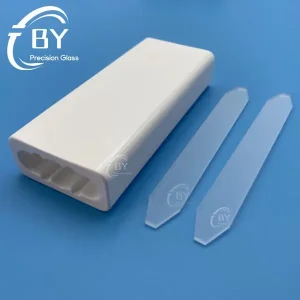
Aesthetic Laser Replacement Ceramic Cavity Reflector
Wholesale Ceramic Cavity Reflector use for DEKA Laser Manufacturers, Supplier
-
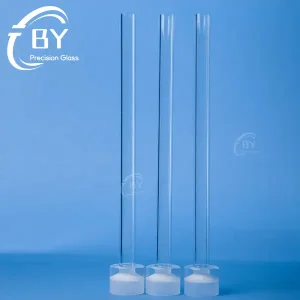
Chemical-Resistant Engineered Quartz Reaction Vessels
High-Quality Chemical Resistant Custom Quartz Glass Parts Fabrication Supplier, Factories
-
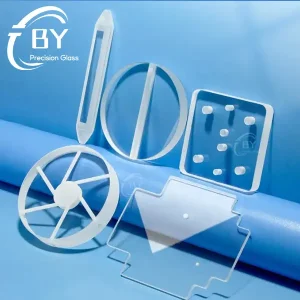
Thermal Shock-Proof High-Temperature Quartz Ware
Wholesale High Temperature Custom Quartz Glass Fabrication Suppliers, Factories
Accelerate Your Chicago Instrumentation Project
Send your engineering drawings (PDF / DWG / DXF / STEP) for immediate manufacturability feedback and factory-direct commercial terms within 24 hours.
Send Inquiry Now