
High-Diffuse Ceramic Reflectors Engineered for Nordic Laser Architecture
Precision glazed and unglazed porous alumina reflective chambers optimizing pump energy absorption across flashlamp and solid-state pumping modules in Finland.
-
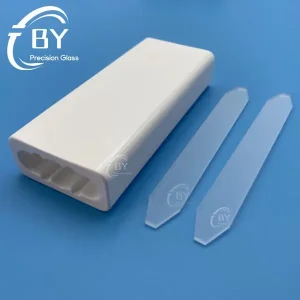
Wholesale Ceramic Cavity Reflector use for DEKA Laser in Finland Systems
View DEKA Reflector Specs -
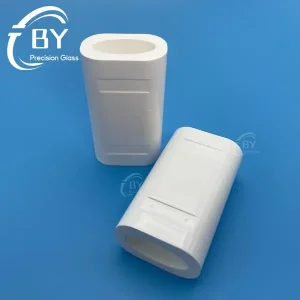
High-Quality Ceramic Cavities For Nd YAG Laser Industrial Integration
Explore Nd:YAG Cavities -
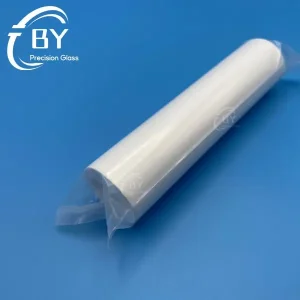
Finland Medical Grade Candela VBeam 6" White Cavity Ceramic Reflector
Candela VBeam Reflectors -
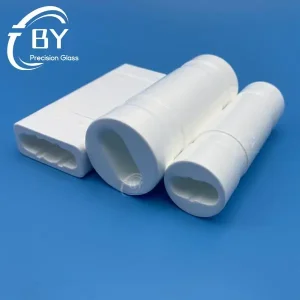
Ceramics Reflector for Semiconductor Lasers OEM Sub-assemblies
Semiconductor Reflectors
Empowering Finland's Photonics & Quantum Ecosystem
From the Photonics Finland cluster in Joensuu and Tampere's optoelectronics valley to Espoo's VTT technical research centers, Finnish advanced manufacturing demands zero-defect thermal components.
Tampere & Joensuu Hubs
Finland hosts world-class clusters specializing in ultrafast fiber lasers, diode-pumped systems, and semiconductor laser diodes. Our specialized yellow-glazed and white diffuse ceramic reflectors provide high thermal shock stability required by Nordic laser developers running uninterrupted, precision clean-room operations.
Harsh Industrial Processing
Finnish heavy manufacturing, forestry machinery processing, and marine Arctic shipbuilding rely heavily on high-power solid-state Nd:YAG cutting and welding machinery. Ceramic cavity reflectors exhibit chemical corrosion inertia against deionized cooling water, significantly outpacing traditional gold-coated metal cavities.
Clinical Dermatology & Surgery
Helsinki and Turku university clinics prioritize reliable flashlamp-pumped aesthetic and surgical lasers. Our replacement Candela and DEKA compatible ceramic reflectors eliminate laser output attenuation, ensuring constant beam irradiance across dermatological pulsed-dye and Alexandrite setups.
Ceramic Laser Cavities vs. Alternative Reflector Architectures
Porous Al₂O₃ ceramic reflectors yield Lambertian diffuse reflection patterns that maximize solid-state laser crystal rod pump uniformity while mitigating thermal lensing phenomena.
| Performance Metrics | High-Purity Al₂O₃ Ceramic | Gold-Plated Metallic Cavity | Spectralon / PTFE Block |
|---|---|---|---|
| Diffuse Reflectivity (600–1064nm) | 97.5% - 98.2% (Lambertian) | 90.0% - 94.0% (Specular) | 98.5% - 99.2% (Diffuse) |
| Operating Temperature Limit | Up to 1500°C | < 300°C (Flaking risk) | < 260°C (Melting / Softening) |
| Cooling Medium Compatibility | Direct DI Water Contact (Glazed) | Requires plating passivation | Porosity absorbs impurities |
| UV Solarization Resistance | Impervious / Non-degrading | Tarnishes under intense UV | Degrades under continuous UV lamp |
| Mechanical Precision Machinability | Diamond ground to ±0.02 mm | CNC milled ±0.05 mm | Difficult to hold tight bore tolerance |
Technological Roadmap: The Future of Laser Reflectors (2026–2030)
Micro-Engineered Porosity
Controlling bulk ceramic porosity at 12–18% ensures maximum bulk scattering without compromising mechanical tensile strength during water-cooled pressurized clamping.
Rare-Earth Glaze Filtering
Integrating samarium and cerium elements directly into inner bore glaze layers to selectively absorb parasitic 1064nm ASE wavelengths directly at the cavity boundary.
Direct Micro-Channel Cooling
Laser additive sintering allows conformal internal cooling channels inside the ceramic body, increasing continuous power handling capacity up to 30 kW laser modules.
Diamond-Ceramic Hybrids
Next-gen composite ceramics utilizing poly-crystalline diamond matrices designed specifically for Finland's sub-zero quantum sensing and high-latitude aerospace laser payloads.
Direct Chinese Factory Precision & Nordic Compliance Standards
Bridging Tianjin’s precision optical machining capacity with strict European Union directives for uninterrupted delivery to Helsinki, Tampere, and Oulu.
Tier-1 Material Integration in Tianjin
By consolidating high-purity alumina isostatic pressing, vacuum sintering, precision diamond grinding, and high-temperature lead-free glazing under one roof, BY Photonics achieves 40% shorter turnaround times compared to European local brokers. Our localized production lines secure reproducible batch tolerances (±0.02mm) with zero reliance on fragmented 3rd-party subcontractors.
EU Directives, RoHS & Finnish Customs (Tulli) Ready
All ceramic laser reflectors and optical flow tubes fully comply with EU RoHS (Directive 2011/65/EU) and REACH (EC 1907/2006). Shipments directed to Finnish ports and Helsinki-Vantaa air cargo are accompanied by comprehensive material batch analysis (COA), coordinate measurement machine (CMM) inspection protocols, and pre-cleared HS Code 690912 documentation for frictionless customs clearance.
Accelerate Your Laser Reflector Development Cycle
Consult with our lead ceramic engineers to receive tailored DFM suggestions, material reflectance curves, and wholesale tier pricing within 24 hours.
Send Inquiry NowPrecision Quartz, Sapphire & Optical Assemblies for Baltic Industry
Engineered companion optical components operating alongside our ceramic reflectors in medical, industrial, and semiconductor pump chambers.
-
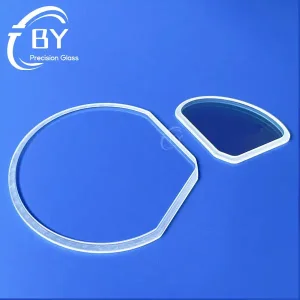
High-Quality Sapphire Viewing Plates for Harsh Chemical Environments in Finland
Sapphire Viewing Plates -
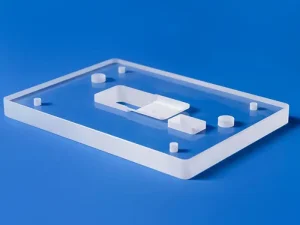
Precision Quartz Glass Machining Plates for Finnish Photonics Laboratories
Quartz Machining Plates -
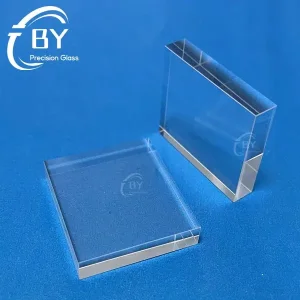
Custom Sapphire IPL Light Guide Block for Aesthetic Treatment Handles
Sapphire Light Guides -
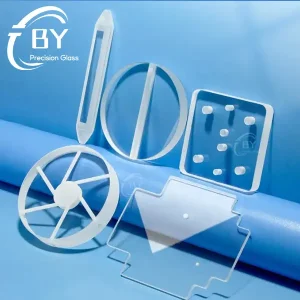
High Temperature Custom Quartz Glass Fabrication for Semiconductor Tools
Quartz Fabrication Parts -
Wholesale Candela VBeam Laser 6" White Cavity Ceramic Reflector 2 Pk
Candela Reflector 2 Pk -
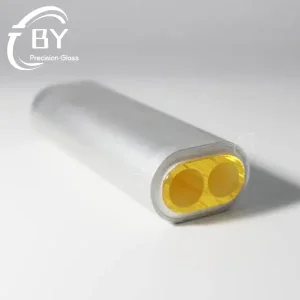
Custom Packed Laser Cavity Flowtubes for High Power Laser Heads
Laser Cavity Flowtubes -
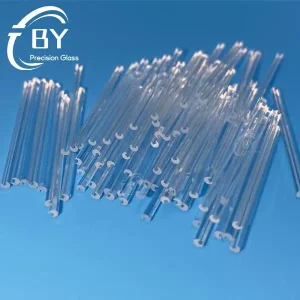
High-Quality Quartz Substrate Groove for Optical Fiber Couplers in Finland
Fiber Substrate Grooves -
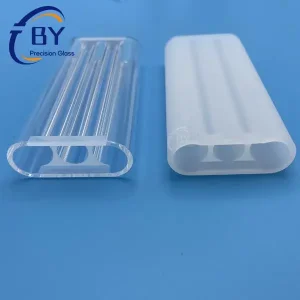
High-Quality Candela Laser Head Triple Bore Chamber for Clinic Replacement
Candela Triple Bore Heads
Frequently Asked Technical Questions
Direct answers for Finnish photonics engineers, system integrators, and clinical maintenance officers.