
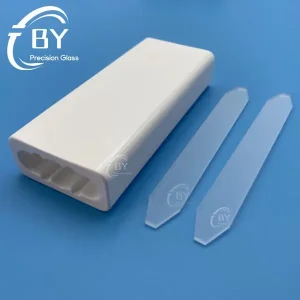
Featured High-Reflectance Laser Cavities (South Africa Industrial & Clinical Series)
Direct OEM & replacement ceramic pump chambers with sintered micro-porous matrices providing over 97.8% diffuse reflectivity across 600–1064 nm. Calibrated for maximum optical longevity in local operating conditions.
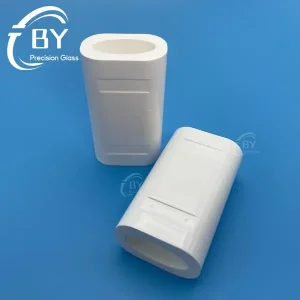
High-Quality Ceramic Cavities For Industrial Nd:YAG Laser Plants
View Specifications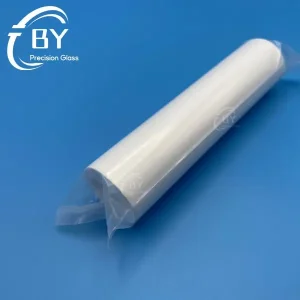
Candela VBeam 6" White Cavity Ceramic Reflector (South Africa 2-Pk)
View Specifications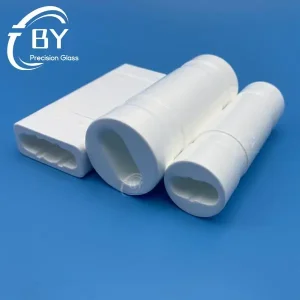
Ceramics Reflector for Semiconductor & Diode Laser Pumping Modules
View Specifications
Market Landscape: South Africa & Global Laser Ceramic Dynamics
Understanding photonics performance within regional environmental constraints and international manufacturing shifts.
South Africa Industrial Baseline
South Africa represents sub-Saharan Africa’s most demanding photonics operational theater. Industrial laser clusters centered in Gauteng (Johannesburg, Pretoria) and the industrial belts of Nelson Mandela Bay and Western Cape experience distinct environmental bottlenecks:
- High ambient particulates from open-pit mining operations.
- Recirculated cooling water mineral buildup causing thermal degradation.
- Grid fluctuations requiring resilient, thermal-shock-resistant pump cavities.
Global Technological Transition
Internationally, precision laser manufacturing has largely abandoned metal-deposited (gold/silver coated) reflectors in high-duty lamp and diode chambers. The global sector favors porous sintered alumina ceramics (Al₂O₃) due to:
- Complete elimination of spectral coating delamination.
- True Lambertian diffuse reflection preventing localized laser crystal hot-spots.
- Inherent chemical inertness against active deionized cooling water.
Strategic Sourcing Imperatives
Procuring wholesale ceramic reflectors in South Africa historically suffered from long lead times from European OEMs. Direct Asian tier-one manufacturing partnerships bridge this gap by offering:
- 40–60% operational replacement savings for Nd:YAG maintenance fleets.
- Complete custom CAD/STEP dimensional conformity within 24 working hours.
- Precision-glazed internal channels preventing mineral entrapment.
Localized Application Scenarios in Southern Africa
From ultra-deep gold and platinum extraction metrology to coastal medical aesthetic clinics, our ceramic reflectors meet stringent mission-critical demands.
Mining & Heavy Metallurgy (Witwatersrand Basin)
Deep-shaft rock monitoring, laser cladding of drilling heads, and downhole spectroscopy demand flashlamp-pumped solid-state systems that operate without failure in extreme environments.
Ceramic Reflector Role: High thermal dissipation prevents cavity distortion under 24/7 high-repetition industrial welding and laser quenching regimes.
Advanced Automotive Cladding (Eastern Cape & Rosslyn)
Automotive body-in-white plants in Port Elizabeth and Pretoria depend on continuous wave (CW) and pulsed Nd:YAG and diode systems for precision localized heat treating and seam joining.
Ceramic Reflector Role: Glazed bore channels withstand glycol-dosed cooling loops, maintaining clean reflectivity without surface pitting or chemical scaling.
Dermatological & Aesthetic Clinics (Cape Town, Sandton)
South Africa’s aesthetic sector utilizes Candela, DEKA, and Cynosure lasers for dermatological therapies requiring precise beam profile uniformity.
Ceramic Reflector Role: High diffuse reflection prevents laser rod "hot-spots," ensuring consistent pulse energy and preventing rod fracture during patient treatments.
Technical Specification Matrix: Ceramic vs. Alternative Pump Cavities
Comparative performance parameters verified across laser pump integration tests.
| Performance Parameter | BY Photonics 99.7% Sintered Al₂O₃ | Gold-Coated Metal Cavities | PTFE (Spectralon-Grade) Reflectors |
|---|---|---|---|
| Reflectivity (600–1064 nm) | 97.5% – 98.2% (Lambertian Diffuse) | 95.0% – 96.5% (Specular) | 98.5% – 99.2% (Diffuse) |
| Max Service Temperature | Up to 1,500 °C | ~350 °C (Coating degrades) | ~260 °C (Deforms easily) |
| Cooling Water Resistance | Immune (Glazed or unglazed options) | Pitting & peeling risks | Absorbs trace organics over time |
| Mechanical Rigidity | Extremely High (Vickers HV 1400) | High (Subject to corrosion) | Low (Creeps under mechanical clamp) |
| Chemical Cleanability | Resistant to acids, solvents & heat | Fragile; scratch-prone surfaces | Difficult to decontaminate |
Require Custom Cavity Geometry for Your South African Equipment?
Send your dimensional sketch or STEP file for complete engineering review within 24 hours.
Technical Roadmap: The Next Generation of Laser Pump Cavities
Emerging engineering trends in industrial ceramic photonics that optimize energy conversion efficiency and equipment lifespan.
Porous Micro-Cell Control
By refining the sub-micron bubble dispersion inside the sintered alumina matrix, modern ceramic reflectors scatter pump light across wider angular distributions. This ensures completely homogeneous excitation of Nd:YAG, Alexandrite, and Ruby crystals, directly lowering thermal lensing distortions.
Nano-Glaze Sealing Technology
Water-cooled ceramic reflectors used in industrial plants often suffer from algae or calcification in cooling fluid. Advanced nano-glazing seals internal bore channels with an amorphous quartz layer, preserving over 98% reflectivity while completely isolating porosity from circulating coolant.
Diode-Pumping Hybrid Architectures
As the South African market upgrades older flashlamp setups to high-brightness diode stacks, ceramic reflectors are evolving from single/double cylindrical bores into multi-faceted polygonal channels tailored to accept vertical and horizontal diode bar emitter arrays.
Comprehensive Solutions for Importers & Maintenance Providers
Systemic approaches for South African laser maintenance contractors, distributors, and laser system builders.
Bespoke Reverse Engineering
Legacy Nd:YAG or Alexandrite machines with obsolete OEM parts can be restored. Send damaged or legacy ceramic reflectors to our facility for CMM optical scanning, CAD reconstruction, and precision fabrication.
Consignment & Wholesale Supply
We supply South African optical distributors with consistent bulk packaging, serialized lot inspections, and material traceability certificates for defense, medical, and scientific tenders.
Turnkey Pumping Chamber Packs
In addition to ceramic reflectors, we provide matched assemblies including flow tubes, samarium-doped filter glass, O-rings, and quartz blocks to streamline field servicing.
Frequently Asked Questions: Laser Ceramic Procurement
Key considerations for engineering and procurement professionals sourcing ceramic laser reflectors in South Africa.
Why is porous alumina ceramic preferred over gold-plated cavities in high-power Nd:YAG lasers?
Gold-plated metal cavities offer high initial specular reflectivity, but their thin electroplated layer degrades rapidly in water-cooled environments due to electrochemical reactions, scratching, and intense flashlamp radiation. Alumina ceramic (99.7% Al₂O₃) is bulk-reflective throughout its micro-porous structure. It cannot peel, flake, or corrode, and its Lambertian diffuse scattering provides uniform excitation throughout the laser crystal, minimizing hot spots.
How does BY Photonics ship ceramic reflectors safely to Johannesburg, Durban, or Cape Town?
Precision optical ceramics are brittle. All orders are packed using custom shock-absorbing foam inserts, vacuum-sealed barrier pouches to prevent dust ingress, and double-walled cartons or crating for air freight. Shipments are handled via express air courier (DHL/FedEx) directly to South African ports with full customs clearance paperwork and tracking.
What is the difference between glazed and unglazed ceramic laser reflectors?
Unglazed ceramics offer slightly higher diffuse reflectivity because their surface micro-pores directly scatter light. However, when exposed to cooling fluid, open pores can absorb water, impurities, and dissolved minerals, slowly diminishing reflectivity. Glazed reflectors feature a high-purity glass coating over internal channels that seals the porosity from cooling water, simplifying maintenance and extending cavity lifespan in harsh water environments.
Can you manufacture custom-dimension reflectors from my mechanical drawing or CAD file?
Yes. We accept STEP, IGES, DXF, DWG, and dimensioned PDF formats. Our engineering team evaluates green-body machining and sintering shrinkage compensation to deliver tight tolerances (typically ±0.05 mm or better on critical bore centerlines). DFM feedback is provided within 24 working hours.
How do ceramic reflectors improve aesthetic laser systems like Candela and DEKA?
Medical and aesthetic laser heads require consistent pulse-to-pulse energy stability. Our ceramic reflectors maintain stable reflectivity across hundreds of thousands of flashlamp pulses. This prevents clinical output drift, minimizes frequent recalibration cycles, and protects expensive laser rods from non-uniform thermal stress.
Full Catalog: Laser Reflectors, Flowtubes & Optical Glass Assemblies
Explore our full line of precision quartz, doped glass, and optical ceramic components designed for laser heads, lithography systems, and industrial optics.
Candela VBeam 6" White Cavity Ceramic Reflector (South Africa 2-Pk)
View Specifications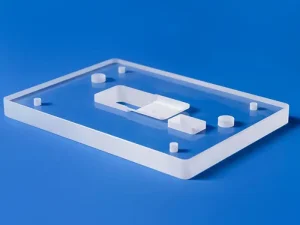
Precision Quartz Glass Machining Plate for High-Temp Environments
View Specifications
Ceramic Cavity Reflector for DEKA Laser Systems (South Africa Supply)
View Specifications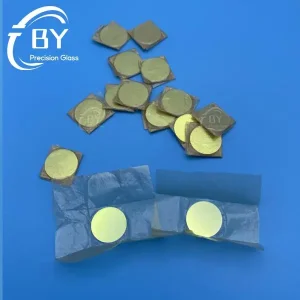
Candela Distance Gauge Slider Windows (755nm & 1064nm Dual-Coating)
View Specifications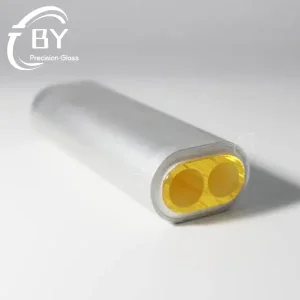
Pre-Assembled Laser Cavity Flowtubes for Solid-State Laser Heads
View Specifications
UV Quartz Optical Windows for Semiconductor Lithography Systems
View Specifications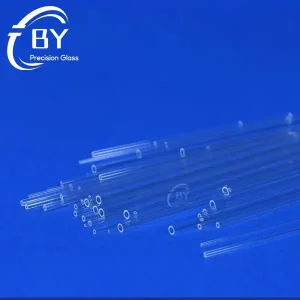
Fluorine-Doped Fused Silica Capillary Tubing for Optical Splicing
View Specifications
Custom High-Precision Fiber Optic Glass Ferrules for Communications
View SpecificationsAccelerate Your Laser Cavity Performance with BY Photonics
Whether configuring a new OEM diode-pumped assembly or replacing worn reflectors in clinical laser platforms across South Africa, our application engineers provide full technical reviews and export logistics.