
Featured Engineering Optics Available for New Zealand
Precision micro-drawn capillary tubes and optical substrates meeting high-tolerance fabrication standards for trans-Tasman industrial research and production lines.
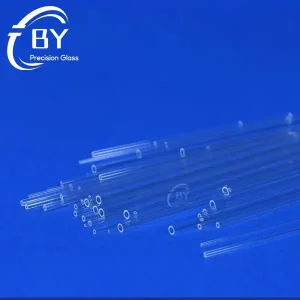
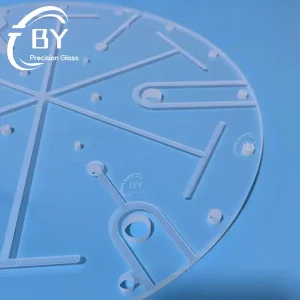
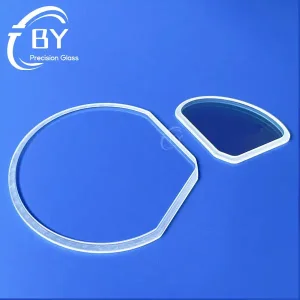
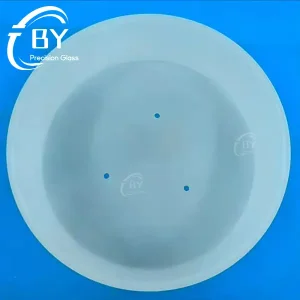
Fluorine-Doped Silica Applications in New Zealand's Growing Tech Sectors
Evaluating commercial demand across high-value export clusters, including agricultural agritech spectrometry, quantum optics research, and aerospace instrumentation.
Precision Capillary Requirements Across North & South Island Tech Hubs
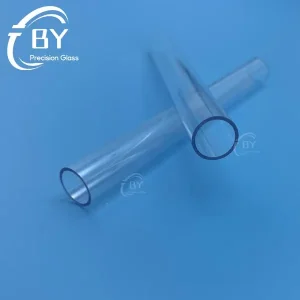
New Zealand’s deep-tech sector—rooted in world-leading photonics universities such as the University of Auckland and University of Otago, and amplified by the commercial aerospace and agritech corridors—is experiencing accelerating demand for micro-structured optical glass. Fluorine-doped capillary tubes play an irreplaceable role where standard fused quartz fails.
By doping the silica glass lattice with fluorine anions, our factory systematically lowers the refractive index relative to pure fused silica (index depressions down to $\Delta n \approx -0.015$). This negative step-index optical profile enables full internal reflection guiding along liquid or gaseous cores, an indispensable capability for:
- Auckland Biophotonics & Flow Cytometry: Capillaries serving as ultra-low-noise fluidic optical conduits for milk protein tagging, cellular separation, and environmental pathogen detection.
- Christchurch Aerospace & Satellite Photonic Links: Radiation-hardened optical cladding jackets capable of maintaining signal fidelity under atmospheric and orbital radiation exposure.
- Geothermal & Oceanographic Sensor Nodes: Chemically passivated capillaries configured for harsh environmental spectrometry in Rotorua and offshore Taupo volcanic zones.
Direct Trans-Tasman Logistics & Export Continuity
Navigating international high-precision procurement requires robust quality documentation and rapid air-freight corridors. For NZ enterprises, our direct factory-to-workshop channel mitigates transit risk through:
- Custom high-vacuum hermetic packaging preventing surface micro-fissures during international air freight into AKL/CHC.
- Detailed batch-specific refractive index profiling and inner/outer diameter interferometry certs.
- Direct engineer-to-engineer collaborative CAD evaluation with zero distributor markup.
Macro Solutions for Global OEM & Deep-Tech System Integrators
Overcoming concentricity deviation, inner-wall surface roughness, and brittle mechanical failure through modern furnace thermal redrawing.
Negative Index Cladding & Waveguide Engineering
Standard quartz capillaries often suffer from wave-leakage when submerged in organic fluids. Our fluorine doping introduces precise depressed cladding profiles, functioning as an external low-index sheath that guarantees core confinement over broad UV-to-NIR spectral distributions (190 nm to 2100 nm).
Sub-Micron Concentricity & Bore Uniformity
Drawing thin capillaries under closed-loop laser gauge monitoring ensures inner diameter (ID) and outer diameter (OD) dimensional standard deviation stays below 1.5%. This minimizes misalignment loss during fiber optic pig-tailing and high-performance capillary electrophoresis.
Mechanical Toughness & Defect Free Polishing
Micro-cracking under laser pulse excitation ruins instrument life. We combine controlled oxyhydrogen heating with synthetic flame polishing to relieve drawn tensile stresses, delivering micro-channels with surface roughness values of Ra < 0.5 nm.
Engineering Matrix: Fluorine-Doped Capillary Tubing
Standard parameters for custom drawing runs. Dimensions, refractive index levels, and end-face treatments are manufactured according to your CAD drawings.
| Performance Characteristic | Standard Specification | High-Precision Custom Range | Test & Compliance Protocol |
|---|---|---|---|
| Substrate Material Base | Synthetic Fused Silica (F-SiO₂) | Low-OH / High-Purity Synthetic VAD/MCVD | ICP-MS Spectrometry |
| Fluorine Doping Concentration | 0.5 wt% to 3.0 wt% F | Customized refractive index depression profile | Interferometric Refractive Index |
| Refractive Index Difference ($\Delta n$) | -0.003 to -0.012 | Down to -0.018 vs Pure Silica ($n=1.458$) | Waveguide Dispersion Analysis |
| Inner Diameter (ID) Range | 0.050 mm to 2.000 mm | Custom down to 0.010 mm micro-bores | Laser Diffraction Gauging |
| Outer Diameter (OD) Range | 0.125 mm to 10.00 mm | Custom cross-sections (Square / Hexagonal / D-bore) | Optical Contactless Micrometer |
| Concentricity / Core Eccentricity | $\le 3.0\%$ | $\le 1.0\%$ upon request | Microscopic Geometry Station |
| End-Face Finishing | Diamond Cleaved or Commercial Cut | Optical Polish (Flat 80/50, 40/20, or Angled Cleave 8°) | White Light Interferometry |
| New Zealand Import Compliance | NZ HS Code 7002.31 / 7017.10 | Standard Phytosanitary & Non-Hazardous Certification | NZ Customs / Biosecurity (MPI) Clear |
Technological Roadmap: The Evolution of Micro-Capillaries
Continuous optimization in preform preparation, multi-bore drawing, and anti-solarization performance.
Multi-Channel & Micro-Structured Preforms
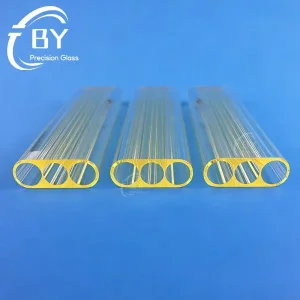
Moving beyond single bore tubes, our development path incorporates array capillaries (up to 37 discrete micro-capillaries within a single F-doped cladding cane). This architecture serves the next generation of multiplexed medical diagnostics and high-throughput cell screening.
Deep-UV Anti-Solarization Hardening
By refining the balance of fluorine substitution and OH-defect control, our newest generation of F-doped silica prevents color-center formation under 193 nm and 266 nm continuous laser irradiation, prolonging the lifetime of flow-cells in analytical instruments.
Direct Laser Cleaving & Surface Hermeticity
Replacing traditional diamond scoring, our automated CO₂ laser-cleaving cell produces square, burr-free end faces with perpendicularity deviations under 0.5 degrees, saving hours of manual prep work for optical assembly teams.
Frequently Asked Questions for New Zealand Buyers
Straightforward guidance on materials, lead times, custom tolerances, and import logistics.
Why should our project choose fluorine-doped silica over standard fused quartz?
What is the typical shipping turnaround time from your factory to New Zealand?
Can you manufacture non-circular cross-section capillary tubes?
How do you safeguard fragile, long capillaries against transit breakage?
What documentation do you provide for university and defense research compliance?
Specialty Components for Australasian Industrial & Laboratory Systems
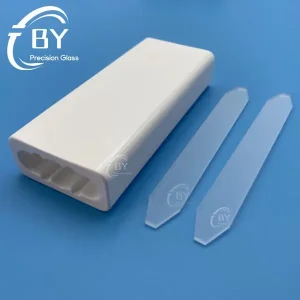
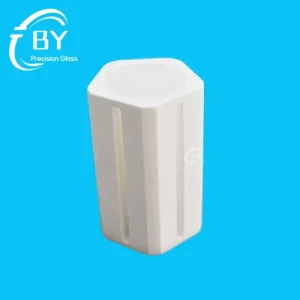
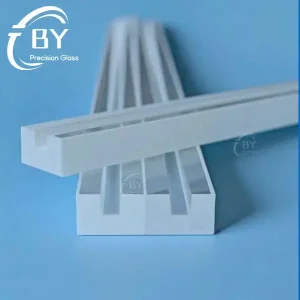
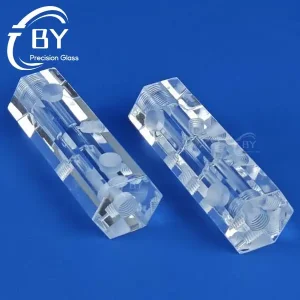
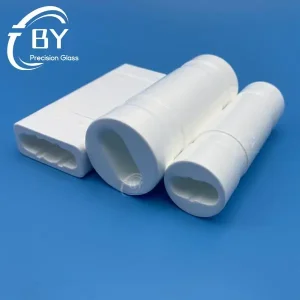
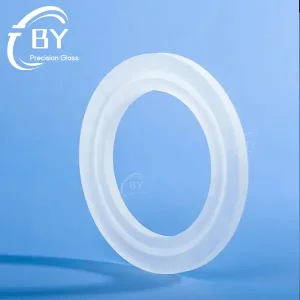
Precision-machined cavities, doped optical filters, and diffuse reflectors manufactured to client CAD models.
Initiate Your Capillary Drawing Review
Send us your required inside diameter (ID), outside diameter (OD), fluorine doping concentration ($\Delta n$), and required volume. Receive actionable DFM (Design for Manufacturability) analysis within 24 working hours.