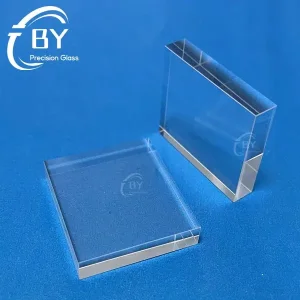
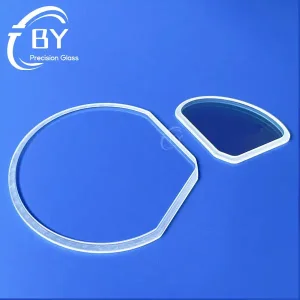
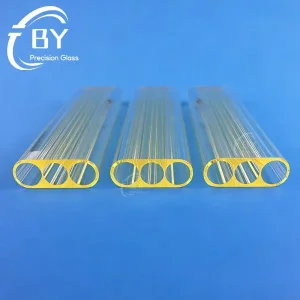
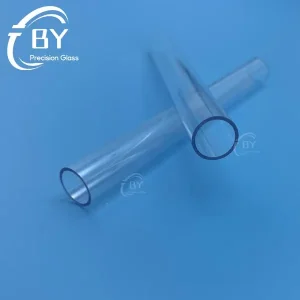
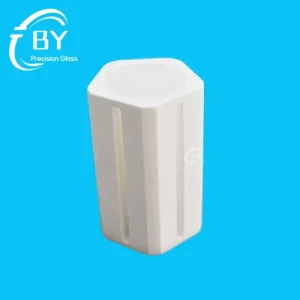
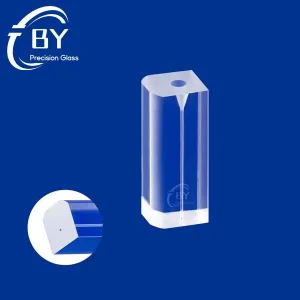
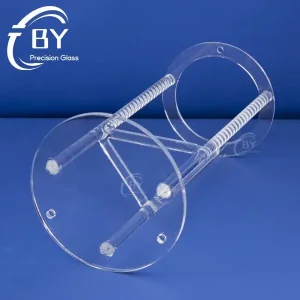
Featured Optical & Ceramic Solutions (Part I)
Explore our flagship standard and bespoke components machined strictly to customer drawings for industrial cutting, aesthetic medical devices, and semiconductor processing.
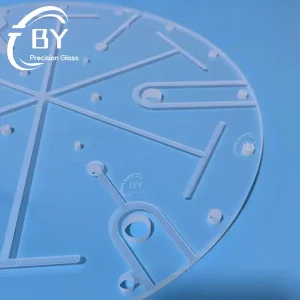
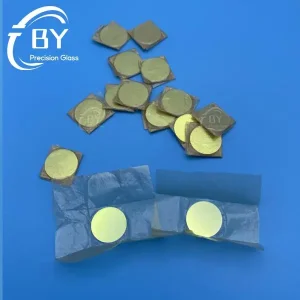
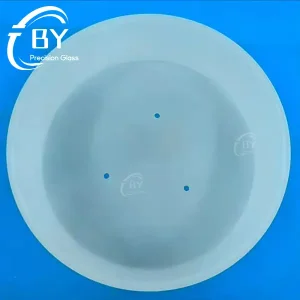
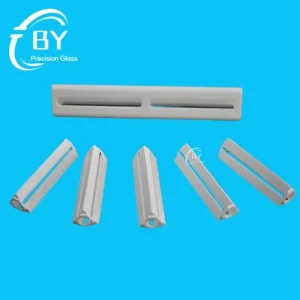
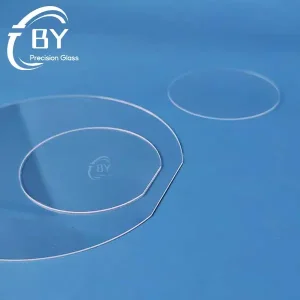
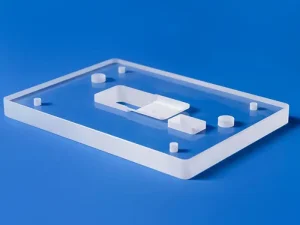
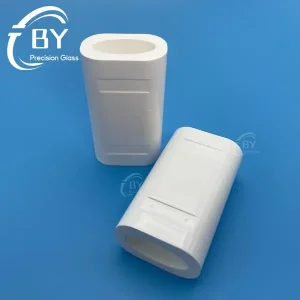
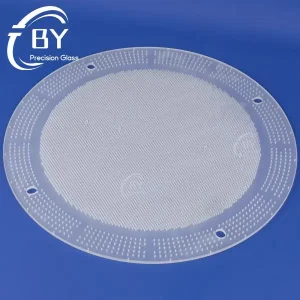
Alumina Ceramic Laser Reflectors: Engineering Foundations & Operating Principles
A comprehensive examination of how 97%+ porous sintered aluminum oxide solves thermal degradation and delivers isotropic pump chamber uniformity.
Lambertian Diffuse Scatter
Unlike specular metallic cavities (gold or silver plating) that produce hotspots and parasitic mode oscillations, micro-porous Al₂O₃ provides near-ideal Lambertian diffuse reflection. The randomized photon dispersion ensures uniform optical pumping across the entire crystal rod volume, suppressing thermal lensing and maximizing beam quality (M² factor).
Spectral Efficiency & Reflectance
Engineered laser-grade ceramics achieve diffuse reflectance exceeding 97.5% across 600 nm to 1100 nm, and greater than 96% from 400 nm to 1200 nm. This matches the crucial absorption bands of Nd:YAG (808 nm / 750–900 nm), Alexandrite (755 nm), and Holmium/Erbium crystals, resulting in maximized slope efficiency and reduced electrical input requirements.
Hydraulic & Glaze Integrity
In high-repetition liquid-cooled pump chambers, bare porous ceramics can slowly absorb deionized water, leading to optical attenuation and bacterial bio-fouling. Our proprietary high-temperature glass glaze seals internal channels, offering zero porosity, chemical inertness against cooling additives, and sustained resistance to photochemical erosion under extreme UV radiation.
Industry Developments: The Shift from Metallic Cavities to Sintered Ceramics
The global photonics sector is aggressively phasing out electroplated gold and aluminum reflectors in favor of sintered alumina ceramics and fluoropolymer composites.
Overcoming Metal Flaking & Blistering
Traditional gold-plated brass or copper cavities fail prematurely when exposed to intense UV emission from xenon flashlamps and aggressive deionized cooling flows. Heat cycles cause microscopic pinholes and blistering in the electroplated layer. Porous alumina is chemically unified and bulk-sintered; it cannot delaminate, peel, or blister throughout multi-year lifecycles.
High-Duty Cycle Thermal Resilience
With modern industrial and medical aesthetic lasers operating at pulse repetition rates exceeding 20 Hz to 50 Hz, thermal loading within the pump chamber can exceed hundreds of watts per cubic centimeter. Alumina ceramic features superior mechanical stiffness, zero thermal creep at laser operating temperatures, and exceptional thermal shock endurance compared to polymeric or organic alternatives.
Diode-Pumping & Monolithic Cavity Integration
As solid-state lasers transition from lamp pumping to side-pumped diode arrays, manufacturers demand complex multi-bore geometric chambers. Custom ceramic fabrication allows simultaneous integration of laser rod channels, coolant bypasses, pyrex/samarium filter flowtube seats, and precision locating pins into a single, compact monolithic block.
Global Enterprise Procurement: Requirements & Vendor Qualification Criteria
Tier-1 photonics integrators in North America, Europe, and Asia evaluate laser ceramic suppliers on quantifiable precision, batch uniformity, and lifecycle yield.
| Evaluation Parameter | Standard Commercial Grade | BY Photonics Enterprise Laser Grade | Operational Impact & ROI |
|---|---|---|---|
| Al₂O₃ Purity & Composition | 92.0% – 95.0% coarse grain | 97.0% – 99.7% high-purity sub-micron grain | Eliminates parasitic trace metal absorption bands; guarantees peak diffuse scatter. |
| Bore Concentricity & Position | ±0.08 mm to ±0.15 mm | ±0.010 mm to ±0.020 mm | Guarantees exact alignment with laser crystals, preventing asymmetric optical gain. |
| Internal Surface Finish | Raw sintered (Ra 1.6 – 3.2 µm) | Precision Glazed (Ra < 0.2 µm) or Fine Lapped | Eliminates micro-turbulences in coolant streams, preventing particulate deposition. |
| Thermal Shock Resistance | ΔT = 150 °C rapid quench | ΔT > 220 °C (water quench testing compliant) | Prevents catastrophic fracture during rapid chiller starts or unexpected flow stops. |
| Batch Lot Traceability | Generic certification | 100% CMM dimensional data & spectral curves | Seamless compliance with ISO 13485 medical and ISO 9001 industrial audits. |
Macro Industry Solutions: Engineering Beyond the Component
BY Photonics bridges the gap between raw ceramic machining and complete optical pump module performance across core global sectors.
Medical & Aesthetic Dermatology
For systems like Candela GentleLase/GentleYag and Cynosure platforms, our custom ceramic cavities and slider windows endure multi-million flash cycles. The sealed glaze prevents coolant ion contamination, maintaining pristine beam delivery for laser hair removal, tattoo removal, and fractional dermatological resurfacing.
Heavy Industrial Laser Processing
Lamp-pumped and diode-pumped Nd:YAG laser systems deployed in metal spot welding, diamond cutting, and deep engraving require maximum photon recirculation. By tailoring internal cavity geometries—including elliptical, close-coupled, and double-lamp configurations—we elevate wall-plug efficiency by up to 18%.
Defense, Lidar & Scientific Research
Harsh environments demand ceramic reflectors that remain impervious to intense shock, broad thermal swings (-40 °C to +85 °C), and deep vacuum. We deliver custom ceramic housings and laser pump reflectors specified for airborne rangefinders, satellite laser communication, and spectroscopy laboratories.
Localized Global Support & Regulatory Compliance Assurance
Operating from our modern facility in Tianjin, China since 2010, BY Photonics ensures strict international manufacturing standards and seamless international logistics.
Full RoHS & REACH Compliance
Every alumina formulation, mineral oxide binder, and high-temperature glaze utilized in our manufacturing pipeline is 100% free of hazardous heavy metals, lead, cadmium, and hexavalent chromium, facilitating unrestricted export across the EU, the Americas, and the Asia-Pacific region.
Rigorous Metrology & Inspection
Our quality assurance department is equipped with coordinate measuring machines (CMM), non-contact laser surface profilometers, spectrophotometers with integrating spheres (200 nm to 2500 nm), and pressurized hydrostatic testing rigs to confirm zero micro-leakage through glazed boundaries.
Export Shock-Proof Crating & DFM
Ceramic components require specialized packaging. We employ multi-layer, shock-absorbing cleanroom-safe vacuum sealed enclosures that withstand transit turbulence. Every project begins with a 24-hour Design-for-Manufacturability (DFM) review by our senior engineering team.
Technology Roadmap: Next-Generation Ceramic & Reflector Innovations
Anticipating the evolving demands of ultra-short pulse lasers, extreme brightness diode pumps, and high-frequency additive manufacturing heads.
Nano-Engineered Grain Sintering
Transitioning from micro-scale grains to sub-micron and nano-crystalline alumina powders (grain sizes < 200 nm). This breakthrough enhances bulk diffuse scattering across shorter visible wavelengths (down to 350 nm) while elevating mechanical flexural strength to over 450 MPa.
Selective Spectral Filtering Glazes
Developing samarium-doped and rare-earth-infused glaze chemistries applied directly onto the inner ceramic cavity walls. These smart glazes selectively absorb unwanted 1064 nm parasitic modes and cut off UV radiation below 380 nm, eliminating the need for independent external filter flowtubes.
Additive Ceramic 3D Printing
Pioneering stereolithography (SLA) ceramic additive manufacturing to create complex internal conformal cooling channels within alumina pump blocks. This eliminates stagnant thermal dead-zones, facilitating dramatic gains in heat removal for next-generation multi-kilowatt solid-state laser systems.
Frequently Asked Questions (FAQ)
Immediate engineering insights regarding custom manufacturing tolerances, glazes, delivery timelines, and replacement compatibility.
What is the key advantage of glazed alumina laser reflectors over unglazed versions?
Unglazed ceramic features high surface porosity that can absorb deionized cooling water, causing optical degradation and biological contamination over time. A precision high-temperature glass glaze seals the cavity surface, providing zero water permeability, easy cleaning, and long-term reflectance stability in liquid-cooled laser chambers.
Can BY Photonics reproduce obsolete or proprietary OEM laser ceramic reflectors?
Yes. We routinely reverse-engineer and manufacture drop-in replacements for major medical and industrial laser platforms (including Candela, Cynosure, Fotona, and others). You can send us technical drawings (STEP, DWG, PDF) or physical samples for coordinate measuring machine (CMM) dimensional verification and reproduction.
What typical dimensional tolerances can be held on complex multi-bore ceramic cavities?
Using diamond tooling and high-precision CNC ceramic ultrasonic grinding centers, we routinely maintain bore tolerances within ±0.01 mm (±10 µm), center-to-center bore pitch within ±0.02 mm, and overall block parallelism and flatness within λ/4 to λ/10 where optical mating is required.
How does alumina ceramic compare to PTFE (Spectralon-grade) diffuse reflectors?
While PTFE provides slightly higher initial reflectance across select bands, it suffers from poor mechanical rigidity, susceptibility to UV photolytic yellowing, and low maximum operating temperatures (< 260 °C). Alumina ceramics operate reliably above 1,500 °C, exhibit zero UV darkening, and provide rigid structural support for mounts and fittings.
What is the typical lead time for custom prototype ceramic reflectors?
Following CAD drawing approval via our 24-hour DFM engineering review, prototype fabrication typically requires 3 to 4 weeks, including green-body isostatic pressing, precision pre-sinter machining, high-temperature furnace sintering, final diamond grinding, and glazing.
Which test reports and material certifications accompany shipments?
Standard delivery documentation includes Certificate of Conformance (CoC), CMM full-dimensional inspection reports, spectrophotometer diffuse reflectance curve validation, and RoHS/REACH compliance declarations.
Featured Optical & Ceramic Solutions (Part II)
Review our specialized laser cavities, sapphire components, and custom doped-glass flow tube assemblies engineered for elite photonics manufacturers.