
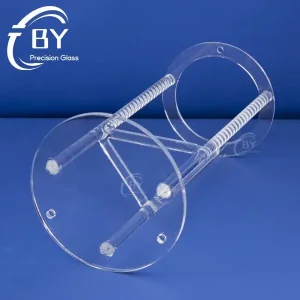
OEM Production Lineup
Core Engineered Quartz & Ceramic Optical Assemblies
Explore our specialized ceramic cavities, doped flow tubes, and quartz components designed for optimal thermal management and laser gain medium pumping efficiency.
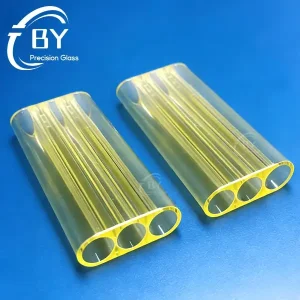
Wholesale Samarium-doped Quartz Triple Bore for Medical Laser Manufacturer, Supplier
Inquire Component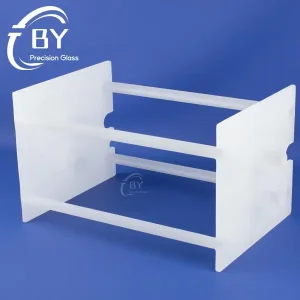
Wholesale Quartz Diffusion Boat for Semiconductor Suppliers, Factories
Inquire Component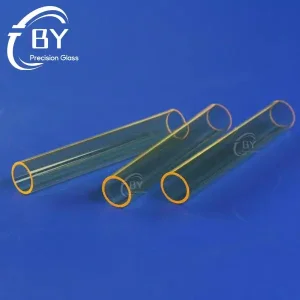
Custom UV Block Yellow Quartz Tube for IPL Lamp Flow Handle Manufacturer, Factories
Inquire Component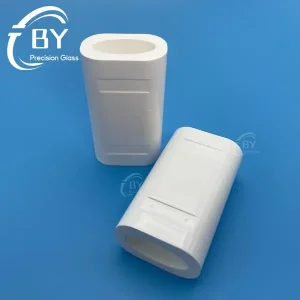
High-Quality Ceramic Cavities For Nd YAG Laser Supplier, Factories
Inquire Component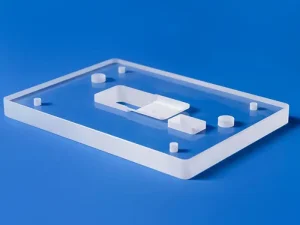
High-Quality Factory Supply Precision Quartz Glass Machining Plate Supplier, Suppliers
Inquire Component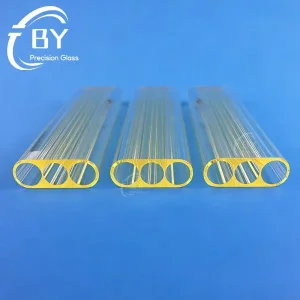
Custom Laser Cavity Flow Tubes & Filters Made from Samarium-doped Glass Supplier, Suppliers
Inquire Component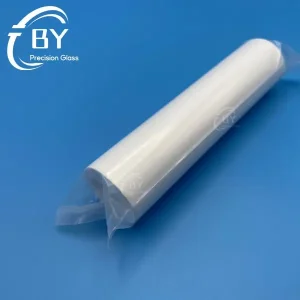
Wholesale Candela VBeam Laser 6" White Cavity Ceramic Reflector 2 Pk Manufacturer, Suppliers
Inquire Component
Technical White Paper
Global Industrial Status & Physics of Diffuse Ceramic Cavity Reflectors
A comprehensive examination of why porous 97-99% purity Al₂O₃ ceramics dominate modern solid-state laser pump head designs over traditional gold-plated or silver-plated metal chambers.
Diffuse Lambertian Scattering
Unlike specular metal mirrors (such as electroplated gold or polished silver) which create hot-spots and optical astigmatism on the laser crystal rod, our porous alumina ceramic exhibits near-perfect Lambertian reflectance. Over 97.8% of optical energy within the critical 600 nm to 1064 nm absorption spectrum is scattered evenly, uniformizing the inversion population profile.
- Eliminates thermal lensing hotspots
- Minimizes transverse mode competition
- Reflectance: >97.5% across 500–1200 nm
Chemical & Coolant Immersion
Gold-plated cavities inevitably degrade due to deionized (DI) water turbulence, corrosion, cavitation, and flaking under prolonged pulsed lamp irradiation. Our laser-grade ceramic cavity reflectors utilize specialized high-temperature vitreous glazing (impermeable seal) that prevents water penetration, eliminates organic fouling, and ensures decadal dielectric reliability.
- Zero leaching into DI cooling loops
- Vitreous glaze resistant to 120°C DI water
- Ultra-low electrical conductivity
Thermal Shock & UV Degradation
Flashlamps emit intense broadband ultraviolet radiation that causes photochemical solarization in synthetic polymers like standard PTFE. Our Al₂O₃ ceramic structures withstand relentless flashlamp exposure without photo-darkening, micro-cracking, or thermal structural collapse up to continuous 1,500°C chamber conditions.
- Solarization-free under intense UV bursts
- Bulk thermal conductivity: 25-30 W/(m·K)
- Dimensional stability under rapid cycling
| Reflector Technology | Diffuse Reflectance (500-1100 nm) | Coolant Resistance (Deionized Water) | UV Solarization Immunity | Cavity Lifetime Under Continuous Pumping |
|---|---|---|---|---|
| BY Photonics High-Purity Glazed Ceramic | 97.5% – 98.2% (Lambertian) | Outstanding (Glazed, zero porosity ingress) | Complete immunity; zero yellowing/photolysis | > 50,000 Hours (Industrial grade) |
| Gold-Plated Metal (Copper / Brass) | 95.0% – 96.0% (Specular only) | Poor (Prone to pinholes, corrosion & peeling) | Moderate (Subject to thermal blistering) | 3,000 – 8,000 Hours (Requires replating) |
| Sintered Virgin PTFE (Spectralon-grade) | 98.5% – 99.1% (High diffuse) | Good (Inert to water chemistry) | Low-Moderate (Suffers photolytic degradation under UV) | 8,000 – 15,000 Hours (Limited lamp life) |
Direct Factory Ecosystem
Chinese Manufacturing Efficiency & Integrated Production
Combining wet-chemical powder synthesis, isostatic pressing, green-state 5-axis CNC machining, high-temperature sintering, and precision grinding within a consolidated facility in Tianjin, China.
Single-Roof Synergy: Material Synthesis to Micromachining
In traditional Western supply chains, ceramic manufacturing is heavily fragmented: powder suppliers, ceramic sintering foundries, and diamond machining shops operate independently. This causes 12 to 20-week lead times and compounding markup costs. At our 3,000+ m² facility, our vertically integrated manufacturing pipeline controls every phase from isostatic slurry compaction to 5-axis diamond CNC boring.
We maintain cold working, hot flame working, optical inspection, and automated glaze firing under strict traceability protocols. This tight coordination cuts prototyping cycles to just 10 days while ensuring batch-to-batch geometrical repeatability within ±0.01 mm.
Rapid Tooling for Custom Geometries
Whether your project demands single-lamp single-rod elliptical profiles, twin-lamp dual-rod double-elliptical cavities, or multi-faceted polygonal diode pump sleeves, our green-state soft-machining capability reduces hard diamond-tooling wear and accelerates project turnaround.
Coupled with automated CMM (Coordinate Measuring Machine) verification and spectrophotometric reflectance testing, global equipment OEMs receive ready-to-integrate pump blocks with full inspection certificates (CoC).
15+
Years Technical Ceramic & Optical Experience
>97.8%
Average Diffuse Reflectance at 1,064 nm
±0.01mm
Precision CNC Dimensional Tolerance
< 24h
Engineering DFM Review Turnaround
Real-World Applications
Mission-Critical Deployments Across Global Laser Systems
From dermatological aesthetic platforms to defense metrology and heavy industrial fabrication, our laser ceramic reflectors provide stable cavity physics.
Medical & Aesthetic Lasers
Widely utilized in Alexandrite (755 nm), Nd:YAG (1064 nm), and Pulsed Dye Lasers (595 nm) such as Candela GentleLase, VBeam, and Cynosure platforms. The glazed finish prevents biological and mineral scaling from handpiece cooling loops, maintaining patient treatment fluence consistency.
Industrial Laser Cutting & Welding
Lamp-pumped and side-pumped diode Nd:YAG solid-state laser cutting heads experience high mechanical vibrations and thermal loads. Our robust Al₂O₃ cavity inserts withstand thousands of continuous industrial duty hours without mechanical micro-fractures.
Aerospace Metrology & Defense
Active Q-switched laser rangefinders and LIDAR designating assemblies require optical pump chambers impervious to wide operating temperature swings (-40°C to +85°C) and cosmic ionizing radiation without optical efficiency fade.
Procurement & Market Dynamics
Global Enterprise Sourcing Trends & Next-Gen Solid-State Lasers
Key procurement demands identified across North American, European, and Asian laser device manufacturers.
Sourcing Demands: Reliability & Compliance
Global procurement directors focus on two crucial criteria: total cost of ownership (TCO) and regulatory supply consistency.
- Traceable Material Certification: Strict batch tracking of raw Al₂O₃ powder ensuring <0.05% ferric or transition metal impurities that degrade reflectance.
- Drop-in Replacement Compatibility: Exact replacement parts for established legacy systems (Candela, Lumenis, Cynosure, Fotona) to streamline aftermarket maintenance.
- Hermetic Glaze Adhesion: ASTM testing to verify glaze resilience against flaking, pitting, or crazing after thousands of thermal shock cycles.
Market Trends: Transition to High-Power DPSS
While flashlamp cavities maintain steady demand in aesthetics and aerospace, high-power Diode-Pumped Solid-State (DPSS) systems are expanding quickly.
- Multi-Channel Pumping Sleeves: Symmetrical radial pump geometries integrating complex water cooling channels directly into the ceramic body.
- Hybrid Ceramic-Polymer Cavities: Pairing high-reflectance PTFE diffuse blocks with ceramic internal guide sleeves for maximum quantum extraction efficiency.
- Miniaturization: Compact microchip laser pump chambers requiring internal diamond-machined bore diameters below 2.0 mm.
Complete Component Catalog
Specialized Laser, Medical & Optical Glass Assemblies
Complete your optical assembly with custom quartz flow tubes, distance gauge windows, Spectralon-grade PTFE reflectors, and precision substrates manufactured to exact tolerances.
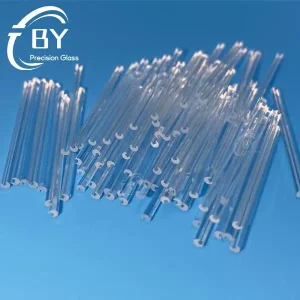
High-Quality Quartz Substrate Groove Use For Optical Fiber Coupler Suppliers, Factories
Inquire Component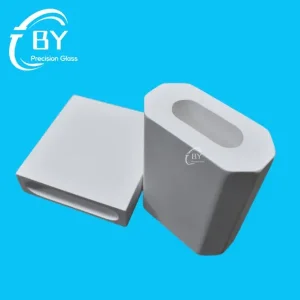
High-Quality Diffuse Reflectors Made of Spectralon‑Grade PTFE for Diode‑Pumping Chambers Manufacturer, Suppliers
Inquire Component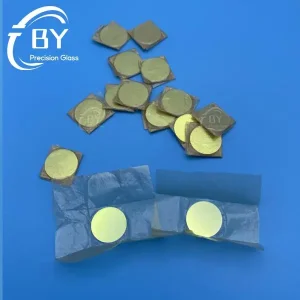
High-Quality Candela Laser Distance Gauge Slider Windows With coating 755 and 1064nm Suppliers, Factories
Inquire Component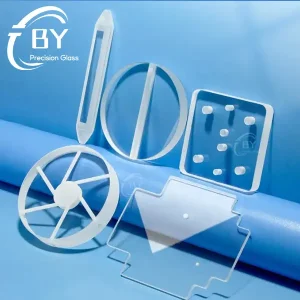
Wholesale High Temperature Custom Quartz Glass Fabrication Suppliers, Factories
Inquire Component
High-Quality Chemical Resistant Custom Quartz Glass Parts Fabrication Supplier, Factories
Inquire Component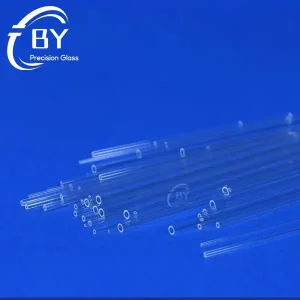
Wholesale Fluorine-Doped Fused Silica Capillary Tube Manufacturer, Factories
Inquire Component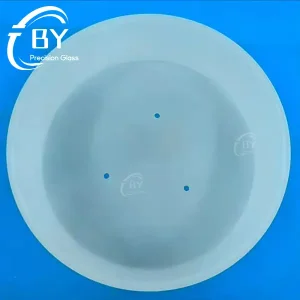
High-Quality Custom Quartz Glass Components for Vacuum Coating Supplier, Factories
Inquire Component
Wholesale Quartz Optical Windows for Semiconductor Lithography Equipment Suppliers, Factories
Inquire Component
Direct Engineering FAQ
Frequently Asked Questions: Laser Ceramic Cavities & Optics
Expert answers addressing the primary design, manufacturability, and integration questions submitted by laser engineering teams.
What specific ceramic composition is used for laser cavity reflectors?
We primarily utilize high-purity (97% to 99.5%) Al₂O₃ (porous alpha-alumina ceramic). The micro-porous structure is engineered to have controlled grain sizes (typically 2 to 5 microns). This structure creates internal diffuse scattering with minimal bulk absorption, generating upwards of 98% diffuse reflectance across 600 nm to 1100 nm.
Why is high-temperature glazing necessary on laser ceramic reflectors?
Because laser-grade porous ceramics are inherently hygroscopic, raw alumina would absorb water, cooling fluids, ions, and minerals in liquid-cooled pump chambers. Absorption causes internal staining, microbial contamination, and accelerated pump degradation. Our glazed coating seals the porous ceramic with an impermeable, high-temperature glass phase that maintains optical cleanliness and facilitates deionized water flow without chemical leaching.
How do ceramic reflectors compare against Spectralon-grade PTFE reflectors?
PTFE reflectors deliver marginally higher initial diffuse reflectance (~99% at 1064 nm) and are easier to CNC machine. However, PTFE has lower structural rigidity, cannot exceed ~250°C, and is vulnerable to photolytic degradation (solarization/yellowing) under direct pulsed UV radiation from flashlamps. Porous glazed ceramics remain structurally stable above 1,200°C, are impervious to intense UV illumination, and provide longer operating lifetimes in flashlamp-pumped systems.
Can you manufacture replacement ceramic reflectors for legacy aesthetic lasers?
Yes. We regularly supply direct-fit, high-performance aftermarket ceramic cavity reflectors compatible with major medical aesthetic systems, including Candela GentleLase, GentleYag, VBeam, Cynosure, and Lumenis platforms. Custom laser engraving, alignment pins, and dimensional tolerances are matched strictly to the original OEM specifications.
What CAD formats and specifications are needed for custom production?
We accept 3D models in STEP (.stp), IGES (.igs), and dimensioned 2D engineering drawings in DWG, DXF, or PDF format. Please specify critical bore center-to-center distances, internal diameter tolerances, requirements for glazed vs. unglazed zones, and whether samarium-doped flow tubes or cooling filters need to be pre-fitted.
What is your typical production turnaround for prototypes versus batch orders?
Custom prototype samples made via green-machined ceramic routes are generally completed within 10 to 15 business days. Production volume runs (hundreds to thousands of units) typically ship within 3 to 5 weeks, supported by complete CMM inspection reports, spectrophotometer reflectance validation curves, and vacuum-sealed export packaging.