Featured Product Showcase
Precision Semiconductor & Laser Optics Suite (Part I)
Engineered quartz micro-structures, carrier boats, and precision optical assemblies calibrated for demanding commercial environments.
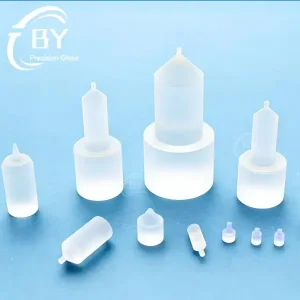
High-Quality Customized Quartz Fiber End Caps for QBH Manufacturer, Factory
View Product Details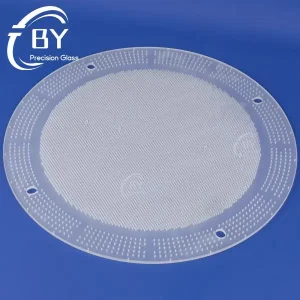
Custom Custom Optical Quartz Gas Distribution Plate Manufacturer, Suppliers
View Product Details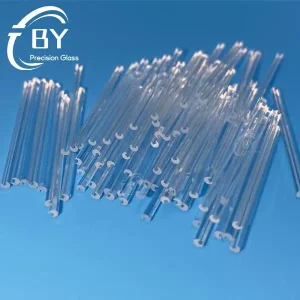
High-Quality Quartz Substrate Groove Use For Optical Fiber Coupler Suppliers, Factories
View Product Details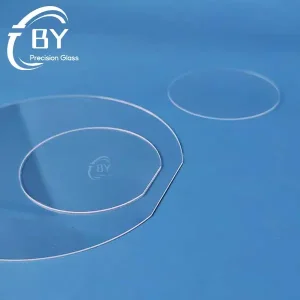
Custom Borofloat 33® Glass Wafers for Semiconductor Manufacturers, Factories
View Product Details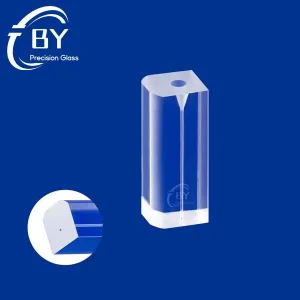
Custom Fiber Optic Glass Ferrules Supplier, Factories
View Product Details
High-Quality Custom Fabrication of Quartz Glass Precision Components Supplier, Factory
View Product Details
High-Quality Diode‑Pumping Chamber Diffuse Reflectors PTFE‑based Supplier, Suppliers
View Product Details
Industry White Paper: Engineering & Physics
High-Purity Quartz Capillary Tubing: Global Market Drivers & Macro-Solutions
A comprehensive examination of how next-generation sub-nanometer lithography, biological sequencing, and quantum photonics dictate high-purity vitreous silica capillary engineering.
The global demand for high-purity quartz capillary tubing has shifted from basic fluid transport to serving as the foundational substrate for micro-scale physics, high-temperature chemical chromatography, and sub-surface telecommunications. Synthetic fused silica (chemically synthesized via SiCl₄ vapor axial deposition) and natural high-grade crystalline quartz represent the ultimate frontier for non-reactive fluidics. In microchip fabrication (specifically extreme ultraviolet [EUV] and deep ultraviolet [DUV] photolithography), trace transition metal impurities (e.g., Fe, Cu, Ni, Na) must remain below single-digit parts-per-billion (ppb) thresholds to eliminate catastrophic wafer yield losses caused by ion leaching.
< 1 ppb
Alkali Impurity Purity
± 0.001 mm
Bore Diameter Tolerance
1200°C
Continuous Thermal Limit
185-3500 nm
Broadband Transmission
The Zero-Birefringence Imperative: In high-power industrial laser cavities and quantum entanglement sensors, internal strain within the quartz capillary matrix induces unwanted optical birefringence. Utilizing computerized oxyhydrogen flame precision drawing followed by automated thermal annealing ramp sequences relieves localized internal stresses, ensuring optical path difference (OPD) remains below ≤ 2 nm/cm across batch executions.
Thermal Shock Resistance
Exhibiting an exceptionally near-zero coefficient of thermal expansion (CTE of 5.5 × 10⁻⁷ /°C from 20°C to 320°C), our quartz capillaries withstand rapid, violent thermal cycles from red-hot heating zones directly into cryogenic cooling streams without micro-fracturing or catastrophic spalling.
High Dielectric Breakdown
With a dielectric breakdown voltage surpassing 25–40 kV/mm at elevated temperatures, quartz capillaries provide exceptional electrical isolation required in capillary electrophoresis (CE), high-voltage mass spectrometry electrospray ionization (ESI), and RF plasma generation chambers.
Chemical Inertness & Surface Passivation
Virtually impenetrable to all mineral acids (with the deliberate exception of concentrated hydrofluoric and hot phosphoric acids), fused quartz ensures zero background leaching, which protects the integrity of pharmaceutical assays, single-cell genomics, and aggressive gas chromatography runs.
Physical & Chemical Specifications
High-Purity Quartz Capillary Material Matrix
Comparative physical, optical, and thermal metrics between core synthetic silica grades (JGS1, JGS2, JGS3) and standard borosilicate tubing.
| Material Class | Optical Transmission | Hydroxyl [OH⁻] Content | Strain Point | Softening Point | Typical Industrial Target |
|---|---|---|---|---|---|
| JGS1 (Synthetic Silica) | 185 nm – 2,500 nm (Deep UV) | < 5 ppm (or high-OH options) | 1070°C | 1680°C | Capillary Electrophoresis, Excimer Lasers, HPLC Flow Cells |
| JGS2 (Fused Natural Quartz) | 220 nm – 2,500 nm (Standard UV-Vis) | < 30 ppm | 1020°C | 1630°C | Semiconductor Thermocouple Sheaths, Gas Ingestion Lines |
| JGS3 (Infrared Fused Silica) | 260 nm – 3,500 nm (Infrared) | < 1 ppm (Dry Silica) | 1025°C | 1610°C | FTIR Gas Cells, Mid-IR Fiber Claddings, Thermal Sensors |
| Fluorine-Doped Silica | Broadband tailored NA | Custom matched | 980°C | 1550°C | Optical fiber cladding capillaries, fluidic light-guides |
| Borosilicate 3.3 Glass | 350 nm – 2,500 nm | N/A | 510°C | 820°C | General clinical sampling, microfluidics, non-thermal lines |
Bore Geometries & Tight Tolerance Capabilities: BY Photonics deploys vertical down-draw towers featuring non-contact laser telemetry that measures exterior diameter (OD) and inner diameter (ID) across 360-degree rotational planes at millisecond refresh rates. We fabricate circular bores, rectangular/square capillaries for flow visualization without optical distortion, D-shaped cross sections, and custom multi-lumen (multi-bore) capillary tubing engineered to sub-micron specifications (±0.001 mm ID tolerance upon customer specification).
Enterprise Reliability & Compliance
Global Logistics, Traceability, & Localized Compliance Assurance
Designed to integrate into international supply chains across North America, Europe, East Asia, and emerging technology corridors.
SEMATECH & ISO 9001 Alignment
Our Tianjin-based manufacturing center operates under strict ISO 9001:2015 quality management procedures. Semiconductor quartzware and microcapillaries follow SEMATECH guidelines for surface roughness, particulate counts, and heavy metal concentrations.
Export-Grade Vacuum & Cleanroom Packing
Capillary tubing features high-aspect ratios vulnerable to particulate contamination and moisture ingress. Every shipment undergoes Class 100 ultrasonic cleaning, deionized water rinsing, and double vacuum bagging within anti-shock suspension packaging to ensure field readiness.
Full Lot Traceability & Material Certs
Every delivery includes comprehensive documentation: Certificate of Conformance (CoC), spectral transmittance verification curves, dimensional interferometry reports, and RoHS/REACH declarations assuring frictionless customs clearance.
Field Deployment Case Studies
Localized High-Tech Application Scenarios
Demonstrated performance in mission-critical hardware, from medical analytical diagnostics to advanced wafer cleanrooms.
DNA Sequencing & Capillary Electrophoresis
High-resolution Sanger sequencing and genetic analyzers demand quartz microcapillaries with uniform inner surfaces and consistent refractive indices. Our precision synthetic fused silica capillaries minimize background fluorescence during laser-induced fluorescence (LIF) detection, enabling reliable base-pair resolution across extended sequencing runs.
Fiber Optic Splicing & Multi-Core Alignment Ferrules
In telecommunications networks and high-density optical interconnects, glass capillary ferrules serve as alignment sleeves. By matching the thermal expansion profile of the silica communication fibers and achieving bore concentricity within < 0.5 μm, BY Photonics ferrules eliminate insertion loss and preserve single-mode signal integrity.
Gas Chromatography (GC) & Analytical Columns
In petrochemical analysis and environmental monitoring, our de-activated, smooth inner-bore quartz capillary tubing withstands high stationary phase temperatures (up to 400°C). High burst pressure ratings prevent catastrophic blowouts when running hydrogen and helium carrier gases under extreme head pressures.
Forward Engineering
Technical Roadmap & Future Engineering Horizons
Pioneering multi-physics fabrication: How BY Photonics advances silica drawing technology through 2028.
Phase I: Current Benchmark
Nanometer Bore Precision
Achieving sub-micron inner diameter consistency down to 10 μm ID with inline dual-axis interferometric feedback systems, serving high-pressure nano-LC fluidic platforms.
Phase II: In Development
Hollow-Core Photonic Bandgap
Developing micro-structured capillary preforms for hollow-core anti-resonant fibers (HC-ARF), enabling light propagation in air/vacuum cores with negligible non-linearity for ultra-fast high-energy lasers.
Phase III: Advanced Pilot
Doped Multi-Material Hybrid Tubing
Engineering rare-earth and fluorine gradient-doped capillary boundaries designed to absorb parasitic ASE (Amplified Spontaneous Emission) directly within laser pump cooling sleeves.
Phase IV: 2027-2028 Horizon
Fused Silica Lab-on-Capillary
Integrating direct femtosecond-laser micromachined internal cavities, optical Bragg gratings, and electromechanical micro-sensors within a single monolithic quartz capillary envelope.
Procurement & Engineering Q&A
Frequently Asked Technical Questions
Comprehensive answers regarding materials, thermal properties, chemical resistance, and drawing tolerances.
What are the practical dimensional tolerance limits for custom quartz capillaries?
For standard precision drawing, outer diameter (OD) and inner diameter (ID) tolerances are maintained within ±0.01 mm to ±0.005 mm. For high-precision semiconductor or fiber-optic ferrule grades, BY Photonics achieves inner bore tolerances down to ±0.001 mm with concentricity held below ≤0.002 mm, verified by computerized optical comparators.
Why choose synthetic fused silica (JGS1) over natural fused quartz (JGS2/JGS3)?
Synthetic fused silica (JGS1) is synthesized from silicon chemical precursors, resulting in exceptional purity with total metal contaminants under 1 ppm, zero micro-bubbles, and high transmission in the deep ultraviolet range (down to 185 nm). Natural quartz (JGS2/JGS3) offers cost efficiency and higher thermal viscosity, making it ideal for high-temperature furnace diffusion tubes, thermocouple protection, and infrared optics (JGS3 low OH).
Can quartz capillary tubes be cut and flame-polished without tapering the bore?
Yes. Conventional flame cutting causes surface-tension collapse, which pinches the capillary bore. BY Photonics uses high-speed precision diamond-wheel dicing and laser cleaving followed by controlled micro-flame or precision mechanical end-face lapping (flatness λ/4, 20-10 scratch-dig). This maintains full bore geometry and prevents fluid restriction.
What pressure ratings can high-purity quartz capillary tubing withstand?
Hydraulic burst pressure is governed by the ratio of wall thickness to internal diameter (OD:ID ratio). Thick-walled quartz capillaries with small inner bores (e.g., 360 μm OD × 50 μm ID) regularly withstand operating pressures exceeding 10,000 to 20,000 PSI (690 to 1380 bar), making them suitable for Ultra-High Performance Liquid Chromatography (UHPLC).
Complete Component Spectrum
Precision Semiconductor & Laser Optics Suite (Part II)
Laser cavity sleeves, samarium-doped flow tubes, and spectrophotometer cuvettes fabricated under one roof in Tianjin.
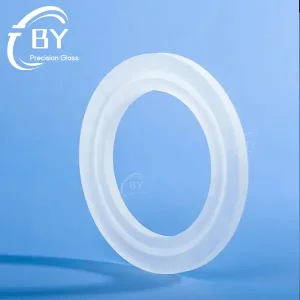
High-Quality Precision Custom Quartz Glass Components for Semiconductor Manufacturers, Supplier
View Product Details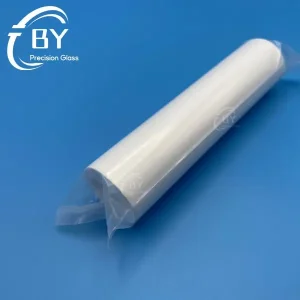
Wholesale Candela VBeam Laser 6" White Cavity Ceramic Reflector 2 Pk Manufacturer, Suppliers
View Product Details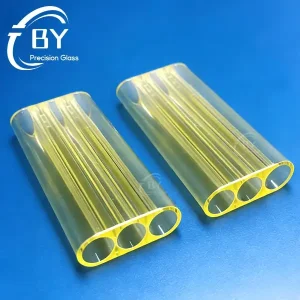
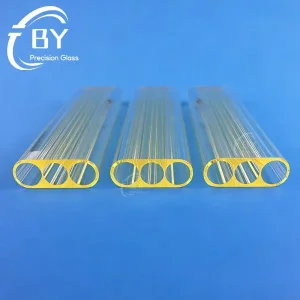
Wholesale Samarium-doped Quartz Triple Bore for Medical Laser Manufacturer, Supplier
View Product Details
Wholesale Customize Quartz Cuvette for Spectrophotometer Supplier, Factory
View Product Details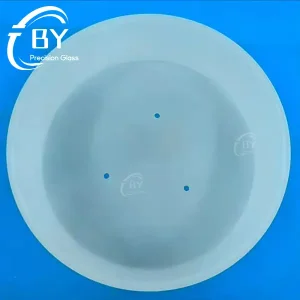
High-Quality Custom Quartz Glass Components for Vacuum Coating Supplier, Factories
View Product Details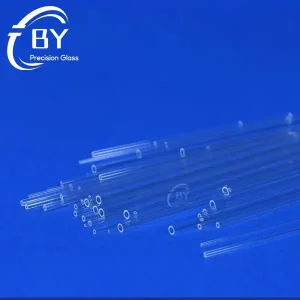
Wholesale Fluorine-Doped Fused Silica Capillary Tube Manufacturer, Factories
View Product Details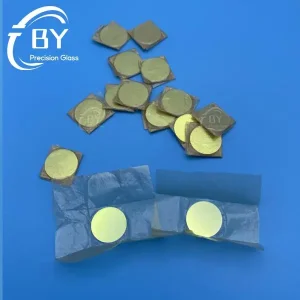
High-Quality Candela Laser Distance Gauge Slider Windows With coating 755 and 1064nm Suppliers, Factories
View Product Details