
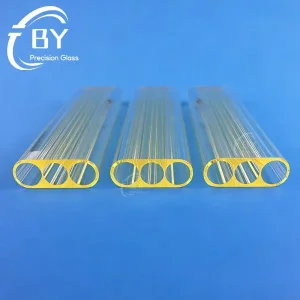
Solid-state laser filtering components with high dimensional stability.
Custom Laser Cavity Flow Tubes & Filters Made from Samarium-doped Glass Supplier, SuppliersUltra-low insertion loss substrates and precision capillary solutions engineered for mission-critical photonic alignment and passive optical coupling.
Solid-state laser filtering components with high dimensional stability.
Custom Laser Cavity Flow Tubes & Filters Made from Samarium-doped Glass Supplier, Suppliers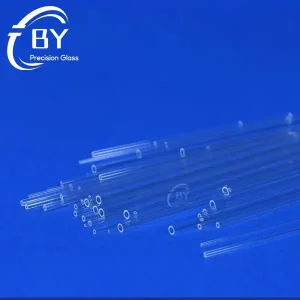
Fluorine-doped fused silica capillaries featuring controlled refractive indices.
Wholesale Fluorine-Doped Fused Silica Capillary Tube Manufacturer, Factories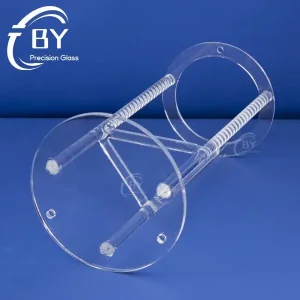
High-purity quartz carriers fabricated for rigorous thermal diffusion.
Wholesale Quartz Wafer Carriers for Semiconductor Supplier, Suppliers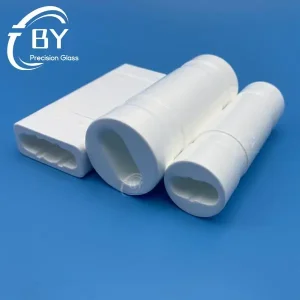
Diffuse ceramic reflectors designed for high-power diode pumping systems.
Wholesale Ceramics Reflecor for Semiconductor Lasers Suppliers, Factory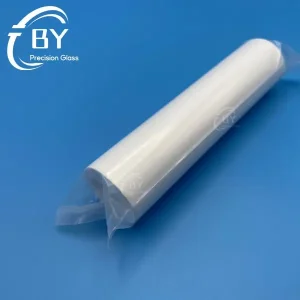
Sintered laser cavity reflectors optimized for medical aesthetic systems.
Wholesale Candela VBeam Laser 6" White Cavity Ceramic Reflector 2 Pk Manufacturer, Suppliers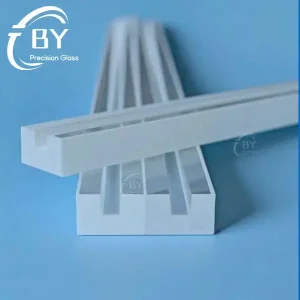
Precision square/V-profile substrates for multi-channel array alignment.
High-Quality Square Groove Quartz Substrate for Fiber Couplers Supplier, Factories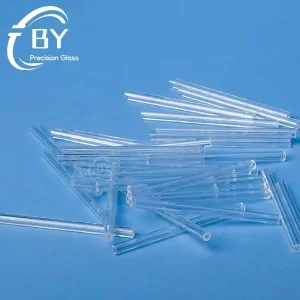
Micro-bore quartz capillaries drawn to tight sub-micron concentricity.
High-Quality Custom Precision Quartz Capillary Tubes Manufacturers, Suppliers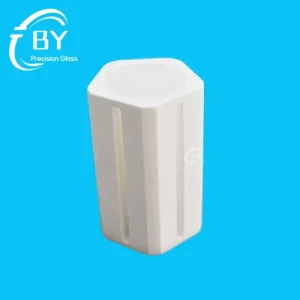
Hydrophobic, high-reflectance PTFE chambers for advanced optoelectronics.
Wholesale Diffuse High‑Reflectivity PTFE Reflectors for Diode‑Pumping Chambers Suppliers, FactoryFrom 400G/800G coherent transceivers to next-generation quantum computing: how precision V-grooves define modern photonic coupling boundaries.
The explosive rise of AI training clusters demands ultra-wide bandwidth with minimal propagation delay. Custom V-groove arrays serve as the passive mechanical foundation for Fiber Array Units (FAUs), securing single-mode and polarization-maintaining (PM) fibers at channel pitches down to 127 µm and 250 µm with sub-micron radial variance.
Coupling light from active laser chips to passive waveguide circuits creates steep numerical aperture mismatches. V-groove substrates fabricated from synthetic fused silica (JGS1) match optical coefficients and thermal expansion curves, reducing coupling insertion loss to under 0.25 dB across C- and L-band spectrums.
Cryogenic quantum optical computers and down-hole distributed fiber sensing require dimensional stability without micro-delamination. Our customized fused quartz and borosilicate V-blocks exhibit zero stress birefringence under extreme thermal shocks from -196 °C to +400 °C.
Combining proprietary ultra-precision ultra-hard grinding, CMP planarization, and strict E-E-A-T quality systems under one roof in Tianjin.
| Performance Metric | Industry Standard Tolerance | BY Photonics Standard | Engineering Benefit |
|---|---|---|---|
| Groove Pitch Accuracy (p) | ±1.0 µm | ±0.3 µm to ±0.5 µm | Eliminates modal field misalignment in SiPh grating and edge couplers. |
| Included Angle Precision | 60° / 90° ± 0.5° | ± 0.1° | Guarantees exact fiber seating depth with zero axial tilt. |
| Substrate Flatness | λ / 2 per inch | Up to λ / 10 @ 632.8 nm | Ensures void-free adhesive bonding when clamping glass cover plates. |
| Surface Roughness (Ra) | Ra < 0.2 µm | Ra < 0.05 µm (Optical Polished) | Mitigates micro-bending stress and long-term attenuation drift. |
| Material Traceability | Commercial Borosilicate | JGS1 Synthetic Silica / Doped Glass | Zero fluorescent impurities, ideal for high UV/IR laser passbands. |
Custom engineering architectures deployed across telecommunications, medical surgery, and industrial laser processing.
For 100G, 400G DR4/FR4, and 800G transceivers, V-groove arrays hold ribbonized single-mode fibers with anti-reflective (AR) coated angled polishing (8° or 0°), curbing optical return loss (ORL > 55 dB).
Multi-channel solid-state automotive LiDAR utilizes multi-core V-groove blocks to accurately steer beam emission vectors into silicon photonic optical phased arrays (OPA).
Combining V-groove fiber arrays with samarium-doped filters or fused quartz capillary channels allows multi-point laser-induced fluorescence (LIF) detection in clinical diagnostics.
OEM defense tier-1s source radiation-hardened quartz V-grooves paired with polyimide-coated fibers to withstand ionizing space radiation and extreme mechanical vibrational loads.
Direct technical responses addressing material properties, bonding procedures, and custom fab tolerances.
Standard angles are ground at 60° or 90° with ±0.1° fidelity. Groove depths are tailored from 50 µm to over 500 µm to accommodate bare claddings (80 µm, 125 µm) or buffered jackets (250 µm, 900 µm) with calculated fiber protrusion.
JGS1 offers superior optical transmission across 185–2500 nm, near-zero thermal expansion coefficient (0.55×10⁻⁶/K), and high UV laser damage thresholds, making it essential for high-power laser interconnects and telecommunication environments.
Yes. We machine and polish matched fused silica and Pyrex cover plates with precision chamfers, optical step recesses, and metallized bonding edges (Au/Ni plating) for hermetic gold-tin solder sealing.
Every batch includes complete 3D optical non-contact profiler reports, interferometry surface flatness charts (λ/10 data), pitch accuracy coordinates, and raw material mill/purity certificates.
Explore our diverse line of laser-grade tubes, sapphire plates, and semiconductor glassware manufactured to exact CAD prints.
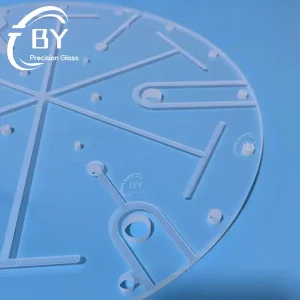
Complex 3D CNC micro-milled and polished optical quartz parts.
High-Quality Custom Precision Quartz Glass Fabrication Supplier, Suppliers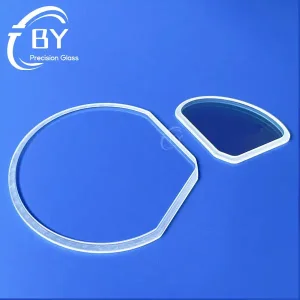
Mohs 9 hardness sapphire sight glass resisting extreme alkalis and acids.
High-Quality Sapphire Viewing Plates for Harsh Chemical Environments Suppliers, Factories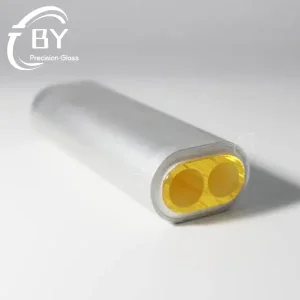
Turnkey pre-aligned flowtube assemblies ready for OEM laser mounting.
Custom Packed Laser Cavity Flowtubes for Laser Head Manufacturers, Suppliers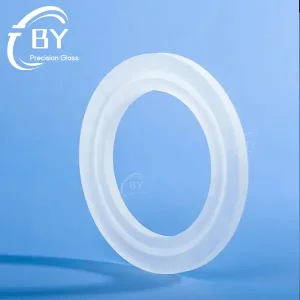
Ultra-clean semiconductor grade quartz chambers and process boats.
High-Quality Precision Custom Quartz Glass Components for Semiconductor Manufacturers, Supplier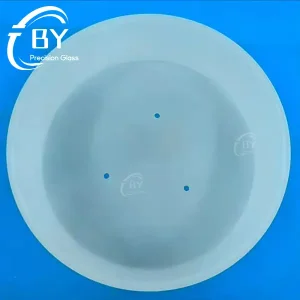
Thermally durable quartz hardware for PVD/CVD chamber environments.
High-Quality Custom Quartz Glass Components for Vacuum Coating Supplier, Factories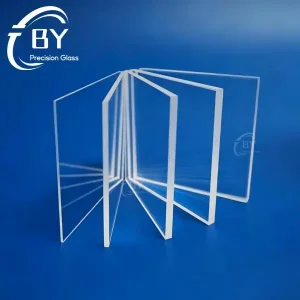
Deep-UV synthetic fused silica substrates with transmittance from 185 nm.
High-Quality JGS1 UItraviolet (UV) Grade Fused Silica Plate Supplier, Factory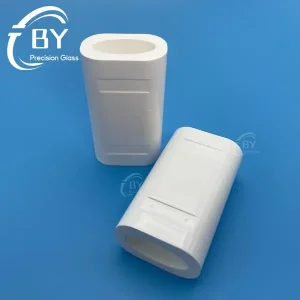
Porous high-reflectivity alumina ceramic pump reflectors for Nd:YAG rods.
High-Quality Ceramic Cavities For Nd YAG Laser Supplier, Factories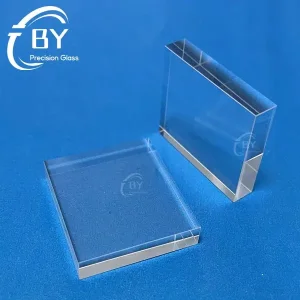
High thermal-conductivity sapphire blocks with fine bevelled edges for laser handles.
Custom Sapphire IPL Light Guide Block Used for Laser IPL Hair Removal Handle Manufacturer, Manufacturers