Catalog Selections
Featured Precision Cavities & Optical Substrates
Direct factory production of custom alumina pump reflectors, laser-grade quartz flow components, and crystal assemblies manufactured under strict ISO 9001 quality frameworks.
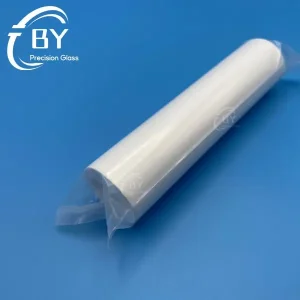
Wholesale Candela VBeam Laser 6" White Cavity Ceramic Reflector 2 Pk Manufacturer, Suppliers
View Details & Request RFQ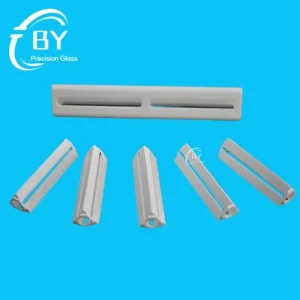
High-Quality Diode‑Pumping Chamber Diffuse Reflectors PTFE‑based Supplier, Suppliers
View Details & Request RFQ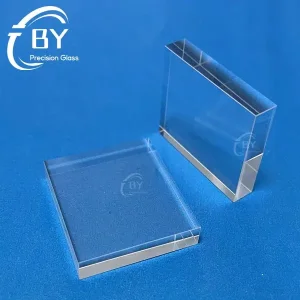
Custom Sapphire IPL Light Guide Block Used for Laser IPL Hair Removal Handle Manufacturer, Manufacturers
View Details & Request RFQ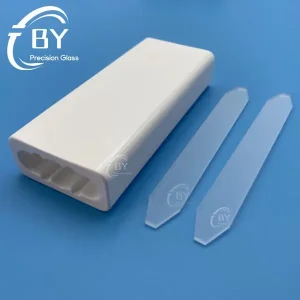
Wholesale Ceramic Cavity Reflector use for DEKA Laser Manufacturers, Supplier
View Details & Request RFQ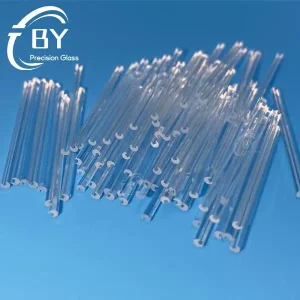
High-Quality Quartz Substrate Groove Use For Optical Fiber Coupler Suppliers, Factories
View Details & Request RFQ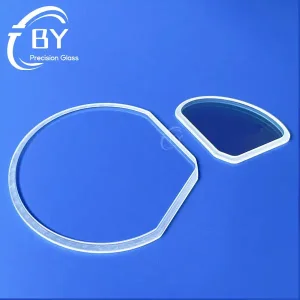
High-Quality Sapphire Viewing Plates for Harsh Chemical Environments Suppliers, Factories
View Details & Request RFQ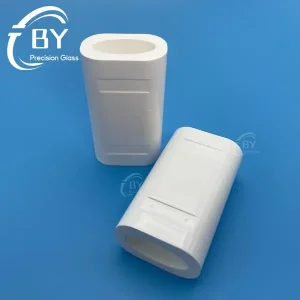
High-Quality Ceramic Cavities For Nd YAG Laser Supplier, Factories
View Details & Request RFQ
Industry Overview
Global Commercial & Industrial Status of Alumina Cavities
In modern photonics, the pump cavity serves as the physical engine determining solid-state laser (SSL) pumping efficiency, thermal load management, and beam profile homogeneity. High-purity porous alumina ceramics have globally supplanted legacy gold- or silver-plated metal cavities.
Diffuse Reflectivity Exceeding 97%
Unlike specular metal mirrors prone to pitting and optical degradation, porous 99.7% Al₂O₃ provides high Lambertian diffuse reflection within the 600 nm to 1064 nm absorption bands, eliminating localized hot spots inside laser crystals.
Chemical & Coolant Inertness
Coolant-submerged pump chambers face continual exposure to deionized (DI) water or glycol solutions. High-purity sintered ceramics are chemically inert, avoiding corrosion, oxidation, or contamination of liquid coolant loops.
Selective Glaze Technology
Modern cavity designs leverage precision partial glazing. Internal reflection bores feature high-efficiency porous ceramic, while exterior mating faces are sealed with non-porous vitreous glazes to eliminate water penetration and bacterial adherence.
Extreme Thermal Stability
Operating reliably at service temperatures exceeding 1,200 °C, ceramic cavities withstand continuous megawatt-level flashlamp pulses without structural deformation, outgassing, or delamination issues typical of dielectric coatings.
99.7%
Al₂O₃ Raw Purity
> 97.8%
Diffuse Reflectance @ 1064nm
± 0.02mm
CNC Machining Tolerance
< 24h
Engineering DFM Review
Supply Chain Integration
Manufacturing Efficiency & Supply Chain Resilience in China
By consolidating powder synthesis, isostatic pressing, vacuum sintering, and ultrasonic diamond CNC machining within our specialized facility in Tianjin, we overcome common lead-time and yield limitations found in fragmented global supply chains.
Full In-House Ceramic Processing
From initial dry-pressing and cold isostatic pressing (CIP) to high-temperature sintering kilns operating up to 1,750 °C, our end-to-end integration ensures batch-to-batch structural homogeneity, controlled bulk density, and zero internal micro-voids.
5-Axis Hard-State Ultrasonic Machining
Alumina hardness (Mohs 9) demands specialized diamond tooling. Our factory uses 5-axis ultrasonic CNC milling centers capable of cutting complex cooling grooves, precise dual-bore pump channels, and tight O-ring sealing chamfers without edge chipping.
Rapid Prototype-to-Volume Scalability
With more than 120 processing machines and dedicated tooling workshops, custom prototype components move from 3D CAD models to physical sintered ceramic test parts in under 15 working days, expediting client development cycles.
Application Matrix
Localized Application Scenarios & Physical Specifications
Our precision ceramic cavity designs are integrated across specialized photonic systems where high diffuse reflection and dielectric breakdown strength are critical operational requirements.
Dermatological & Surgical Medical Lasers
Essential diffuse reflectors in aesthetic platforms (Candela GentleLase, VBeam, Cynosure, DEKA). They ensure uniform pulse absorption across Alexandrite (755 nm) and Nd:YAG (1064 nm) rods while isolating high flashlamp discharge voltages.
Industrial Laser Welding & Additive Systems
High-duty-cycle solid-state laser cutting, cladding, and marking systems require durable pump enclosures that survive high thermal loads and resist mechanical vibration without reflective coating decay.
Semiconductor Metrology & Inspection
Ultra-stable pump chambers for deep-UV (DUV) and laser-sustained plasma (LSP) light sources used in wafer inspection, lithography alignment, and semiconductor optical defect classification.
Aerospace LIDAR & Scientific Research
Diode-pumped solid-state (DPSS) laser chambers engineered for satellite range-finding, airborne atmospheric remote sensing, high-energy particle physics, and spectroscopy setups.
| Material Parameter / Characteristic | Porous Laser-Grade Alumina (Al₂O₃) | Dense Technical Alumina (99.7%) | Sintered PTFE (Spectralon-Grade) |
|---|---|---|---|
| Reflectance @ 600 - 1100 nm | 97.5% - 98.2% (Diffuse) | 88.0% - 91.0% | > 99.0% (Diffuse) |
| Bulk Density (g/cm³) | 3.10 - 3.30 | 3.90 - 3.96 | 2.15 - 2.20 |
| Thermal Conductivity (W/m·K) | 18 - 25 | 30 - 35 | 0.25 - 0.35 |
| Dielectric Strength (kV/mm) | 15 - 20 | 25 - 30 | 40 - 60 |
| Maximum Working Temperature | 1,300 °C | 1,650 °C | 260 °C |
| Resistance to Water Erosion | Excellent (Glazed Surface) | Superior (Unglazed) | Moderate (Deforms Under High Pressure) |
Market Intelligence
Industry Trends & Global Enterprise Procurement Priorities
International procurement for solid-state laser components has shifted significantly toward long-term lifecycle reliability, strict dimensional interchangeability, and verified material provenance.
Shift from Metallic to Ceramic Cavities
Global OEMs continue phasing out electroplated gold reflectors. Gold surfaces degrade under intense UV radiation from flashlamps, flaking off and causing catastrophic thermal runaways. Alumina provides an intrinsically non-degrading bulk reflection matrix.
Monolithic Complex Multi-Bore Cavities
Modern diode-side-pumped laser modules require compact designs that combine crystal rod bores, diode bar collimator slots, and internal coolant paths into single monolithic ceramic blocks, reducing mechanical assembly tolerance stack-ups.
Supply Chain Diversification & Dual Sourcing
Western photonics manufacturers are expanding direct-from-factory relationships in East Asia. They require suppliers with clear engineering communication (DFM in English), transparent raw material tracing, and reliable batch-to-batch repeatability.
Stringent Cleanliness & Coolant Compatibility
High-energy laser applications require sub-micron surface pore sealing. Unsealed porous edges introduce micro-particulate contamination into DI cooling loops, so procurement specifications increasingly mandate zero-defect glass glazes on fluid-wetted interfaces.
Technical FAQ
Frequently Asked Questions: Engineering & Sourcing
Key technical insights addressing reflectance performance, ceramic glazing, tolerances, and design for manufacturability (DFM) for high-performance laser cavities.
Why is porous alumina preferred over dense alumina for laser pump reflector cavities?
Porous alumina contains micro-scale internal refractive voids that scatter light through diffuse volume scattering. This produces a Lambertian reflectance profile across pump bands (exceeding 97% to 98% between 600 nm and 1064 nm). In contrast, dense sintered alumina exhibits significant direct transmittance and Fresnel surface reflection, which yields lower total cavity reflectance and uneven energy absorption across the laser rod.
What is the purpose of applying a glaze to the alumina ceramic cavity?
Because porous ceramics naturally absorb fluids, unsealed cavities placed in direct contact with liquid coolants can take up DI water, collect particulates, or promote organic growth. Applying a high-purity, chemically resistant glass glaze seals fluid-facing surfaces. This prevents coolant migration and extends operational life while preserving unglazed porous internal surfaces for maximum diffuse light reflection.
What dimensional tolerances can your CNC ultrasonic ceramic machining hold?
For critical dimensions—including bore diameters, rod-to-lamp center distances, and O-ring sealing grooves—we maintain standard tolerances of ±0.05 mm, with precision CNC finishing down to ±0.02 mm upon request. Bore concentricity and parallelism over long cavities (up to 250 mm in length) are routinely verified to within 0.03 mm using our coordinate measuring machines (CMM).
Can you manufacture aftermarket replacements for legacy medical laser cavities (Candela, DEKA, Cynosure)?
Yes. We stock and manufacture direct drop-in replacement ceramic cavities, diffuse reflectors, and flow tubes compatible with popular systems, including the Candela GentleLase/VBeam, DEKA, and Cynosure series. Parts are reverse-engineered and CNC-ground to ensure matching focal geometry, optical pumping efficiency, and sealing compatibility with OEM laser heads.
What engineering drawings and files are required for a customized cavity quotation?
We accept 3D models in STEP, IGES, or Parasolid formats alongside 2D engineering PDFs detailing critical dimensions, glaze zoning, surface finish (Ra), and operating conditions. Our engineering team returns a comprehensive DFM (Design for Manufacturability) analysis and formal quote within 24 working hours.
Complementary Components
Integrated Laser Optics & Precision Glass Elements
Complete your laser pump chamber assembly with our in-house manufactured Samarium-doped flow tubes, PTFE pump bodies, and high-transmission sapphire windows.
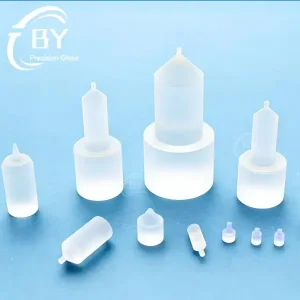
High-Quality Customized Quartz Fiber End Caps for QBH Manufacturer, Factory
View Details & Request RFQ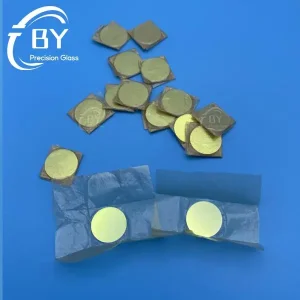
High-Quality Candela Laser Distance Gauge Slider Windows With coating 755 and 1064nm Suppliers, Factories
View Details & Request RFQ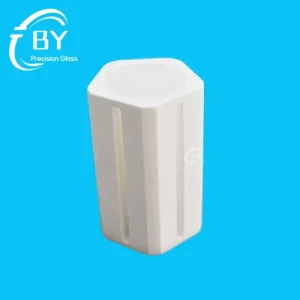
Wholesale Diffuse High‑Reflectivity PTFE Reflectors for Diode‑Pumping Chambers Suppliers, Factory
View Details & Request RFQ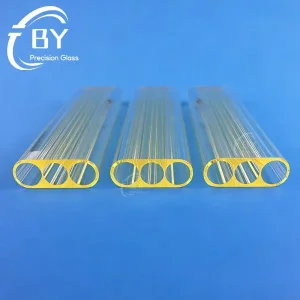
Custom Laser Cavity Flow Tubes & Filters Made from Samarium-doped Glass Supplier, Suppliers
View Details & Request RFQ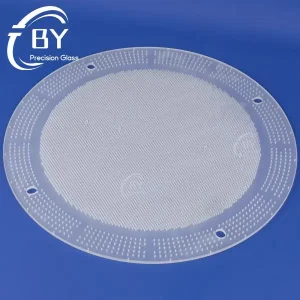
Custom Custom Optical Quartz Gas Distribution Plate Manufacturer, Suppliers
View Details & Request RFQ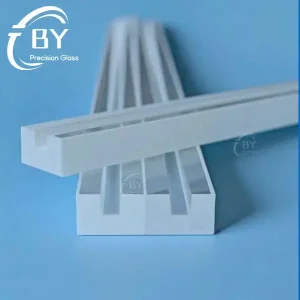
High-Quality Square Groove Quartz Substrate for Fiber Couplers Supplier, Factories
View Details & Request RFQ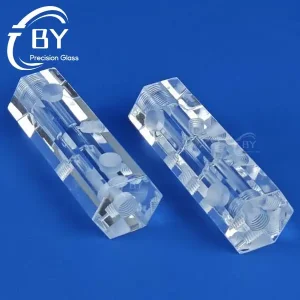
High-Quality Custom Fabrication of Quartz Glass Precision Components Supplier, Factory
View Details & Request RFQ