Precision Inventory Portfolio
Specialized Laser Cavity & Optical Substrate Solutions
Engineered for extreme radiant endurance, superior thermal dissipation, and uniform diffuse pumping geometry.
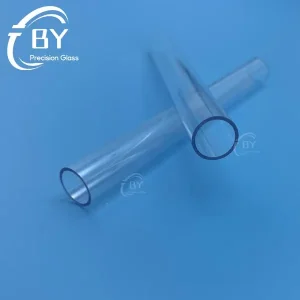
Wholesale Cerium Doped Quartz Tube Blocked UV Wavelength Manufacturer, Manufacturers
View Product Details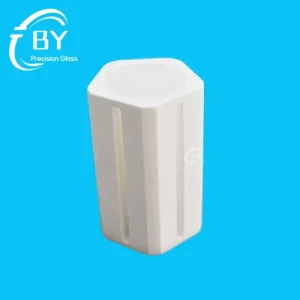
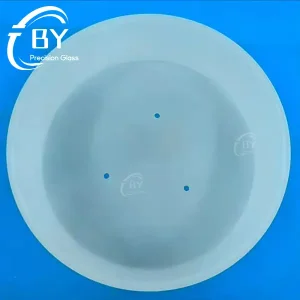
Wholesale Diffuse High‑Reflectivity PTFE Reflectors for Diode‑Pumping Chambers Suppliers, Factory
View Product Details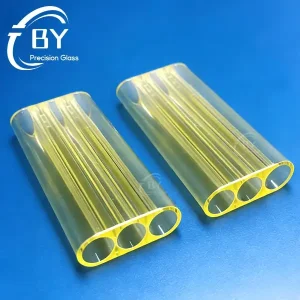
Wholesale Samarium-doped Quartz Triple Bore for Medical Laser Manufacturer, Supplier
View Product Details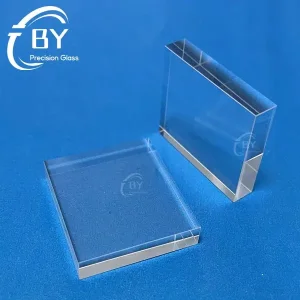
Custom Sapphire IPL Light Guide Block Used for Laser IPL Hair Removal Handle Manufacturer, Manufacturers
View Product Details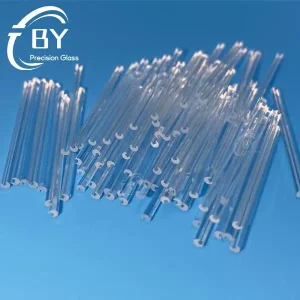
High-Quality Quartz Substrate Groove Use For Optical Fiber Coupler Suppliers, Factories
View Product Details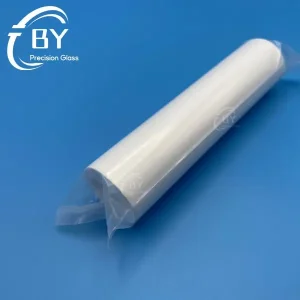
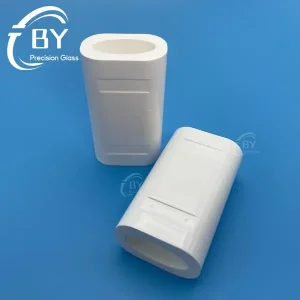
Wholesale Candela VBeam Laser 6" White Cavity Ceramic Reflector 2 Pk Manufacturer, Suppliers
View Product Details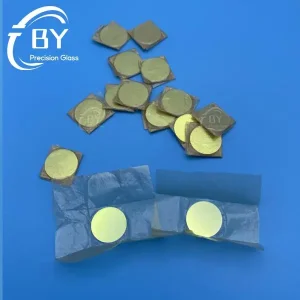
High-Quality Candela Laser Distance Gauge Slider Windows With coating 755 and 1064nm Suppliers, Factories
View Product Details
Material Science & Industry Trends
The Paradigm Shift from Metallic to Porous Alumina Ceramic Reflectors
Evaluating the optical physics, thermal hysteresis, and chemical endurance transforming solid-state and flashlamp pump chambers.
Lambertian Diffuse Reflectivity
Unlike specular metallic coatings (gold, silver) that degrade and produce local hot spots, porous alumina ceramics deliver up to 98.2% bulk Lambertian reflectance across the critical 600–1100 nm absorption bands, maximizing laser crystal gain uniformity.
Extreme Thermal Stability
Synthesized via high-purity α-Al₂O₃ and high-temperature isostatic sintering above 1650°C, our ceramic cavities endure localized thermal shocks exceeding 1000°C without micro-cracking, structural degradation, or delamination.
Deionized Water & Coolant Inertness
Metallic reflectors suffer from electrolytic oxidation and chemical pitting when subjected to high-flow deionized cooling fluids. High-grade glazed alumina reflectors prevent coolant ingress, eliminating biological fouling and chemical leaching.
Global OEM Sourcing Requirements
Meeting Precision Criteria for Tier-1 Photonics Manufacturers
How BY Photonics resolves technical procurement friction points across Europe, North America, and East Asia.
98.2%
Diffuse Reflectance @ 600–1064nm
<0.05%
Absorption Factor in Active Waveband
±0.02mm
CNC Dimensional Cavity Tolerance
100%
Laser Interferometric & Spectric QC
Medical Aesthetic Compliance
Medical device integrators (Candela, DEKA, Cynosure-grade systems) mandate FDA/CE compliant material batch reports. Every alumina reflector shipped from our foundry is delivered with raw powder chemical composition sheets.
Glazing Integrity & Waterproofing
Custom fluid-contact chambers require specialized internal high-temperature vitreous glazing. Our proprietary glaze eliminates surface porosity, preventing laser flashlamp cooling water contamination.
Supply Chain Traceability
We implement single-lot material tracing from the spray-dried powder granulator to diamond milling and final ultrasonic cleaning, mitigating counterfeit risk and batch-to-batch spectral deviation.
Engineering Performance Index
Comparative Material Physics in High-Power Pump Cavities
Direct technical audit contrasting BY Photonics 99.7% Al₂O₃ ceramics with legacy gilded metals and PTFE reflectors.
| Evaluation Parameter | BY High-Purity Alumina (Al₂O₃) | Sintered PTFE (Spectralon-Type) | Gold-Coated Copper / Invar |
|---|---|---|---|
| Bulk Diffuse Reflectance (600–1100nm) | 97.5% – 98.4% (Uniform) | 99.0% – 99.3% (Initial) | 95.0% – 96.0% (Specular Only) |
| Maximum Working Temperature | 1,550 °C (Continuous) | 260 °C (Deforms easily) | 350 °C (Coating degrades) |
| Thermal Conductivity (W/m·K) | 28 – 35 W/m·K | 0.25 W/m·K (Thermal Insulator) | 380 W/m·K (High) |
| Resistance to Intense UV Flash Radiation | Immune (No solarization/yellowing) | Susceptible to surface charring | Severe photo-oxidation blistering |
| Chemical Washdown & DI Water Tolerance | Unaffected (Glazed or unglazed) | Porous absorption without seal | Galvanic corrosion & stripping |
| Mechanical Rigidity (Mohs / Hardness) | Mohs 9 / HV 1600 | Extremely soft (Scratches readily) | HV 120 (Soft metal layer) |
System Architectures & Solutions
Macro Engineering Integration Across Critical Industries
Engineered cavity chambers designed to enhance pumping efficiency, prolong flashlamp life, and stabilize beam profiles.
Medical Aesthetic Laser Consumables
For Candela AlexELEC/GentleLASE, DEKA Motus, and Cynosure systems, our retrofit and OEM ceramic reflectors offer exact drop-in mechanical dimensional parity, ensuring optical pulse symmetry and extended pulse longevity.
High-Power DPSS Laser Pumping Chambers
Custom multi-bore ceramic pump cavities engineered for side-pumped Nd:YAG and Nd:YLF rods. Precision diamond grinding ensures consistent coolant channel clearances, suppressing thermal lensing under kilowatt-class thermal loads.
Semiconductor Lithography & Inspection
Ultra-clean, zero-outgassing ceramic reflectors for DUV inspection tools and wafer exposure modules. High thermal shock resilience guarantees structural stability within extreme vacuum processing enclosures.
Quality Assurance & Global Trade Compliance
Foundry Audits, Quality Control, and Rapid Global Dispatch
Operating under verified ISO 9001:2015 frameworks, BY Photonics bridges overseas engineering with transparent delivery.
CMM Coordinate Metrology
Every critical bore axis, mounting groove, and chamfer is verified via automated coordinate measuring machines to maintain true positional accuracy within ±0.015 mm.
Material Batch Certificates
Direct spectroscopic analysis accompanies shipments, verifying Al₂O₃ content ≥ 99.7%, bulk density ≥ 3.92 g/cm³, and total loss factor compliance.
Cleanroom Export Packaging
Components undergo multi-stage ultrasonic degreasing, cleanroom vacuum sealing, and custom anti-shock custom-molded cellular casing to prevent micro-fissures in transit.
Localized Technical Service
Direct bilingual DFM (Design for Manufacturability) engineering reviews within 24 hours, supporting STEP/CAD models and prototype-to-volume schedules.
Next-Generation Photonics Roadmap
Refining Alumina Ceramic Optical Matrix Technologies
Strategic development initiatives leading the optical ceramics evolution from 2026 through 2030.
Phase 01: Nano-Pore Sintering
Sub-Micron Scattering Boundaries
Achieving 98.8% reflectivity by controlling grain sizes below 800 nanometers, minimizing bulk absorption losses in short-pulse green lasers.
Phase 02: Hybrid Glass-Ceramic
Fused Silica-Alumina Fusion
Developing composite zero-expansion ceramic cavities with integrated flow paths, eliminating mechanical O-ring seals in high-repetition lasers.
Phase 03: Precision 3D Printing
Additive Ceramic Lithography
Enabling conformal internal cooling geometries and irregular cavity contours unachievable by traditional 5-axis diamond tooling.
Phase 04: Advanced Coatings
Hydrophobic Glazes
Implementing atomic-layer deposited glazes resistant to aggressive deionizing filtration and UV solarization across 10,000 continuous hours.
Technical FAQs
Frequently Asked Questions: Alumina Ceramic Reflectors
Immediate engineering answers regarding tolerances, reflectance testing, custom mold tooling, and replacement compatibility.
What makes 99.7% Al₂O₃ alumina ceramic superior to standard 95% technical ceramics in laser pump chambers?
Higher purity (99.7% vs 95%) eliminates metallic impurity trace oxides (such as Fe₂O₃ and SiO₂) which cause parasitic light absorption and premature discoloration under intense ultraviolet radiation from flashlamps. The 99.7% grade also ensures superior chemical inertness against high-temperature deionized cooling water, significantly preventing leaching and electrical conductivity spikes in the coolant system.
Can BY Photonics fabricate drop-in ceramic reflectors for Candela, Cynosure, and DEKA medical lasers?
Yes. We precision-machine exact drop-in replacements for models including Candela VBeam, GentleLASE, GentleYAG, DEKA, and Cynosure aesthetic systems. Our reflectors match OEM outer dimensional profiles, internal bore pitches, and flow sealing features with micrometer precision, ensuring identical optical pump efficiency and pulse repeatability without equipment modification.
What is the difference between glazed and unglazed ceramic laser reflectors?
Unglazed alumina ceramic provides marginally higher diffuse reflectance (approx. 98% across 600–1000 nm) but retains open microscopic pores (typically 10–15% porosity), making it best suited for dry cavities or sealed optical setups. Glazed reflectors incorporate a high-temperature vitreous glass coating over the reflection surface, rendering it completely impermeable to deionized water and chemical impurities. This prevents fluid absorption, contaminant buildup, and biological growth in liquid-cooled pump chambers.
What files are needed for a custom ceramic reflector quote and DFM assessment?
We accept 3D CAD models in STEP, IGES, or SAT formats along with a 2D PDF drawing outlining critical linear tolerances, concentricity, surface finish requirements, and glazing specifications. Our engineering desk completes a full Design for Manufacturability (DFM) review and delivers pricing within 24 business hours.
How does porous ceramic reflectivity compare to sintered PTFE (Spectralon-grade) materials?
While sintered PTFE initially provides slightly higher reflectance (around 99% vs 98%), it is a thermal insulator with very low heat deflection temperatures (softens at ~260°C) and scratches easily. In contrast, 99.7% Al₂O₃ alumina ceramic handles temperatures up to 1550°C, features high thermal conductivity (30 W/m·K), and offers Mohs 9 hardness, making it far superior for high-energy flashlamp and sustained DPSS industrial operations.
Semiconductor, Fiber & Cavity Assemblies
Extended High-Precision Optical Glass & Cavity Inventory
OEM replacement modules and custom-fabricated quartzware built for demanding production environments.
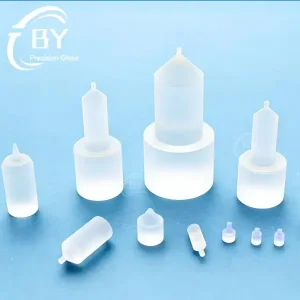
High-Quality Customized Quartz Fiber End Caps for QBH Manufacturer, Factory
View Product Details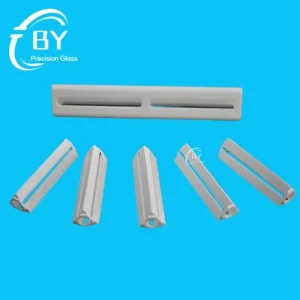
High-Quality Diode‑Pumping Chamber Diffuse Reflectors PTFE‑based Supplier, Suppliers
View Product Details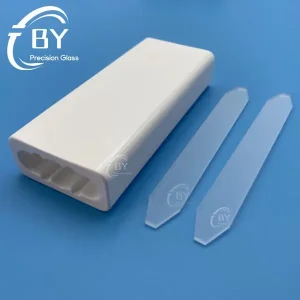
Wholesale Ceramic Cavity Reflector use for DEKA Laser Manufacturers, Supplier
View Product Details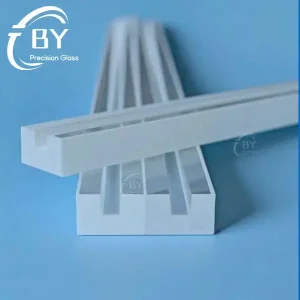
High-Quality Square Groove Quartz Substrate for Fiber Couplers Supplier, Factories
View Product Details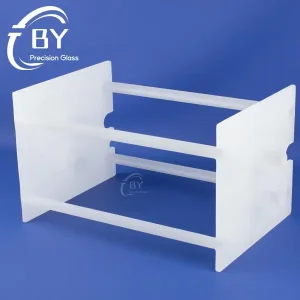
Wholesale Quartz Diffusion Boat for Semiconductor Suppliers, Factories
View Product Details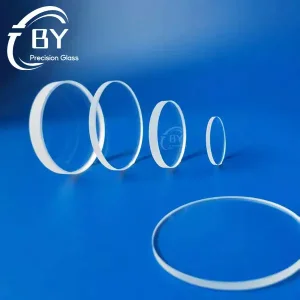
Wholesale Quartz Optical Windows for Semiconductor Lithography Equipment Suppliers, Factories
View Product Details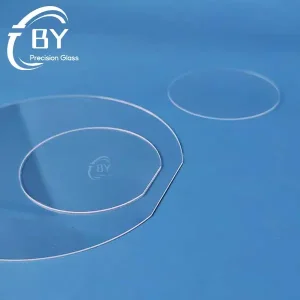
Custom Borofloat 33® Glass Wafers for Semiconductor Manufacturers, Factories
View Product Details