
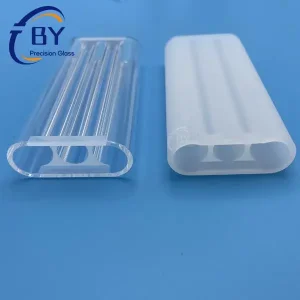
Precision Engineering Showcase: Batch A
Direct OEM Engineered Components & Assemblies
Browse our frontline inventory of high-demand laser pump chambers, PTFE diffused reflectors, synthetic fused silica plates, and precision quartzware manufactured through rigorous hot flame glassblowing and cold optical machining.
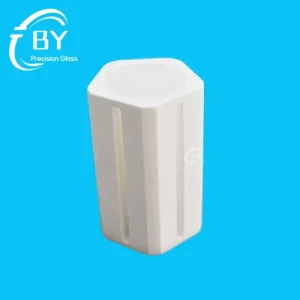
Diffuse High-Reflectivity PTFE Reflectors for Diode Cavities
View Specifications →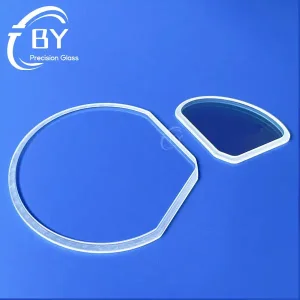
Sapphire Viewing Plates for Harsh Chemical Chambers
View Specifications →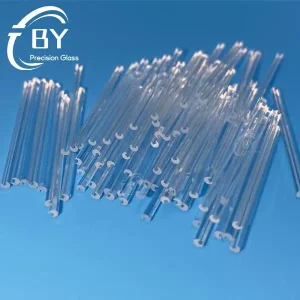
Quartz Substrate Groove for Optical Fiber Coupler
View Specifications →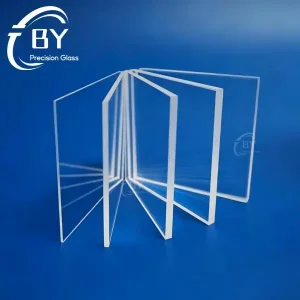
JGS1 Ultraviolet (UV) Grade Fused Silica Optical Plate
View Specifications →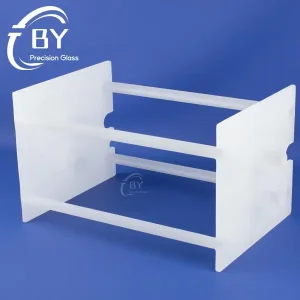
High-Purity Quartz Diffusion Boat for Semiconductor Fabs
View Specifications →
Customized Quartz Fiber End Caps for QBH Laser Heads
View Specifications →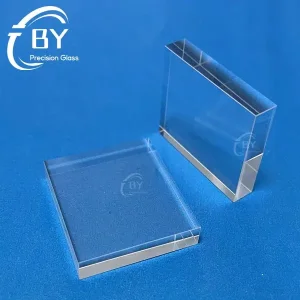
Custom Sapphire IPL Light Guide Block for Aesthetic Devices
View Specifications →
Technical Whitepaper & Industrial Macro-Analysis
The Evolution of Scientific Carter Glassblowing in Global High-Tech Industries
Scientific glassblowing—often recognized historically in the legacy of master fabricators such as Carter Glassblowing—has transitioned from an artisanal craft into an indispensable discipline within modern advanced manufacturing. In the contemporary microelectronics, aerospace photonics, and solid-state laser sectors, high-purity quartz manipulation demands atomic-level precision, thermo-mechanical endurance, and uncompromising optical homogeneity.
Today’s global industrial ecosystem demands scientific glassware and quartz products that operate stably across extreme thermal gradients ranging from -196°C in cryogenic optical sensors up to 1,250°C in chemical vapor deposition (CVD) and thermal diffusion chambers. When sourcing a qualified CarterGlassblowing supplier or partner, industrial procurement engineers must navigate a specialized convergence of hot scientific torchworking (oxyhydrogen flame lathe fusion) and cold optical precision machining (multi-axis ultrasonic CNC, double-sided chemical mechanical planarization, and sub-aperture polishing).
As semiconductor lithography moves further into extreme ultraviolet (EUV) regimes and high-energy solid-state lasers achieve multikilowatt continuous-wave output, optical glass fabrication faces unprecedented thermal lensing, bubble inclusion, and hydroxyl (OH-) absorption constraints. Suppliers are no longer merely shape fabricators; they are technical partners responsible for total chemical purity, transmission bandwidth optimization from 185 nm to 5,500 nm, and zero-stress structural integrity.
Unified Engineering Architecture
The Hybrid Manufacturing Protocol: Cold Machining Meets Hot Flame Working
Historically, optical fabrication shops and scientific glassblowing workshops operated in separate silos. High-end glassblowing suppliers bridge this gap by housing high-temperature oxyhydrogen glass lathes and sub-micron multi-axis cold machining centres in one integrated ISO 9001:2015 certified environment.
Oxyhydrogen Hot Working
Operating glass lathes heated past 1,800°C via balanced stoichiometric hydrogen-oxygen torches. Delivers full homogeneous molecular fusion, vacuum-sealed envelope tubes, diffusion chambers, and distortion-free joint welds with no foreign binder or solder contamination.
Ultrasonic 5-Axis CNC
Diamond-impregnated rotary micro-tooling coupled with ultrasonic vibrational frequencies. Eliminates sub-surface micro-cracks, edge chipping, and brittle catastrophic fractures when machining micro-grooves, triple bores, custom manifold ports, and non-circular geometries.
Lapping & CMP Polishing
Double-sided continuous pitch polishing combined with chemical-mechanical planarization (CMP). Reaches optical surface roughness below Ra 0.3 nm, optical flatness up to λ/10 per inch, and scratch-dig specifications down to 10-5 for ultra-high power laser optical windows.
Thermal Stress Annealing
Programmable multi-step thermal ramp annealing ovens running cycles up to 1,180°C. Relieves internal thermal residual stresses created during flame manipulation, verified under sensitive cross-polarization polarimeters to guarantee zero optical birefringence.
Engineering Material Matrix
Optical & Thermal Properties of Fabricated Substrates
Material selection determines system survivability in harsh optoelectronic and reactive plasma environments. The table below delineates the critical thermal, optical, and mechanical performance parameters of materials routinely shaped in our advanced scientific glassblowing and precision machining centers:
| Substrate Material | Transmission Bandwidth | Coefficient of Thermal Expansion (CTE) | Softening / Max Service Temp | Chemical Resistance Profile | Dominant Applications |
|---|---|---|---|---|---|
| JGS1 Synthetic Fused Silica | 185 – 2,500 nm (Deep UV) | 0.54 × 10⁻⁶ / °C | 1,730°C / 1,150°C | Virtually inert to acids except HF; resistant to deionized steam | EUV/DUV Excimer optics, QBH fiber end caps, laser windows |
| JGS2 Fused Quartz (Natural) | 220 – 2,500 nm (Standard) | 0.55 × 10⁻⁶ / °C | 1,680°C / 1,100°C | Excellent resistance to harsh oxidizers and etching gases | Diffusion furnace tubes, quartz boats, viewing sight glasses |
| JGS3 Low-OH Infrared Quartz | 260 – 3,500 nm (Near/Mid IR) | 0.55 × 10⁻⁶ / °C | 1,680°C / 1,100°C | Unaffected by corrosive halogens, low outgassing in high vacuum | CO₂ and fiber laser optics, IR viewports, pyrometry envelopes |
| Samarium-Doped (Sm:Glass) | Filters 1064nm ASE & UV | 7.8 × 10⁻⁶ / °C | 580°C / 450°C | Stable against deionized water cooling loops and cavitation | Laser flow tubes, flashlamp filter sleeves, parasitic suppression |
| Single-Crystal C-Plane Sapphire | 170 – 5,500 nm (UV to MWIR) | 5.8 × 10⁻⁶ / °C | 2,040°C / 1,800°C | Immune to HF up to 300°C; Mohs 9 scratch abrasion resistance | IPL aesthetic wave guides, plasma etch windows, high-pressure cells |
| Micro-Porous Sintered PTFE | >99.2% Diffuse Reflectance | 100 × 10⁻⁶ / °C | 327°C / 260°C | Total chemical inertness to coolants, acids, and organics | Diode pump chambers, integrating spheres, Nd:YAG cavities |
Cross-Sector Implementation
Macro Industry Solutions: Mission-Critical Glass Applications
Precision CarterGlassblowing suppliers serve demanding Tier-1 clients spanning North America, Europe, and the Asia-Pacific. Here is how custom-engineered quartz and optical components perform in primary real-world settings:
Semiconductor Wafer Processing
In 200mm and 300mm front-end wafer fabrication facilities, high-purity quartz boats, paddle brackets, injector tubes, and bell jars must withstand aggressive cyclic thermal shocking and silane chemistry. Our flame-welded quartzware ensures metal trace contaminants remain below 0.1 ppb, preventing heavy metal migration into the gate oxide layers.
High-Power Solid-State Lasers
For flashlamp-pumped Alexandrite and Nd:YAG industrial and medical systems, Carter-grade glassblowing delivers precision samarium-doped flow tubes and multi-bore flow cavities. These elements absorb destructive 1064 nm amplified spontaneous emission (ASE) and block flashlamp deep UV, extending rod lifespan and optimizing beam profile fidelity.
Biomedical & Analytic Instrumentation
Spectrophotometric flow cells, capillary redrawn fluidic channels, and HPLC flow detectors require absolute chemical passivity and zero optical bubble occlusion. Optical quartz cuvettes assembled through molecular fusion—without synthetic adhesives—guarantee zero elution of adhesives even under constant exposure to acetone, methanol, and concentrated acids.
Fiber Optics & Beam Delivery
QBH quartz block end-caps and fluorine-doped capillaries safeguard high-power fiber laser delivery cables. By fusing a high-purity homogeneous fused silica cylinder to the fiber output termination, power densities at the glass-air boundary are drastically reduced, preventing optical breakdown and thermal catastrophe under multikilowatt laser loads.
Aesthetic & Dermatological Systems
Intense Pulsed Light (IPL) crystal blocks cut and polished from synthetic sapphire or UV-absorbing optical quartz provide total internal reflection while protecting patient dermal layers through active contact cooling. Diamond-polished chamfers ensure patient comfort, zero internal scattering, and resistance to thermal fracture during high repetition pulses.
Vacuum Coating & Sputtering Viewports
High vacuum and ultra-high vacuum (UHV) inspection windows requiring hermetic fused silica-to-kovar metal brazing or customized zero-expansion flange mountings. These systems maintain vacuum levels exceeding 10⁻¹⁰ Torr during long-duration thin film deposition, physical vapor deposition (PVD), and reactive magnetron sputtering runs.
Technology Roadmap 2026–2030
Next-Generation Trends in Precision Glassblowing & Fabrication
The convergence of artificial intelligence, robotic torch positioning, and femtosecond laser micromachining is redefining what high-end optical glass suppliers can deliver.
AI-Assisted Pyrometric Control
Integration of closed-loop multi-spectral infrared cameras with robotic lathe actuators. Real-time viscosity modeling eliminates localized wall thinning during manual redrawing and torch fusion, reducing wall thickness variability to under 0.8%.
Laser-Assisted Micro-Joining
Pico- and femtosecond laser welding replaces conventional gas torches for ultra-thin quartz wafers and microfluidic channels. Enables localized molecular bonds without raising the bulk substrate temperature above 60°C, preventing thermal warpage.
Additive Silica 3D Sintering
Direct-ink writing and slurry stereolithography of nanoscale silica suspensions followed by vacuum furnace sintering. Allows production of re-entrant channels, cellular heat exchangers, and internal lattice structures previously impossible via traditional glassblowing.
Zero-Hydroxyl (OH) Doping
Advancing soot remelting and chlorine dehydroxylation chemistries to reduce OH content to below 1 ppm. Essential for extending transmissive thresholds up to 3.8 microns in 2-micron Thulium and Holmium medical laser beam transmission conduits.
Quality Assurance & Authority
Supplier Qualification Checklist: Verifying E-E-A-T Capabilities
Procuring custom quartz and glassblown assemblies demands verifiable metallurgical and metrological documentation. When auditing potential partners or evaluating our manufacturing facility in Tianjin, engineering teams should evaluate five decisive benchmarks:
1
Raw Material Spectral Traceability:
Verification of ingot batch origins (JGS1, JGS2, JGS3, Corning 7980, Heraeus Suprasil) via spectrophotometer transmission scans from 190 nm to 3,500 nm, complete with certified impurity certificates detailing Fe, Al, Cu, and Ti content.
2
Internal Stress & Birefringence Measurement:
Post-flame polariscopic inspection under crossed Nichol prisms to confirm optical path difference (OPD) below 5 nm/cm, ensuring components will not fracture during cyclic thermal shock.
3
Sub-Micron Metrology Instrumentation:
In-house coordinate measuring machines (CMM), laser interferometers (Zygo 4-inch λ/20), contact stylus profilometers, and high-resolution digital microscopes for scratch-dig qualification.
4
Hermetic Helium Leak Testing:
For vacuum jackets, flashlamp envelopes, and laser flow chambers, mass spectrometer helium leak rate testing certifying leak rates under 1 × 10⁻⁹ mbar·l/s.
5
Class 1,000 / 10,000 Cleanroom Packaging:
Ultrasonic multi-stage bath degreasing in deionized water, IPA vapor drying, and hermetic vacuum bagging in anti-static, particulate-free nitrogen sleeves for direct fab introduction.
Technical Clarifications & Engineering Answers
Frequently Asked Questions (FAQ)
Comprehensive answers addressing material compatibility, fabrication tolerances, flame working procedures, and drawing submission criteria for engineers and procurement specialists.
1. What distinguishes modern scientific glassblowing from traditional glass craftsmanship?
Scientific glassblowing—such as the specialized engineering seen in Carter-grade manufacturing—focuses strictly on structural, optical, and chemical tolerances rather than artistic form. It utilizes refractory glasses such as synthetic fused silica and pure quartz requiring flame temperatures above 1,700°C. Fabricated components must integrate directly with metal flanges, optical train fixtures, and vacuum seals while sustaining extreme pressures and zero chemical outgassing.
2. How does a custom CarterGlassblowing supplier guarantee dimensional accuracy on complex welded quartz assemblies?
Dimensional fidelity is achieved through a multi-step process: high-precision graphite and ceramic alignment fixtures hold components during flame welding, followed by controlled thermal annealing to prevent warping. Post-anneal, critical surfaces, slots, and bores undergo secondary multi-axis CNC grinding and chemical mechanical polishing, holding tolerances down to ±0.005 mm (±5 microns) on key datums.
3. What are the key differences between Chinese quartz grades JGS1, JGS2, and JGS3?
JGS1: Synthetic fused silica produced by chemical vapor synthesis (SiCl₄). Free of bubbles, high deep-UV transmission (>90% at 200 nm), hydroxyl content ~1,000 ppm. Ideal for UV optics, lithography masks, and laser windows.
JGS2: Fused quartz melted from refined natural quartz crystal. Transmits from 220 nm to 2,500 nm, contains low bubbles. Preferred for optical flow tubes, sight glasses, and semiconductor quartzware.
JGS3: Anhydrous electric-vacuum melted quartz with hydroxyl (OH-) content below 5 ppm. Extends infrared transmission up to 3,500 nm without the broad 2.73 μm absorption band characteristic of high-OH silica.
4. Why is Samarium-doped glass widely chosen for laser pump cavity flow tubes?
Samarium-doped glass (typically containing 10% Sm₂O₃) exhibits sharp absorption at the 1064 nm wavelength while remaining transparent to pump wavelengths (around 700–850 nm). In solid-state Nd:YAG laser heads, this prevents parasitic amplified spontaneous emission (ASE) from depopulating upper-state energy levels, improving overall slope efficiency and laser output stability.
5. What CAD file formats and technical data are necessary for initial DFM (Design for Manufacturability) review?
We accept standard 3D CAD models (.STEP, .IGES, .SLDPRT) alongside dimensioned 2D engineering drawings (.PDF, .DWG, .DXF). The documentation should state the intended material grade, operating temperature, mechanical clamping points, optical aperture regions, surface quality requirements (MIL-PRF-13830B or ISO 10110), and desired anti-reflective (AR) coating specifications.
6. Can you machine internal cavities, multi-bores, and threaded ports in quartz and sapphire?
Yes. Utilizing ultrasonic rotary CNC machining centers equipped with electroplated diamond micro-cutters and internal coolant delivery, we fabricate intricate triple bores (such as Candela laser heads), curved fluidic channels, counter-bored blind holes, and precision internal threads directly into quartz, sapphire, and technical ceramics without edge micro-fractures.
7. What is the standard engineering turn-around time for custom prototype glassblowing?
Our engineering team delivers a comprehensive manufacturability review and quote within 24 business hours. Prototype batches generally ship within 2 to 3 weeks depending on tooling and raw blank availability, while standard expedited prototyping can be achieved in 7 to 10 working days for urgent R&D trials.
8. How are delicate precision quartz assemblies packaged to survive international air transit?
Every component undergoes multi-point optical cleaning before being sealed in anti-static ESD sleeves or dust-free membrane boxes. Shipments are packed with precision-cut high-density closed-cell polyethylene foam inserts inside reinforced multi-ply export cartons or custom wooden crates equipped with external impact and tilt indicators (DropWatch / ShockWatch).
Precision Engineering Showcase: Batch B
Specialized Flow Cavities, Capillary Tubing & Quartz Machining
Explore additional custom parts including samarium-doped filters, micro-precision quartz capillary tubes, fluorine-doped waveguides, and vacuum coating components fabricated to exact customer tolerances.
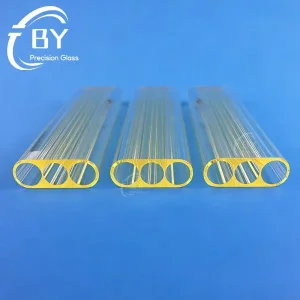
Laser Cavity Flow Tubes & Filters (Samarium-Doped Glass)
View Specifications →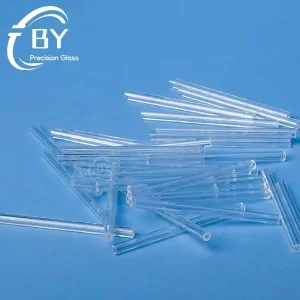
Custom Precision Quartz Capillary Tubes (High Concentricity)
View Specifications →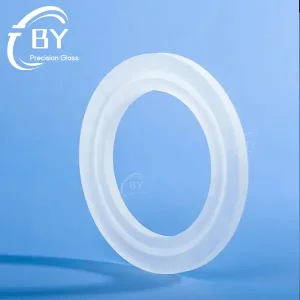
Precision Quartz Glass Components for Semiconductor Fabs
View Specifications →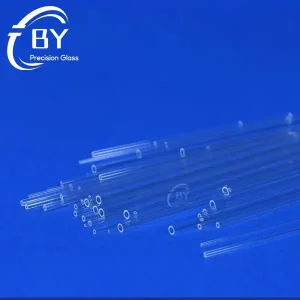
Fluorine-Doped Fused Silica Optical Capillary Tubes
View Specifications →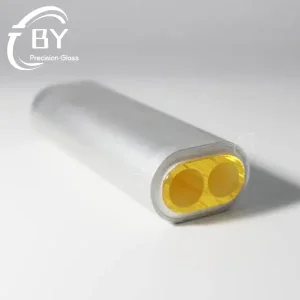
Custom Packed Laser Cavity Flowtubes for Laser Heads
View Specifications →
Chemical-Resistant Custom Quartz Glass Parts Fabrication
View Specifications →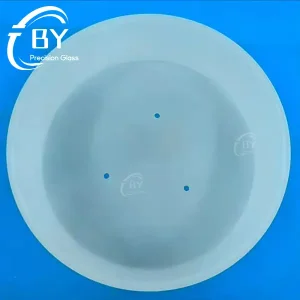
Custom Quartz Glass Components for Vacuum Coating Plants
View Specifications →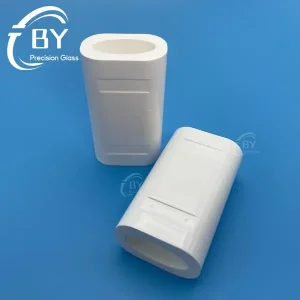
High-Quality Alumina Ceramic Cavities for Nd:YAG Lasers
View Specifications →Accelerate Your Optical Glassblowing Project with Proven Specialists
Submit your 2D engineering drawings or 3D CAD files (.STEP, .DWG, .DXF, .PDF). Our senior optical engineers review tolerances, thermal properties, and manufacturability within 24 business hours.
Request Technical Feasibility & Quote →