
Product Catalog · Tier 1 Sourcing
High-Precision Cavity Reflectors & Optical Glass Ware
Explore standard and precision CNC machined reflective bodies, flow assemblies, and laser substrates ready for immediate factory deployment or custom OEM adaptation.
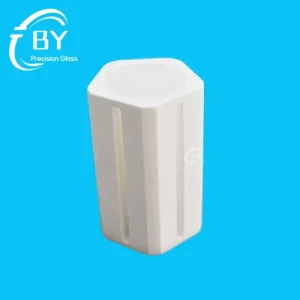
Wholesale Diffuse High‑Reflectivity PTFE Reflectors for Diode‑Pumping Chambers Suppliers, Factory
View Specifications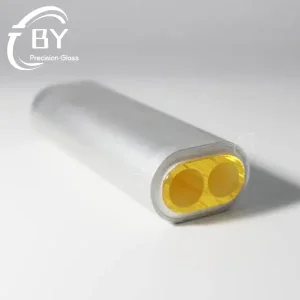
Custom Packed Laser Cavity Flowtubes for Laser Head Manufacturers, Suppliers
View Specifications
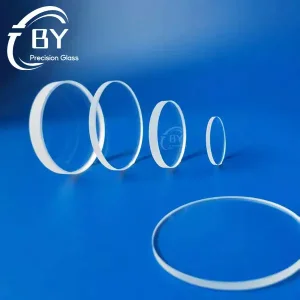
High-Quality Borosilicate Windows and Plates for Viewports Suppliers, Factory
View Specifications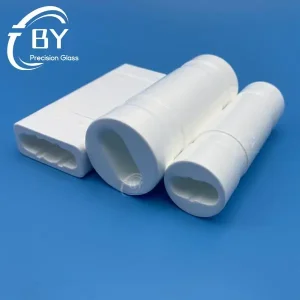
Wholesale Ceramics Reflecor for Semiconductor Lasers Suppliers, Factory
View Specifications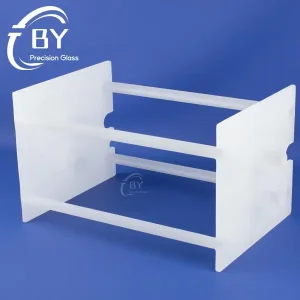
Wholesale Quartz Diffusion Boat for Semiconductor Suppliers, Factories
View Specifications
Wholesale Candela VBeam Laser 6" White Cavity Ceramic Reflector 2 Pk Manufacturer, Suppliers
View Specifications
High-Quality Custom Fabrication of Quartz Glass Precision Components Supplier, Factory
View Specifications
Technical Whitepaper
Engineering Diffusive Ceramic Reflectors: Physics & Cavity Efficiency
In high-power diode-pumped solid-state lasers (DPSSL) and intense pulsed light (IPL) systems, reflective cavity performance dictates operational lifespan, beam profile symmetry, and power conversion ratio.
A diffusive ceramic reflector functions by scattering incident radiation isotropically through volumetric Lambertian reflection, fundamentally preventing thermal hotspots and parasitic oscillation modes that plague specular metal-coated (gold or silver) cavities. Manufactured from high-purity sintered aluminum oxide (Al₂O₃ ≥ 99.7%), these engineering ceramics incorporate controlled, micron-scale sub-surface porosity (typically 12% to 22%). When photons enter the porous structure, they undergo multiple refractive scatterings at grain boundaries, yielding an integrated diffuse reflectance exceeding 98.0% to 99.2% across the primary pump absorption bands (500 nm – 1200 nm, specifically targeting 808 nm and 940 nm).
Unlike dielectric coatings that degrade under intense UV radiation or metallic coatings that peel and oxidize in deionized cooling water circuits, porous technical ceramics demonstrate extreme photochemical inertness. To maximize hydraulic efficiency and inhibit organic fouling or biological algae accumulation within water-cooled laser cavities, advanced units are treated with a specialized high-temperature glaze sealing on the reflective surface, maintaining reflection while establishing an impervious barrier to coolant permeation.
| Performance Vector | Porous Alumina Ceramic (Al₂O₃ 99.7%) | Spectralon-Grade Sintered PTFE | Gold-Plated Metal Cavities |
|---|---|---|---|
| Reflectance (600–1000 nm) | 97.8% – 99.2% (Lambertian Diffuse) | 99.0% – 99.5% (Highest Diffuse) | 95.5% – 96.5% (Specular) |
| Continuous Service Temp | Up to 1,500 °C (Non-degrading) | Up to 260 °C (Softens at higher temp) | Up to 300 °C (Risk of oxidation/peeling) |
| Coolant Resistance (DI Water) | Excellent (Glazed surface impermeable) | Hydrophobic (No corrosion, micro-porous) | Poor over time (Galvanic/erosion risks) |
| UV Photolytic Stability | Immune to solarization & UV blistering | High stability, minimal yellowing | Coating pinholing & delamination |
| Mechanical Rigidity & CNC Tolerances | Extreme hardness, ±0.02 mm grinding | Soft polymer, requires stress relief | Machinable, high coefficient of expansion |
Industrial Ecosystem
Global Market Status & Localized Operational Scenarios
From advanced semiconductor wafer processing to precision medical laser repair, diffusive reflectors provide the thermal and optical foundation for modern photonics.
Global Market Expansion
Global demand for laser pump cavities is growing rapidly, propelled by the worldwide transition to high-brightness direct-diode systems, DPSSL industrial additive manufacturing, and aesthetic laser dermatological procedures. System integrators in North America and Europe are systematically replacing metal-clad reflectors with ceramic counterparts to enhance pump uniformity and extend mean-time-between-failures (MTBF).
Semiconductor Lithography & Annealing
Semiconductor wafer processing equipment utilizes precision ceramic and quartz ware inside rapid thermal processing (RTP) and laser annealing modules. Reflector components distribute excimer or diode radiation across silicon substrates without wavefront distortion or micro-contaminant release under cleanroom conditions.
Aesthetic & Medical Laser Platforms
Pulsed dye lasers (such as the Candela VBeam 595 nm platform), Nd:YAG dermatological platforms, and alexandrite hair-removal devices depend on dual-bore and elliptical ceramic chambers. They diffuse intense xenon flashlamp pulses into gain crystals while isolating high-voltage trigger discharge from circulating deionized water.
Industrial Additive & Deep-Penetration Welding
In multikilowatt DPSSL systems used for automotive battery tab welding and aerospace cladding, ceramic reflectors resist long-duration thermal accumulation. Their high breakdown voltage (> 15 kV/mm) and minimal thermal expansion ensure laser output beam parameter product (BPP) remains constant during continuous operation.
The Tianjin Advantage
Chinese Manufacturing Velocity & Technical Precision
Combining vertically integrated raw powder formulation, cold isostatic pressing (CIP), high-precision diamond CNC grinding, and in-house spectral metrology.
Rapid Tooling to Pilot Delivery
By retaining mold preparation, high-pressure isostatic forming, and atmospheric sintering in our Tianjin facility, prototype lead times for complex multi-bore ceramic cavities are reduced from 12 weeks to just 10–14 working days.
Sub-Millimeter CNC Hard Machining
Post-sintered ceramics present extreme Vickers hardness (> 15 GPa). Our automated multi-axis ultrasonic and diamond grinding cells achieve surface finishes down to Ra 0.4 μm, with inner bore concentricity held strictly within ±0.02 mm.
Batch Traceability & Quality Rigor
Every production batch undergoes spectrophotometer reflectance testing with integrating spheres, dye-penetration non-destructive crack detection, and coordinate measuring machine (CMM) dimensional validation before cleanroom double vacuum packaging.
> 98.2%
Diffuse Reflectance @ 600-1000nm
± 0.02mm
Precision Bore Tolerancing
> 15 kV
Dielectric Strength per mm
< 24h
Engineering DFM Review Turnaround
Procurement Insights
Global Enterprise Sourcing Trends & Quality Checklist
How leading photonics OEMs mitigate supply chain fragility and certify tier-one optical ceramic suppliers.
Global procurement teams in photonics hardware are transitioning away from high-cost, long-lead boutique manufacturers toward agile contract manufacturing partners capable of delivering both high-volume standardized pump cavities and tight-tolerance custom prototypes. Three primary procurement criteria define high-reliability sourcing in 2026 and beyond:
1. Glaze Chemical Compatibility
Verify whether the cavity glaze can withstand long-term immersion in high-resistivity deionized water circuits without micro-leaching alkali ions that disrupt electrical isolation in flashlamp ignition systems.
2. Porosity Uniformity
Non-homogeneous pore distribution generates localized thermal stress gradients under high-repetition pulsed pump loads. Sourcing engineers verify cold isostatic pressing data to prevent micro-fissuring and cavity fracture.
3. Complete CAD/DFM Collaborative Workflow
Procurement demands rapid feedback on wall thicknesses, cooling port chamfers, and flow tube tolerances to avoid stress concentrations in brittle ceramic structures prior to tooling investment.
Technical Inquiries
Frequently Asked Questions: Diffusive Ceramic Reflectors
Authoritative technical answers to support optical designers and global procurement specialists.
What causes ceramic laser reflectors to deliver superior beam homogeneity compared to metal reflectors?
Metal reflectors operate primarily via specular reflection, reflecting pump light at an angle equal to incident light. This produces localized hot zones, beam asymmetry, and higher risks of thermal lensing inside solid-state crystals. In contrast, diffusive porous ceramics follow Lambert's cosine law, redistributing photons uniformly across the entire laser rod circumference. This results in uniform gain distribution, higher laser beam quality (M²), and superior extraction efficiency.
Why is surface glazing critical for water-cooled ceramic pump cavities?
High-reflectivity ceramics feature an open micro-porous matrix (12% to 22% porosity). In directly liquid-cooled laser systems, unglazed ceramics can absorb cooling fluids, leading to mineral deposition, algal fouling, and gradual loss of internal reflection. A vitreous glaze seals the open pores against coolant penetration while matching the refractive index to preserve over 98% diffuse reflectance.
How does Spectralon-grade PTFE compare to alumina ceramic reflectors?
Sintered PTFE provides exceptional reflectance (up to 99.2% - 99.5%) across ultraviolet, visible, and near-infrared bands, along with outstanding chemical inertness. However, its upper thermal threshold is restricted to approximately 260 °C. For high-duty cycle flashlamp-pumped or high-power industrial solid-state lasers generating substantial radiant heat, 99.7% Al₂O₃ ceramic is the preferred industrial choice because it withstands operating temperatures exceeding 1,000 °C without mechanical deformation.
Can BY Photonics fabricate customized reflectors for legacy systems like Candela, Cynosure, or Fotona?
Yes. We regularly supply direct-replacement, high-precision ceramic cavities, flow tubes, and distance slider windows for aesthetic and dermatological systems, including Candela VBeam, GentleLase, and alexandrite platforms. Components match or exceed OEM optical tolerances and fit standard laser head mounts without modification.
What drawing files and parameters are needed to start a quotation and DFM review?
We accept standard 3D CAD models (STEP, IGES) and 2D dimensioned engineering drawings (DWG, DXF, or PDF). Please specify core material preferences (e.g., 99.7% porous alumina or sintered PTFE), target pump wavelengths, glaze requirements on internal surfaces, and critical mounting tolerances. Our engineering desk returns a comprehensive DFM assessment within 24 business hours.
Factory Direct Selection
Precision Substrates, End Caps & Optical Tubes
Explore complementary precision-machined fused silica, doped flow cells, and fiber optic accessories designed to integrate directly with our reflective assemblies.
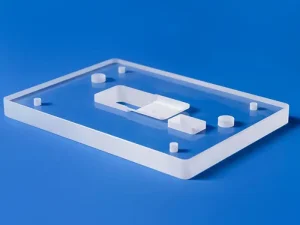
High-Quality Factory Supply Precision Quartz Glass Machining Plate Supplier, Suppliers
View Specifications
High-Quality JGS1 UItraviolet (UV) Grade Fused Silica Plate Supplier, Factory
View Specifications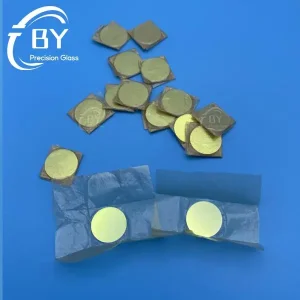
High-Quality Candela Laser Distance Gauge Slider Windows With coating 755 and 1064nm Suppliers, Factories
View Specifications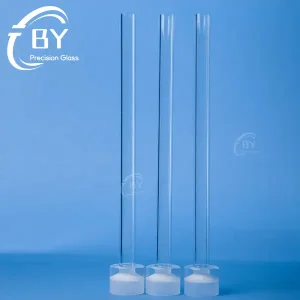
High-Quality Chemical Resistant Custom Quartz Glass Parts Fabrication Supplier, Factories
View Specifications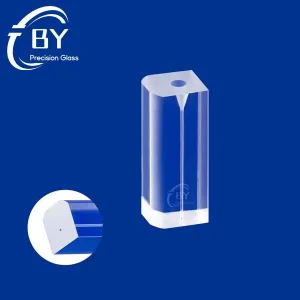
Custom Fiber Optic Glass Ferrules Supplier, Factories
View Specifications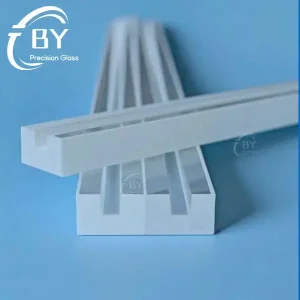
High-Quality Square Groove Quartz Substrate for Fiber Couplers Supplier, Factories
View Specifications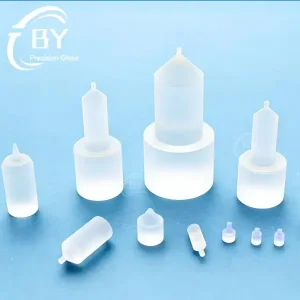
High-Quality Customized Quartz Fiber End Caps for QBH Manufacturer, Factory
View Specifications