
Precision Optical & Laser Cavity Components
Engineered specifically for OEM solid-state lasers, diode-pumped systems, analytical instruments, and semiconductor manufacturing platforms.
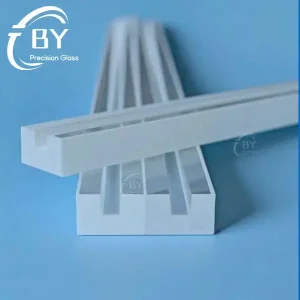
Square Groove Quartz Substrate for Fiber Couplers
Explore Specifications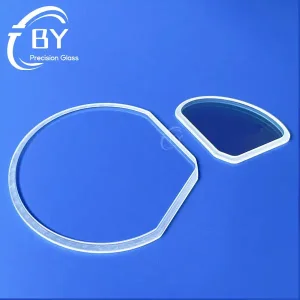
Sapphire Viewing Plates for Harsh Chemical Environments
Explore Specifications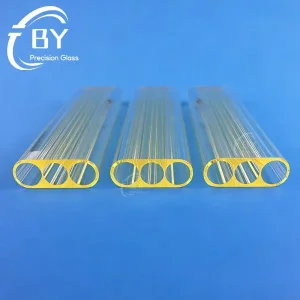
Laser Cavity Flow Tubes & Filters: Samarium-Doped Glass
Explore Specifications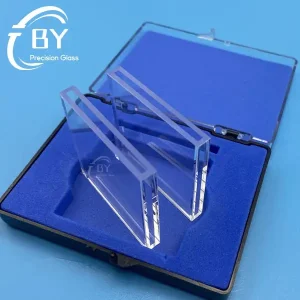
Customize Quartz Cuvette for Spectrophotometer
Explore Specifications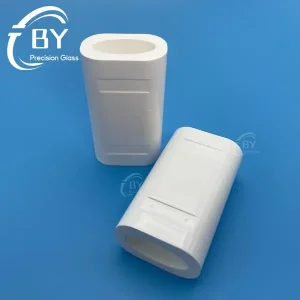
High-Quality Ceramic Cavities For Nd:YAG Lasers
Explore Specifications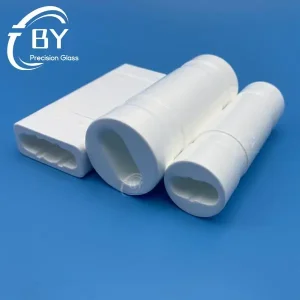
High-Reflectance Ceramic Reflector for Semiconductor Lasers
Explore Specifications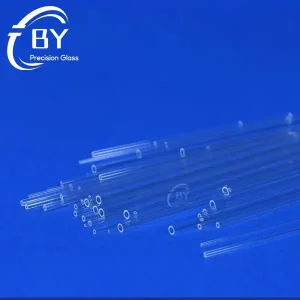
Fluorine-Doped Fused Silica Capillary Tubing
Explore Specifications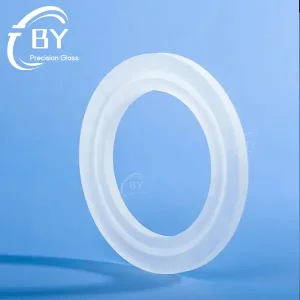
Precision Custom Quartz Glass Components for Semiconductor
Explore SpecificationsThe Evolution of High Reflectance Cavities in Modern Laser Architectures
In solid-state laser physics, diode-pumped solid-state (DPSS) systems, and lamp-pumped laser gain chambers, the optical pumping efficiency is fundamentally governed by the transfer efficiency and reflectance characteristics of the pump cavity. A high reflectance cavity serves as an optical integrating chamber, designed to redirect, homogenize, and concentrate wide-spectrum pump light onto the laser crystal (such as Nd:YAG, Er:YAG, Alexandrite, or Ruby) with minimal optical loss.
Diffuse vs. Specular Reflectance Mechanics
Historically, flashlamp cavities relied on specular (mirror-like) reflectors, typically gold-plated or silver-coated elliptical brass or aluminum blocks. While specular cavities direct pump rays geometrically, they suffer from hot-spot formation, high thermal lensing within the laser rod, and catastrophic coating degradation when exposed to deionized cooling water.
Modern laser engineering has transitioned toward diffuse reflectance chambers made from porous or glazed ultra-pure porous alumina ceramics ($Al_2O_3$, typically ≥99.7% purity) and micro-porous sintered fluoropolymers (Spectralon-grade PTFE). Diffuse reflectors scatter pump light randomly according to Lambert’s cosine law, producing a spatial gain profile of exceptional uniformity. This eliminates localized thermal stress inside the gain medium, suppresses high-order transverse modes, and enhances beam quality ($M^2$ factors).
Spectral Performance: UV, Visible & NIR Pumping
The reflectance threshold of an optical cavity directly dictates energy loss per round trip. Advanced high-purity alumina ceramics provide an outstanding diffuse reflectance of 96.5% to 98.2% across the 500 nm to 1100 nm wavelength band, precisely overlapping the absorption bands of Nd:YAG (808 nm) and Alexandrite (570 nm–680 nm).
Furthermore, ceramic pump reflectors engineered with a selective glaze can integrate spectral filtering capabilities directly on the inner bore. Glazed surfaces protect against erosion from high-flow cooling water, prevent biological fouling or particle trapping in open pores, and maintain chemical inertia against continuous oxidation under high-intensity ultraviolet irradiation.
Suppression of Parasitic Oscillations
A persistent failure mode in high-average-power and Q-switched solid-state lasers is the onset of Amplified Spontaneous Emission (ASE) and parasitic whispering-gallery modes inside the laser crystal. If unconstrained, ASE depletes stored inversion energy before the Q-switch opens.
To resolve this, high-performance pump chambers deploy specialized Samarium-doped glass (Sm-doped quartz) flow tubes alongside high-reflectance ceramic cavities. Samarium ions provide sharp cut-off absorption at 1064 nm (absorbing parasitic photons emitted by Nd:YAG) while remaining virtually transparent to flashlamp pump bands between 400 nm and 850 nm, boosting extraction efficiency by up to 22%.
Benchmarking Cavity Materials: Technical Comparison
Selecting the optimal cavity material requires balancing bulk diffuse reflectance, thermal conductivity, resistance to chemical leaching in deionized coolant, and laser-induced damage thresholds (LIDT). Below is an engineering evaluation comparing contemporary high-reflectance cavity media against legacy architectures.
| Material Classification | Reflectance (600 - 1000 nm) | Bulk Thermal Conductivity (W/m·K) | Coolant Compatibility (DI Water) | Solarization / UV Aging Resistance | Primary Industrial Use Case |
|---|---|---|---|---|---|
| Glazed Porous Alumina Ceramic (99.7% Al₂O₃) | 97.2% – 98.4% (Diffuse) | 25 – 30 | Exceptional: Non-reactive glaze prevents leaching & erosion | Zero solarization, permanent chemical stability | Medical aesthetic Nd:YAG/Alexandrite, industrial cutting lasers |
| Spectralon-Grade Sintered PTFE | 99.1% – 99.5% (Diffuse) | 0.25 – 0.35 (Very Low) | Good (Chemically inert, hydro-phobic) | Low UV breakdown; susceptible to blistering under intense UV | Diode-pumped solid-state (DPSS), integrating spheres, calibration |
| Electroplated Specular Gold on Metal | 95.5% – 97.0% (Specular) | 160 – 380 (Substrate dependent) | Poor; electro-galvanic flaking and micro-pinhole erosion | Excellent thermal stability, but scratch/delamination prone | Legacy military rangefinders, high-conduction flashlamp chambers |
| Synthetic Fused Silica (JGS1) with Dielectric HR | 99.0% – 99.9% (Band-specific) | 1.38 | Excellent; chemically inert quartzware | Immune to solarization; narrow angular acceptance | Precision scientific resonators, multi-pass laser amplifiers |
China Factory 4.0: Supply Chain Resilience, Vertical Integration & Precision Machining
In the global photonic supply chain, international laser system integrators face severe challenges: extended lead times from European ceramic houses, brittle raw material shortages, and fragmented tier-2 subcontracting. Tianjin BY Photonics addresses these pain points by uniting high-purity material processing, ultrasonic CNC cold working, precision oxyhydrogen hot working, and ISO-standard metrology within a single, vertically integrated 4.0 facility.
Monolithic Vertical Manufacturing
Unlike brokers who outsource ceramic sintering to one entity and machining to another, our factory manages the entire value chain. From proprietary slip casting, isostatic pressing of high-purity alumina, high-temperature sintering at 1700°C, to 5-axis ultrasonic CNC grinding of complex multi-bore cavities, every process step is documented with complete batch traceability.
This closed-loop system prevents the thermal stress cracks and micro-fissures that typically emerge when semi-sintered ceramics are subjected to conventional aggressive tooling.
Supply Chain Resilience & Lead-Time Velocity
Global procurement officers frequently encounter 16-to-24-week delivery timelines from Western suppliers for bespoke Nd:YAG or Alexandrite pump chambers. Operating from Tianjin's mature industrial port corridor, our factory maintains pre-conditioned raw material reserves of JGS1/JGS2/JGS3 quartz, samarium-doped preforms, and high-density ceramic cylinders.
Our rapid-prototyping DFM (Design for Manufacturability) protocol converts customer STEP/DXF designs into functional, first-article samples within 10 to 14 business days, compressing time-to-market for OEM R&D teams.
Rigorous Quality Assurance & Metrology
Every high-reflectance cavity leaving the cleanroom undergoes 100% non-destructive dimensional and optical verification. Our testing suite combines:
- UV-Vis-NIR Spectrophotometers: Validating diffuse reflectance across the 200–2500 nm range.
- Zeiss 3D CMM Metrology: Ensuring sub-micron concentricity of twin bores for pump lamps and laser rods.
- Surface Profilometry: Verifying mirror-glaze smoothness ($Ra < 0.2\,\mu\text{m}$) to eliminate turbulence in coolant fluid channels.
- Helium Leak Testing: Certifying zero vacuum or fluid leakage for integrated flow tube assemblies.
Industrial, Medical & Scientific Application Scenarios
High reflectance cavities are non-generic components; their geometry, material selection, and bore design must strictly mirror the thermodynamic and optical realities of the host system.
1. Medical Aesthetic & Dermatological Systems
In laser hair removal, tattoo removal, and vascular lesion treatment (utilizing Alexandrite 755 nm, Long-Pulse Nd:YAG 1064 nm, and Q-Switched systems such as DEKA, Candela, or Cynosure platforms), the laser cavity operates under severe repetitive pulse cycling.
Our glazed ceramic reflectors resist discoloration caused by extreme flashlamp arc discharges and high-temperature cooling fluids. By providing uniform diffuse radiation, they eliminate hot-spot damage to expensive Alexandrite crystals, ensuring consistent energy fluence over millions of shots.
2. High-Power Industrial Laser Processing
Heavy-duty industrial applications—including precision mold cladding, seam welding, deep hole drilling, and additive manufacturing—demand pump cavities capable of sustained multi-kilowatt operation.
Our high-strength alumina ceramic reflectors withstand the aggressive fluid dynamics of high-flow deionized cooling circuits without surface erosion. Combined with cerium-doped quartz or samarium-doped flow tubes, they shield internal components from damaging ultraviolet breakdown, maintaining maximum throughput in factory-floor environments.
3. Semiconductor Lithography & Wafer Metrology
In advanced wafer inspection, defect metrology, and deep-UV photolithography illumination engines, optical components must be strictly non-outgassing, thermally invariant, and structurally pristine.
Tianjin BY Photonics manufactures synthetic fused silica (JGS1) substrate grooves, wafer carriers, and quartz diffusion boats under strict cleanroom conditions. Our quartzware guarantees sub-ppm trace metal purity, zero bubbles, and outstanding mechanical stability at processing temperatures exceeding 1100°C.
4. Diode-Pumped Solid-State (DPSS) Chambers
Next-generation DPSS systems utilize side-pumped multi-bar diode stacks where diode laser emission (typically at 808 nm or 880 nm) must be efficiently trapped within the crystal diameter.
Our sintered Spectralon-grade PTFE reflectors and micro-machined diffuse ceramic bodies deliver diffuse reflectance up to 99.2%, reducing the threshold pump power required to achieve laser oscillation and minimizing overall thermal management overhead.
5. Analytical Instrumentation & Spectroscopy
In UV-Vis-NIR spectrophotometry, fluorescence analysis, and chemical process viewports, optical stability is non-negotiable.
We machine custom quartz cuvettes, high-pressure sapphire observation plates, and fluorine-doped capillaries that maintain uncompromised optical path lengths and withstand chemically corrosive solutions, high hydrostatic pressures, and extreme thermal gradients.
6. Aerospace, Defense & Remote LiDAR Sensors
Tactical laser rangefinders, target designators, and satellite-borne atmospheric LiDAR platforms operate under severe mechanical shock, high vibration, and wide operational temperature swings (-40°C to +85°C).
Our monolithic ceramic cavities and ruggedized flow modules eliminate metallic plating delamination risks, providing hermetically stable, long-endurance laser performance across extreme aerospace environments.
Frequently Asked Questions: Laser Cavity Sourcing & Engineering
Comprehensive answers to the technical, operational, and commercial questions raised by optical engineers, procurement heads, and laser system designers.
What causes high-reflectance laser cavities to yellow or degrade, and how is it prevented?
Tianjin BY Photonics mitigates this by utilizing ≥99.7% ultra-pure alumina sintered at high temperatures, which exhibits zero color-center formation under UV exposure. Furthermore, applying an engineered, defect-free internal glaze completely seals the surface, preventing chemical leaching, blocking pore absorption, and making the cavity chemically impervious to long-term deionized water circulation.
When should an engineer select Sintered PTFE over Alumina Ceramic for a pump chamber?
Choose Sintered PTFE (Spectralon-grade): In diode-pumped solid-state (DPSS) systems where the diodes emit at near-infrared wavelengths (e.g., 808 nm, 880 nm) with zero UV content, and where the gain medium is conduction-cooled or diode heat is removed externally. PTFE offers unmatched diffuse reflectance (up to 99.2%–99.5%), maximizing pump-light recycling.
Choose Alumina Ceramic: In high-energy flashlamp-pumped systems, medical lasers (Alexandrite/YAG), and high-power industrial lasers where the cavity interior is flooded with high-flow deionized cooling water and exposed to high-energy UV radiation. Ceramic possesses orders-of-magnitude higher thermal conductivity (25–30 W/m·K vs. 0.25 W/m·K for PTFE), exceptional mechanical rigidity, and absolute immunity to erosion under turbulent fluid dynamics.
How does Samarium-doped glass suppress parasitic laser oscillation at 1064 nm?
When used as a flow tube or cavity sleeve surrounding an Nd:YAG rod, the samarium glass transmits flashlamp pump light into the crystal while absorbing spontaneously emitted 1064 nm photons that reflect off the cavity walls. This prevents amplified spontaneous emission (ASE) from recycling back into the rod, effectively eliminating transverse parasitic oscillation and significantly increasing the peak stored energy and Q-switched pulse output.
What manufacturing tolerances and surface roughness can BY Photonics achieve for custom ceramic cavities?
• Dimensional Tolerances: Inner bore diameter and center-to-center bore spacing held to ±0.005 mm (±5 μm).
• Geometric Concentricity & Parallelism: Within 0.010 mm along bore lengths up to 250 mm.
• Surface Roughness ($Ra$): Unglazed diffuse surfaces are controlled to $Ra$ 1.0–1.6 μm for optimal Lambertian scattering. Glazed internal bores are polished to $Ra ≤ 0.2\,\mu\text{m}$, creating a glass-smooth hydrodynamic boundary layer that minimizes coolant drag and inhibits mineral scaling.
What drawing formats and specifications are required for an engineering feasibility review?
To provide an accurate technical assessment and commercial quote within 24 hours, please indicate: (1) Base material specification (Alumina ceramic grade, JGS1/JGS2/JGS3 quartz, sapphire, or doped glass); (2) Glazing zone requirements (e.g., full bore, external face, selective masking); (3) Coolant operating pressure and chemistry; and (4) Prototype or production volume requirements.
What is the standard production lead time for custom prototype vs. volume batch manufacturing?
• Rapid Prototypes (1 to 5 pieces): Typically shipped in 10 to 14 business days from final drawing approval.
• Batch OEM Production (100 to 1,000+ pieces): Standard delivery cycles range from 3 to 5 weeks, with support for blanket purchase agreements, safety stock warehousing, and scheduled split shipments via DHL, FedEx, or international air freight.
Specialized Quartzware, Optical Filters & Cavity Reflector Solutions
High-purity fused silica plates, doped filter tubes, ceramic laser reflectors, and semiconductor process components manufactured to exacting industrial specifications.
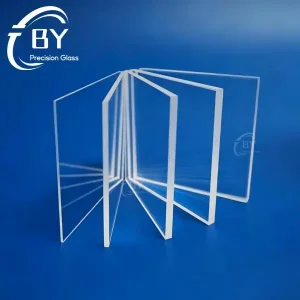
JGS1 Ultraviolet (UV) Grade Fused Silica Plate
Explore Specifications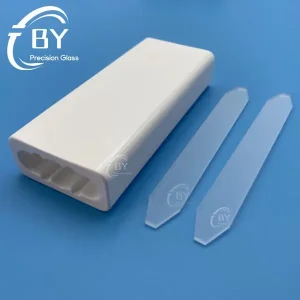
Ceramic Cavity Reflector for DEKA Laser Systems
Explore Specifications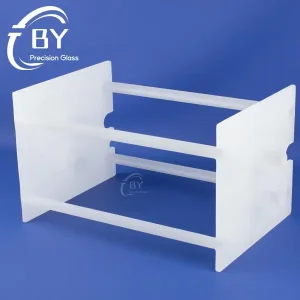
Quartz Diffusion Boat for Semiconductor Wafers
Explore Specifications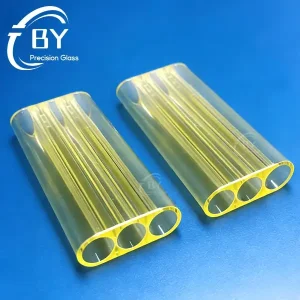
Samarium-Doped Quartz Triple Bore for Medical Lasers
Explore Specifications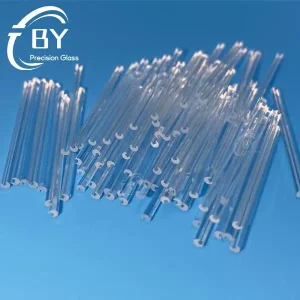
Quartz Substrate Groove for Optical Fiber Couplers
Explore Specifications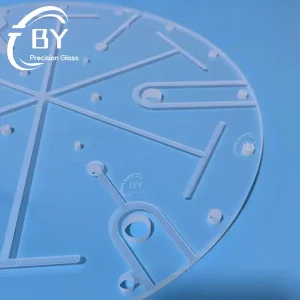
Custom Precision Quartz Glass Fabrication & Machining
Explore Specifications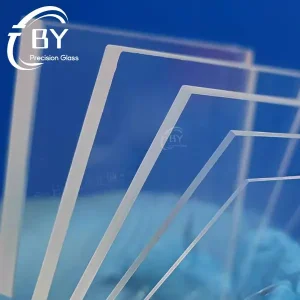
Borosilicate Windows and Plates for High-Pressure Viewports
Explore Specifications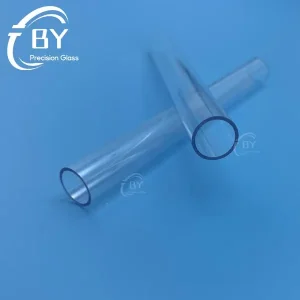
Cerium-Doped Quartz Tubing: Blocked UV Wavelength
Explore SpecificationsSubmit Your CAD / 2D Drawings for a 24-Hour DFM Review
Consult directly with a senior photonics manufacturing engineer. We examine tolerancing feasibility, thermal-fluid boundary dynamics, material optimization, and optical reflectance curves prior to component prototyping.
STEP, IGES, DWG, DXF, SolidWorks & Dimensioned PDF.
Strict NDA & Intellectual Property Protection.