
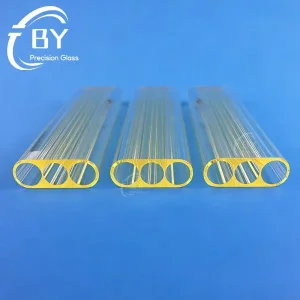
Featured Resonator Components
Precision Flow Tubes & Resonator Optomechanics (Series I)
Direct factory integrations for Nd:YAG, Alexandrite, Ruby, and Holmium laser cavities. Custom outer/inner diameters calibrated within ±0.01 mm for hydrodynamic cooling integrity.
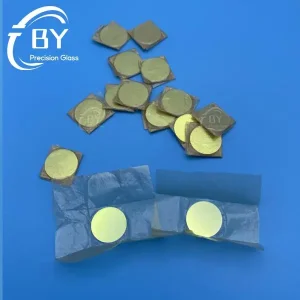
High-Quality Candela Laser Distance Gauge Slider Windows (755/1064nm)
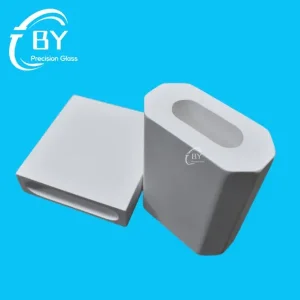
Spectralon-Grade PTFE Diffuse Reflectors for Diode-Pumping Chambers
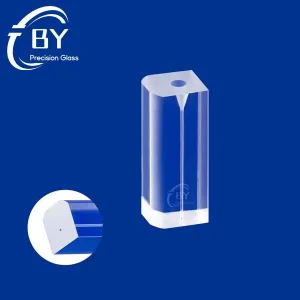
Precision Bore Custom Fiber Optic Glass Ferrules Supplier
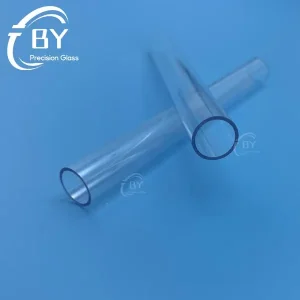
Cerium Doped Quartz Tube (Blocked UV Wavelength Filtration)

Diode-Pumping Chamber Diffuse Reflectors (PTFE-Based Cavities)
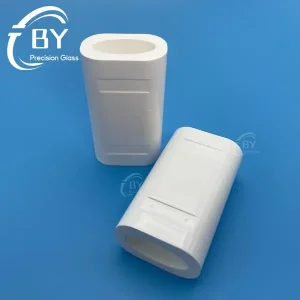
High-Reflectance Ceramic Cavities for Nd:YAG Laser Pumping
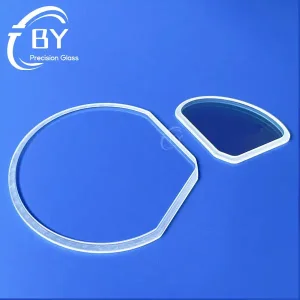
Sapphire Viewing Plates for Corrosive & High-Pressure Environments
Technical Whitepaper Overview
Physics of Optical Filtration & Thermal Management in Flashlamp Flow Tubes
In high-power optically pumped solid-state laser (DPSSL and lamp-pumped SSLL) systems, the flow tube serves two indispensable physical roles: spectral bandpass filtering and high-velocity dielectric coolant conveyance. Flashlamps (Xenon and Krypton) emit broad blackbody continuum radiation spanning from deep ultraviolet (<200 nm) to mid-infrared (>1000 nm). Uncontrolled UV radiation causes severe solarization in Nd:YAG and Ti:Sapphire crystals, creating color centers that induce thermo-optic aberrations and parasitic 1064 nm amplified spontaneous emission (ASE).
Samarium-Doping (Sm³⁺) & ASE Suppression
Doping high-purity silicate matrix with 10% or custom-molar Samarium oxide creates sharp transmission cutoffs. It provides near-total absorption at 1064 nm (blocking 4F3/2 → 4I11/2 parasitic laser oscillation) while allowing wide transmission across the 700–900 nm Nd³⁺ pump bands.
Cerium-Doping (Ce³⁺) UV Cut-Off
Cerium-doped quartz eliminates deep UV radiation below 380 nm. By blocking short-wavelength radiation, it prevents the thermal breakdown of deionized coolant water, stops ozone generation inside enclosed pump cavities, and eliminates photochemical degradation of elastomeric seals.
Thermo-Mechanical Shock Resistance
With an ultra-low coefficient of thermal expansion (CTE of 0.54 × 10⁻⁶/K for synthetic fused silica), our flow sleeves withstand cyclic thermal gradients exceeding ΔT = 300°C during Q-switched high-repetition pulsed discharges without mechanical failure or fracture.
| Material Class | Doping Concentration | UV Blocking Cutoff (λ) | 1064nm Parasitic Attenuation | Operating Coolant Pressure | Surface Quality (MIL-PRF-13830B) |
|---|---|---|---|---|---|
| Sm³⁺ Doped Glass (K-Sm10) | 10.0 wt% Sm₂O₃ ±0.5% | < 390 nm (>99.2%) | OD ≥ 3.0 at 1064 nm | Up to 1.2 MPa (12 bar) | 40-20 Scratch-Dig |
| Cerium Doped Quartz (CFQ) | 0.5 – 1.5 wt% CeO₂ | < 380 nm (>99.8%) | Neutral (High visible trans.) | Up to 2.5 MPa (25 bar) | 20-10 Scratch-Dig |
| Synthetic Fused Silica (JGS1) | Undoped (Trace metals <1ppm) | Deep UV Pass (>185 nm) | Transmission > 92.5% | Up to 3.0 MPa (30 bar) | 10-5 Scratch-Dig |
| Titanium/Borosilicate Sleeves | Proprietary Doped Glass | < 320 nm Blocked | Moderate broad-band filter | Up to 0.8 MPa (8 bar) | 60-40 Scratch-Dig |
Localized Field Applications
Field Deployment: From Aesthetic Dermatology to Aerospace Metrology
Our engineered flow tubes and laser cavity accessories operate across mission-critical installations globally, adhering to rigorous operational demands across key geographic industrial clusters.
North American Aesthetic & Dermatological OEMs
Integrated within 755 nm Alexandrite and 1064 nm Nd:YAG hair removal, vascular therapy, and tattoo removal laser platforms (e.g., Candela GentleLase, Cynosure). Dual-bore and triple-bore custom geometries guarantee balanced DI cooling around high-output flashlamps while protecting expensive laser rods from thermal fracture.
European Industrial Heavy-Duty Processing
Supplying German and Swiss precision tooling manufacturers with flow tubes tailored for pulsed Nd:YAG micro-welding, precision drilling, and turbine blade ceramic ablation. The hydraulic integrity prevents coolant turbulences and cavitation bubbles, preserving beam mode cleanliness (M² < 1.15).
Asia-Pacific Semiconductor & Metrology
Deployed in wafer inspection lidar sources and laser shock peening (LSP) facilities across Japan, Korea, and Taiwan. Tubes undergo rigorous secondary ultrasonic chemical deburring to ensure zero silica micro-particulate detachment inside cleanroom deionized water loops.
Supply Chain Architecture
China Supply Chain Resilience: End-to-End Vertical Integration
Tianjin BY Photonics Co., Ltd. consolidates ingot synthesis, precision hot redraw, 5-axis CNC machining, ultrasonic polishing, and thin-film AR coating in one localized ecosystem, shielding tier-1 laser OEMs from geopolitical and procurement bottlenecks.
Raw Material Precursor Autonomy
Direct supply lines to high-purity synthetic silicon tetrachloride (SiCl4) precursors and rare-earth dopants (Samarium, Cerium oxides with >99.999% purity) insulate production from global mineral volatility, locking in stable lead times and transparent cost schedules.
Continuous Capillary Redraw Efficiency
Our proprietary horizontal and vertical oxyhydrogen redraw towers hold internal bore tolerances within ±0.01 mm over 1,200 mm production lengths. This automation yields 40% higher material efficiency over conventional mechanized drill-and-lap methods.
DFM Engineering & Fast Prototyping
Senior optical glass fabrication engineers perform 24-hour Design-for-Manufacturability (DFM) reviews on custom STEP/DWG drawings. Rapid prototyping cycles take non-standard single/multi-bore flow tubes from CAD file to cleanroom-inspected physical prototypes in under 10 business days.
15+
Years Optical Glass Heritage
±0.01mm
Precision Bore Tolerance
100%
Polarimetric Stress Inspected
<24h
Drawing & DFM Feedback
Roadmap & Next-Gen Photonics
Technology Roadmap: High-Luminance Flow Systems for Next-Gen Lasers
As solid-state lasers transition to multi-kilowatt average power regimes and space-based LIDAR systems, flow containment design encounters unprecedented thermal and mechanical stress. Our R&D team targets three fundamental technology frontiers:
Gradient-Index (GRIN) & Dual-Doped Matrices
Developing co-doped Samarium/Cerium glasses featuring spatial radial doping profiles. This gradient structure optimizes pump spectral matching while eliminating the steep thermal stress boundaries common to single-doped glass interfaces, increasing burst pressure limits by 35%.
Plasma-Assisted Hydrophobic Inner Coatings
Applying ultra-thin fluorosilicate dielectric barriers via low-temperature PECVD on flow sleeve interior channels. This innovation prevents trace calcification and mineral scaling from closed-circuit coolant loops, extending flashlamp operating lifetimes over 10 million shots.
Laser-Sintered Monolithic Multi-Chambers
Replacing hand-assembled laser head manifolds with single-piece 3D femtosecond-laser micromachined fused silica flow manifolds. Monolithic assemblies eliminate O-ring fluid leak risks, simplify alignment, and withstand extreme shock and vibration profiles in field-deployed military systems.
Global Compliance & Traceability
Quality Assurance Architecture & Regulatory Compliance
Every flow tube batch undergoes exhaustive quality testing aligned with international standards: Polarimetric Birefringence Mapping (stress verification per ISO 10110-2), Spectrophotometric Transmission Profiling (confirming >OD3 absorption at 1064 nm and >90% pass in designated pump bands on Shimadzu UV-3600i Plus), and Hydrostatic Proof Testing up to 30 bar. All shipped optics adhere to RoHS 3 (EU 2015/863), REACH, and ISO 9001:2015 quality manufacturing processes.
Procurement & Technical FAQ
Frequently Asked Questions: Flow Tubes & Resonator Optomechanics
Direct engineering answers for laser system designers, optical procurement specialists, and replacement part distributors.
Why is Samarium-doped glass preferred over standard quartz for flashlamp flow tubes?
Samarium-doped glass (typically 10% Sm³⁺ concentration) provides a tailored absorption profile designed for Nd:YAG resonators. It features high transmission in the 700–900 nm wavelength range where neodymium ions absorb pump light, while completely attenuating radiation at 1064 nm. This attenuation eliminates parasitic amplified spontaneous emission (ASE) and whispering gallery modes across the laser rod circumference, dramatically boosting cavity laser efficiency and pulse energy stability.
What is the difference between single-bore, dual-bore, and triple-bore flow tubes?
Single-bore flow tubes sleeve either a solitary flashlamp or a laser rod individually within a shared fluid chamber. Dual-bore and triple-bore tubes are integrated multi-channel glass blocks or capillaries holding both the excitation source (one or two flashlamps) and the laser crystal rod in fixed parallel alignment within a single glass unit. Multi-bore configurations drastically reduce cavity assembly dimensions, streamline cooling fluid delivery, and guarantee precise center-to-center distance tolerances.
How do you guarantee mechanical reliability against coolant pressure pulsations?
Coolant circulation in pulsed laser systems generates rapid hydraulic cycling and micro-water hammer forces. Tianjin BY Photonics subjects all redrawn and machined tubes to precision thermal annealing in computer-controlled electric kilns to eliminate internal stress. Each production batch undergoes 100% polarimetric cross-polarizer inspection to ensure residual optical retardation is below 5 nm/cm, followed by hydrostatic proof testing up to 1.5–2.5× nominal working pressure.
Can you manufacture custom dimensions and retrofits for legacy laser platforms?
Yes. We routinely fabricate exact-fit direct replacements and enhanced custom alternatives for major laser brands (such as Candela, Cynosure, Lumenis, Fotona, and Trumpf). Send us your dimensioned 2D prints (PDF/DWG) or 3D models (STEP/IGES), or physically ship a sample flow tube to our Tianjin metrology lab for non-contact coordinate measuring machine (CMM) optical reverse engineering.
What drawing formats and procurement terms are supported?
We accept STEP, IGES, DWG, DXF, and dimensioned PDF formats. Please indicate critical dimensional tolerances, required dopant grade (Sm³⁺, Ce³⁺, or synthetic fused silica), expected coolant operating pressure, and batch quantity. Standard prototype lead time is 7–10 working days, with international shipping handled via DHL, FedEx, or air cargo with custom export-grade foam packaging.
Featured Resonator Components
Precision Flow Tubes & Resonator Optomechanics (Series II)
Full catalog range of advanced quartzware, triple-bore cavities, and ceramic components designed for high-repetition industrial and medical solid-state lasers.
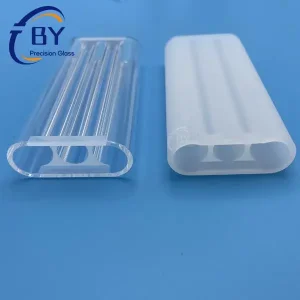
Candela Laser Head Triple Bore Flow Chamber (Old & New Versions)
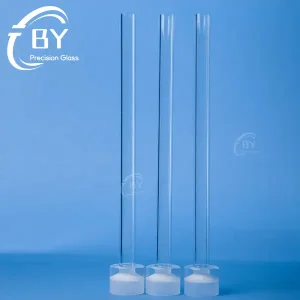
Chemical-Resistant Custom Quartz Glass Parts Fabrication
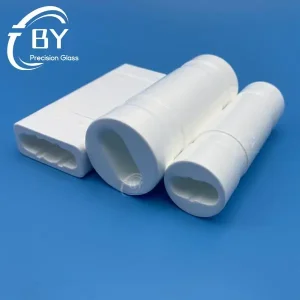
Ceramic Reflectors for Semiconductor & Diode Laser Modules

Custom Fabrication of Quartz Glass Precision Components
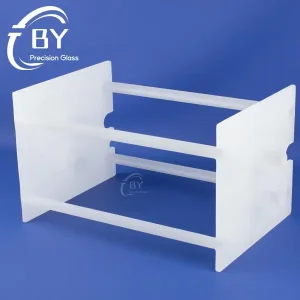
Quartz Diffusion Boat for Semiconductor Processing
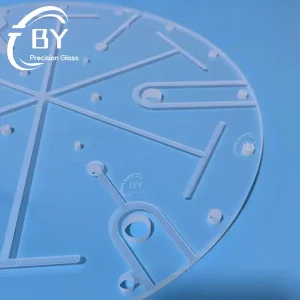
Custom Precision Quartz Glass Fabrication & Machining
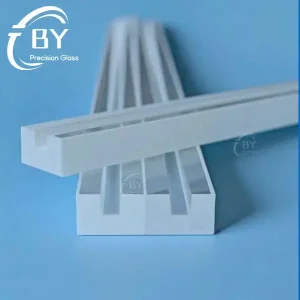
Square Groove Quartz Substrate for Fiber Couplers
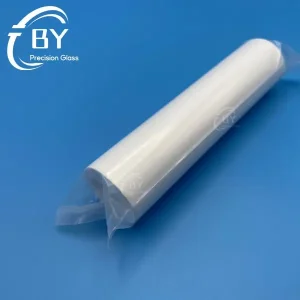
Candela VBeam Laser 6" White Cavity Ceramic Reflector (2 Pk)
Direct Engineering Channel
Start Your Custom Flow Tube Feasibility Review
Connect directly with our optical engineering team in Tianjin. Skip general sales queues—submit your CAD models or specifications and receive complete DFM tolerance and pricing feedback within 24 working hours.