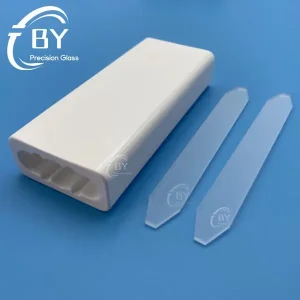
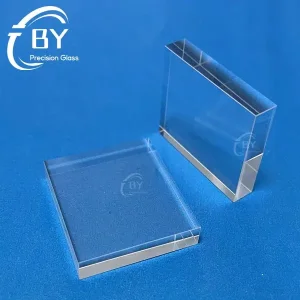
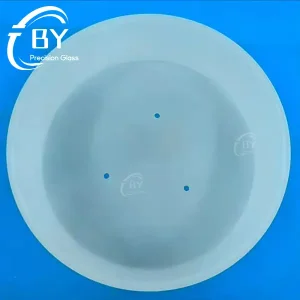
Featured Micro-Optic & Capillary Assemblies
Standardized and custom engineered precision quartz, borosilicate, and doped cavity glass substrates machined to ultra-precise optical dimensional tolerances.
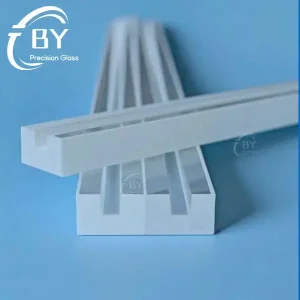
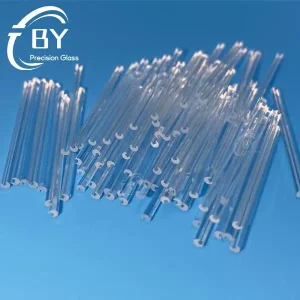
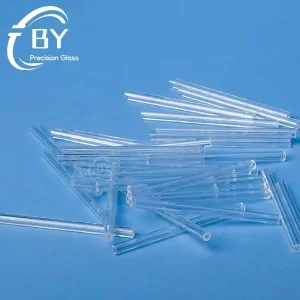
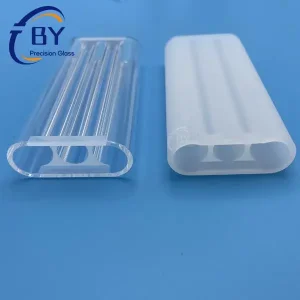
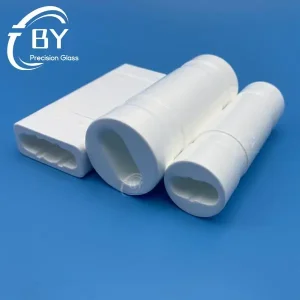
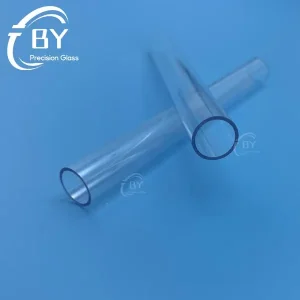

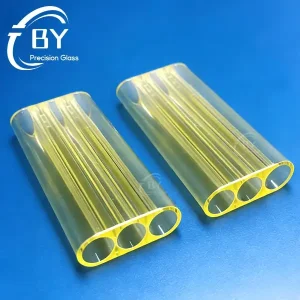
Microfluidic & Optical Quartz Capillary Science
Precision quartz capillary tubing represents the pinnacle of micro-channel material engineering, offering unmatched geometric repeatability, wide spectral transparency, and extreme thermal resilience.
Synthetic Fused Silica vs. Natural Quartz
Understanding the molecular origin of quartz capillary tubing determines success in demanding photonic and chromatographic applications. Synthetic fused silica (JGS1 grade), synthesized via the chemical vapor deposition (CVD) hydrolysis of silicon tetrachloride (SiCl4), delivers an ultra-high purity amorphous matrix virtually free of metallic impurities (Fe, Al, Ti < 0.1 ppm). In contrast, natural fused quartz (JGS2/JGS3) derived from natural crystal pegmatites retains exceptional mechanical rigidity up to 1,150°C while offering a highly cost-effective thermal expansion profile (CTE 5.5 × 10⁻⁷ /°C).
- JGS1 Grade: UV cutoff at 185 nm; zero bubble class; optimal for deep UV CE detectors.
- JGS2 Grade: Extended transmission 220–2,500 nm; superior structural stability for thermal flow cells.
- JGS3 Grade: Water-free grade (OH⁻ < 2 ppm); eliminates the 2.73 µm absorption dip for IR spectroscopy.
Dielectric, Chemical & Thermal Physics
Quartz capillaries boast a dielectric breakdown field exceeding 25 kV/mm, making them the standard carrier medium for high-voltage capillary zone electrophoresis (CZE) and capillary electrochromatography (CEC). Chemically, the amorphous silica structure exhibits absolute inertness against concentrated inorganic acids (with the exception of hydrofluoric and hot phosphoric acid) and organic solvents, eliminating sample cross-contamination and phase bleed in mass spectrometry interfaces.
- Dielectric Constant: 3.75 at 1 MHz; exceptionally low dielectric loss factor (tan δ < 0.0001).
- Thermal Shock Resistance: Capable of withstanding instantaneous quenching from 1,100°C to 20°C without crack propagation.
- Internal Pressure Rating: Thick-walled micro-bores easily withstand hydrodynamic pressure exceeding 1,500 bar (21,750 psi).
Controlled Micro-Geometric Dimensionality
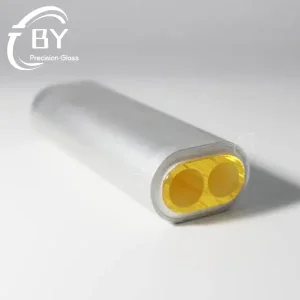
State-of-the-art capillary redrawing utilizes multi-axis laser triangulation and interferometric feedback to hold inner diameter (ID) and outer diameter (OD) tolerances down to ±0.001 mm (±1 µm). For specialized multi-bore arrays and rectangular capillary geometries, maintaining cross-sectional wall uniformity is critical to prevent non-uniform wavefront deformation and asymmetric heat dissipation in diode-pumped solid-state (DPSS) and fiber coupling systems.
- Inner Diameter Range: Available from 2 µm micro-bores to 5,000 µm macro-flow capillaries.
- Concentricity / TIR: Total Indicated Runout maintained below 0.003 mm across custom cut canes.
- Interior Surface Roughness: Ra < 0.5 nm via natural fire-polished drawing without abrasive micro-scratches.
Procurement Dynamics Across Critical Sectors
Tier-1 OEM buyers in North America, the European Union, and Asia-Pacific demand precision quartz capillaries that fulfill strict industry-specific criteria.
Biopharma & CE/MS Chromatography
Global life-science instrumentation OEMs require high-purity capillaries for capillary electrophoresis (CE), nano-LC columns, and electrospray ionization (ESI) emitters. Essential procurement requirements include polyimide coating concentricity, zero chemical leaching of trace metal ions, and uniform hydraulic conductance across consecutive manufacturing batches to guarantee reproducible chromatographic retention times.
Optical Fiber Splice & Telecommunications
In passive optical network (PON) deployment and multi-channel DWDM module fabrication, quartz capillary ferrule blanks and square-groove alignment sleeves demand sub-micron inner diameter matching (down to 125.5 µm +0.5/-0 µm). Sourcing teams focus on end-face bevel quality, absence of micro-burrs, and thermal expansion matching with silica fibers to prevent temperature-induced insertion loss drift.
Medical Lasers & Flow Chambers
Dermatological, ophthalmological, and surgical solid-state lasers require specialized samarium-doped (Sm³⁺) or cerium-doped quartz capillary flow tubes. Procurement demands centered around strict spectral cutoffs: blocking parasitic 1,064 nm emission in Nd:YAG rods while completely shielding flashlamp UV radiation below 380 nm to protect organic sealants and laser cavity housing assemblies from photodegradation.
Semiconductor & Lithography
Wafer fab wet-etch and gas-dispersion sub-assemblies employ precision capillary arrays for precise dosing of corrosive process gases (HCl, NF3) and wafer-edge spin rinsing. Suppliers must satisfy cleanroom Class 100 vacuum packaging, zero particle fallout (>0.1 µm), and complete chemical batch traceability complying with SEMI standards.
The True Total Cost of Ownership (TCO) in High-Purity Capillary Sourcing
A dimensional deviation of merely 1.5 µm in a capillary bore translates to a severe volumetric flow variance exceeding 12% in microfluidic shear-pressure regimes. By eliminating wall thickness irregularities and micro-voids at the redraw stage, our customers report an 18.4% reduction in downstream optical alignment scrap rates and up to 300% extension in component service lifespan inside high-repetition industrial laser heads.
Macro-Industry Engineering Solutions
Addressing the deep-seated manufacturing vulnerabilities that plague standard quartz capillary fabrication through disciplined physical and material engineering.
Thermal Gradient & Residual Stress
The Challenge: High thermal gradients during redrawing generate catastrophic frozen-in hoop and axial stresses within thick-walled capillary canes, leading to spontaneous micro-cleaving during ultrasonic cutting or laser firing.
Our Solution: Implementation of a closed-loop vertical radiant electric annealing tower operating at 1,180°C with controlled cool-down ramps down to 950°C at < 1.5°C/min. This full stress-relief cycle ensures residual optical birefringence below 5 nm/cm, verified by polarimetric stress analysis.
End-Face Edge Chipping & Micro-Fissures
The Challenge: Standard mechanical scoring and snapping induce sub-surface micro-cracks along the capillary bore edge, causing fluidic turbulence, sample entrapment, and premature laser breakdown under gigawatt pulses.
Our Solution: Multi-axis ultra-fine diamond saw dicing paired with CO2 laser cleaving and secondary flame fire-polishing. End faces achieve optical-grade perpendicularity (< 0.5°) and chip-free margins (< 5 µm), ensuring seamless hermetic sealing against standard HPLC polyether ether ketone (PEEK) fittings.
Bore Ellipticity & Wall Eccentricity
The Challenge: Thermal convection fluctuations inside draw furnaces cause asymmetric wall collapse, yielding eccentric bores that destroy single-mode fiber splice alignment and distort fluidic laminar velocity profiles.
Our Solution: Ultrasonic preform bore core-drilling followed by internal positive-pressure inert argon gas regulation during vertical drawing. Dual-plane laser gauges measure ID/OD dynamically at 2,000 Hz, maintaining circularity and concentricity within 0.5% of nominal diameter.
Comparative Optical Glass Material Matrix
An empirical performance evaluation across primary fused silica, quartz, and borosilicate formulations to guide design engineers in material specification.
| Material Classification | Spectral Window | OH⁻ Content | Refractive Index (nd) | Softening Point | Coefficient of Thermal Expansion | Key Applications |
|---|---|---|---|---|---|---|
| JGS1 UV Synthetic Silica | 185 – 2,500 nm | < 1,200 ppm | 1.4585 | 1,730 °C | 5.5 × 10⁻⁷ /°C | UV-CE detection, excimer laser optics, flow cytometry |
| JGS2 Fused Quartz (Natural) | 220 – 2,500 nm | < 200 ppm | 1.4584 | 1,680 °C | 5.5 × 10⁻⁷ /°C | Industrial laser flow tubes, furnace thermocouple sheaths |
| JGS3 Low-OH Infrared Silica | 260 – 3,500 nm | < 2 ppm | 1.4584 | 1,680 °C | 5.5 × 10⁻⁷ /°C | IR transmission capillaries, gas-phase laser spectroscopy |
| Samarium-Doped Glass (Sm³⁺) | Filters < 400nm & 1064nm | Controlled | 1.5200 | 720 °C | 8.2 × 10⁻⁶ /°C | Medical laser pump cavity filters (Candela, DEKA, Cynosure) |
| Cerium-Doped Quartz (Ce:SiO₂) | Blocks < 380 nm | < 50 ppm | 1.4600 | 1,680 °C | 5.5 × 10⁻⁷ /°C | UV-blocking flowtubes, IPL hair removal light guides |
| Borosilicate Glass 3.3 | 350 – 2,500 nm | Standard | 1.4730 | 820 °C | 3.3 × 10⁻⁶ /°C | Disposable micro-capillaries, general laboratory fluidics |
Technology Roadmap & Industry Horizon (2026–2035)
Anticipating the converging requirements of next-generation photonics, sub-nanoliter single-cell diagnostics, and quantum sensing hardware.
Micro-Structured & Photonic Crystal Fibers
The progression toward hollow-core photonic bandgap fibers (HC-PBGF) and anti-resonant reflecting optical waveguides (ARROW) demands multi-capillary preform stacking with ultra-tight spatial uniformity. Over the next decade, capillary drawing technologies will bridge the gap between macroscopic tubes and nanoscale internal web architectures (< 200 nm wall thickness), enabling near-lossless high-power ultraviolet and mid-IR beam guidance without nonlinear optical breakdown in silica.
Monolithic Organ-on-a-Chip Interfaces
Microfluidic diagnostic platforms are rapidly outgrowing polymer-based chips due to auto-fluorescence interference and solvent swelling. The integration of high-aspect-ratio rectangular quartz capillaries with sub-micron wall boundaries allows direct evanescent-wave fluorescence interrogation of single DNA molecules and exosome sorting, cementing quartz capillary technology as the backbone of personalized oncology diagnostics.
Extreme Environment Quantum Sensing
Nitrogen-vacancy (NV) center diamond magnetometer probes and atomic vapor cells (rubidium and cesium) require hermetically sealed, helium-impermeable quartz micro-enclosures. Advances in laser-welded borosilicate-to-quartz graded seals and low-loss fluorine-doped optical capillary cladding will drive ultra-miniaturized quantum gyroscopes and magnetometers capable of deep subterranean and aerospace deployment.
Localized Support, Quality Infrastructure & Compliance
Meeting international compliance and metrology protocols to provide multinational enterprises with uncompromised operational confidence.
Metrology & Quality Infrastructure
Every production cane is certified using non-contact dual-axis laser scanning micrometers, Zygo white-light optical interferometers for surface micro-roughness, and PerkinElmer Lambda 1050+ UV/Vis/NIR spectrophotometers. Comprehensive dimensional inspection sheets, certificate of analysis (CoA), and polariscope stress certifications are provided with every batch delivery.
Global Environmental Compliance
All manufactured quartz capillary lines strictly comply with European Union Directives 2011/65/EU and 2015/863 (RoHS 3), EC 1907/2006 (REACH SVHC), and Dodd-Frank Conflict Minerals protocols. Cleanroom Class 100/1000 handling prevents organic and particle contamination, ensuring compliance for clean-in-place medical assembly lines.
Global Logistics & Shock-Proof Packaging
Recognizing the extreme fragility of thin-walled micro-tubing, we deploy custom anti-static polymer grid cassettes, cushioned in nitrogen-purged hermetic vacuum-sealed barrier pouches and high-density impact-damping outer cases. Fast-track express export agreements guarantee seamless delivery into European, North American, and Asian industrial hubs within 3 to 5 business days.
Frequently Asked Technical Questions
Concise, data-backed answers addressing critical dimensional, thermal, and manufacturing inquiries from optical and fluidic engineers.
What is the minimum achievable inner diameter (ID) and maximum concentricity tolerance? +
How does internal burst pressure scale with the outer-to-inner diameter ratio? +
What is the difference between synthetic fused silica (JGS1) and natural fused quartz (JGS2) for UV spectroscopy? +
Can you provide custom cross-sections like square, rectangular, or multi-bore profiles? +
What cutting and end-face finishing techniques are available to prevent edge chipping? +
How do samarium-doped (Sm³⁺) and cerium-doped quartz capillary flow tubes function in laser heads? +
What coating options are supported (Polyimide, Acrylate, Fluoropolymer, Metal)? +
What documentation and quality reports accompany prototype and volume shipments? +
Advanced Quartz Fabrication & Cavity Components
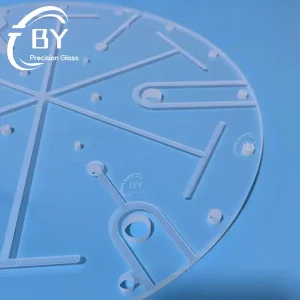
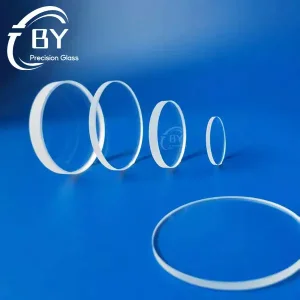
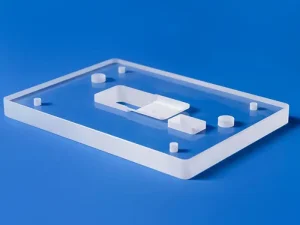
Specialized optical windows, laser pump cavity reflectors, and custom quartz glass fabrications engineered for extreme laser fluence and vacuum processing environments.