Featured Optical Cavity Inventory
Precision Laser Cavity Components & Reflectors
Explore high-temperature quartz tubes, ceramic laser reflectors, and diffuse-pumping chambers designed for industrial DPSS modules and medical aesthetic laser systems.
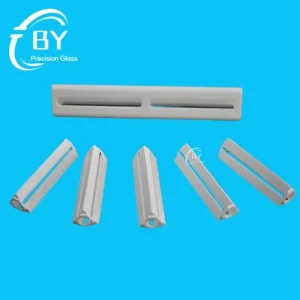
High-Quality Diode‑Pumping Chamber Diffuse Reflectors PTFE‑based Supplier, Suppliers
Configure Part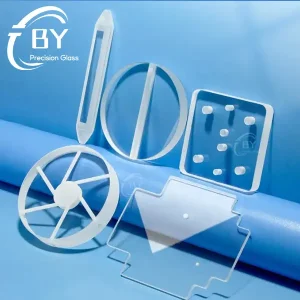
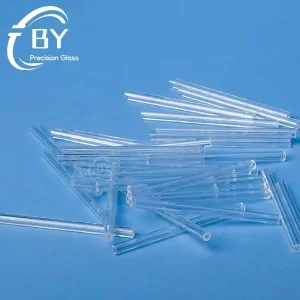
Wholesale High Temperature Custom Quartz Glass Fabrication Suppliers, Factories
Configure Part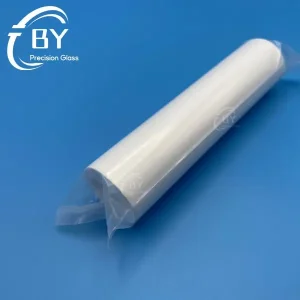
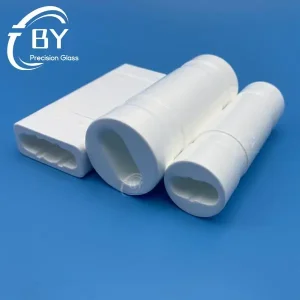
Wholesale Candela VBeam Laser 6" White Cavity Ceramic Reflector 2 Pk Manufacturer, Suppliers
Configure Part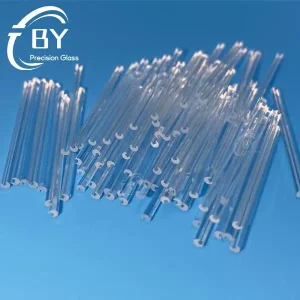
High-Quality Quartz Substrate Groove Use For Optical Fiber Coupler Suppliers, Factories
Configure Part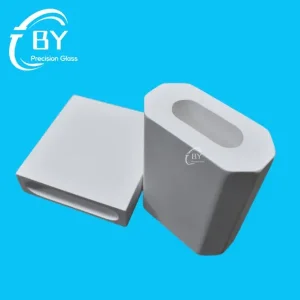
High-Quality Diffuse Reflectors Made of Spectralon‑Grade PTFE for Diode‑Pumping Chambers Manufacturer, Suppliers
Configure Part
High-Quality Customized Quartz Fiber End Caps for QBH Manufacturer, Factory
Configure Part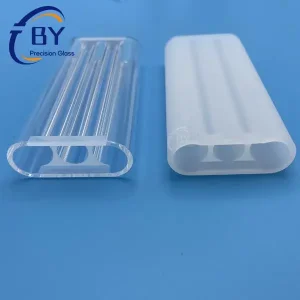
High-Quality Candela Laser Head Triple Bore Old and New Version In Stock Manufacturer, Factory
Configure Part
Engineering Whitepaper
Material Science of Quartz Laser Cavities & Optical Fluidics
A rigorous examination of laser cavity design, pump chamber geometry, solarization mitigation, and hydrothermal endurance in lamp-pumped and diode-pumped solid-state (DPSS) systems.
Synthetic Fused Silica vs. Natural Quartz
The core matrix of high-energy laser cavities demands stringent selection between synthetic fused silica (JGS1) and natural fused quartz (JGS2/JGS3). JGS1, synthesized via high-temperature hydrolysis of silicon tetrachloride (SiCl₄), exhibits exceptional optical transmission from 185 nm deep ultraviolet (DUV) through 2500 nm near-infrared (NIR), accompanied by negligible bubble classes and virtually zero heavy metal impurities.
- JGS1 Grade: Synthetic purity (<1 ppm metallic impurities), negligible bubble inclusion, ideal for UV excimer and harmonic Nd:YAG generations.
- JGS2 Grade: Economical natural quartz, high structural rigidity, suited for continuous visible and 1064 nm DPSS flow envelopes.
- JGS3 Grade: Water-free optical quartz with hydroxyl (OH⁻) content below 2–5 ppm, eliminating deep absorption bands at 2.2 µm and 2.7 µm for Mid-IR lasers.
Parasitic Depumping & Doped-Glass Mitigation
Flashlamp-pumped Nd:YAG, Alexandrite, and Holmium laser heads generate broad spectral emission. Unfiltered UV radiation promotes color center formation (solarization), lattice defects, and thermal distortion of the crystal rod. Simultaneously, amplified spontaneous emission (ASE) at 1064 nm depumps the laser rod, reducing gain efficiency.
- Cerium-Doped (Ce³⁺) Quartz: Serves as an inherent optical cut-off filter below 380–400 nm, quenching destructive UV radiation while fluorescing in the blue-green band to boost pump absorption.
- Samarium-Doped (Sm³⁺) Glass: Specifically engineered with strong resonant absorption at 1064 nm while preserving maximum transmission at pump bands (750–850 nm), decisively suppressing transverse ASE parasitic oscillation.
Hydrothermal Dynamics & Wall Concentricity
A laser cavity flow tube acts simultaneously as a coolant channel and an optical lens. Coolant flow creates turbulent convective heat transfer across coolant-quartz-crystal boundaries. Wall concentricity tolerances exceeding ±0.02 mm induce asymmetrical thermal lensing, beam aberration, and localized boiling points under peak pumping conditions.
- Surface Polishing: Down to 20-10 scratch-dig, preventing micro-cavitation and coolant mineral scaling.
- Thermal Expansion Coeff: Ultra-low CTE of 5.5 × 10⁻⁷ /°C maintains optical wavefront stability under 1,000 W/cm² thermal flux.
- Stress-Relief Annealing: Controlled cool-down ramps remove residual oxyhydrogen torch stress, ensuring zero optical birefringence.
| Parameter | JGS1 Synthetic Silica | JGS2 Optical Fused Quartz | Cerium Doped (Ce³⁺) Quartz | Samarium Doped (Sm³⁺) Glass |
|---|---|---|---|---|
| Transmission Band | 185 nm – 2,500 nm | 220 nm – 2,500 nm | 380 nm – 2,200 nm (UV Block) | Cut-off at 1064 nm (ASE Stop) |
| Coefficient of Thermal Expansion (CTE) | 5.5 × 10⁻⁷ /°C | 5.5 × 10⁻⁷ /°C | 5.6 × 10⁻⁷ /°C | 8.2 × 10⁻⁶ /°C |
| Laser-Induced Damage Threshold (LIDT) | >15 J/cm² @ 1064 nm, 10 ns | >8 J/cm² @ 1064 nm, 10 ns | >6 J/cm² @ 1064 nm, 10 ns | >4 J/cm² @ 1064 nm, 10 ns |
| Hydroxyl (OH⁻) Concentration | <1,200 ppm (Standard) / <10 ppm | <150 ppm | <200 ppm | <50 ppm |
| Surface Precision / Wavefront | λ/10 @ 632.8 nm (Custom Lap) | λ/4 @ 632.8 nm | λ/4 @ 632.8 nm | λ/4 @ 632.8 nm |
Industrial Deployment
Localized Application Scenarios & Field Architectures
How customized quartz laser chambers, flow tubes, and diffuse housings integrate directly into mission-critical clinical and heavy-duty manufacturing environments.
Medical Dermatology & Surgical Laser Heads
In pulsed dye lasers (such as 595 nm Candela VBeam systems) and high-energy Alexandrite (755 nm) / Nd:YAG (1064 nm) aesthetic platforms, quartz cavities maintain absolute flow balance across multi-bore arrangements. Triple-bore and dual-bore flow tubes house the flashlamp and crystal rod within sub-millimeter tolerances, ensuring direct deionized water circulation without creating dead zones that trigger dielectric breakdown or organic biofilm formation.
Precision Semiconductor Wafer Dicing & Litho
DPSS laser modules utilized in wafer scribing, circuit trimming, and micro-via drilling demand round-the-clock power stability (drift <0.5%). Spectralon-grade sintered PTFE and high-temperature fused silica cavities provide uniform, non-imaging diffuse pump energy distribution around the Nd:YVO₄ / Nd:YAG active medium, suppressing high-order thermal mode distortions and ensuring Gaussian TEM₀₀ beam propagation.
Defense Metrology & Aerospace Rangefinding
Airborne and naval flashlamp-pumped systems face high ambient vibration, rapid thermal cycling (-40°C to +85°C), and acoustic shock. Precision flame-welded and CNC-machined quartz pump cavities feature custom stress-relieved shoulders, tight concentricity (<0.01 mm), and chemical sealing surfaces that prevent coolant leakage during extreme g-force maneuvers.
R&D Trajectory
Technology Roadmap & Future Optical Advancements
Anticipating the requirements of multi-kilowatt green lasers, femtosecond micromachining, and sustainable pump geometries through next-generation material science.
Micro-Structured Internal Cooling Geometry
Traditional annular flow tubes provide uniform laminar or low-turbulent coolant flow. BY Photonics is pioneering ultra-precise helical micro-grooved inner bores that induce controlled fluid swirl without increasing back-pressure. This enhances thermal heat-transfer coefficients by up to 34%, eliminating localized crystal boundary thermal saturation during high-repetition industrial welding.
Rare-Earth Co-Doping Synthesis
Next-phase glass drawing research focuses on dual-dopant matrices combining Samarium (Sm³⁺) and Cerium (Ce³⁺) in monolithic fused silica tubing. By optimizing co-doping valence distribution, a single flow tube will simultaneously suppress the 1064 nm parasitic laser line, eliminate deep-UV solarization, and absorb excitation-inhibiting spectral spikes in flashlamps.
Additive Laser Machining & Direct Fusion
Moving beyond conventional diamond CNC machining, sub-surface damage (SSD) free femtosecond laser polishing and selective laser-induced chemical etching (SLE) are being integrated. This unlocks 3D monolithic internal cooling manifolds inside fused silica laser cavity blocks without mechanical joints, eliminating O-ring failure modes completely.
Supply Chain Excellence
China Factory Supply Chain Resilience & Production Scale
How BY Photonics leverages vertically integrated raw quartz smelting, automated diamond grinding, flame hot-working, and strict metrology in Tianjin to eliminate supply chain volatility.
End-to-End Vertical Integration
By hosting cold CNC shaping, high-temperature oxyhydrogen flame synthesis, glass capillary redraw, and class-1000 optical coating under a unified 3,000 m² factory footprint in Tianjin, China, we bypass multi-tier vendor markups and inter-stage transportation delays. Material provenance is traceable from certified high-purity silica ingots to final laser bench assembly.
Agile Prototyping to High-Volume Runs
Our rapid-response tooling setups enable pilot runs of 1 to 10 prototype cavities within 5 to 7 business days, backed by comprehensive DFM (Design for Manufacturability) engineering reviews within 24 hours. Once frozen, production seamlessly scales into 10,000+ unit batches with total tooling repeatability and CNC program reproducibility.
Uncompromising Multi-Tier Metrology
Every laser cavity component is subjected to 100% non-contact laser optical micrometer dimension checks, Zygo laser interferometric surface wavefront verification (up to λ/10), spectrophotometric UV-Vis-NIR transmission scans, and spectrophotometer diffuse reflectance qualification. Full inspection reports accompany each export consignment.
Market Dynamics
Global Commercial & Industrial Landscape
Navigating global supply bottlenecks, geopolitical decoupling, and the growing demand for independent precision optical fabrication in Tier-1 photonics hubs.
North American Laser Replacement & OEM Market
With hundreds of aesthetic dermatology clinics and industrial laser cutting centers operating legacy solid-state architectures (e.g., Candela, Cynosure, Cutera, Lumonics), the demand for drop-in replacement triple-bore quartz flow tubes and diffuse chambers has outstripped domestic Western manufacturing bandwidth. Lead times of 16–24 weeks from local optical machine shops have pushed US integrators toward BY Photonics' verified 2-week dispatch pipeline.
European Research Infrastructure & Medical Devices
European photonics consortia across Germany, Switzerland, and the UK are driving advances in diode-pumped alkali lasers (DPAL) and ultra-stable solid-state oscillators for quantum metrology. Compliance with strict environmental standards (RoHS, REACH) and full material chemistry transparency is mandatory. Our direct optical-grade certifications provide turn-key qualification across EU medical apparatus audits.
Asia-Pacific Industrial Expansion
The rapid scaling of EV battery production, photovoltaic cell manufacturing, and PCB micro-machining across Japan, South Korea, Taiwan, and Southeast Asia requires immense volumes of durable, high-yield quartz laser components. By pairing competitive raw quartz synthesis with sub-micron automated CNC grinding, BY Photonics enables APAC OEMs to protect profit margins against escalating raw material inflation.
Global Assurance
Localization Support, Quality Compliance & Export Protocols
Ensuring frictionless international procurement through multi-lingual technical engineering desks, robust global carrier logistics, and comprehensive regulatory adherence.
CAD / CAM File Compatibility
Our engineering division processes 3D CAD native files (STEP, IGES, SolidWorks, DWG, DXF) alongside high-definition dimensional prints. Our optical tooling engineers identify unmachinable internal radii, draft angles, or stress-concentrating corners, returning actionable recommendations that lower production scrap rates and part costs.
ITAR-Free Commercial Optical Classification
All standard fused silica flow tubes, PTFE diffuse reflectors, and samarium glass assemblies manufactured by BY Photonics are 100% dual-use ITAR-exempt commercial components. We supply direct ECCN self-classifications, CE declarations, RoHS 3 (EU 2015/863), and REACH certificates with complete batch lot numbers to ensure unhindered customs clearance.
Cleanroom Shock-Proof Export Packaging
Brittle optical quartz components require specialized packaging engineering. Finished cavities undergo ultrasonic solvent degreasing and vacuum nitrogen-sealed bagging in Class 10,000 cleanrooms. Components are then suspended inside high-density anti-static foam inserts within heavy wooden or shock-buffered containers to ensure zero scratching or breakage during air courier transit.
Engineering Knowledgebase
Frequently Asked Questions on Quartz Cavities
Direct technical answers addressing procurement, tolerances, doping selections, thermal stress, and installation protocols.
What is the primary factor dictating between Cerium-doped quartz and Samarium-doped glass?
The choice hinges on whether your priority is UV solarization suppression or parasitic depumping mitigation. Cerium-doped quartz is optimized for flashlamp UV absorption (<380 nm), protecting Nd:YAG or Alexandrite crystals from darkening. Samarium-doped glass (typically 10% Sm₂O₃) provides sharp spectral filtration at 1064 nm to quench amplified spontaneous emission (ASE) in high-gain, high-energy laser heads.
What dimensional tolerances can BY Photonics maintain on custom triple-bore cavities?
On custom CNC-machined and flame-worked multi-bore assemblies, we reliably achieve inner/outer diameter tolerances within ±0.015 mm, center-to-center bore pitch parallelism within ±0.02 mm, and total indicator reading (TIR) runout below 0.03 mm along lengths exceeding 200 mm. Surface roughness on polished coolant channels is held down to Ra < 0.2 µm.
How do you eliminate micro-cracking and internal stress during CNC cutting of quartz?
Hard and brittle optical glass requires precision multi-axis CNC machining with customized diamond-impregnated resin-bond tooling under continuous pressurized flood cooling. Post-machining, all components undergo a multi-stage thermal annealing cycle in computer-controlled electric kilns (ramped up to 1,120°C and slowly soaked), fully releasing residual mechanical stresses.
Can you manufacture legacy replacement flow tubes from physical worn samples?
Yes. Through our optical reverse engineering protocol, clients can send intact or fractured sample tubes. We conduct coordinate measurement machine (CMM) profiling, optical wall measurement, and spectrophotometric transmission validation to recreate complete manufacturing-ready CAD prints and deliver 100% form-fit-function equivalents.
What is the advantage of sintered PTFE diffuse reflectors over gold-coated metal cavities?
While electroplated gold reflectors deliver high specular reflectance in the infrared, they are prone to peeling, pinhole oxidation, and localized hotspots under intense water flow. Sintered optical PTFE (such as Spectralon grades) provides true Lambertian diffuse reflectance exceeding 99% across 400–1500 nm, is impervious to deionized water erosion, and does not tarnish or flake over years of service.
What documentation accompanies OEM production shipments?
Standard documentation includes raw material spectroscopic purity certificates, dimensional CMM inspection sheets, surface roughness interferometry profiles, Certificate of Conformance (CoC), and RoHS/REACH compliance declarations. Custom lot traceability and cleanroom packaging verification records are available upon request.
Specialized Optical Geometries
Custom Flow Tubes, Capillaries & Laser Glass Substrates
Explore additional high-temperature laser optics, sapphire light guides, precision capillaries, and spectrophotometer cuvettes manufactured to customer drawings.
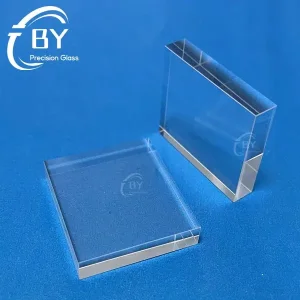
Custom Sapphire IPL Light Guide Block Used for Laser IPL Hair Removal Handle Manufacturer, Manufacturers
Configure Part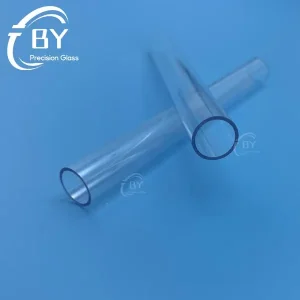
Wholesale Cerium Doped Quartz Tube Blocked UV Wavelength Manufacturer, Manufacturers
Configure Part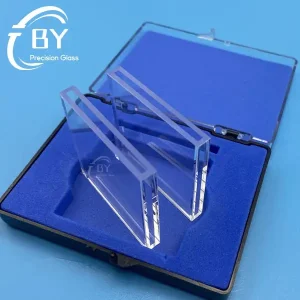
Wholesale Customize Quartz Cuvette for Spectrophotometer Supplier, Factory
Configure Part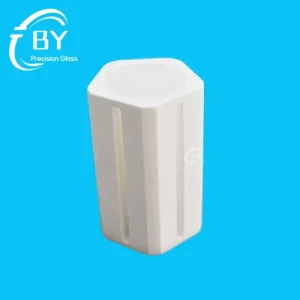
Wholesale Diffuse High‑Reflectivity PTFE Reflectors for Diode‑Pumping Chambers Suppliers, Factory
Configure Part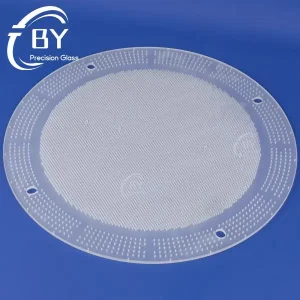
Custom Custom Optical Quartz Gas Distribution Plate Manufacturer, Suppliers
Configure Part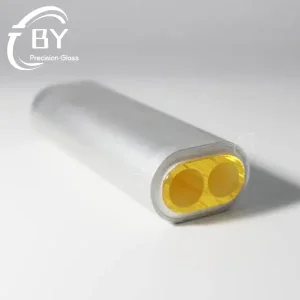
Custom Packed Laser Cavity Flowtubes for Laser Head Manufacturers, Suppliers
Configure Part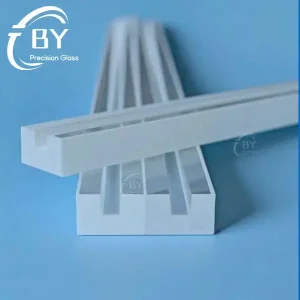
High-Quality Square Groove Quartz Substrate for Fiber Couplers Supplier, Factories
Configure Part