
Engineered Optical Flow Tubes & Cavity Optics
Fabricated with sub-micron precision to minimize thermal lensing, block parasitic 1064 nm amplified spontaneous emission (ASE), and eliminate solarization under high-repetition pulsed pump radiation.
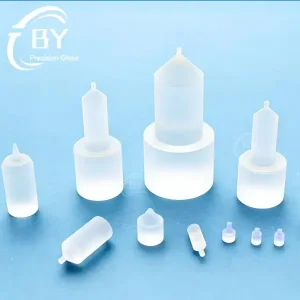
High-Quality Customized Quartz Fiber End Caps for QBH Manufacturer, Factory
View Product Detail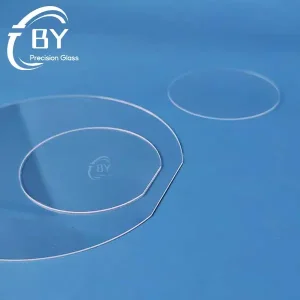
Custom Borofloat 33® Glass Wafers for Semiconductor Manufacturers, Factories
View Product Detail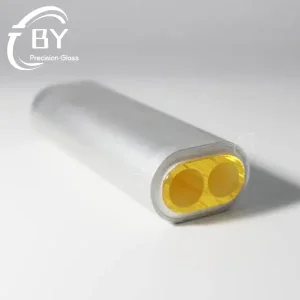
Custom Packed Laser Cavity Flowtubes for Laser Head Manufacturers, Suppliers
View Product Detail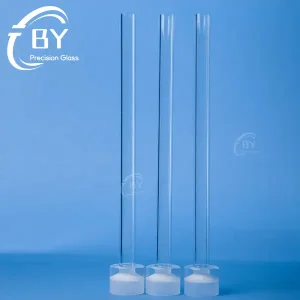
High-Quality Chemical Resistant Custom Quartz Glass Parts Fabrication Supplier, Factories
View Product Detail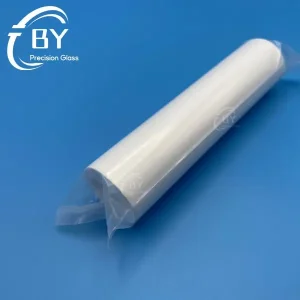
Wholesale Candela VBeam Laser 6" White Cavity Ceramic Reflector 2 Pk Manufacturer, Suppliers
View Product Detail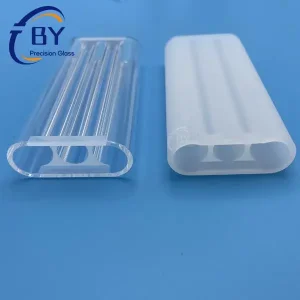
High-Quality Candela Laser Head Triple Bore Old and New Version In Stock Manufacturer, Factory
View Product Detail
Custom UV Block Yellow Quartz Tube for IPL Lamp Flow Handle Manufacturer, Factories
View Product Detail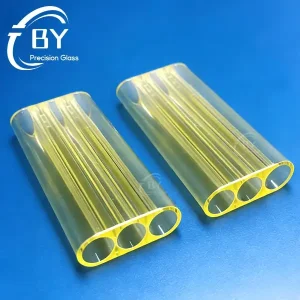
Wholesale Samarium-doped Quartz Triple Bore for Medical Laser Manufacturer, Supplier
View Product DetailThe Critical Role of Flow Tubes in Solid-State Laser Chambers
A comprehensive metallurgical and optical analysis of thermal-fluid dynamics, spectral filtering mechanisms, and cavity longevity inside modern high-duty solid-state laser resonators.
Thermodynamic Coolant Boundary Stability
In solid-state laser pump cavities (Nd:YAG, Er:YAG, Alexandrite, Ruby, Ho:YAG), up to 70% of optical pumping excitation converts directly into thermal load within the laser crystal rod and flashlamp. Flow tubes act as precise hydraulic isolation ducts, guiding deionized water or water-glycol mixtures directly across the active gain medium and pump lamps. Controlled inner diameter (ID) and wall concentricity suppress turbulent eddy zones, preventing localized boiling, bubble cavitation, and asymmetrical radial thermal gradients that induce destructive thermal lens aberrations.
Parasitic ASE Suppression via Sm3+ Doping
Samarium-doped glass (typically 10% or 5% Sm2O3 content) is the undisputed industry standard for 1064 nm Nd:YAG systems. While transmitting crucial pump wavelengths (e.g., flashlamp emission between 400 nm and 900 nm), Samarium glass exhibits strong cut-off absorption at 1064 nm. When lateral spontaneous photons escape the gain rod, the Sm-doped flow tube absorbs them instantly, effectively stopping parasitic Amplified Spontaneous Emission (ASE) and whispering-gallery ring oscillations from robbing population inversion and reducing pulsed laser peak power.
UV Solarization Mitigation & Laser Rod Shielding
High-intensity xenon and krypton arc lamps emit severe ultraviolet radiation below 380 nm. Unmitigated UV exposure leads to rapid solarization (color-center formation) within synthetic optical glasses, causing irreversible brown discoloration and thermal runaway. Cerium-doped quartz or yellow-doped quartz flow tubes create an acute spectral barrier, absorbing harmful UV rays while simultaneously blocking ultraviolet radiation from degenerating the Nd:YAG or Alexandrite crystal lattice, thus maintaining cavity efficiency over millions of pulses.
| Optical Glass Grade | Composition / Dopant | Transmission Bandwidth | Absorption Cut-Off | Primary Industrial / Medical Application |
|---|---|---|---|---|
| JGS1 Synthetic Fused Silica | SiO₂ > 99.999% (Low trace metals) | 185 nm – 2,500 nm | Far-UV < 180 nm | DPSSL pump chambers, excimer laser handling, high-power QBH end caps |
| Samarium-Doped Glass (Sm3+) | Borosilicate matrix + 10% Sm₂O₃ | 400 nm – 900 nm (Selective) | 1064 nm (Strong), UV < 380 nm | Nd:YAG medical aesthetic (Candela, Cynosure), military rangefinders |
| Cerium-Doped Fused Quartz | Fused silica + CeO₂ dopant | 420 nm – 2,200 nm | Complete block < 380 nm | IPL handpieces, flashlamp water jackets, medical dermatological lasers |
| Borofloat 33® / Pyrex Equivalent | Borosilicate (Na₂O-B₂O₃-SiO₂) | 350 nm – 2,500 nm | UV < 300 nm | Low-duty industrial solid-state resonators, viewing flow cells |
Commercial & Industrial Landscape for Solid-State Laser Pump Chambers
As the global photonics ecosystem accelerates toward ultra-high precision and megawatt-class peak powers, the demand for resilient laser cavity flow tubes expands across medical aesthetics, advanced micro-welding, and aerospace defense.
Medical Aesthetic & Surgical Laser OEM Systems
The medical aesthetic market—dominated by 755 nm Alexandrite (hair and pigmentation removal), 1064 nm Nd:YAG (vascular and deep tissue rejuvenation), and 2940 nm Er:YAG (skin resurfacing)—relies entirely on custom triple-bore and dual-bore flow tubes. Systems manufactured by industry leaders such as Candela (GentleLase, VBeam), Cynosure, and Lumenis operate under relentless pulse frequencies. A single dimensional deviation of ±0.05 mm in concentricity can induce cavitation hotspots, leading to premature lamp rupture, costly clinic downtime, and clinical treatment variability.
Semiconductor Metrology, Annealing & Micromachining
In advanced wafer packaging, laser lift-off (LLO) for microLEDs, and deep silicon trench etching, diode-pumped solid-state lasers (DPSSL) require flow tubes manufactured from synthetic fused silica (JGS1) characterized by zero bubble inclusions and ppb-level metal impurities. Ultra-pure water coolant must flow under laminar velocity across the gain crystal without leaching sodium, potassium, or boron ions into the closed-loop cooling system, ensuring micro-radian beam stability over continuous multi-thousand-hour production runs.
Aerospace, Remote Sensing LIDAR & Defense
Solid-state laser rangefinders, target designators, and airborne topographic LIDAR platforms operate under severe mechanical vibration, high thermal shock, and broad ambient operating windows (-40 °C to +85 °C). Flow tubes in these pump chambers must possess high mechanical fracture toughness (KIC), stress-relieved annealing profiles, and precision chamfered edge profiles to withstand hydraulic pressure surges without micro-cracking.
Field-Proven Industrial & Medical Case Studies
How BY Photonics flow tubes resolve thermal shock, parasitical cross-talk, and mechanical fatigue in mission-critical deployments worldwide.
Case 1: Dual-Wavelength Aesthetic Laser Heads (Alexandrite 755nm / Nd:YAG 1064nm)
Challenge: A Tier-1 European medical device refurbishment partner faced repeated lamp envelope blistering and premature Nd:YAG crystal degradation after only 200,000 pulses using generic borosilicate flow tubes.
Solution: BY Photonics supplied custom-milled monolithic Samarium-doped triple-bore quartz flow tubes featuring precision-drilled coolant chambers. The 10% Sm2O3 content completely eliminated 1064 nm parasitic loop radiation into the neighboring Alexandrite rod while filtering UV arc radiation below 380 nm.
Result: Lamp service life increased by 310%, pulse uniformity stabilized within ±1.5%, and warranty replacement costs dropped to zero across 1,400 active clinical installations.
Case 2: Industrial Laser Shock Peening (LSP) for Gas Turbine Blades
Challenge: An aerospace manufacturing facility operating 100 J pulsed Nd:Glass lasers suffered periodic flow tube mechanical fractures caused by high-pressure coolant turbulence and rapid thermal cycling.
Solution: We engineered high-purity JGS1 synthetic fused silica flow tubes with chemical flame-polished internal surfaces and deep oxyhydrogen annealing to neutralize internal residual hoop stress.
Result: Internal burst pressure resistance exceeded 28 bar (406 psi). The flow tubes demonstrated zero fatigue failure after 18 months of continuous multishift operation, preventing water leakage onto delicate cavity diffuse ceramic reflectors.
Case 3: High-Energy Holmium (Ho:YAG 2.1 µm) Lithotripsy Resonators
Challenge: Endoscopic surgical lithotripters require rapid pulse bursts to fragment urinary stones. Conventional flow tubes introduced optical absorption at 2.1 µm due to excessive internal hydroxyl (OH-) radical concentrations in standard quartz.
Solution: BY Photonics deployed low-OH JGS3 infrared-grade fused quartz flow tubes with OH- content < 5 ppm, coupled with precision diamond-lapped ends to ensure absolute hermetic O-ring compression.
Result: Reduced pump chamber transmission losses by 4.2%, enabling higher laser pulse peak energies with reduced input electrical power and lower thermal dissipation demands.
Technological Roadmap & Future Outlook
Pioneering the next generation of photonic isolation, multi-layer hard dielectric coatings, and monolithic multi-channel microfluidic architectures.
1. Conformal Internal AR Nanocoatings (IAD & IBS)
Standard flow tubes suffer a 4% to 8% Fresnel reflection loss at each glass-coolant interface. BY Photonics is pioneering Ion Beam Sputtered (IBS) hydrophobic anti-reflective coatings deposited directly inside high-aspect-ratio inner bores. These coatings are engineered to survive years of submersion in high-purity deionized water without film delamination, enhancing transfer efficiency from flashlamp/diode to the active laser medium by up to 6.5%.
2. Monolithic Diffusion-Bonded Multi-Cavity Blocks
Rather than assembling loose glass tubes inside a metal housing sealed with elastomeric rubber O-rings (a chronic failure point for coolant leakage and outgassing), our R&D laboratory is deploying optical-contact silicate bonding (diffusion bonding). This produces a monolithic fused quartz pump chamber where flow channels, gain rod channels, and diffuse ceramic coatings merge into a single seamless, hermetic block capable of operating under 50 bar pressures.
3. Advanced Rare-Earth Co-Doping Matrixes
Beyond standard Samarium (Sm3+) and Cerium (Ce3+), research into multi-dopant optical matrices combining Titanium (Ti4+), Europium (Eu3+), and Neodymium-absorbing spectral notch filters is underway. These specialized glasses effectively down-convert unused ultraviolet pump photons into visible green-yellow wavelengths matched precisely to Nd:YAG absorption bands (790 nm – 810 nm), turning harmful parasitic heat into useful pumping energy.
Chinese Manufacturing Resilience & Vertical Supply Chain Efficiency
From raw fused quartz boules to high-precision CNC multi-axis milling, ultrasonic coring, and class-10,000 cleanroom packaging—all under one roof in Tianjin, China.
Complete Vertical In-House Integration
Tianjin BY Photonics eliminates multi-tier subcontractor markups and quality blind spots. Raw glass ingot inspection, precision cold diamond core drilling, high-speed multi-axis CNC milling, inner-bore honing, oxyhydrogen flame-polishing, and polariscope stress relief operate in a single 3,000 m² standardized manufacturing facility. This vertical integration guarantees 100% material traceability and strict adherence to technical prints.
High-Precision Cold Diamond Honing & Metrology
Achieving uniform wall thickness across flow tubes exceeding 150 mm in length requires specialized deep-hole diamond honing machines. Our proprietary CNC processes hold outer-to-inner diameter runout within 0.015 mm. Every shipment is verified utilizing Zygo laser interferometers, Mitutoyo 3D Coordinate Measuring Machines (CMM), and PerkinElmer Lambda 950 UV-Vis-NIR spectrophotometers with full spectral transmission curves included.
Logistics Agility & Global Port Infrastructure
Located adjacent to Tianjin International Port and Beijing Capital/Daxing air freight hubs, BY Photonics ensures rapid export processing. Standard customized prototypes ship within 10 to 14 business days, while volume OEM orders are supported with safety buffer stocking programs. Multi-layer shockproof vacuum-sealed packaging protects fragile glass components during international express and air cargo transit.
Localized Technical Support & Stringent International Compliance
Engineering collaboration that bridges language and time zones with documented compliance to RoHS, REACH, and ISO standards.
Direct Optical Engineering Consultations
We eliminate sales intermediaries. When your design team submits a STEP, DXF, or dimensioned PDF drawing, a dedicated optical process engineer conducts a thorough Design for Manufacturability (DFM) review within 24 hours. We evaluate draft angles, stress concentrations, edge bevels, and coolant flow clearances, ensuring optimal yields and reduced prototype tooling costs.
ISO 9001:2015 & Global Environmental Mandates
Every batch of optical glass, samarium dopant, and high-purity quartz complies strictly with EU RoHS Directive (2011/65/EU) and REACH (EC 1907/2006) chemical safety regulations. All components undergo ultrasonic cleaning in deionized water and are vacuum-packed in Class 10,000 (ISO 7) cleanroom environments to ensure they arrive ready for immediate laser cavity cleanroom assembly.
Pressure & Thermal Shock Hydrostatic Validation
Flow tubes are subject to extreme operational stresses. BY Photonics conducts destructive and non-destructive hydrostatic pressure testing up to 35 bar, coupled with cyclic thermal shock tests (cycling repeatedly from 20 °C chilled water to 95 °C hot fluid). This testing regime ensures that components will never develop stress micro-cracks under pulsing cavity environments.
Frequently Asked Questions: Laser Cavity Flow Tubes
In-depth technical answers addressing optical tolerances, dopant properties, chemical compatibility, and custom fabrication parameters.
Why is Samarium-doped glass preferred over standard quartz in Nd:YAG laser heads?
Nd:YAG lasers emit at 1064 nm. When lateral spontaneous emissions bounce inside the pumping chamber, they deplete upper-state inversion (ASE losses). Samarium-doped glass (Sm3+) has a strong absorption band precisely at 1064 nm, quenching lateral parasitic modes while maintaining high optical transmittance between 400 nm and 900 nm to transmit flashlamp pump energy. It also effectively absorbs UV radiation below 380 nm, preventing crystal solarization.
What is the standard dimensional concentricity and runout tolerance for flow tubes?
Our standard CNC diamond core-drilling and honing processes deliver outer diameter (OD) and inner diameter (ID) tolerances of ±0.05 mm, with concentricity within 0.02 mm. For ultra-high precision medical aesthetic and military cavity heads, we routinely grind and lap OD/ID tolerances to ±0.01 mm and total indicator runout (TIR) < 0.015 mm, preventing uneven coolant flow channels.
How does BY Photonics prevent micro-cracks during multi-bore drilling?
Fabricating dual-bore, triple-bore, or complex asymmetric flow plates requires diamond ultrasonic core drilling combined with slow feed rates under constant chilled coolant. Following mechanical machining, components undergo controlled oxyhydrogen flame-polishing or chemical etching to eliminate micro-fractures, followed by a multi-hour annealing cycle in programmable furnaces to eliminate internal hoop stresses.
Can you manufacture replacement flow tubes for legacy aesthetic systems like Candela or Cynosure?
Yes. We produce high-precision aftermarket and OEM replacement flow tubes, triple bores, and ceramic diffuse reflectors compatible with Candela GentleLase, GentleYag, VBeam, Cynosure Apogee/Elite, and Lumenis systems. We hold critical geometry specifications in stock or can reverse-engineer them from physical samples with 100% optical and dimensional interchangeability.
What coolant fluids are compatible with your fused quartz and doped glass tubes?
Our flow tubes are chemically resistant to high-purity deionized water (DI water), distilled water, and glycol-water anti-freeze mixtures. Synthetic fused silica (JGS1) and samarium borosilicate glass maintain hydrolytic resistance (Class 1) and will not leach ions or cloudy deposits into the coolant stream over prolonged operating cycles.
What is the typical minimum order quantity (MOQ) and production turnaround?
We support both prototype R&D (MOQ as low as 2 to 5 pieces) and volume OEM manufacturing (thousands of units per month). Prototypes typically ship in 10 to 14 business days from drawing sign-off. High-volume repeat orders are scheduled with dedicated production capacity and flexible batch releases.
Precision Quartz, Windows & Optical Substrates
Browse complementary precision optical glass fabrication capabilities, from high-temperature borosilicate windows to semiconductor-grade lithography quartz plates.
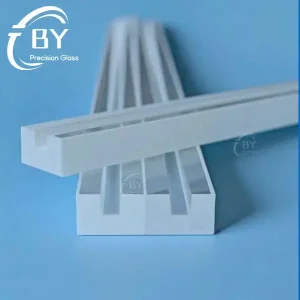
High-Quality Square Groove Quartz Substrate for Fiber Couplers Supplier, Factories
View Product Detail
High-Quality Borosilicate Windows and Plates for Viewports Suppliers, Factory
View Product Detail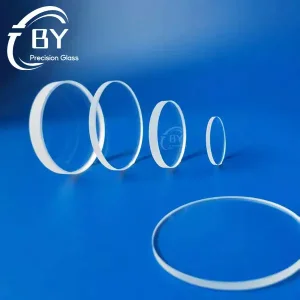
Wholesale Quartz Optical Windows for Semiconductor Lithography Equipment Suppliers, Factories
View Product Detail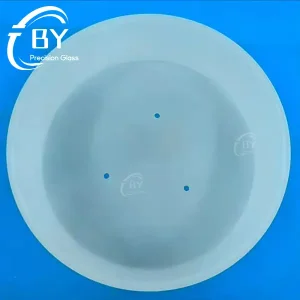
High-Quality Custom Quartz Glass Components for Vacuum Coating Supplier, Factories
View Product Detail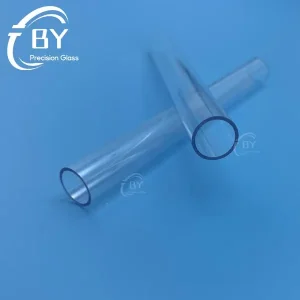
Wholesale Cerium Doped Quartz Tube Blocked UV Wavelength Manufacturer, Manufacturers
View Product Detail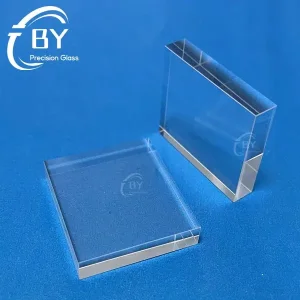
Custom Sapphire IPL Light Guide Block Used for Laser IPL Hair Removal Handle Manufacturer, Manufacturers
View Product Detail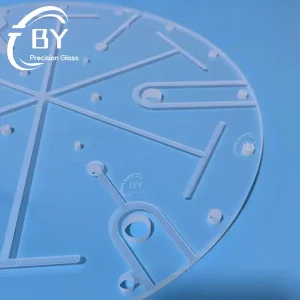
High-Quality Custom Precision Quartz Glass Fabrication Supplier, Suppliers
View Product Detail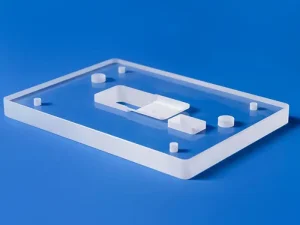
High-Quality Factory Supply Precision Quartz Glass Machining Plate Supplier, Suppliers
View Product DetailReady to Optimize Your Laser Cavity Flow Tube Performance?
Submit your CAD drawings (STEP, DWG, DXF, or PDF). Our senior optical engineers review tolerances, material dopant concentration, and coolant hydraulic clearances within 24 business hours.