
Featured Pump Cavity & Optical Subsystem Components
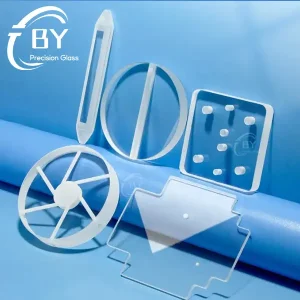
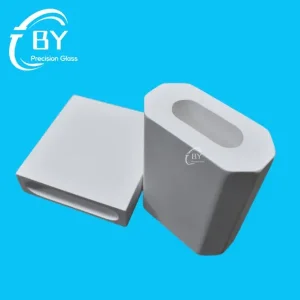
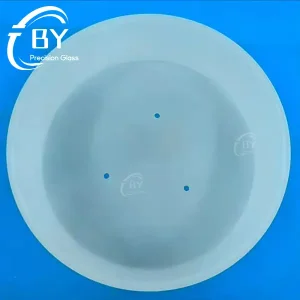
Precision-machined optical quartz, doped filter elements, and ceramic reflectors custom engineered for optimal transfer efficiency, high-duty thermal load dissipation, and parasitic ASE damping.
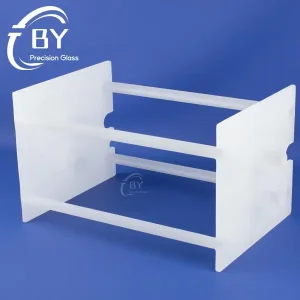
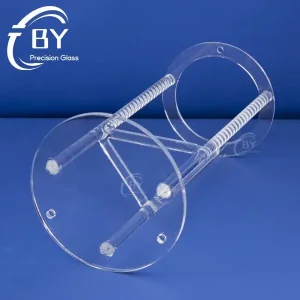
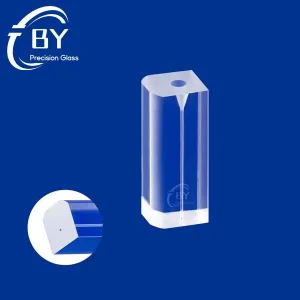
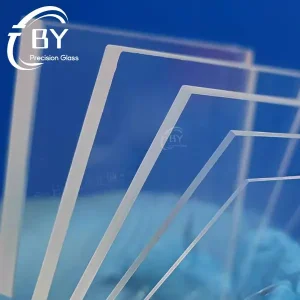
The Engineering Core: High-Efficiency Solid-State Laser Pump Cavities
In solid-state laser physics, the pump chamber serves as the optical reactor vessel. Its geometrical profile, material reflectance, and hydrodynamic cooling channels govern fundamental beam quality, wall-plug efficiency, and laser rod operational longevity.
Optical Transfer Efficiency
A high-performance pump cavity maximizes the photon coupling coefficient from the excitation source (linear xenon/krypton flashlamps or high-power diode laser bars) to the gain medium (Nd:YAG, Yb:YAG, Er:YAG, Ruby, Alexandrite, or Ti:Sapphire). Whether utilizing specular gold-plated elliptical geometry, high-density porous ceramic reflectors, or micro-porous Spectralon-grade sintered PTFE, optimal transfer minimizes thermal load on the resonator while elevating slope efficiency.
Parasitic ASE & 1064nm Suppression
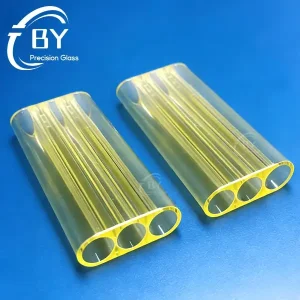
High-gain laser configurations suffer from Amplified Spontaneous Emission (ASE) and whispering gallery modes transverse to the laser axis. Our proprietary samarium-doped (Sm³+) fused quartz flow tubes and samarium-doped filter glass deliver sharp cut-off band absorption strictly targeting 1064 nm while transmitting critical pump wavelengths between 750 nm and 850 nm, inhibiting transverse parasitics and protecting against optical solarization under deep-UV flash emissions.
Thermal Uniformity & Lensing Control
Non-uniform pump light distribution introduces severe thermal gradients inside crystalline gain rods, precipitating thermal lensing, stress-induced birefringence, and beam depolarization. By deploying diffuse Lambertian scattering chambers, our pump cavities homogenize spatial photon distribution throughout the rod mantle, drastically reducing focal shift and stabilizing wavefront sphericity at multi-kilowatt CW and high-repetition pulsed duty cycles.
Strategic Procurement Framework for High-Reliability Laser Manufacturers
Evaluating supplier capability for solid-state laser pump cavities requires an integrated assessment extending beyond basic unit machining cost to encompass microstructural stability, chemical leaching resistance, and dimensional repeatability.
Direct Economic Impact of Chamber Longevity
In high-duty industrial laser workstations and critical medical laser platforms, premature pump cavity degradation represents one of the largest drivers of unscheduled field servicing. Sintered diffuse ceramic reflectors with substandard glaze layers experience micro-cracking and coolant infiltration, resulting in reflectance decay from 97% to under 88% within several hundred operating hours.
Procuring high-grade glazed laser ceramics (99.7% Al&sub2;O&sub3;) or virgin, high-density sintered PTFE eliminates spectral degradation caused by coolant ionic leaching, preventing excitation loss, laser diode thermal overdrive, and premature laser rod failure.
Quality Assurance Protocols in Vendor Auditing
Global OEM procurement teams must verify that suppliers utilize multi-axis CNC ultrasound glass grinding, flame-welded stress annealing, and certified optical grade glass ingots. Without controlled thermal annealing cycles, quartz flow tubes harbor residual internal stresses that cause catastrophic mechanical fracture under sudden cooling loop pressure spikes.
We implement 100% polarimeter stress inspection, coordinate measuring machine (CMM) multi-bore concentricity verifications (≤ 0.010 mm), and spectrophotometer reflectance tracking across 200 nm to 2500 nm on every production batch.
Comparative Material Physics for Solid-State Laser Cavities
Selecting the correct optical substrate, diffuse reflector, or filtering flow tube material directly impacts thermal conductivity, damage threshold, chemical compatibility with DI water cooling, and parasitic spectral management.
| Material Class | Key Spectral Properties | Bulk Reflectance / Transmittance | Coolant Interaction | Typical Cavity Application |
|---|---|---|---|---|
| Glazed Laser Cavity Ceramics (99.7% Al&sub2;O&sub3;) | Porous high-scatter matrix with sealed chemical glass-phase glaze | 97.2% – 98.0% diffuse reflectance (500–1200 nm) | Impermeable; zero DI water erosion; chemically inert | High-Power Flashlamp / DPSS |
| Spectralon-Grade Sintered Virgin PTFE | Nearly ideal Lambertian scattering; wide optical transparency band | 99.2% – 99.5% reflectance (400–1500 nm) | Hydrophobic; requires particulate-free deionized coolant loop | High-Efficiency Diode-Pumped Lasers |
| Samarium-Doped Fused Quartz (Sm³+ 10wt%) | Severe absorption band at 1064 nm; strong absorption below 400 nm | >90% transmission at 750–850 nm pump spectrum | Thermally durable; thermal shock resistant up to 1050 °C | Nd:YAG Flow Tubes / Triple Bore Sleeves |
| Synthetic UV Fused Silica (JGS1 Grade) | Extreme UV transmission down to 185 nm; zero bubble class 0 | >92% internal transmission across 185–2500 nm | Hydrothermal resistance; optical damage threshold >20 J/cm² | Excimer / Harmonic Laser Windows & Tubes |
| Electro-Plated 24K Gold over Inconel/Copper | Specular metallic reflection; optimal in near-to-mid IR bands | 96.5% – 98.2% specular reflectance (>800 nm) | Vulnerable to galvanic corrosion and de-lamination over time | Holmium & Erbium Medical Systems |
Hydrodynamic Channel Architecture & Parasitic ASE Quenching
Modern solid-state lasers operating at kilohertz repetition rates produce intense heat deposition in the laser rod mantle. Managing thermal distortion requires specialized flow tube profiles coupled with rare-earth spectral filtering.
Concentric Flow Velocity Control
Maintaining uniform laminar flow along the length of the gain crystal is critical. Any localized turbulence or dead zone creates thermal hot spots, causing asymmetric optical wavefront phase distortion. Our precision multi-bore flow tubes guarantee wall thickness concentricity within ±0.015 mm, ensuring balanced coolant velocity gradients and preventing bubble cavitation around the rod mantle.
Quenching 1064nm Parasitic Lasing
When pumping Nd:YAG crystals at high energy densities, 1064 nm spontaneous emission reflected back into the rod triggers parasitic lasing modes that deplete upper-state storage efficiency. By utilizing samarium-doped (Sm³+) quartz sleeves, back-reflected 1064 nm rays are selectively trapped and attenuated by resonant absorption without generating heat directly within the laser crystal.
UV Solarization Inhibition
Flashlamp discharge generates broad emission encompassing deep ultraviolet wavelengths (<300 nm). Continuous exposure to UV photons creates color centers within standard fused silica and crystalline host lattices, degrading transmittance and triggering optical breakdown. Our Cerium-doped and Titanium-doped quartz flow barriers selectively cut off harmful deep UV while preserving crucial excitation bands.
Macro-Industry Solutions & Turnkey System Implementations
From medical aesthetics and surgical instruments to high-precision micro-machining and military-grade rangefinders, our solid-state pump cavity subsystems serve mission-critical industrial ecosystems.
Medical & Aesthetic Lasers
Engineered for Candela, DEKA, Cynosure, and Fotona compatible replacement and OEM architectures. High-durability ceramic cavities and yellow UV-blocking flow tubes for Alexandrite (755 nm), Nd:YAG (1064 nm), and Er:YAG (2940 nm) surgical and dermatological treatments.
Industrial Micro-Machining
High-stability pump cavities tailored for diode-pumped solid-state (DPSS) pulsed laser modules utilized in wafer dicing, sapphire cutting, solar cell scribing, and high-precision diamond engraving with maximum pulse-to-pulse energy stability.
Defense & Aerospace LiDAR
Ruggedized, hermetically sealed, vibration-immune laser pump chambers engineered for airborne target designation, satellite optical communication, and long-range LiDAR rangefinding operating in extreme shock and thermal environments.
Semiconductor Metrology
Ultra-pure synthetic fused silica flow cells, diffusion boats, and deep-UV optical quartzware fabricated under class-100 cleanroom protocols for inspection systems requiring absolute chemical inertness and zero trace-metal contamination.
Technology Roadmap: Next-Generation Pump Cavity Geometries
As solid-state lasers transition toward petawatt peak powers, femtosecond regimes, and ultra-compact tactical footprints, pump cavity designs are undergoing a paradigm shift in material science and photon distribution mechanics.
Hybrid Ceramic-PTFE Composites
Emerging cavity designs merge the mechanical stiffness and thermal conductivity of high-purity alumina ceramics with the unmatched diffuse reflectance of micro-porous PTFE liners. This hybrid geometry enables direct conduction cooling of pump diodes while sustaining diffuse Lambertian scatter exceeding 99% across the absorption spectrum.
Direct-Diode Micro-Channel Cavities
Next-generation multi-kW DPSS architectures integrate multi-layer micro-channel cooler (MCC) copper heat sinks directly into the ceramic reflector housing. By optimizing coolant velocity vectors through computational fluid dynamics (CFD), thermal boundary layers are reduced to sub-millimeter scales, allowing double the power density in half the form factor.
Additively Manufactured Fused Silica
3D laser-sintering of high-purity amorphous silica is entering high-precision production. This technology unlocks non-circular, conformal cooling channels and multi-helix flow patterns inside monolithic glass flow tubes, eliminating seal joints, reducing fluid stagnation, and lowering beam wavefront aberration by more than 40%.
Metrology Rigor, Global Compliance & Localized Technical Support
Laser components destined for regulated medical, aerospace, and semiconductor environments undergo comprehensive dimensional, optical, and chemical validation in accordance with international standards.
Optical Metrology & Interferometry
Every flat optical window and flow tube end face undergoes Zygo laser interferometry to verify wavefront flatness down to λ/10 at 632.8 nm. Surface quality is inspected according to MIL-PRF-13830B down to 20-10 scratch-dig, preventing laser-induced damage thresholds (LIDT) degradation under multi-gigawatt peak powers.
CMM Multi-Bore Geometric Precision
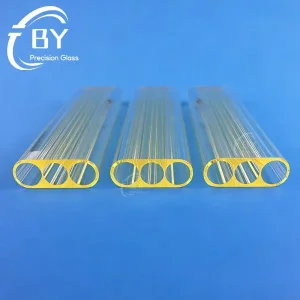
Multi-bore flow tubes (double-bore, triple-bore, quadruple-bore) demand extreme dimensional concentricity and parallelism. Using automated non-contact optical coordinate measuring machines, we certify hole center distance and inner diameter tolerances within ±0.005 mm, ensuring drop-in mechanical alignment with commercial laser heads.
RoHS, REACH & ISO 9001:2015
All raw materials—from high-density ceramic reflectors to fused quartz and specialized doped glasses—are fully documented with material test certificates (MTR). Fully compliant with EU RoHS and REACH regulations, our manufacturing facility in Tianjin supports worldwide OEM exports with full supply chain traceability.
Frequently Asked Questions by Optical Engineers & OEM Sourcing Teams
Detailed technical answers to common queries regarding material selection, pump cavity longevity, spectral absorption, and custom manufacturing tolerances.
What are the key technical differences between ceramic reflectors and gold-plated metal cavities?
Why is samarium-doped (Sm³+) quartz preferred over clear quartz for Nd:YAG laser flow tubes?
What is the reflectance stability of Spectralon-grade PTFE under high-power diode pumping?
What are typical dimensional tolerances achievable for multi-bore quartz flow tubes?
Can you manufacture custom pump cavity components based on proprietary CAD models?
Specialized Solid-State Laser & Precision Optics Collection
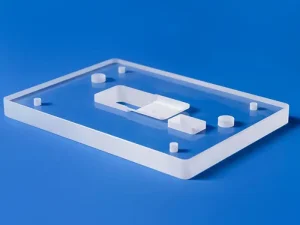
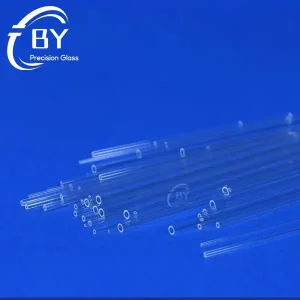
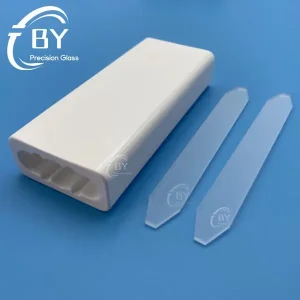
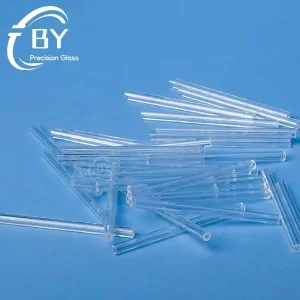
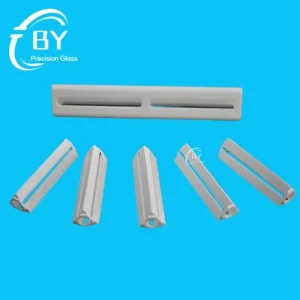
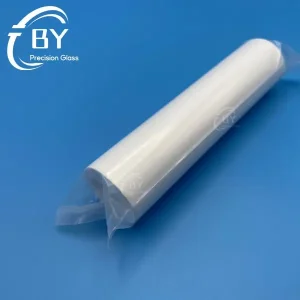
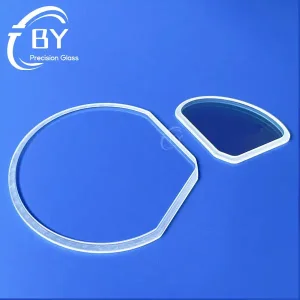
Expanded laser flow plates, capillary tubes, replacement medical aesthetic ceramic reflectors, and sapphire harsh-environment windows produced to stringent OEM quality specifications.
Initiate Your Custom Pump Cavity DFM Review
Send your STEP, IGES, or 2D technical drawings directly to our optical engineering team in Tianjin. Receive a comprehensive Design for Manufacturability (DFM) assessment, material grade recommendation, and formal quotation within 24 business hours.