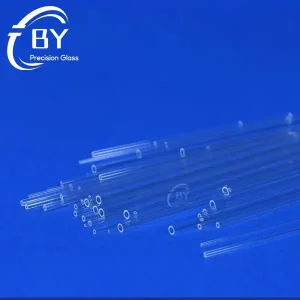
Semiconductor, Laser & Precision Optical Components
Engineered for extreme deep-UV transmission, high thermal stability up to 1,100°C, and trace impurity levels below 1 ppm. Explore our premier fabricated components deployed across global Tier-1 foundries and laser cavity assemblies.
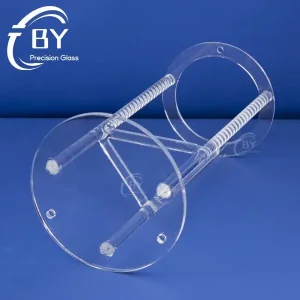
Wholesale Quartz Wafer Carriers for Semiconductor
Explore Specification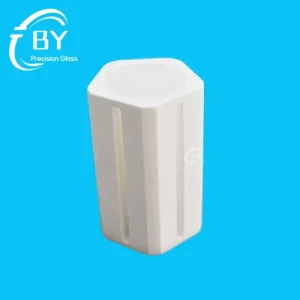
Diffuse High-Reflectivity PTFE Reflectors
Explore Specification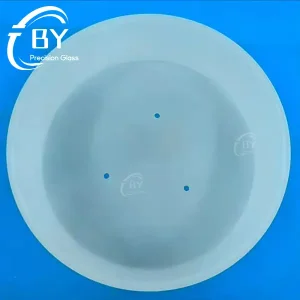
Custom Quartz Glass Vacuum Coating Components
Explore Specification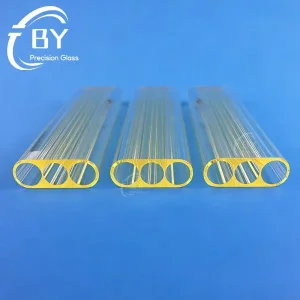
Samarium-Doped Laser Cavity Flow Tubes
Explore Specification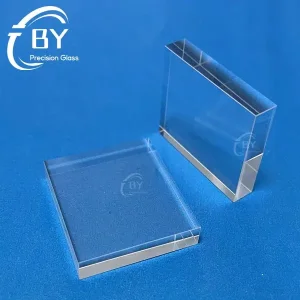
Sapphire IPL Aesthetic Light Guide Blocks
Explore Specification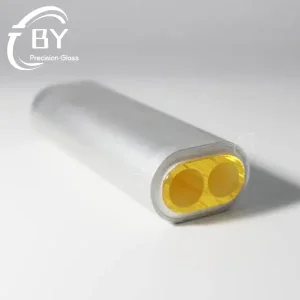
Pre-Packed Laser Cavity Flowtubes for Heads
Explore Specification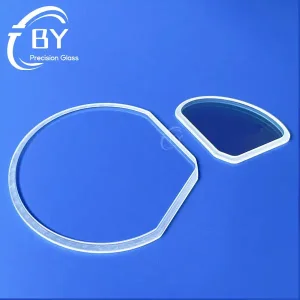
Harsh Environment Sapphire Sight Plates
Explore Specification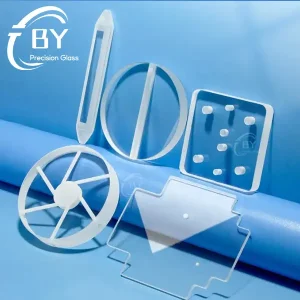
High Temperature Custom Quartz Fabrication
Explore SpecificationEngineering Architecture of UV Grade Quartz Glass Plates
UV grade quartz glass plates (primarily synthetic fused silica, chemical formula SiO₂) represent the pinnacle of vitreous silica engineering. Unlike commercial borosilicate or natural quartz glass, synthetic UV grade plates provide ultra-pure cross-linked amorphous networks free of microscopic bubbles, inclusions, and optical striations.
Deep Ultraviolet (DUV) Transmittance
With an internal transmittance cutoff down to 185 nm, JGS1 grade fused silica eliminates the structural solarization commonly observed in visible and IR quartz. Our UV plates sustain >90% raw transmission at 193 nm (ArF excimer wavelength) and 248 nm (KrF), enabling high-duty deep UV lithography and fluorescence spectroscopy without photo-darkening degradation.
Near-Zero Coefficient of Thermal Expansion
Operating with a thermal expansion coefficient (α) of only 0.55 × 10⁻⁶/°C between -50°C and 200°C, these optical plates resist thermal lensing and destructive mechanical shock. They endure sudden thermal excursions exceeding 1,000°C, maintaining optical figure integrity in high-power CW laser cavities, diode pump arrays, and thermal vacuum environments.
Chemical Inertness & Laser Damage Threshold
Demonstrating extreme resistance to deionized water leaching, aggressive acids, halogens, and organic solvents (insoluble in all reagents except HF and hot concentrated phosphoric acid). Coupled with bulk laser-induced damage thresholds (LIDT) exceeding 10–15 J/cm² at 1064 nm (10 ns pulse), our plates withstand the most abrasive industrial etching and high-flux photon bombardment.
Vitreous Silica Grade Matrix & Specification Parameters
Selecting the appropriate synthetic or natural silica grade determines both cost-efficiency and optical performance. Compare the spectral limits, hydroxyl (OH⁻) content, and functional roles across standard industry designations.
| Material Designation | Origin / Synthesis Process | Transmission Bandwidth | Hydroxyl (OH⁻) Concentration | Key Applications & Environments |
|---|---|---|---|---|
| JGS1 (UV Grade Fused Silica) Primary | Chemical Vapor Deposition (SiCl₄ Flame Hydrolysis) | 185 nm – 2,500 nm | ~1,200 ppm (High OH) | Excimer laser windows, DUV spectrophotometer flow cells, wafer inspection prisms |
| JGS2 (Optical Grade Fused Quartz) | Electric Arc Fusion of High-Purity Natural Quartz | 220 nm – 2,500 nm | 30 – 150 ppm | Solar simulator optics, plasma chamber sight ports, optical lithography condenser lenses |
| JGS3 (Infrared Grade Fused Quartz) | Gas-Free Vacuum Fusion Process | 260 nm – 3,500 nm | < 5 ppm (Water-Free) | Mid-IR spectroscopy, thermal sensing windows, high-temperature furnace pyrometer viewports |
| Corning 7980 / Suprasil 311 Equivalent | Ultra-pure Gas Phase Oxidation | 190 nm – 2,100 nm | 800 – 1,000 ppm | Semiconductor steppers, high-energy laser beam splitters, interferometer reference flats |
| High-Purity Natural Quartz | Electrically Melted Natural Granules | 260 nm – 2,800 nm | < 30 ppm | Diffusion furnace wafer boats, semiconductor wet bench tanks, epitaxial reactor plates |
Macro-Industry Solutions & System Integration
From cleanroom lithography suites to aerospace remote sensing, UV grade quartz glass plates serve as indispensable dielectric barriers and beam transmission substrates in severe multi-physical operational regimes.
Semiconductor Lithography & Wafer Handling
Modern sub-7nm semiconductor fabrication demands extreme wavefront fidelity and zero-defect substrates. UV grade fused silica plates function as photomask blanks, pellicle support frameworks, and wafer chuck inspection windows. Their dimensional stability under intense DUV irradiation eliminates thermal distortion drift, maintaining registration tolerances within single-digit nanometers.
Industrial Laser Processing & Cavity Optics
High-power ultraviolet lasers (such as third-harmonic 355 nm Nd:YAG and diode-pumped solid-state systems) require beam-delivery windows with non-measurable internal absorption. Our high-homogeneity quartz plates prevent thermal lensing, beam depolarization, and catastrophic coating ablation, sustaining pulse energies across millions of cycles in micro-machining and additive manufacturing.
Aerospace, Defense & Remote Optical Sensors
Deployed as hypersonic payload sensor covers and orbital Earth observation satellite viewports, synthetic quartz plates withstand intense gamma radiation, rapid decompression, and abrasive atmospheric friction. Hydroxyl-stabilized JGS1 optics maintain uniform transmissive clarity in high-vacuum orbital conditions without clouding, yellowing, or structural micro-fracturing.
Biomedical Metrology, Flow Cytometry & Genomics
In high-throughput DNA sequencing platforms, UV-induced fluorescence detection requires ultra-low auto-fluorescent optical flats. Our UV grade plates serve as microfluidic chip ceiling substrates, spectrophotometer cell viewports, and confocal microscope stages, providing signal-to-noise ratios essential for single-molecule biological detection.
Commercial Landscape & Global Supply Chain Realities
The global quartz and fused silica market faces supply consolidation, with raw precursors (silicon tetrachloride) and synthetic boule casting concentrated among few major chemical providers. BY Photonics mitigates global supply disruptions via direct strategic raw ingot reserves, integrated bilateral processing capabilities (cold double-sided lapping and oxyhydrogen thermal synthesis), and factory-direct distribution that circumvents intermediary markups and lead-time delays.
Rigorous Metrology, Localized Support & Compliance Standards
Precision optics require non-negotiable verification. Every shipment from Tianjin BY Photonics undergoes exhaustive multi-point optical metrology, certified material traceability, and strict adherence to global regulatory frameworks.
Optical Metrology & Interferometry
Certified using Zygo phase-shifting laser interferometers (λ = 632.8 nm) for transmitted and reflected wavefront distortion up to λ/10. Optical surface roughness is validated via atomic force microscopy (AFM) and white-light non-contact optical profilers, guaranteeing Ra < 0.5 nm for ultra-low scattering loss.
International Regulatory Directives
100% compliant with EU RoHS Directives 2011/65/EU and 2015/863, REACH (EC No 1907/2006) for Substances of Very High Concern (SVHC), and conflict-mineral reporting standards. Every production batch is delivered with full lot-traceable Raw Material Mill Test Certificates (MTC) and spectroscopic curves.
Global Export Packaging & Engineering SLA
Packaged under Class 1,000 / ISO 6 cleanroom conditions using custom fluoropolymer vacuum wafer containers, lint-free optical lens tissue, and hermetically sealed moisture-barrier foil packs. Backed by a 24-hour engineering drawing feasibility turnaround and localized logistical customs clearance protocols for North America, Europe, and Asia-Pacific.
Technology Roadmap & Future Outlook (2026–2030)
As photonic computing, high-numerical-aperture EUV lithography, and high-energy directed photon systems evolve, the technical performance envelope required from UV grade quartz glass is accelerating rapidly.
Atomic Level Superpolishing (Ra < 0.1 nm)
Integrating magneto-rheological finishing (MRF) and ion beam figuring (IBF) into our cold working lines. This enables deterministic sub-nanometer surface roughness correction across large-aperture quartz plates (Ø > 450 mm), virtually eliminating high-angle optical scatter for extreme UV diagnostics and ring laser gyroscopes.
Defect-Engineered Extreme DUV Grade Synthetic Boules
Advancing raw precursor synthesis to produce fluorine-doped, hydroxyl-controlled vitreous silica blocks exhibiting near-zero structural compaction under 193 nm immersion and 157 nm VUV exposure. This eliminates color center formation and transmission degradation during multi-thousand-hour exposure runs.
Sub-Surface Damage (SSD) Elimination
Deploying chemomechanical non-contact planarization to completely eradicate micro-cracks trapped within the Bielby layer. This increases mechanical flexural rupture strength by >40% and elevates laser-induced damage thresholds beyond 25 J/cm² for next-generation petawatt petascale research facilities.
Frequently Asked Technical & Procurement Questions
Direct answers to the most critical dimensional, metallurgical, and supply questions raised by procurement managers and optical design engineers.
What is the definitive mechanical and optical difference between JGS1, JGS2, and JGS3 quartz plates?
JGS1 is synthetic fused silica synthesized from silicon tetrachloride via chemical vapor deposition. It offers high DUV transmission starting at 185 nm and is practically free of bubbles and inclusions, though it contains ~1200 ppm of OH⁻ (causing absorption at 2.73 μm). JGS2 is made by fusing high-purity natural quartz crystals in an electric furnace; it transmits from 220 nm and is cost-effective for visible optics. JGS3 is vacuum-melted natural quartz with minimal OH⁻ (<5 ppm), eliminating the infrared absorption water peak and providing clear transmission out to 3,500 nm.
How does BY Photonics measure and certify surface flatness and scratch-dig specifications?
Flatness is measured using Zygo 4-inch and 6-inch VeriFire phase-shifting He-Ne laser interferometers (632.8 nm). Standard production guarantees λ/4 flatness across clear apertures, with high-precision batches polished to λ/10 or λ/20. Surface quality is inspected in accordance with MIL-PRF-13830B or ISO 10110 standards under high-intensity dark-field illumination, verifying scratch-dig thresholds down to 20-10 or 10-5 for ultra-low scatter laser optics.
Can you machine complex geometric features, through-holes, and steps into UV quartz plates?
Yes. Our Tianjin facility operates 5-axis CNC ultrasonic glass milling machines, diamond core drilling tools, and double-sided lapping centers. We routinely machine through-holes, countersinks, bevels, stepped ledges, and intricate fluidic micro-channels into quartz plates with dimensional tolerances down to ±0.02 mm and edge chamfers that prevent thermal edge flaking.
What anti-reflective (AR) or protective thin-film optical coatings can be applied to quartz plates?
We provide in-house physical vapor deposition (electron-beam evaporation with ion-assisted deposition, IAD). Available coatings include single-wavelength V-coating AR (e.g., at 193 nm, 248 nm, 266 nm, 355 nm, 532 nm, or 1064 nm with residual reflectance R < 0.25%), broadband AR coatings (BBAR, 190–400 nm or 350–700 nm), high-damage threshold dielectric mirrors, and conductive ITO coatings for EMI shielding.
What is the standard engineering review lead-time and prototype turnaround?
Our engineering team reviews complete CAD or PDF drawings (STEP, IGES, DXF, DWG) within 24 working hours, providing design-for-manufacturability (DFM) feedback and thermal/optical recommendations. Prototype quartz plates are dispatched within 7–12 business days depending on material availability, while volume recurring batches are produced on scheduled multi-axis production cells.
How does thermal annealing affect the performance of UV quartz plates?
Precision coarse and fine annealing cycles in microprocessor-controlled vacuum electric furnaces relieve internal mechanical stress and birefringence. By cooling vitreous silica gradually through its transformation range (~1,120°C to 1,025°C), we achieve residual optical retardation ≤ 5 nm/cm, ensuring predictable polarization maintenance and high laser damage resistance under operational thermal loads.
Precision Quartz Ware, Diffuse Reflectors & Engineered Optics
Discover our comprehensive range of custom quartzware, flow cells, laser-pump reflectors, and specialty optical crystals produced to custom tolerances under stringent ISO-aligned quality systems.
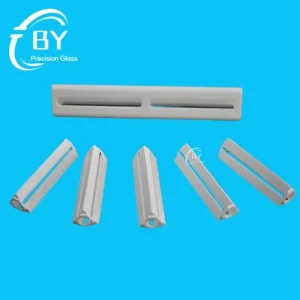
Diode-Pumping Chamber Diffuse Reflectors
Explore Specification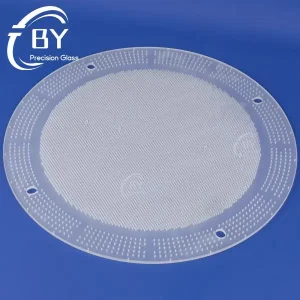
Optical Quartz Gas Distribution Plates
Explore Specification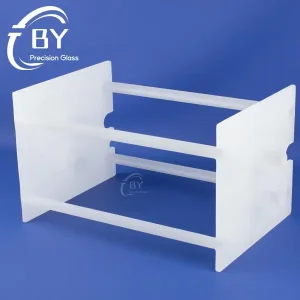
Semiconductor Quartz Diffusion Boats
Explore Specification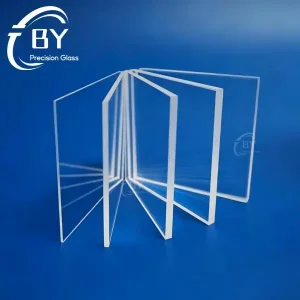
JGS1 Ultraviolet Fused Silica Plates
Explore Specification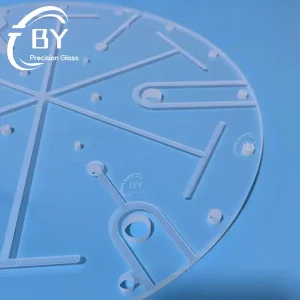
Precision Quartz Glass Custom Machining
Explore Specification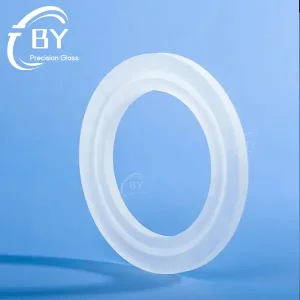
Semiconductor Precision Quartz Components
Explore Specification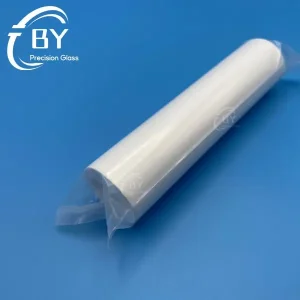
Candela VBeam Cavity Ceramic Reflectors
Explore Specification