Featured Optical Laser Components & Ceramic Cavities
Precision-machined laser pump cavities, high-transmission flow tubes, and synthesized quartz assemblies directly delivered from our ISO-certified manufacturing facility in Tianjin.
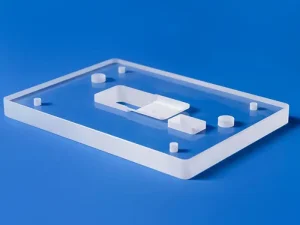
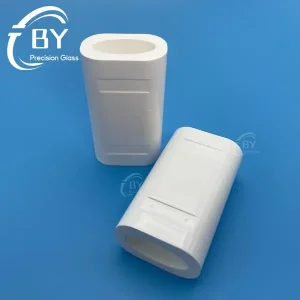
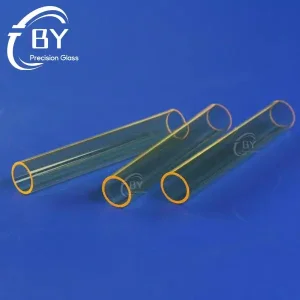
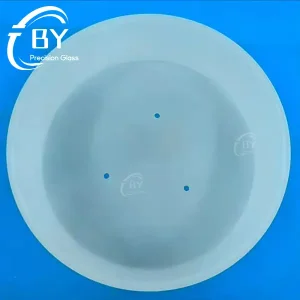
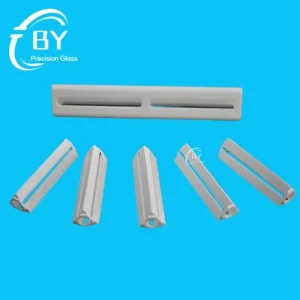
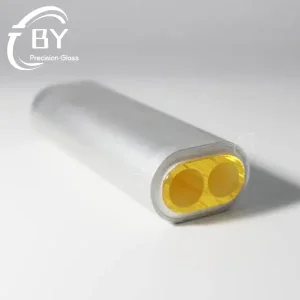
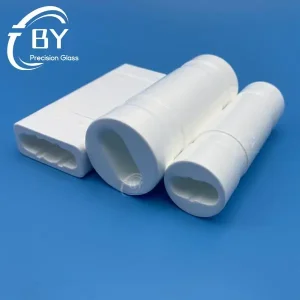
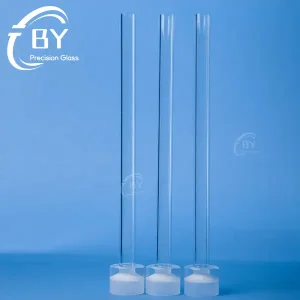
The Physics of Ceramic Laser Cavity Reflectors: Diffuse Scattering & Thermal Optics
Understanding volumetric Lambertian diffusion versus specular metallic mirrors in high-energy solid-state laser resonators.
In high-power flashlamp-pumped and diode-pumped solid-state laser (DPSSL) architectures, pump efficiency is directly governed by the physical properties of the pump chamber reflector. While historical architectures utilized specular reflectors—such as electroplated gold or polished silver coatings on copper or stainless steel substrates—modern industrial and medical photonics have overwhelmingly transitioned to porous diffuse ceramic laser reflectors fabricated from ultra-high-purity alumina (α-Al₂O₃ ≥ 99.7%).
Specular metallic reflectors operate on single-point Fresnel reflection principles. When intense broadband flashlamp radiation (200 nm to 1100 nm) or diode emissions strike a metallic mirror, non-uniform flux distribution generates pronounced hot-spots along the active gain crystal (such as Nd:YAG, Er:YAG, Ho:YAG, or Alexandrite). This localized thermal lensing induces severe wavefront distortions, astigmatism, and premature mechanical fracture of laser rods. In stark contrast, porous ceramic cavities function via volumetric bulk scattering. High-purity alumina ceramics feature an engineered microscopic pore network (average porosity: 10% to 20%) wherein photon bundles undergo millions of elastic refractive inter-grain scatterings before exiting the bulk matrix. This creates a true Lambertian diffuse reflectance profile, delivering an isotropic photon cloud across the gain crystal circumference, effectively maximizing the single-pass absorption efficiency and suppressing pump-induced spatial hole burning.
| Performance Characteristic | Porous Ceramic Cavity (BY Photonics 99.7%) | Electroplated Gold (Au/Cu) | Sintered PTFE (Spectralon-Grade) |
|---|---|---|---|
| Reflectance (600 nm – 1000 nm) | 97.5% – 98.2% (Lambertian Diffuse) | 95.0% – 96.5% (Specular) | 98.5% – 99.1% (Diffuse) |
| UV Solarization Resistance (<380 nm) | Immune (Glazed seal prevents degradation) | Prone to blistering & peel-off | Susceptible to yellowing under UV flash |
| DI Water Coolant Compatibility | Excellent (Corrosion-proof vitreous glaze) | Moderate (Pinhole galvanic oxidation) | Poor (Prone to fluid absorption & swelling) |
| Thermal Expansion (CTE × 10⁻⁶/K) | 7.2 – 8.0 (Extremely dimensionally stable) | 16.5 (Copper base mismatch with rods) | 100 – 135 (Severe thermal expansion drift) |
| Mechanical Service Life (Pump Pulses) | > 25,000,000 pulses without decay | 5,000,000 to 10,000,000 pulses | 10,000,000 pulses (Limited duty cycle) |
Localized Application Scenarios: Where BY Ceramic Cavities Excel
From hospital operating suites to micron-level wafer fabs, our ceramic laser reflectors provide thermal ruggedness and spectral efficiency.
Aesthetic & Medical Dermatology Lasers
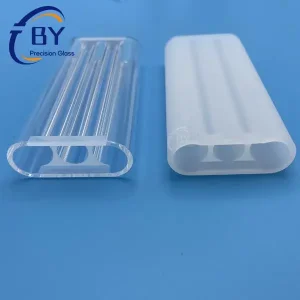
Widely deployed in replacement cavity modules for market-leading platforms (such as Candela GentleLase, GentleYag, VBeam, Cynosure Apogee, and Fotona). Our monolithic dual-bore and triple-bore reflectors accommodate both the active Alexandrite/Nd:YAG laser rods and high-energy xenon flashlamps. A chemically inert vitreous glaze on all coolant passages prevents deionized water leaching and ionic contamination, ensuring zero laser output power degradation over millions of clinical pulses.
Precision Industrial Laser Micromachining
Used inside heavy-duty Q-switched Nd:YAG cutting, drilling, and seam-welding heads for electronics fabrication and diamond processing. The high thermal shock threshold of our 99.7% Al₂O₃ ceramic maintains bore straightness under 24/7 continuous duty cycles, preventing the beam divergence or thermal focal drift common in metal cavities subjected to fluctuating high-temperature water chillers.
Semiconductor Metrology & Inspection
In deep ultraviolet (DUV) optical inspection tools and laser-produced plasma (LPP) illumination setups, our ceramic reflectors withstand prolonged irradiation without chemical off-gassing. Their exceptional chemical purity ensures that zero volatile trace elements escape into ultra-clean vacuum chambers or particulate-sensitive wafer exposure environments.
China Factory Manufacturing Agility & Vertical Integration
How Tianjin BY Photonics eliminates supply vulnerabilities, offering rapid prototype-to-mass-production cycles with zero quality compromise.
Global photonics OEMs and laser repair service organizations often encounter long lead times (upwards of 16 to 24 weeks) and exorbitant minimum order quantities from traditional European or North American ceramic processors. Tianjin BY Photonics redefines this dynamic through total vertical integration. From cold isostatic pressing (CIP) of high-purity sub-micron alumina powders to green-state 5-axis CNC machining, high-temperature sintering, diamond lapping, and precision glazing, all operations take place within our 3,000+ m² modernized facility in Tianjin, China.
Green-State CNC Machining: Rather than performing labor-intensive diamond grinding on fully hardened ceramics, our manufacturing engineers machine cavity geometries—including complex triple-bore elliptical paths, asymmetric fluid manifold grooves, and locating notches—in the pre-sintered "green" stage. By factoring precise shrink-rate algorithms (±0.05% predictive tolerance during 1,750°C vacuum firing), we dramatically lower processing overhead, shorten prototype lead times to just 7–10 days, and pass substantial cost advantages to our wholesale distribution partners.
Rapid 24-Hour DFM Assessment
Send your 2D PDF or 3D STEP/IGES CAD drawings. Our senior optical and ceramic fabrication engineers provide a comprehensive Design for Manufacturability (DFM) review within 24 hours, offering insights on draft angles, wall thickness, glaze boundaries, and shrinkage control.
Raw Material Security
We maintain guaranteed reserves of pharmaceutical-grade calcined alumina powders, doped silica glass precursors, and optical crystal blanks. This deep raw material buffer shields our global OEM accounts from supply chain bottlenecks, inflationary spikes, and geopolitical logistics chokepoints.
Turnkey Tooling & Moldless Prototyping
Through advanced multi-axis diamond ultrasonic machining and high-speed ceramic routing, we produce pilot runs of 5 to 50 pieces without requiring expensive hard tooling or custom pressing dies, reducing upfront R&D entry costs by up to 75%.
Global Commercial Landscape: OEM Integration & Aftermarket Dynamics
Navigating the high-margin secondary maintenance, repair, and overhaul (MRO) sector alongside next-generation system manufacturing.
The worldwide commercial market for ceramic laser cavities is bifurcated into two high-growth sectors: original equipment manufacturer (OEM) module integration and the aftermarket laser maintenance ecosystem. In the medical aesthetics sector alone, an estimated active install base of over 120,000 flashlamp-pumped systems requires regular cavity overhauls every 12 to 24 months. Over prolonged operation, flashlamp UV radiation solarizes inferior ceramic materials, while micro-cavitations in turbulent cooling water erode non-glazed surfaces, causing flashlamp misfires, reduced fluence, and patient treatment inconsistencies.
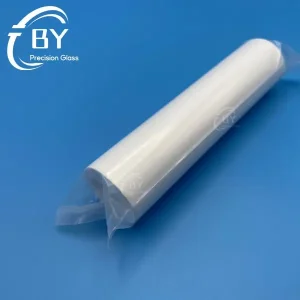
Third-party clinical service engineers and wholesale distribution entities face immense pressure from OEM brand monopolies that restrict replacement cavity availability or price them exorbitantly. Tianjin BY Photonics bridges this market gap by manufacturing 100% physically and optically compatible, high-precision replacement ceramic reflectors—such as 6-inch white cavity reflectors for Candela VBeam, triple-bore cavities for GentleLase Mini/Pro, and custom diode pump chambers—meeting or exceeding OEM operational specifications at a fraction of the cost.
Technology Roadmap: Ceramic Laser Cavities (2026–2035)
Pioneering developments in nano-composite matrices, active brazing, and 3D additive ceramic manufacturing for the next decade of photonics.
Sub-Micron Nanostructured Alumina
Transitioning from micro-grain powders to 200 nm high-purity alumina compacts, increasing Lambertian diffuse reflectance from 97.8% to 98.9% across the critical 400–700 nm spectral band.
Active Metal Brazing (AMB) Integration
Direct ceramic-to-metal vacuum brazing (Al₂O₃ to Kovar or Titanium flanges), eliminating elastomeric O-rings in pump chambers and extending seal endurance in ultra-pure cooling loops.
Additive Ceramic 3D Printing
Stereolithography (SLA) fabrication of dense alumina reflectors with conformal internal cooling channels, drastically reducing thermal boundary layers around high-duty pump diodes.
Dual-Band Glaze Engineering
Advanced multi-layer rare-earth doped surface glazes that simultaneously absorb parasitic UV (<300 nm) while down-converting stray photons into usable 808 nm pump wavelengths.
Global Compliance, Quality Verification & Engineering Support
Strict metrological verification and documented traceability matching the rigorous demands of Western laser manufacturers.
Tianjin BY Photonics strictly enforces an ISO 9001:2015 certified quality management system across every batch of ceramic laser reflectors. Dimensional verification is performed utilizing coordinate measuring machines (CMM) with volumetric probing accuracy down to ±1.5 μm. Internal bores undergo 100% video borescope scanning to ensure total freedom from micro-cracks, surface pits, or glaze pinholes.
Comprehensive Spectral Certification: Every batch is tested using a PerkinElmer Lambda 1050+ UV/Vis/NIR spectrophotometer equipped with a 150 mm integrating sphere. Diffuse reflectance curves spanning 250 nm to 2500 nm are generated and supplied with delivery certificates. Furthermore, all components are fully compliant with RoHS (EU 2015/863), REACH (EC 1907/2006), and CE directives, ensuring frictionless customs clearance and swift integration for international clients in North America, Europe, Japan, and South Korea.
Frequently Asked Technical & Procurement Questions
Direct engineering answers addressing material specifications, custom fabrication capabilities, and maintenance cycles.
Why is internal glazing critical for ceramic laser reflectors?
Porous alumina is naturally absorbent (typically 10–20% open porosity). In liquid-cooled laser chambers, unglazed ceramic will absorb cooling water, minerals, and organic impurities, resulting in fungal growth, ionic contamination of the DI water loop, and thermal spalling. Applying an ultra-smooth, high-temperature vitreous glaze seals the open pores completely, providing exceptional chemical erosion resistance and easy cleanability.
How does 99.7% Al₂O₃ compare with lower purity (95% or 97%) ceramics?
Lower purity ceramics contain residual glass phases and binder fluxes (such as SiO₂ or MgO) that strongly absorb UV light and green spectra. Under high-energy flashlamp pulses, these impurities trigger solarization, turning the ceramic gray or yellow and drastically dropping pump efficiency. Our 99.7% α-Al₂O₃ grade guarantees zero solarization degradation and maximum diffuse reflectance (>97.8%).
Can you manufacture custom triple-bore or asymmetric diode pump chambers?
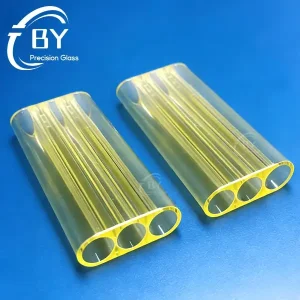
Yes. We specialize in custom CNC green-machined geometries, including triple-bore medical cavities (for lamp, rod, and flow tube), asymmetric diode-array reflector slots, and multi-segment interlocking reflectors. We work directly from STEP, IGES, DXF, or fully dimensioned 2D prints.
What is the typical delivery timeframe for custom prototypes versus wholesale batches?
Custom prototypes produced via our moldless green CNC machining process are typically completed in 7 to 14 business days. Standard wholesale batch orders (50 to 500 units) require 3 to 4 weeks, with fast global courier dispatch via DHL, FedEx, or air freight.
Are BY Photonics replacement cavities 100% compatible with Candela lasers?
Yes. Our replacement ceramic reflectors for Candela GentleLase, GentleYag, and VBeam systems are manufactured to exact OEM dimensions and optical tolerances. They feature identical mounting notches, bore alignments, and high-temperature glaze seals for direct drop-in replacement.
How should technicians clean and maintain ceramic laser cavities?
Glazed ceramic surfaces should be cleaned with high-purity spectroscopic grade isopropyl alcohol (IPA) and lint-free optical wipes. Avoid using ultrasonic baths on non-glazed ceramic sections, and never use abrasive scrubbing pads that could damage the vitreous glaze layer.
Explore Related Optical Flow Tubes, Cavities & Sapphire Components
Browse our full production range of replacement ceramic cavities, triple-bore tubes, and optical light guides ready for global wholesale dispatch.