
High-Precision Optical & UV Quartz Flow Components
Explore our core production line of laser cavity sleeves, quartz flow tubes, optical windows, and custom-doped ultraviolet optical components manufactured under strict ISO 9001:2015 quality regimes.
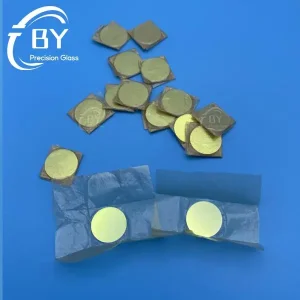
High-Quality Candela Laser Distance Gauge Slider Windows With coating 755 and 1064nm Suppliers, Factories
View Specifications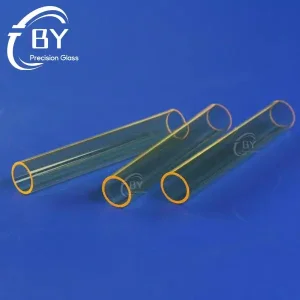
Custom UV Block Yellow Quartz Tube for IPL Lamp Flow Handle Manufacturer, Factories
View Specifications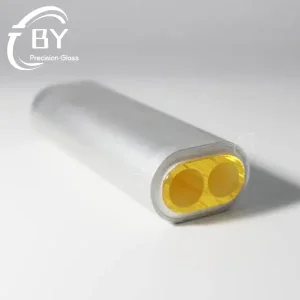
Custom Packed Laser Cavity Flowtubes for Laser Head Manufacturers, Suppliers
View Specifications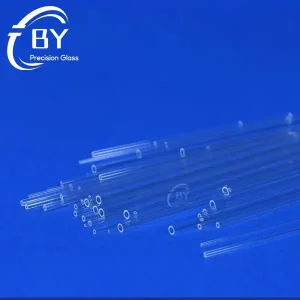
Wholesale Fluorine-Doped Fused Silica Capillary Tube Manufacturer, Factories
View Specifications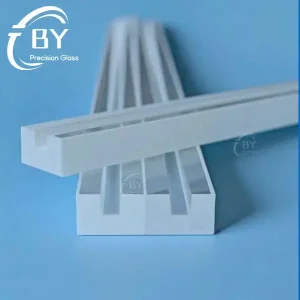
High-Quality Square Groove Quartz Substrate for Fiber Couplers Supplier, Factories
View Specifications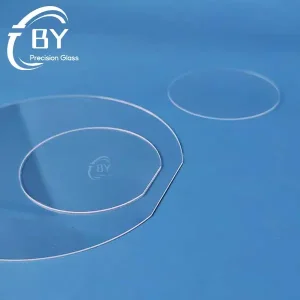
Custom Borofloat 33® Glass Wafers for Semiconductor Manufacturers, Factories
View Specifications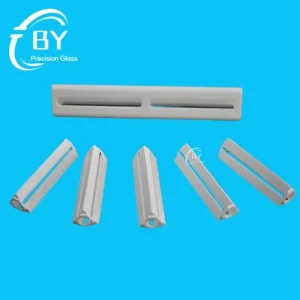
High-Quality Diode‑Pumping Chamber Diffuse Reflectors PTFE‑based Supplier, Suppliers
View Specifications
Wholesale Quartz Optical Windows for Semiconductor Lithography Equipment Suppliers, Factories
View SpecificationsEngineering Fundamentals of Germicidal Quartz Flow Tubes
In modern industrial and municipal disinfection architectures, the germicidal lamp flow tube (often referred to as a quartz sleeve or flow cell) is not merely a passive protective barrier; it serves as a critical optical interface and hydraulic boundary.
JGS1 vs. JGS2 Transmission Dynamics
Standard borosilicate or commercial soda-lime glass completely attenuates photons below 300nm. Precision germicidal sleeves utilize electric-fused quartz (JGS2) or synthetic fused silica (JGS1). Synthetic JGS1 achieves greater than 90% transmission at the primary germicidal mercury emission line of 253.7nm and maintains stable transparency in the deep Far-UVC excimer spectrum (222nm), eliminating solarization degradation caused by trapped interstitial metallic impurities.
Ozone-Free vs. Ozone-Generating Control
By precision doping quartz formulations with trace titanium oxides (Ti), flow tube factories can truncate transmission below 200nm. This suppresses the 184.9nm mercury spectral line, preventing toxic atmospheric ozone generation in enclosed air handling units. Conversely, for semiconductor TOC (Total Organic Carbon) destruction systems, synthetic high-hydroxyl fused quartz sleeves maximize 185nm passage to drive the formation of aggressive hydroxyl radicals (•OH).
Hydraulic Shock & Thermal Resistance
Operating low-pressure high-output (LPHO) or medium-pressure amalgam lamps generates envelope temperatures exceeding 120°C to 240°C while simultaneously interfacing with freezing incoming municipal fluids (4°C). The near-zero coefficient of thermal expansion of fused silica (5.5 × 10⁻⁷ /°C) guarantees zero micro-fissuring during rapid thermal cycling, while specialized fire-polishing eliminates residual micro-notches that could fail under hydraulic water hammer events.
Material Transmission & Mechanical Tolerances
Comprehensive metallurgical and optical tolerances maintained across our Chinese wholesale manufacturing facilities for global OEM device integrators.
| Material Classification | Primary Spectral Band | UV-C Transmission (@254nm) | OH Content (ppm) | Thermal Shock Index | Primary Industrial Use Case |
|---|---|---|---|---|---|
| JGS1 Synthetic Fused Silica | 185 nm – 2,500 nm | ≥ 91.5% (1mm wall) | < 5 ppm (Low-OH) or > 1200 ppm | 1,100°C to 20°C Ice Quench | Semiconductor TOC reduction, Excimer 222nm Far-UVC |
| JGS2 Optical Fused Quartz | 220 nm – 2,500 nm | ≥ 89.0% (1.5mm wall) | ≤ 30 ppm | 1,000°C to 20°C Ice Quench | Municipal wastewater, Potable water purification |
| Titanium-Doped (Ozone-Free) | 240 nm – 2,500 nm | ≥ 88.0% (<0.1% @ 185nm) | ≤ 40 ppm | 950°C to 20°C Water Quench | HVAC disinfection, Occupied indoor air treatment |
| Samarium-Doped Fused Quartz | 350 nm – 3,000 nm | UV Cutoff (< 380nm blocked) | ≤ 20 ppm | 900°C Quench Stability | Aesthetic laser cavity cooling, Selective lamp filtering |
| Borosilicate 3.3 Hydrostatic | 320 nm – 2,500 nm | Near 0% UV-C (UV-A / VIS only) | N/A | ΔT = 150°C Rapid Gradient | Secondary non-critical fluid sleeves, visible sight conduits |
Chinese Factory Supply Chain Advantages & Vertical Integration
Why Tier-1 water disinfection equipment manufacturers and international engineering contractors source wholesale germicidal lamp flow tubes from our Tianjin and Jiangsu manufacturing hubs.
Raw Material Proximity
Our plants benefit from strategic proximity to the Donghai silica belt—the world's most concentrated silicon dioxide purification and smelting hub. We secure premium quartz sands (>99.998% SiO2 purity) with trace elemental iron, cobalt, and aluminum kept below 0.1 ppm, safeguarding raw tube stocks against geopolitical supply disruptions.
Continuous Redrawing Lines
Equipped with automated continuous electric-melting and thermal drawing towers, our lines hold precise dimensional constancy across lengths exceeding 2,500mm. Integrated dual-axis laser scanning micrometers monitor outer diameter (OD) and wall thickness at 100 Hz, ensuring zero localized necking or ovality that would compromise O-ring seals.
End-Face Cold & Hot Processing
A leak in a high-pressure municipal UV reactor is fatal to operational continuity. We run both automated oxyhydrogen precision flame-doming (closed test-tube ends) and diamond CNC grinding (flanged, flat polished, or beaded ends) under one roof, guaranteeing perpendicularity and surface roughness (Ra < 0.2 μm) on critical sealing faces.
Cost-to-Performance Superiority
By pairing high-yield redrawing with multi-axis automated ultrasonic cleaning and cleanroom packaging, wholesale buyers realize a 35% to 55% reduction in total landed acquisition costs compared to Western European or North American domestic quartzware converters without compromising optical transmittance.
Global Enterprise Sourcing Demands & DFM Benchmarks
Enterprise procurement executives and R&D engineers in water engineering, healthcare sterilization, and commercial electronics face rigorous operational constraints when specifying quartz sleeves.
Precision Geometric Tolerances & TIR
In multi-lamp horizontal reactors, flow tubes often exceed 1,500mm in length. Total Indicated Runout (TIR) or camber must remain below 0.15% of the total span. Any excessive bowing stresses mechanical gland packings, generates localized shear tension during vibration, and leads to sleeve catastrophic fracture during turbulent fluid surges. Wholesale orders include dimensional QA runout graphs per production batch.
Batch Consistency & Solarization Warranties
A primary failure mode of secondary quartz supplies is accelerated solarization—the rapid formation of E'-centers in the SiO2 lattice that darkens the quartz envelope within 2,000 to 4,000 operational hours. Global procurement demands guaranteed UV-C transmission retaining >85% initial value after 12,000 hours of continuous irradiation from high-intensity low-pressure amalgam lamps.
Custom End-Configuration Engineering
Different UV reactor chassis call for proprietary end geometries: Single-Ended Open (SEO) with fire-closed hemispherical domes; Double-Ended Open (DEO) with bevelled fire-polished safety rims; flared lips for sanitary clamp fittings; or threaded quartz sleeves joined to 316L stainless steel collars using aerospace-grade, ozone-resistant epoxies.
Hermetic Transit Packaging & Yield Protection
Brittle optical quartz requires specialized shipping logistics. Every sleeve is sealed in antistatic cleanroom PE tubing, separated by continuous closed-cell polyethylene foam cells, and crated in custom reinforced timber cases with tilt and drop impact sensors, achieving a global freight survival rate >99.8% across ocean container shipments.
Localized Support & International Compliance Assurance
Procuring germicidal components requires navigating stringent municipal public health mandates, clean water directives, and occupational safety protocols across target jurisdictions.
NSF/ANSI Standard 55 & 61 Compliance
For municipal and point-of-use drinking water systems across North America and Europe, flow tubes directly wet potable water lines. Our quartz glass formulations are tested and certified inert, ensuring zero leaching of toxic heavy metals (lead, arsenic, cadmium) or hazardous contaminants even after years of continuous high-power UV-C bombardment.
FDA 21 CFR 177 & cGMP Pharma Standards
Biopharmaceutical WFI (Water for Injection) systems and food & beverage pasteurization processes require total compliance with FDA extractables criteria. Our fire-polished quartz interiors exhibit mirror-grade finishes preventing bio-film adhesion, facilitating standard Clean-in-Place (CIP) and Sterilize-in-Place (SIP) cycles up to 135°C steam.
Localized Engineering Hubs & Buffer Inventory
To eliminate extended transit lead times during municipal replacement cycles, we maintain stocking arrangements with distribution hubs in the European Union and North America. Critical municipal flow tube lengths (standard 20mm, 23mm, 28mm, 30mm, 38mm OD sleeves) can be released within 48 hours to service public utilities.
Industrial & Municipal Flow Tube Application Paradigms
From high-volume municipal wastewater facilities to nanoscale semiconductor wet benches, our quartz flow sleeves form the optical heart of modern pathogen destruction.
Municipal Wastewater & Reuse
Open-channel gravity-fed and pressurized closed-vessel UV reactors rely on arrays of long-length (1,500mm–2,000mm) quartz sleeves. Sleeves must withstand constant mechanical wiping ring friction (PTFE or stainless wiper seals) without scratching or pitting, ensuring uninterrupted germicidal flux into turbid wastewater streams.
Semiconductor Ultrapure Water (UPW)
Advanced sub-nanometer wafer fabrication facilities demand water with Total Organic Carbon (TOC) levels under 1 part per billion (ppb). We engineer synthetic JGS1 flow tubes optimized for combined 185nm / 254nm irradiation, photo-oxidizing residual organic carbon molecules into volatile CO2 that can be deaerated.
Maritime Ballast Water Management
Operating under the IMO Ballast Water Convention and USCG directives, maritime ballast systems encounter severe salinity, chemical cleaning agents, and aggressive engine vibrations. Thick-walled fused quartz flow sleeves offer superior tensile strength to prevent sea chest ruptures aboard global cargo vessels.
Industry Evolution & Future Development Trends
The ultraviolet germicidal industry is undergoing major technological shifts. Next-generation disinfection architectures dictate new physical specifications for wholesale quartz manufacturing.
Excimer Far-UVC 222nm Sleeving
Krypton-Chloride (Kr-Cl) excimer lamps emitting at 222nm are rapidly gaining adoption for pathogen eradication in occupied public spaces without causing skin or eye irritation. Standard natural fused quartz absorbs or rapidly solarizes under 222nm flux. We provide synthetic high-purity silica tubes with zero internal seed defects to maintain high transmission over 10,000+ hours.
Anti-Fouling Nano-Coated Flow Surfaces
Mineral scale buildup (calcium carbonate, iron scaling) on flow tube exteriors severely drops operational UV intensity, forcing frequent chemical flushing. Our advanced R&D lines have introduced ultra-thin sol-gel silane and titania anti-fouling coatings that prevent foulant nucleation while sustaining >97% relative UV-C transmittance.
UVC-LED Integrated Quartz Matrix Chambers
As solid-state UVC LEDs mature in optical power density, disinfection reactors are migrating toward compact, multi-wavelength, micro-channel reactors. We manufacture micro-bore capillary quartz arrays and square-groove optical flow cells that collimate divergent LED emission directly through fluid laminar boundaries.
Frequently Asked Questions on Wholesale Germicidal Flow Tubes
In-depth technical answers addressing material selection, dimensional verification, OEM compatibility, and factory direct sourcing logistics.
What is the optical difference between natural fused quartz and synthetic fused silica in germicidal applications?
Why do high-pressure water disinfection reactors specify domed test-tube sleeves over open cylinders?
How does wall thickness affect UV-C disinfection dosage and mechanical burst pressure?
What are the key manufacturing controls that prevent quartz sleeve breakage during shipping and installation?
Can your factory manufacture replacement flow tubes compatible with Trojan, Wedeco, or Aquafine UV chambers?
What certifications and quality inspection reports accompany wholesale shipments?
Specialized Laser, Medical & Custom Fabricated Quartz Components
Explore our advanced laser cavity flow tubes, multi-bore medical flow cells, optical sapphire guides, and precision quartz fabrication solutions built strictly to custom engineering specifications.
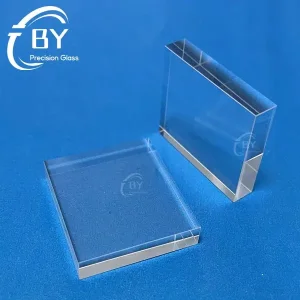
Custom Sapphire IPL Light Guide Block Used for Laser IPL Hair Removal Handle Manufacturer, Manufacturers
View Specifications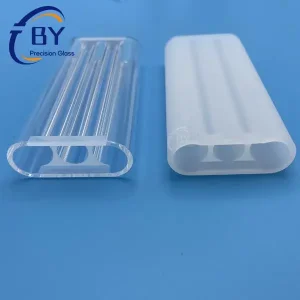
High-Quality Candela Laser Head Triple Bore Old and New Version In Stock Manufacturer, Factory
View Specifications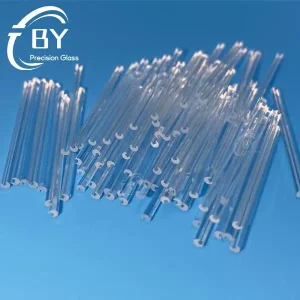
High-Quality Quartz Substrate Groove Use For Optical Fiber Coupler Suppliers, Factories
View Specifications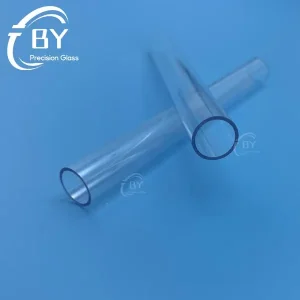
Wholesale Cerium Doped Quartz Tube Blocked UV Wavelength Manufacturer, Manufacturers
View Specifications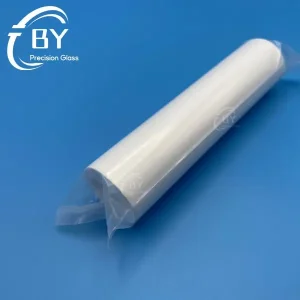
Wholesale Candela VBeam Laser 6" White Cavity Ceramic Reflector 2 Pk Manufacturer, Suppliers
View Specifications
High-Quality Customized Quartz Fiber End Caps for QBH Manufacturer, Factory
View Specifications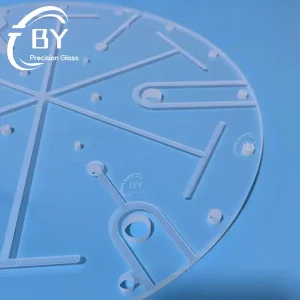
High-Quality Custom Precision Quartz Glass Fabrication Supplier, Suppliers
View Specifications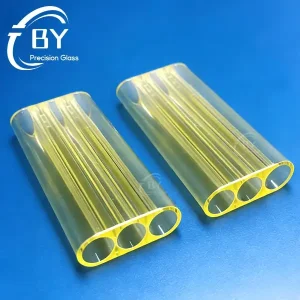
Wholesale Samarium-doped Quartz Triple Bore for Medical Laser Manufacturer, Supplier
View SpecificationsRequest Direct Wholesale Pricing & Factory DFM Review
Submit your CAD blueprints, outer/inner diameter tolerances, and annual quantity requirements. Our optical process engineers return complete manufacturability evaluations and tiered wholesale quotes within 24 business hours.