
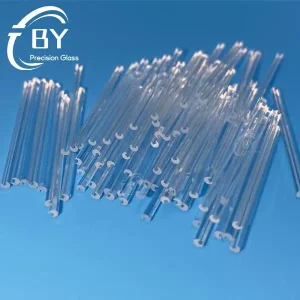
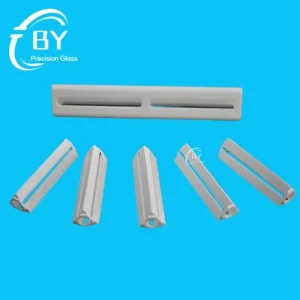
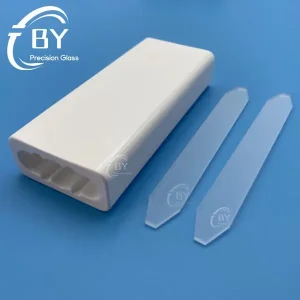
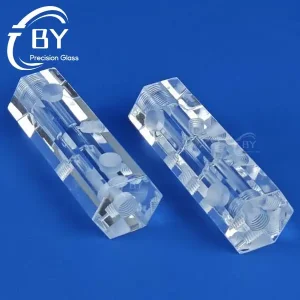
High-Quality Quartz Substrate Groove Use For Optical Fiber Coupler Suppliers, Factories
Inquire Product
Batch-calibrated optical and analytical quartzware fabricated in our class-1000 cleanroom facilities for high-precision OEM and research deployment.
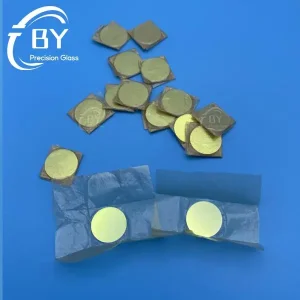

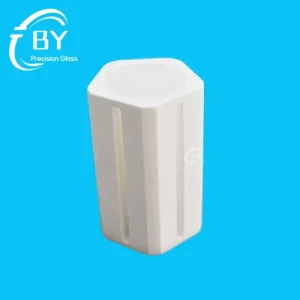
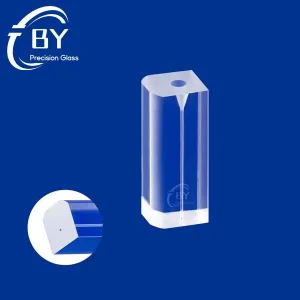
An engineering treatise on why synthetic fused silica microcapillaries and quartz tubing serve as the cornerstone for ultra-trace chemical and clinical instrumentation.
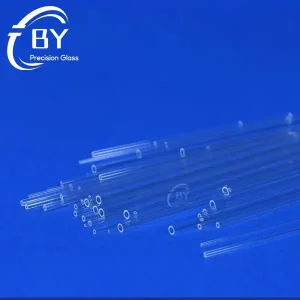
In modern analytical chemistry, chromatographic separation, flow cytometric analysis, and microfluidic diagnostics operate under microscopic volume thresholds where fluid-surface molecular interactions dictate system precision. Micro quartz tubes (often specified with inner diameters spanning from 5 μm to 2000 μm) represent far more than passive transport channels: they are active optical windows, dielectric isolation barriers, and chemically inert reaction vessels. As commercial chromatography shifts toward sub-micron ultra-high performance liquid chromatography (UHPLC) and capillary electrophoresis (CE), the mechanical integrity and surface silanol uniformity of the fused silica substrate directly determine peak resolution, baseline noise, and chromatographic plate numbers.
Tianjin BY Photonics Co., Ltd., capitalizing on over 15 years of dedicated cold-working, thermal redrawing, and oxyhydrogen flame fabrication, delivers wholesale micro quartz capillaries manufactured under certified quality control protocols. Understanding the divergence between natural quartz crystals and synthetic silica precursors is critical for instrument architects. Below, our engineering matrix demonstrates the thermodynamic, optical, and structural differences across key materials utilized in specialized chemical analysis.
| Material Category | Spectral Bandwidth | Hydroxyl (OH⁻) Density | Thermal Strain Point | Inner Bore Tolerance | Primary Analytical Role |
|---|---|---|---|---|---|
| JGS1 Synthetic Silica | 185 nm – 2,500 nm | < 5 ppm to 1200 ppm (Grade dep.) | 1070 °C – 1120 °C | ±0.002 mm (±2 μm) | Deep-UV Absorption Detectors, CE Capillary Columns |
| JGS2 Electrically Fused | 220 nm – 2,500 nm | < 30 ppm | 1070 °C | ±0.005 mm (±5 μm) | Gas Chromatography Liners, Pyrolysis Combustion Tubes |
| JGS3 Optical Quartz (Low-OH) | 260 nm – 3,500 nm | < 5 ppm (Water-free IR) | 1080 °C | ±0.003 mm (±3 μm) | FTIR Flow Cells, Near-IR Process Monitoring Cells |
| Fluorine-Doped Silica | Custom NA (0.12 - 0.22) | Customized | ~1000 °C | ±0.002 mm (±2 μm) | Evanescent Wave Sensors, Integrated Waveguide Fluidics |
| Borofloat 33® / Borosilicate | 350 nm – 2,500 nm | Standard | 518 °C | ±0.010 mm (±10 μm) | Disposable Blood Sampling, Routine Reagent Dispensers |
Real-world integration protocols where micro quartz tubes enable breakthroughs in analytical limits, thermal cyclers, and optofluidic detection modules.
Navigating tier-1 analytical OEM procurement, material consolidation, and the worldwide shift toward micro-bore capillary consumables.
The analytical instrumentation sector is experiencing a rapid decentralization of consumable manufacturing. Historically dominated by European and North American specialized glassblowers, tier-1 OEMs (producing liquid chromatographs, mass spectrometers, and microplate readers) face severe margin compression and protracted supply cycles often exceeding 16 to 24 weeks. Simultaneously, clinical molecular diagnostics require sub-microliter droplet digital PCR (ddPCR) flow components and disposable analytical microchannels at multi-million unit yearly volumes.
In response, global supply architects are migrating toward vertically integrated Chinese manufacturers capable of unifying raw ingot sourcing, hot redraw processing, precision CNC end-polishing, and cleanroom packaging. This commercial realignment permits scientific instrument manufacturers in North America, Europe, and Asia-Pacific to scale prototyping cycles into mass serial manufacture within weeks rather than quarters.
How co-locating raw synthesis, cold working, CNC machining, and oxyhydrogen flame shops under one roof in Tianjin ensures uncompromised quality and cost leadership.
Supply chain fragmentation is the single largest driver of tolerance stack-up and component rejection in analytical glass fabrication. When one vendor draws the capillary cane, a second provider cuts the lengths, a third polishes the optical windows, and a fourth applies surface passivations, cumulative variances inevitably compromise fluidic resistance and optical alignment. BY Photonics completely eliminates this multi-tier liability by anchoring the entire production workflow inside our 3,000+ m² production complex in Nankai District, Tianjin, China.
Anticipating the technological frontier: nano-bore channels, chemical functionalization, and monolithic lab-on-a-chip architectures.
Strict quality assurance protocols and customs documentation guaranteeing regulatory compliance for tier-1 analytical labs globally.
In-depth responses covering material selection, tolerances, customization, and logistical procedures.
Explore our extended catalog of laser cavities, doped silica capillary components, and substrate wafers built to exact OEM blueprints.

Collaborate directly with our senior quartzware fabrication specialists. Submit your capillary, flow cell, or custom optical glass drawings for a comprehensive manufacturability analysis within 24 working hours.